Click on the above“Linux Technology Enthusiast” and select “Set as Starred”
High-quality articles delivered promptly
In computing, virtualization (English: Virtualization) is a resource management technology that abstracts and presents various physical resources of a computer, such as servers, networks, memory, and storage, breaking the inseparable barriers between physical structures, allowing users to utilize these resources in a better way than the original configuration.
The new virtual parts of these resources are not limited by the existing resource setup, location, or physical configuration. The resources generally referred to in virtualization include computing power and data storage.
There are many types of virtualization technologies, such as: software virtualization, hardware virtualization, memory virtualization, network virtualization (VIP), desktop virtualization, service virtualization, virtual machines, etc..
In practical production environments, virtualization technology is mainly used to address the surplus capacity of high-performance physical hardware and the reorganization and reuse of old hardware with low capacity, thereby maximizing the utilization of physical hardware resources.

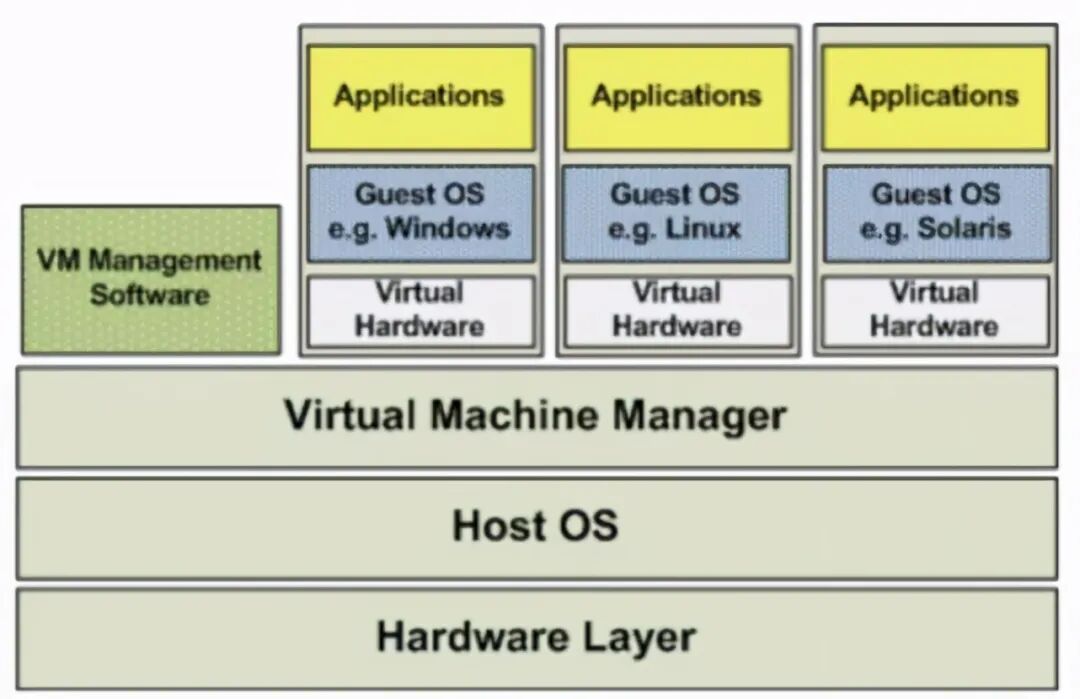
◆ Full Virtualization Architecture
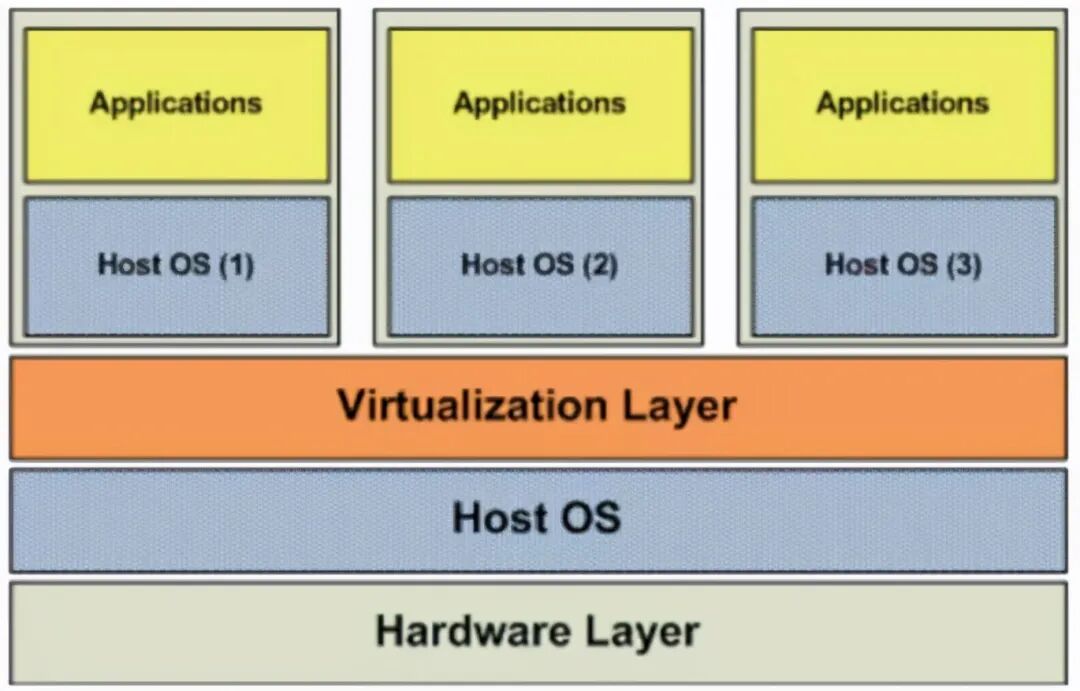
◆ OS-Level Virtualization Architecture
◆ Hardware-Level Virtualization
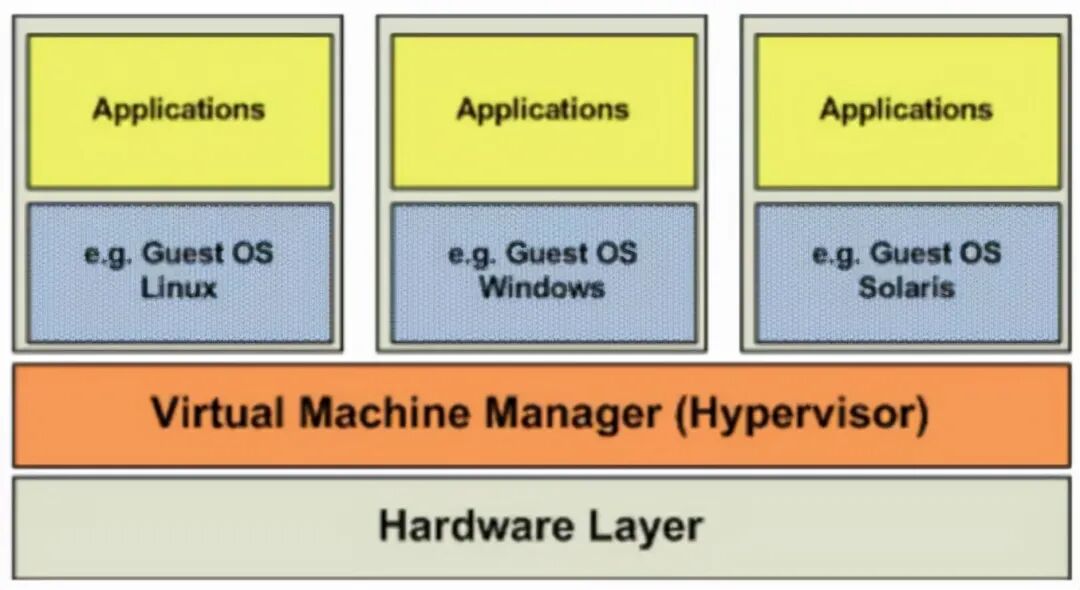
Hardware-level virtualization offers high performance and isolation because the hypervisor runs directly on the hardware, facilitating control over the VM’s OS access to hardware resources. Products using this solution include VMware ESXi and Xen server. Search for the public account: Architect’s Guide on WeChat, reply: Architect to receive materials.
The hypervisor is an intermediate software layer that runs between the physical server and the operating systems, allowing multiple operating systems and applications to share a set of underlying physical hardware. Therefore, it can also be seen as the “meta” operating system in a virtual environment, coordinating access to all physical devices and virtual machines on the server, also known as the Virtual Machine Monitor (VMM).
The hypervisor is the core of all virtualization technologies. When the server starts and executes the hypervisor, it allocates appropriate memory, CPU, network, and disk to each virtual machine and loads the client operating systems of all virtual machines.
Software and hardware architecture and management are more efficient and flexible, allowing hardware performance to be better utilized. Common products include: VMware, KVM, Xen, etc.
Source:
https://www.toutiao.com/i7000914991998353931/
-End-Reading this indicates that you enjoy the articles from this public account. Feel free to star this public account, Linux Technology Enthusiast, so you can receive updates promptly!
In this public account, Linux Technology Enthusiast, reply: Linux to receive 2TB of learning materials!
Recommended Reading:
1. Complete Linux Command List, from A to Z, 2023 Collection!
2. Essential Operations and Maintenance: “Network Port Guide”, this one is enough!
3. Linux Learning Guide (Collection Edition)
4. A 20,000-word systematic summary to help you achieve freedom with Linux commands.