IntroductionOur daily food relies on the production functions of farmland, the clean water we drink depends on the purification role of wetlands, and even the pleasant landscapes we see when we go out are part of the “ecological gifts” provided by nature. These benefits, known as “ecosystem services,” have long been integrated into our daily lives. But have you ever considered how these ecological services are typically managed? Most of the time, they are either managed through market transactions or supported by government subsidies, yet little attention is paid to another possibility: Could farmers, tourists, environmental workers, and others living in the same area cooperate to more effectively safeguard these ecological services? Why is this management approach of “collective action” often overlooked in the governance of ecological services? This study from 2018 seeks to build a conceptual framework that connects ecological services, social relationships, and collective action, providing new ideas for ecological governance. English Title:Ecosystem Services, Social Interdependencies, and Collective Action: A Conceptual FrameworkChinese Title:生态系统服务、社会相互依存关系和集体行动:概念框架Author: Cecile Barnaud’s team from the University of Toulouse, France1. Research Background
The concept of ecosystem services (ES), which describes the support role of nature in human survival and quality of life, has been widely applied in scientific fields and policy practices, serving as an important theoretical basis for everything from protected area planning to watershed management and urban ecological construction.
Currently, the governance tools for ecosystem services mainly focus on market mechanisms and government-led approaches: Market mechanisms such as carbon markets and ecological compensation banks achieve the value transformation of ecological services through economic transactions; Government measures such as agricultural ecological subsidies and environmental regulations use administrative power to regulate the supply and protection of ecological services, with some governance models combining both to form hybrid solutions.
However, the collective action mechanism based on voluntary cooperation among stakeholders remains relatively weak in both theoretical discussions and empirical research, and existing studies have not sufficiently analyzed how collective action influences the governance of ecosystem services.
Meanwhile, the complexity and multi-scale characteristics of social-ecological systems (SES) make it difficult for single market or government governance to address all challenges. Particularly during the agricultural ecological transition, the effective supply of agricultural ecosystem services relies not only on management at the farmland and farm scale but also requires collaboration among land users and managers at the landscape scale. Existing governance models show significant shortcomings in coordinating such cross-entity and cross-scale interactions, necessitating an analytical framework and practical pathways from the perspective of collective action to meet the real demands of ecosystem service governance.
2. Research Content
The core of this research is to construct a conceptual framework that integrates ecosystem services, social interdependencies, and collective action, aiming to identify and characterize the interdependencies among social entities from the perspective of ecosystem services, thereby providing an analytical basis and practical guidance for existing or potential collective actions. The framework first clarifies three key types of social interdependencies:
-
The first type is the dependency between beneficiaries and providers of ecosystem services, which often presents asymmetry. For example, tourists depend on farmers to maintain the open landscapes of mountain pastures for recreational experiences, while farmers may not perceive this dependency;
-
The second type is the dependency within beneficiaries, which includes cooperation or competition among beneficiaries of the same ecosystem service, as well as benefit synergies or conflicts among related ecosystem service beneficiaries;
-
The third type is the dependency within providers, where the supply of ecosystem services at the landscape scale requires coordinated actions from multiple land managers. This dependency may arise from the providers’ own demand for the service or the requirements of external beneficiaries.
Based on this, the framework analyzes the impact of these interdependencies on collective action from four key dimensions:
-
First, the cognitive framework, which refers to the degree and manner in which stakeholders perceive social-ecological interdependencies. If entities are unaware of their mutual dependencies, the motivation for collective action is difficult to form;
-
Second, the organizational level, where the supply and benefits of ecosystem services exhibit multi-scale characteristics, necessitating attention to the scale matching between action fields and ecological processes to avoid constraints on collective action due to scale mismatches;
-
Third, the institutional environment, which includes formal and informal rules, requires analysis of whether existing institutions support collective action. For example, some ecosystem services still rely on individual management due to the lack of dedicated collective action fields;
-
Fourth, power relations, where differences in the influence of entities within the action field can significantly affect collective action. For instance, the dominance of cooperatives over farmers’ production standards may limit farmers’ participation in ecological service cooperation.
To implement the framework, the research combines participatory action research methods and proposes specific practical pathways: identifying key entities and their relationships in the action field through stakeholder analysis, integrating scientific knowledge and local experience through collective modeling, enhancing entities’ awareness of interdependencies through role-playing games, and testing the effects of different ecosystem service management schemes through scenario simulations. Additionally, the research emphasizes that the framework should consider the negative services of ecosystems (EDS), such as the threat of wolves to livestock farming, to avoid focusing solely on the positive effects of ecosystem services while neglecting potential conflicts. It also clarifies the dual role of researchers in participatory processes: as facilitators providing tools and methods to promote collective learning, and as knowledge providers sharing scientific understanding of ecosystem processes.
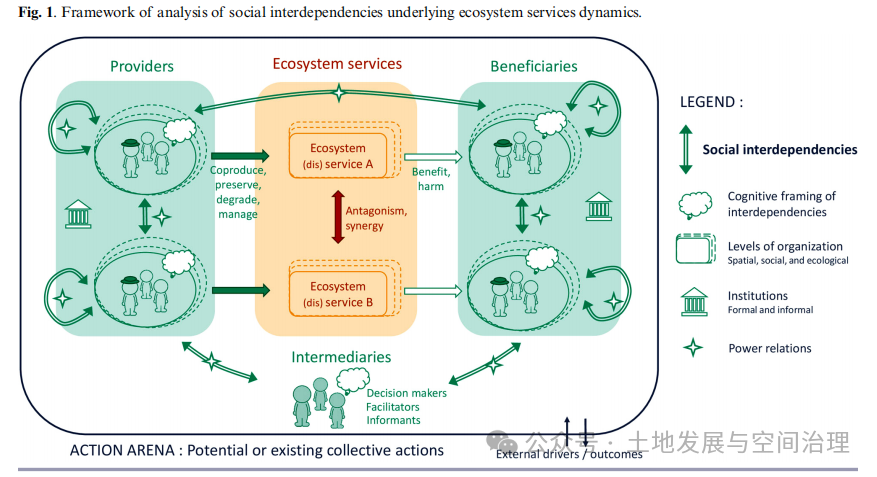
Figure 1. Analysis Framework of Social Interdependencies Behind the Dynamics of Ecosystem Services
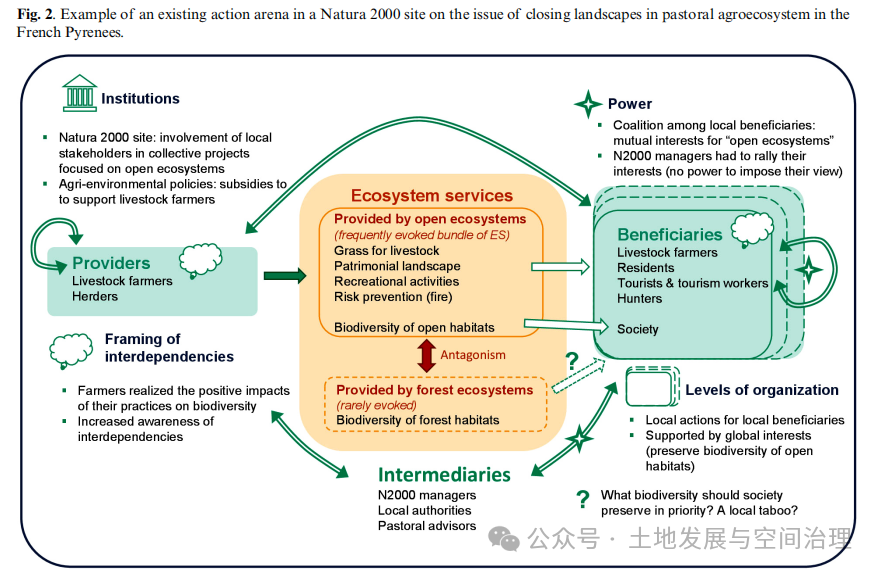
Figure 2. Example of Existing Action Arena Regarding the Closed Landscape Issues of Agricultural Ecosystems in the French Pyrenees within Natura 2000 Sites
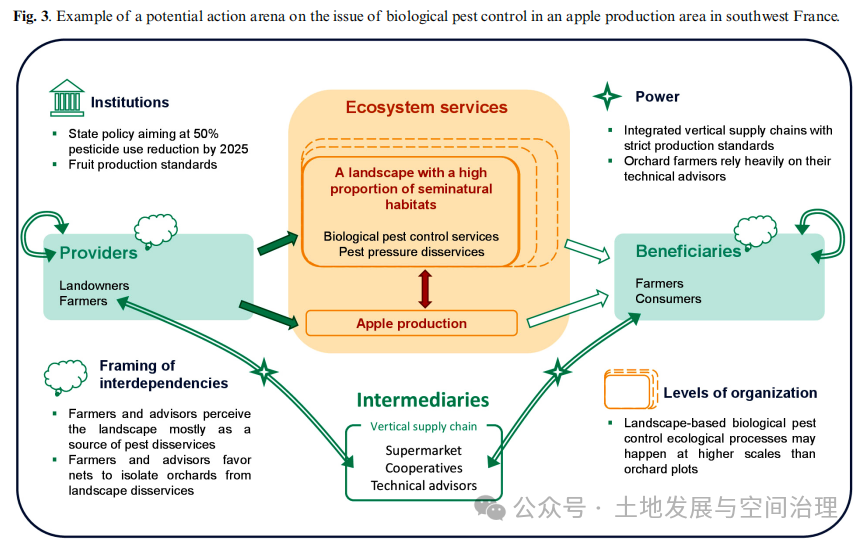
Figure 3. Example of Potential Action Stage for Biological Pest Control Issues in the Apple Production Area of Southwestern France
3. Research Conclusions
This research fills the gap in the study of collective action mechanisms in ecosystem service governance by constructing an integrated framework, clarifying the unique value of the perspective of ecosystem services in revealing hidden social interdependencies. Compared to traditional natural resource management that focuses on interactions among resource users, the concept of ecosystem services can identify more cross-entity and cross-scale social connections, providing new entry points for initiating collective action.
The study finds that the identification and recognition of social interdependencies are core prerequisites for promoting collective action: if stakeholders fail to perceive their dependencies on each other, it is difficult to invest time and energy in cooperation. However, through cognitive guidance and participatory tools within the framework, entities’ awareness of interdependencies can be effectively enhanced, thereby promoting the initiation and deepening of collective action. The application of the framework has dual pathways: in analytical research, tools such as stakeholder analysis and power analysis can be used to analyze the social dependencies and collective action potential related to ecosystem services in specific regions; in participatory action research, methods such as peer modeling can be combined to transform the framework into practical tools that support stakeholders in jointly designing ecosystem service management schemes.
The research also points out that the framework has significant application value in agricultural ecological transitions and biosphere reserve management: the landscape-scale collaboration required for agricultural ecological transitions can be promoted by identifying the dependencies among land users through the framework; the multi-entity governance of biosphere reserves can utilize the framework to integrate various interests, achieving a balance between protection and development. Finally, the research emphasizes that in the face of global environmental challenges such as climate change and biodiversity loss, the interconnections of human society are becoming increasingly prominent. Although collective action faces challenges in cross-scale coordination, its potential in ecosystem service governance is worth further exploration, and future research should test and refine the framework in more diverse social-ecological contexts.
4. Article Interpretation
The core contribution of this research lies in breaking through the traditional dual perspective of “market-government” dominance in ecosystem service governance by incorporating the often-overlooked mechanism of collective action into the analysis. Through the mediating role of social interdependencies, it builds a theoretical bridge between ecosystem services and collective action, providing a new path for ecological governance that combines theoretical depth with practical value.
From a theoretical perspective, the study’s classification of three types of social interdependencies and four-dimensional analysis refines the influencing factors of collective action, responding to the complexity characteristics of social-ecological systems. For example, the inclusion of power relations can explain why collective action is difficult to advance in some ecosystem service management contexts, such as the lack of voice for vulnerable farmers in the formulation of production standards, which leads to their difficulty in actively participating in pest control cooperation. The analysis of organizational levels reveals issues of scale mismatch, such as farmers often managing at the farmland scale while pest control ecological processes require landscape-scale support. This mismatch directly constrains the advancement of agricultural ecological innovation. These analytical dimensions not only improve the theoretical system of ecosystem service governance but also provide a clear analytical framework for subsequent related research.
From a practical perspective, the participatory pathways proposed by the research are highly operable, effectively linking theory and practice. For instance, role-playing games can help non-expert stakeholders intuitively understand the connections between ecosystem services and social dependencies, avoiding barriers to knowledge transfer in traditional expert-led models. The collective modeling process can integrate scientists’ ecological process knowledge with local stakeholders’ practical experiences, ensuring that the designed ecosystem service management schemes are both scientifically sound and aligned with local needs. Furthermore, the research’s attention to negative ecosystem services reflects its rigor, differing from previous studies that only emphasize the positive values of ecosystem services. By incorporating negative services, the framework more comprehensively reflects the conflicts of interest within social-ecological systems, providing a basis for conflict mediation and equitable governance—for example, the conflict between wolf protection and livestock development can be addressed by identifying the dependencies between beneficiaries (environmentalists) and providers (herders) to build a negotiation platform for seeking balanced solutions.
The research uses biosphere reserves as a practical case, not only validating the applicability of the framework but also providing new tools for governance scenarios involving multiple entities and objectives. However, the research still has areas for expansion: in the context of globalization, how to apply this framework to coordinate distant, multi-cultural stakeholders in cross-regional and cross-national ecosystem service governance requires further empirical exploration. Additionally, differences in stakeholders’ perceptions of social dependencies across different cultural backgrounds may also affect the framework’s application effectiveness, necessitating research in more cultural contexts in the future.
Translation may inevitably contain errors; feedback and corrections are welcome. For copyright issues, please contact for removal.