
Abstract: With the advancement of smart city construction and the popularity of connected consumer electronics, sensors have become an indispensable foundational component of smart buildings.
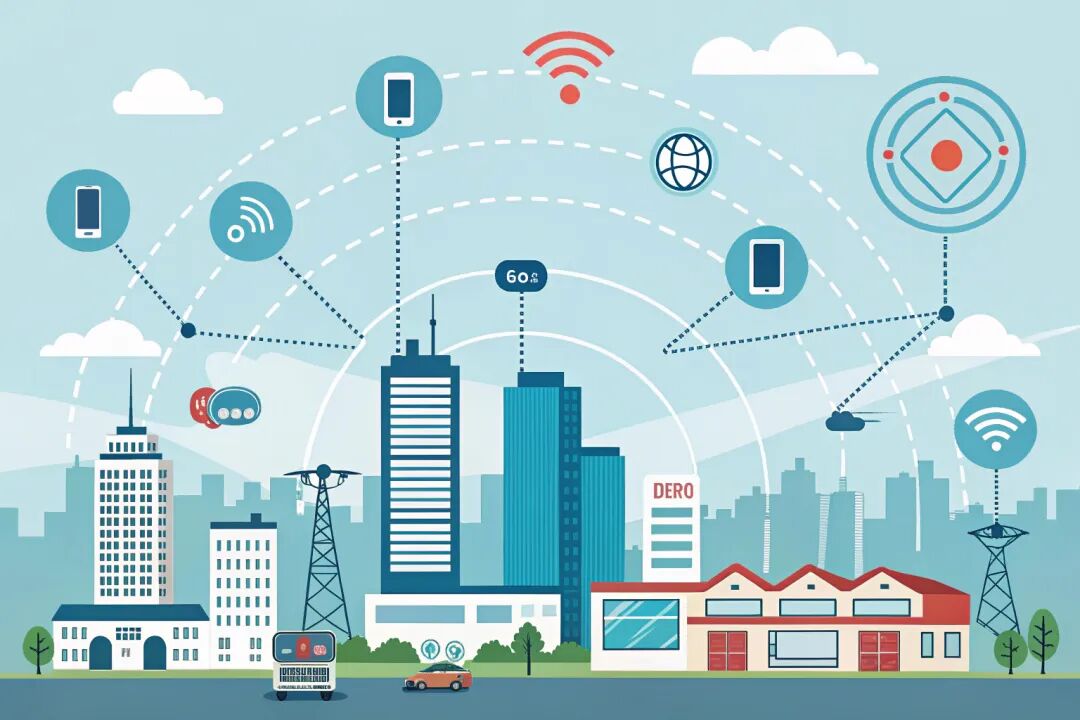
In recent years, significant progress has been made in building energy management. For a long time, optimizing energy consumption without sacrificing occupant comfort or system performance has been a daunting and time-consuming challenge. Today, the emergence of smart building technology allows energy management to seamlessly connect with Internet of Things (IoT) nodes, enabling automation and intelligent adjustments, thus accelerating industry transformation.
From Passive to Active: The Evolution of Energy Management
Traditional energy management strategies primarily rely on passive control, often focusing on optimizing building envelope structures or system design. For example, facility managers consider the direction and intensity of sunlight when installing windows to maximize natural heating in winter. Early monitoring systems had limited functionality, requiring manual input and completely relying on human intervention.
In contrast, predictive approaches integrate historical and real-time data to make intelligent, data-driven decisions while ensuring occupant comfort and system health. Modern sensors can monitor multidimensional indicators such as air quality, occupancy, humidity, heat exchange, and energy consumption. When readings approach set thresholds, artificial intelligence combined with the IoT ecosystem can automatically trigger condition-based responses for more efficient management.
As smart city construction progresses and connected consumer electronics become widespread, sensors have become an indispensable foundational component of smart buildings.
Transitioning to Predictive Energy Management
The rise of smart building technology has sparked interest among various stakeholders and created new value. Experts predict that the global energy management market will grow from $11.3 billion in 2025 to $16.3 billion in 2029, with a projected compound annual growth rate (CAGR) of 9.68%, and residential penetration is expected to reach 30.4%.
This growth is driven not only by regulatory pressures for sustainability and carbon reduction but also by owners’ urgent demand for improved energy efficiency. In the context of the green energy transition, the U.S. Department of Energy warns that by 2030, the frequency of power outages could increase by 100 times. If energy demand continues to exceed supply, electricity prices will rise, providing direct economic incentives for upgrading building energy systems.
The Advantages of Smart Sensors
Sensors have a wide range of applications and can track nearly all environmental variables, enabling interconnectivity with various building systems. Unlike many traditional tools that are limited to specific operating systems or require complex adjustments, sensors offer high interoperability.
This technology not only overcomes the limitations of programming and fixed schedules but also optimizes automatically based on real-time conditions. Research shows that sensors combined with artificial intelligence systems can reduce energy consumption by up to 30% and operational costs by 20%. More importantly, as time goes on, AI systems continuously learn and optimize, improving the accuracy of predictions and responses.
Smart automation can also detect and resolve issues in advance. For example, if debris accumulates in HVAC ducts, sensors can record anomalies days or even weeks before operators notice, allowing for early intervention, thus extending equipment lifespan and reducing maintenance costs.
Predictive Analytics Driving Sustainability
Smart building technology can predict electricity usage and monitor environmental conditions, allowing for more accurate assessments of the renewable energy capacity required for HVAC, lighting, plumbing, and security systems.
Through real-time data collection and artificial intelligence analysis, facility managers can gain more refined visual insights, translating them into actionable plans that enhance decision quality.
The Value of Predictive Maintenance
Building equipment supported by machine learning can predict maintenance needs by tracking system operating conditions. For instance, if the HVAC unit operates at excessively high temperatures or shows abnormal energy efficiency metrics (kW/t), early warnings can be issued. By monitoring subtle changes, issues can be prevented from escalating into costly repairs.
Keeping assets in optimal condition not only extends their lifespan but also enhances energy efficiency. The U.S. Environmental Protection Agency (EPA) states that through optimized maintenance, building electricity consumption can be reduced by up to 30% without affecting occupant comfort.
Common Misconceptions in Energy Management
-
Simply collecting energy data does not lead to energy savings: The real value lies in analyzing the data to identify patterns and develop optimization strategies.
-
Sub-metering does not automatically guarantee energy savings: It only yields benefits when part of a comprehensive energy management strategy combined with effective action plans.
-
The misconception that sub-metering is too costly: When combined with regular analysis, visualization tools, and actionable insights, the energy savings and cost reductions can offset the initial investment.
-
The misunderstanding that sub-metering is merely a passive tool: Supported by a systematic approach and cloud-based analytics platforms, sub-metering is an active component of energy optimization, capable of real-time monitoring and identifying improvement opportunities.
Overcoming Implementation Challenges
Research shows that reasonable sensor configurations can improve predictive performance by 76%. Therefore, when developing implementation strategies, managers must carefully consider the number of sensors, installation locations, and flexibility to ensure data accuracy and reliability.
However, IoT systems commonly face challenges related to data security and technical support. Continuously updated regulations have prompted device manufacturers to enhance cybersecurity and lifecycle support. Yet, operators still need to follow best practices, such as changing default credentials and timely updating systems.
Moreover, the complexity of system integration often becomes an implementation barrier. While professional installation can ensure accurate readings, it is more costly than self-built solutions, requiring a balance between budget and long-term benefits.
Upgrading Smart Sensors in Residential Settings
Smart sensors are gradually entering households. Experts predict that the smart home market will grow from $630 billion in 2025 to $1.4943 trillion in 2032. Whether it’s thermostats, garage doors, security systems, or irrigation systems, ready-to-use solutions are rapidly proliferating, significantly lowering the usage threshold for homeowners.
In residential settings, homeowners’ primary tasks are to complete node deployment and daily maintenance. Once successfully connected, smart building technology can handle most energy optimization and comfort adjustment tasks.
Smart Buildings Driving Positive Change
Through real-time monitoring and predictions via smart building systems, building energy efficiency can be continuously optimized, thereby reducing energy consumption, lowering utility bills, and cutting carbon emissions. With the rapid development of the smart technology industry, a plethora of cost-effective, plug-and-play solutions have emerged, making the intelligent transformation of building energy management an attainable reality.
Source: Qianjia Network