Last week, there were several significant acquisition cases in the semiconductor industry. The acquisitions by SMIC and Huahong are essentially about acquiring their joint venture assets to enhance performance, which does not strictly count as external mergers and acquisitions. The acquisition of Chipone by Chipright is the largest case in the IC design field recently. Based on the latest information, the significance of Chipright’s acquisition of Chipone Technology (referred to as “Chipone”) is not just an ordinary corporate merger but a major milestone concerning the RISC-V ecosystem in China.
The RISC-V CPU market is in a rapid growth phase, with its overall share still significantly lower than that of X86 and ARM. However, a leading pattern has already formed, with the global market share roughly as follows (2024):
-
SiFive: 15.3%, an American company and one of the initiators of the RISC-V ecosystem.
-
Andes (Aisino Technology): Approximately 12%, a Taiwanese company supporting the RVA23 specification.
-
Chipone Technology: Over 10%, acquired by Chipright, leading in automotive and AI scenarios.
-
StarFive: Approximately 8%, a Chinese company and partner in Alibaba’s Tsinghua Unigroup ecosystem.
-
Cortus, Codasip: <5%, small to medium-sized IP vendors in Europe.
In summary, SiFive and Andes dominate global IP licensing, while Chipone and Alibaba’s Tsinghua Unigroup represent China’s rise, with the Asia-Pacific market becoming the main battleground for the RISC-V ecosystem.
Returning to the Chinese market, there are strictly speaking three RISC-V ecosystem alliances.
1. The CRVA Alliance led by the Chinese Academy of Sciences (CAS).
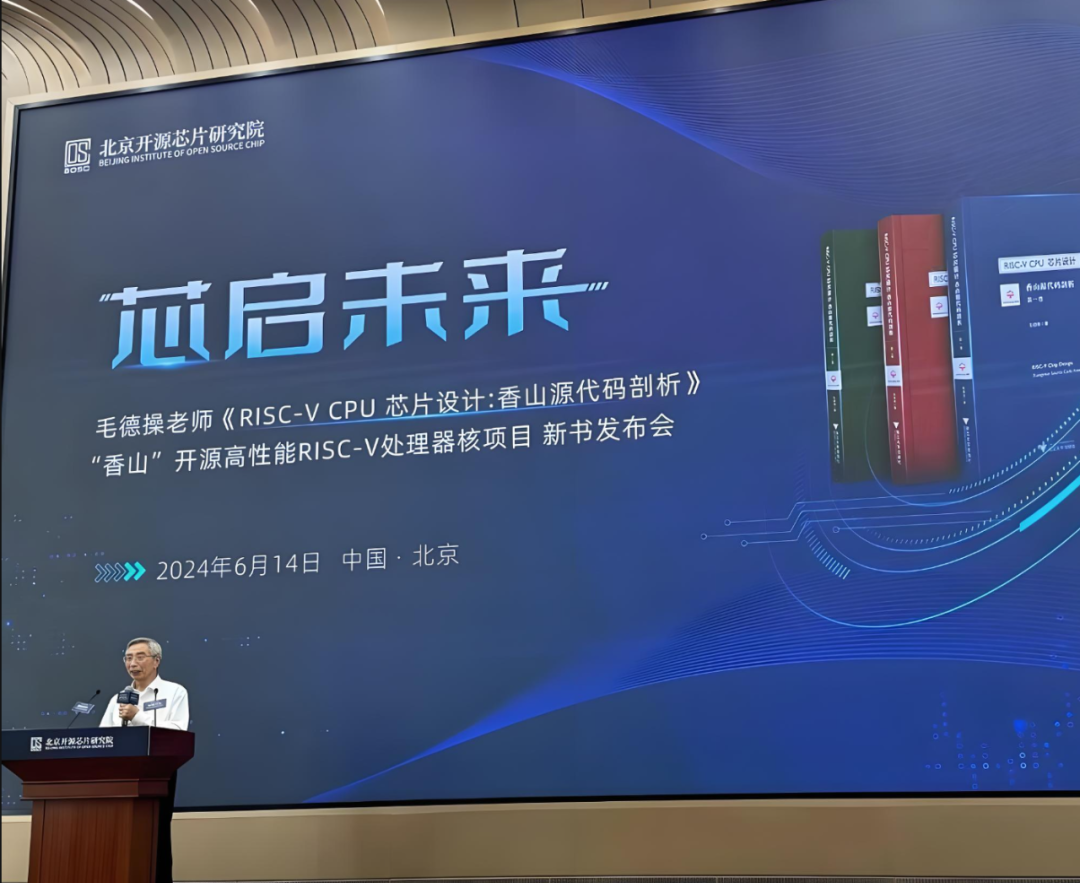
Academician Ni Guangnan leads the RISC-V Alliance established by the Institute of Computing Technology of the CAS, which includes over 20 universities/research institutes and companies like Alibaba, Baidu, and SMIC. The goal is to make RISC-V a sustainable and evolving “Chinese version” of the instruction set, addressing issues of standards, toolchains, and talent cultivation, with open-source repositories, teaching courses, and local government sub-centers (Zhuhai, Hefei, etc.).
The CAS’s demand is for self-control, as even if the instruction set is open-source, microarchitecture patents, compilers, and debugging tools may still be subject to external control. Therefore, they are collaborating with universities, large enterprises, and ministries to develop “Chinese version” extended instructions, toolchains, and teaching materials to ensure that critical areas are under their control.
The CAS system has formed a three-tier structure in the RISC-V field:
1. Research institutes (source technology)
The Institute of Computing Technology, CAS: Leading the “Xiangshan” series of open-source high-performance RISC-V cores (Nanhai/Kunming Lake).
The Institute of Software, CAS: The “Aolai” RISC-V native operating system, has released openEuler/OpenHarmony RISC-V distributions.
The Aerospace Information Innovation Research Institute: Participating in toolchain and cross-layer optimization framework development.
2. Open-source carriers (technology transformation and incubation)
Beijing Open Source Chip Research Institute (referred to as “KX Institute”): Positioned as the productization and commercial distribution agency for “Xiangshan” results, with over 10 chip companies developing their own SoCs based on “Xiangshan” IP.
3. Industrial companies (external implementation)
CAS Wuxi, Ruisi Xinke, CAS Haixin, Aolai Software, CAS Yushu, CAS Yuhua, CAS (Zhuhai) Chuangxin, etc.
2. The CRVIC Alliance led by Chipright.
The China RISC-V Industry Alliance (CRVIC) founded by Chipright has over 300 member units, mainly consisting of IP/chip companies, system manufacturers, and investment institutions, aiming to turn RISC-V into a marketable product and address patent, mass production, and market issues.
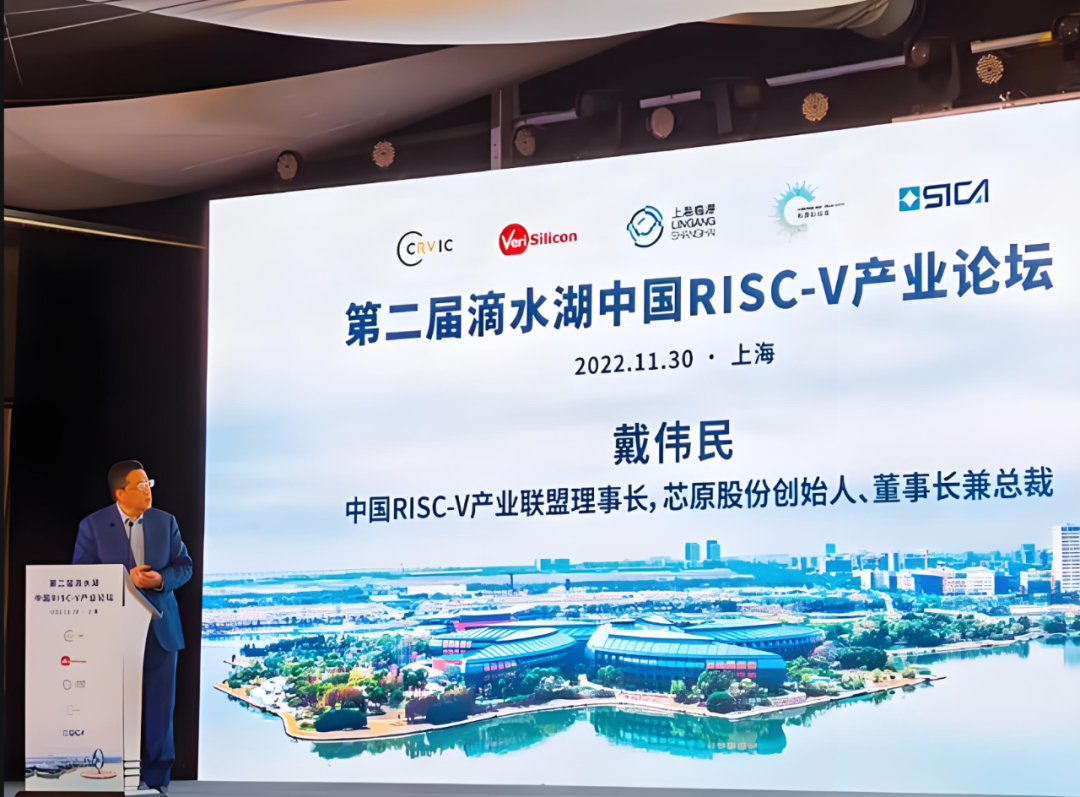
Shanghai hopes to replicate the “ARM + TSMC” model: treating RISC-V as a commercial IP to sell, quickly generating tax revenue and exports. Chipright itself is a commercial IP supplier that needs the alliance to help attract customers, build an ecosystem, and establish a patent pool, thus CRVIC inherently has a “business model”. Since Chipright does not have a national-level status, although the Shanghai municipal government is involved in endorsement, this is a more commercialized IP plaza alliance, which some refer to as a “patent non-litigation alliance”.
3. The Wu Jian Alliance led by Alibaba’s Tsinghua Unigroup (Damo Academy Semiconductor).
Surrounding Alibaba’s upstream supply chain, there are over 60 signed partners, each taking on a “mass production” role in Alibaba’s RISC-V chain. The goal is to transform RISC-V from “usable” to “marketable”, focusing on a complete production line from “chip-board-machine-application”.
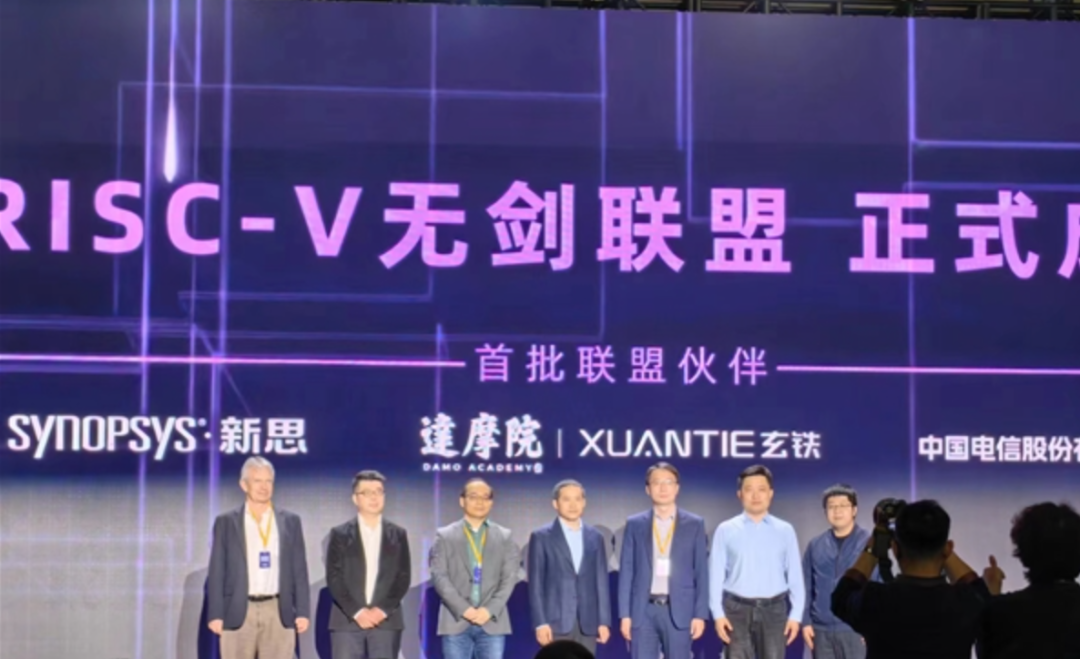
The main members and divisions in Alibaba’s alliance are:
-
IP/EDA: Tsinghua Unigroup (Xuan Tie IP core + Wu Jian SoC platform), Chipright (GPU/interface IP).
-
Wafer: SMIC, Huahong, TSMC Nanjing.
-
OS/software: Alibaba Cloud (AliOS-Things), OpenHarmony (Runhe Software), Institute of Software, CAS.
-
Board/machine: State Grid NARI, Jingwei Hengrun, Inspur, Huaqin, BYD Electronics.
-
Scenario customers: Haier Smart Home, BYD Auto, Hikvision, SF IoT, Cainiao Logistics.
This alliance can be seen as a “commercial community” led by Alibaba, essentially Alibaba’s own “specialty store”.
The domestic RISC-V CPU track can be viewed as a competition between Alibaba and Chipone (now Chipright), but their positioning is different; Alibaba focuses on “big cores + ecosystem”, while Chipright focuses on “small cores + IP supermarket”.
Previously, Chipright mainly provided non-CPU IP in the RISC-V field (such as GPU, NPU, interface IP), while Chipone had a mature commercial RISC-V CPU IP full matrix (N/U/NX/UX general series + NS/NA/NI specialized series), covering embedded to high-performance scenarios. After the acquisition, Chipright will become the only RISC-V supplier in China with both CPU and non-CPU IP full-stack capabilities, providing “one-stop chip design services”, directly competing with ARM’s Cortex + Mali combination.
Moreover, Chipright’s advanced process IP below 14nm complements Chipone’s mature process CPUs above 28nm, covering the full process requirements from automotive MCUs to AI acceleration chips. After the merger, Chipright will simultaneously hold the “standard-setting rights” and “core IP supply rights”, similar to ARM’s role in the mobile ecosystem.
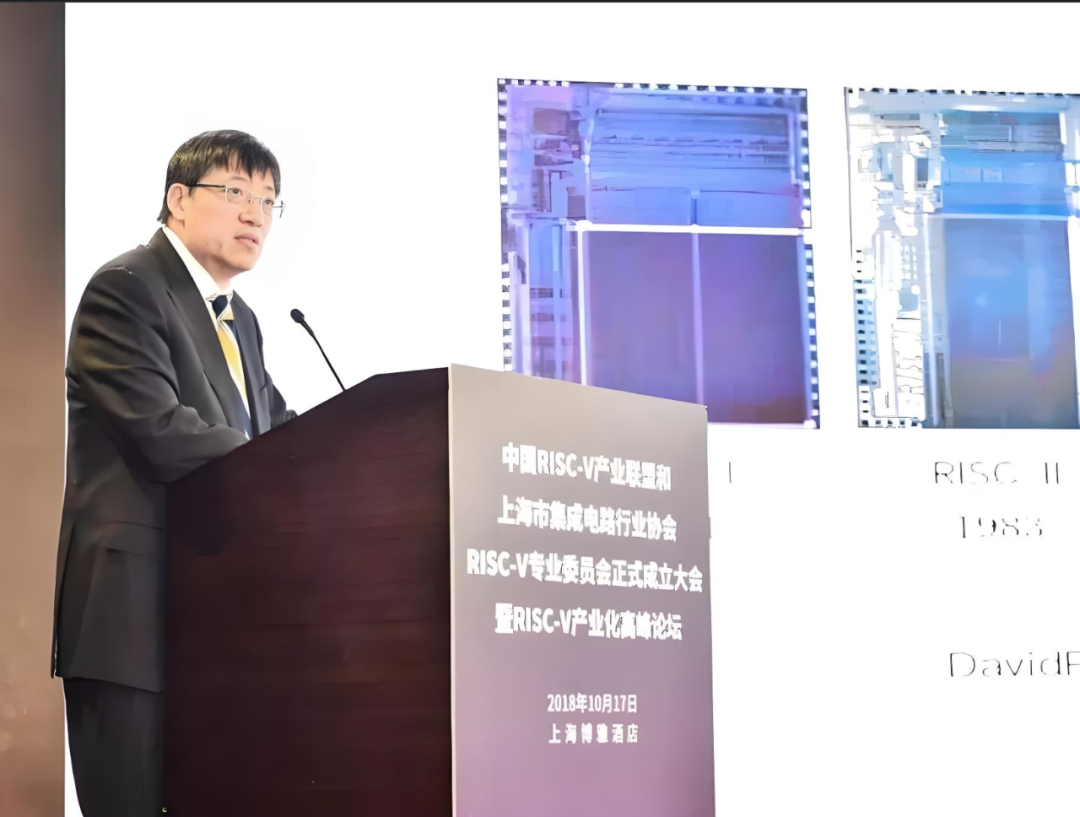
The Chinese RISC-V IP market previously exhibited a bipolar competition between Chipone (CPU IP) and Tsinghua Unigroup (high-performance cores). After the acquisition, the Chipright + Chipone alliance will form a “dual oligopoly” with Alibaba’s Tsinghua Unigroup, squeezing the survival space of small and medium-sized IP vendors. This is an unavoidable outcome; the strong will continue to grow stronger, which is the main theme of this era.
Chipright’s customer structure has undergone significant changes in 2024. In the first half of 2024, non-traditional IC customers such as system manufacturers, internet giants, cloud service providers, and automotive companies contributed 37.2% of revenue. Start-up chip design companies are still within the service scope, but their proportion is declining year by year, with their share of revenue dropping from over half in earlier years to less than 30%. The company is directing more resources towards “high computing power, advanced processes, and advanced packaging” projects, which are typically led by large system manufacturers/internet companies.
Comparing the future outcomes of Chipright and Alibaba, Chipright has scale and ecological advantages in the IP supermarket and custom foundry dimensions, while Damo Academy holds a technological high ground in CPU cores and cloud scenarios. Currently, both parties are misaligned, but by 2026, they will collide head-on in automotive SoCs and data center CPUs, with the outcome depending on who can first complete the ecological closed loop.
Alibaba’s weakness also stems from its strength; other internet giants are unlikely to adopt its solutions, meaning that like Google’s GPUs, it is essentially self-sufficient, leaving Chipright with vast imaginative space.
Setting aside those abstract stories, Chipright’s ecological position in RISC-V has indeed undergone a qualitative leap through this acquisition. After the merger, Chipright will become the only RISC-V supplier in China with both CPU and non-CPU IP full-stack capabilities, while simultaneously holding “standard-setting rights” and “core IP supply rights”, similar to ARM’s role in the mobile ecosystem. Chipright may have the potential to replicate ARM’s rise in the mobile sector, challenging the global definitions of RISC-V IP and chip customization services.