PCB Circuit Board Parameters
1. Dielectric Constant (DK Value): This typically indicates the ability of a material to store electrical energy. The smaller the DK value, the less energy it can store, and the faster the transmission speed.
2. Glass Transition Temperature (TG): When the temperature rises to a certain range, the substrate transitions from a “glass state” to a “rubber state”. This temperature point is referred to as the glass transition temperature (Tg) of the board. Tg is the maximum temperature (°C) at which the substrate maintains its “rigidity”.
3. Comparative Tracking Index (CTI): This indicates the quality of insulation. A higher CTI value means better insulation.
4. Thermal Decomposition Temperature (TD): This is an important indicator of the heat resistance of the board material.
5. Coefficient of Thermal Expansion (CTE) – Z-axis: This reflects the thermal expansion characteristics of the board material. A smaller CTE value indicates better performance of the material.
PCB Material Knowledge and Standards
Currently, there are various classification methods for copper-clad laminates widely used in China. Generally, they can be classified based on the reinforcing material of the board into five categories: paper-based, glass fiber cloth-based, composite-based (CEM series), multilayer laminated boards, and special material bases (ceramic, metal core, etc.). If classified according to the type of resin adhesive used, common paper-based CCLs include: phenolic resin (XPc, XxxPC, FR-1, FR-2, etc.), epoxy resin (FE-3), polyester resin, and various types. Common glass fiber cloth-based CCLs include epoxy resin (FR-4, FR-5), which is currently the most widely used type of glass fiber cloth-based material.
Additionally, there are other special resins (using glass fiber cloth, polyamide fiber, non-woven fabric, etc. as reinforcing materials): bismaleimide-modified triazine resin (BT), polyimide resin (PI), diphenyl ether resin (PPO), maleic anhydride-imide-styrene resin (MS), polycyanate resin, polyolefin resin, etc. Based on the flame retardant properties of CCLs, they can be divided into flame-retardant types (UL94-V0, UL94-V1) and non-flame-retardant types (UL94-HB). In recent years, with increasing attention to environmental issues worldwide, a new type of bromine-free flame-retardant CCL has emerged, commonly referred to as “green flame-retardant CCL”. With the rapid development of electronic product technology, the requirements for CCLs have also become higher.
Therefore, based on the performance classification of CCLs, they can be divided into general performance CCLs, low dielectric constant CCLs, high heat-resistant CCLs (generally above 150°C), and low thermal expansion coefficient CCLs (commonly used in packaging substrates). As electronic technology continues to develop and advance, new requirements for PCB substrate materials are constantly being proposed, thus promoting the continuous development of copper-clad laminate standards. Currently, the main standards for substrate materials are as follows:
1. National Standards: The national standards related to substrate materials in China include GB/T4721—47221992 and GB4723—4725—1992. The standards for copper-clad laminates in Taiwan are based on the CNS standards, which were developed based on the Japanese JIS standards and released in 1983.
2. International Standards: These include Japan’s JIS standards, the USA’s ASTM, NEMA, MIL, IPC, ANSI, UL standards, the UK’s BS standards, Germany’s DIN, VDE standards, France’s NFC, UTE standards, Canada’s CSA standards, Australia’s AS standards, the former Soviet Union’s FOCT standards, and international IEC standards. Common suppliers of PCB design materials include Shengyi, Jiantao, and others.
PCB materials are classified by brand quality level from low to high as follows: 94HB-94VO-CEM-1-CEM-3-FR-4
The specific parameters and uses are as follows:
94HB: Ordinary paperboard, not flame-retardant (lowest grade material, cannot be used for power boards)
94V0: Flame-retardant paperboard (can be punched)
22F: Single-sided semi-glass fiber board (can be punched)
CEM-1: Single-sided glass fiber board (must be drilled with a computer, cannot be punched)
CEM-3: Double-sided semi-glass fiber board (the lowest grade material for double-sided boards, simple double-sided boards can use this material, which is 5-10 yuan/m² cheaper than FR-4)
FR-4: Double-sided glass fiber board
1. The classification of flame-retardant properties can be divided into four types: 94VO-V-1-V-2-94HB.
2. Prepreg: 1080=0.0712mm, 2116=0.1143mm, 7628=0.1778mm.
3. FR4 and CEM-3 both refer to board materials; FR4 is glass fiber board, and CEM3 is composite board.
4. Halogen-free refers to substrates that do not contain halogens (such as fluorine, bromine, iodine, etc.) because bromine produces toxic gases when burned.
5. Tg is the glass transition temperature, which is the melting point.
6. Circuit boards must be flame-resistant and should not burn at certain temperatures, only softening. This temperature point is called the glass transition temperature (Tg), which relates to the dimensional durability of the PCB.
What is High Tg? Advantages of Using High Tg PCBs
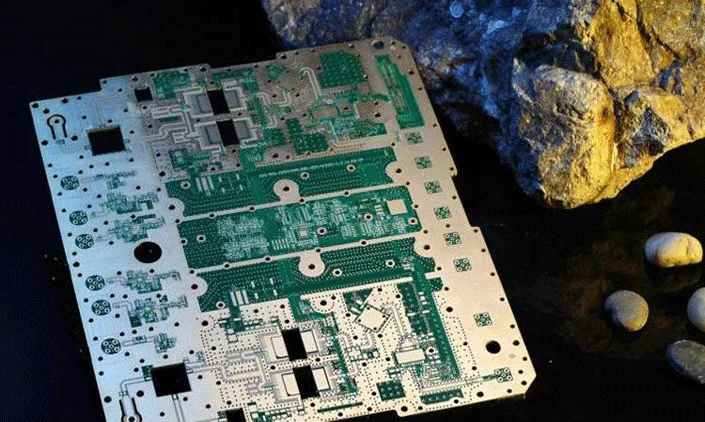
High Tg refers to high heat resistance. When the temperature of a high Tg PCB reaches a certain threshold, the substrate transitions from a “glass state” to a “rubber state”. This temperature is referred to as the glass transition temperature (Tg) of the board. Tg is the maximum temperature (°C) at which the substrate maintains its rigidity. Under high temperatures, ordinary PCB substrate materials tend to soften, deform, and melt, which also leads to a sharp decline in mechanical and electrical properties, affecting the product’s lifespan. Typically, Tg for materials is above 130°C, high Tg is usually above 170°C, and medium Tg is around 150°C; PCBs with Tg ≥ 170°C are referred to as high Tg PCBs. As the Tg value increases, the heat resistance, moisture resistance, chemical resistance, and stability of the circuit board improve. The higher the Tg value, the better the temperature resistance of the material, especially in lead-free processes where high Tg applications are more common.
With the rapid development of the electronics industry, especially in products represented by computers, there is a trend towards higher functionality and multilayer designs, necessitating higher heat resistance in PCB substrate materials. The emergence and development of high-density mounting technologies represented by SMT and CMT have made it increasingly reliant on the support of high heat resistance in PCB substrates for small apertures, fine line designs, and thin profiles.
Therefore, the differences between standard FR-4 and high Tg materials are significant, especially under high temperatures and after moisture absorption. Their mechanical strength, dimensional stability, adhesion, water absorption, thermal decomposition, and thermal expansion characteristics differ, with high Tg products being significantly superior to standard PCB substrate materials.
What Are the Important Parameters of High-Frequency PCBs?
The dielectric constant (Dk) of high-frequency circuit board substrates must be low and stable; generally, the lower, the better. The signal transmission speed is inversely proportional to the square root of the material’s dielectric constant, and a high dielectric constant can cause signal transmission delays.
The dielectric loss (Df) of high-frequency circuit board substrates must be low, as this primarily affects the quality of signal transmission. A lower dielectric loss results in less signal loss.
The impedance of high-frequency circuit boards refers to the parameters of resistance and reactance. Since PCB circuits must consider the installation of electronic components, the conductivity and signal transmission performance after installation must be optimized, thus requiring lower impedance.
The water absorption of high-frequency circuit board substrates must be low; high water absorption can lead to changes in dielectric constant and dielectric loss when exposed to moisture.
To meet the signal integrity requirements of different applications, PCBs must not only test S-parameters and TDR impedance but also analyze the physical properties of the materials themselves, such as dielectric constant and dielectric loss. Accurate dielectric constants not only enable effective design but also ensure that simulation results align more closely with actual product testing outcomes, improving the efficiency of design and development, which is significant for PCB material suppliers and PCB manufacturers.
Disclaimer:This article is copyrighted by the original author and does not represent the views of the association. The articles promoted by the “Jiangxi Province Electronic Circuit Industry Association” are for sharing purposes only and do not represent the stance of this account. If there are any copyright issues, please contact us for removal.