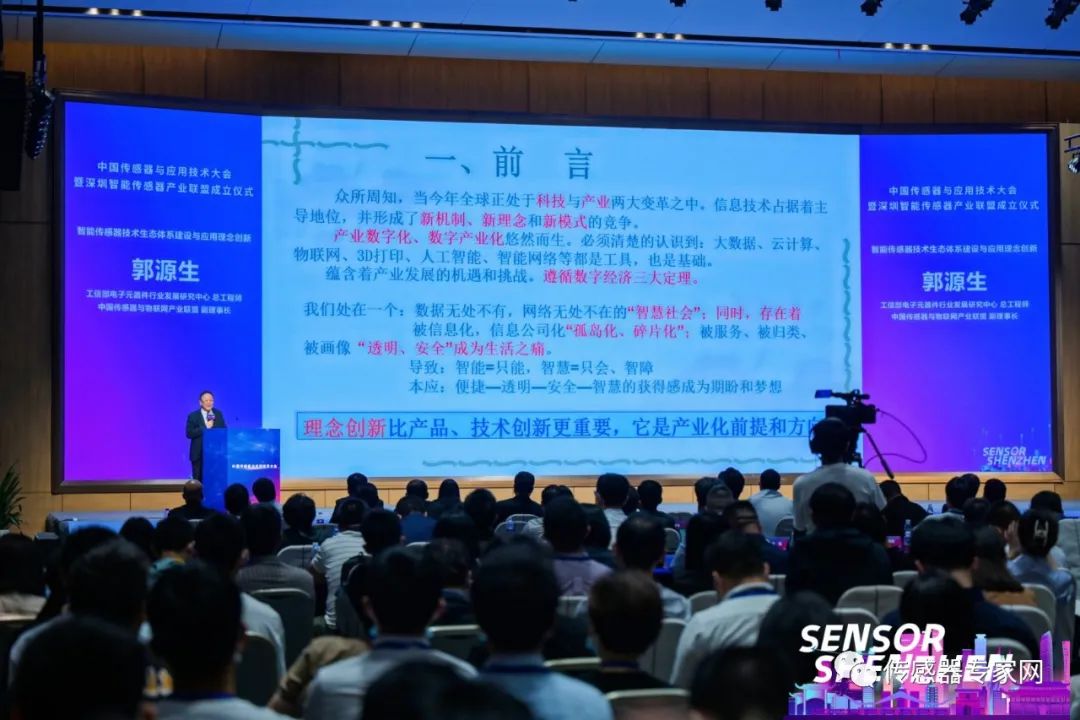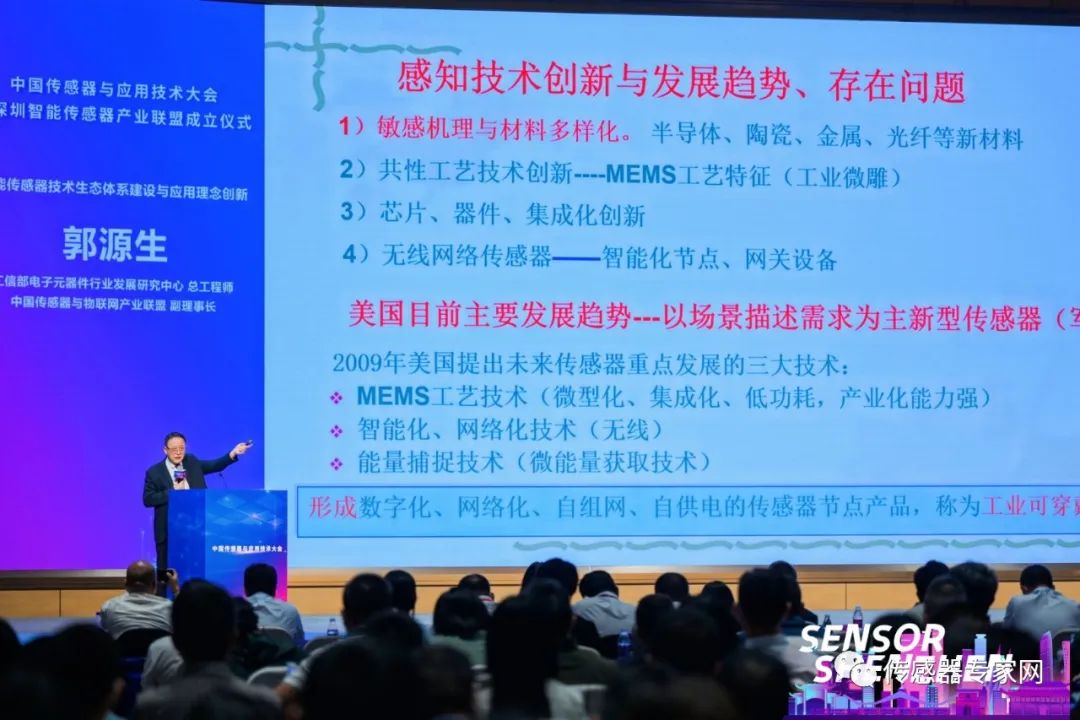
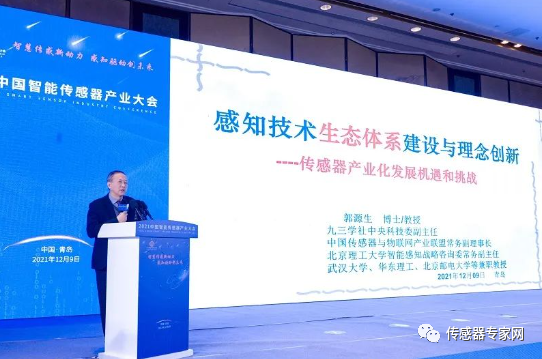
Recently, the first China Sensor and Application Technology Conference was grandly held in Guangming District, Shenzhen. At the conference, Guo Yuansheng, Chief Engineer of the Electronic Components Industry Development Research Center of the Ministry of Industry and Information Technology and Vice Chairman of the China Sensor and Internet of Things Industry Alliance, delivered a speech titled “The Construction of Intelligent Sensor Technology Ecological System and the Innovation of Application Concepts.”
This article is a comprehensive summary of Guo Yuansheng’s related speech. He pointed out that “Without sensitive components, sensor companies have no core technology; without applications, there is no economic benefit.” and “Those who use sensors do not know the manufacturing process of sensors, and those who manufacture sensors do not know the specific applications. This is the biggest problem in the Chinese sensor industry.” These statements reveal the relationship within the industrial chain and the characteristics of industrial development.
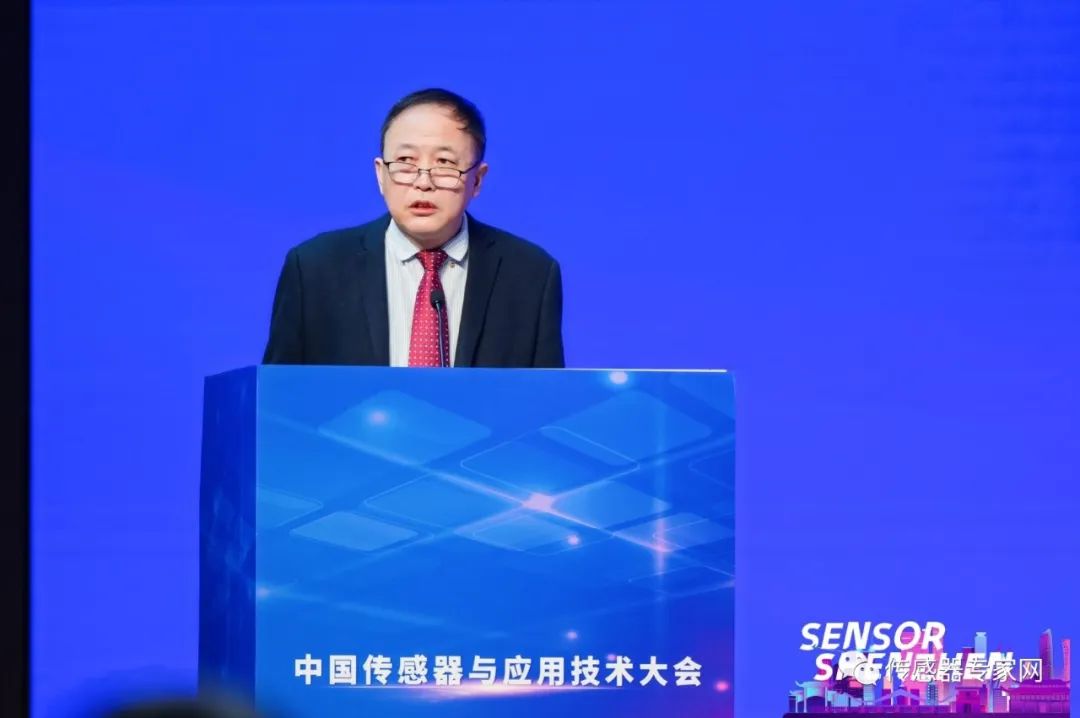 Guo Yuansheng, Deputy Director of the 93rd Central Science and Technology Committee; Chief Engineer of the Electronic Components Industry Development Research Center of the Ministry of Industry and Information Technology; Vice Chairman of the China Sensor and Internet of Things Industry Alliance; Deputy Chairman of the Sensitive Technology Branch of the China Electronics Society; Deputy Director of the National 3D Competition Organizing Committee; Deputy Director of the Strategic Committee of the Sensor Intelligent Technology Innovation Center at Beijing Institute of Technology; Distinguished Professor at Shandong University; Part-time Professor at Wuhan University, East China University of Science and Technology, and Beijing University of Posts and Telecommunications. He is a project review expert for the National Development and Reform Commission, Ministry of Industry and Information Technology, Ministry of Science and Technology, etc.; participated in the compilation and approval of national electronic information plans such as the “White Paper on the Development of China’s Sensor Industry” and the “13th Five-Year Plan for the Development of the Electronic Components Industry in China.”
The Third Wave of Informatization Must Solve Data Collection Issues
China’s industrial development has its unique development trajectory, having gone through three historically significant stages.
The first was before the reform and opening up, characterized by a policy-driven shortage economy, with low industrial scale and capacity levels. The second was a large-scale economic development of manufacturing, quickly leading to overcapacity under capital-driven forces. The third, starting from the 19th National Congress, is the industrial transformation we currently face, including how manufacturing can upgrade, how traditional industries can deeply integrate with the new generation of information technology, and how to ensure sufficient gains for people, focusing on an innovation economy driven by data and numbers.
The development of information technology also has its fixed trajectory. The birth of personal computers in the 1980s digitalized computation, marking the first wave of informatization. The second wave was the arrival of the Internet at the beginning of this century, which infinitely shortened the distance between people through terminals. The third wave started in 2009, marking the era of the Internet of Things. These three waves of informatization form a complete Internet of Things system and constitute the three major pillars of information technology: information collection, information transmission, and information processing.
Moreover, the third wave of informatization primarily aims to address data collection issues. Without solving this problem, the concept of the Internet of Things cannot be discussed.
At the same time, these three waves of informatization have also formed the three major laws of the digital economy, constructing a complete digital economic system. The first wave follows Moore’s Law, the second follows Metcalfe’s Law, and the third follows Davis’s Law, where the first to enter is the first to benefit.
Sensors Are the Mother of Big Data
The development speed of sensors is changing rapidly, with a wide variety of types. It has been suggested that there are over 30,000 types of sensors globally, with about 26,000 commonly used, while our country has around 7,000 types. Our country is a major application country, but not a major manufacturing country for sensors. Approximately 67% of ordinary sensors need to be imported, while over 90% of high-end sensors need to be imported, which is a significant issue.
However, after years of effort, intelligent sensors have become a key research and development focus of the Ministry of Science and Technology, and the project has been approved. How to achieve industrialization and domestic substitution has become a challenge for the industry.
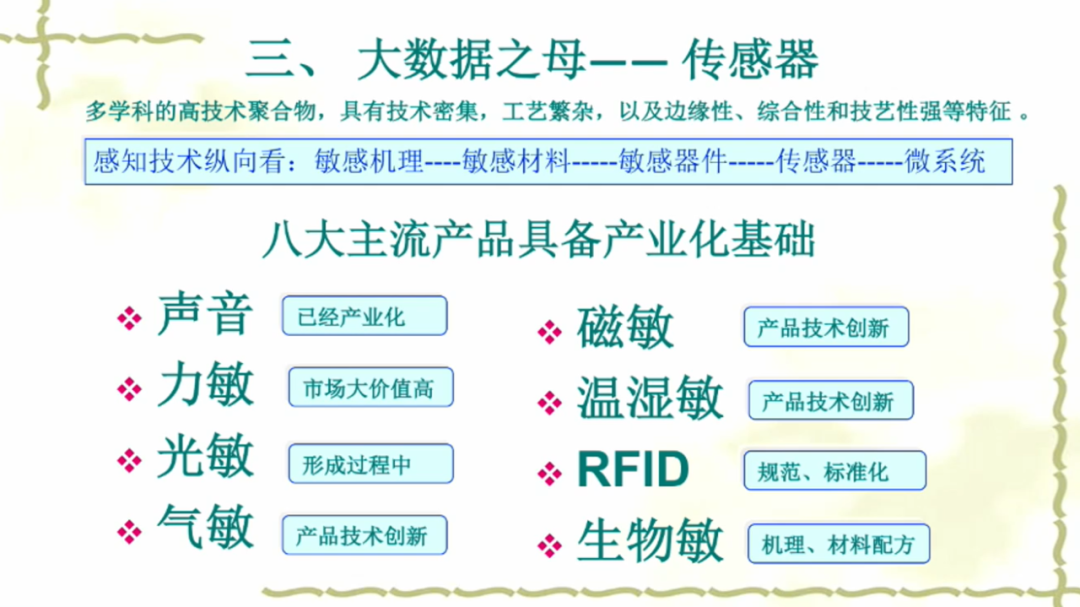
To build a basic common platform, we should form eight common platforms among the eight major sensor types (acoustic, force-sensitive, light-sensitive, gas-sensitive, magnetic, temperature and humidity, RFID, and biological). From the perspective of industrialization concentration, limited resources, and industrial chain structure, all eight major types can be industrialized based on MEMS technology.
Its development can be divided into several levels: the first is the exploration and discovery of sensitive accumulation, requiring theoretical innovation and research; the second is materials; the third is how to turn it into a device; the fourth is to become a complete modular system, and then standardize and regulate it as much as possible for different applications, making industrialization relatively easier.
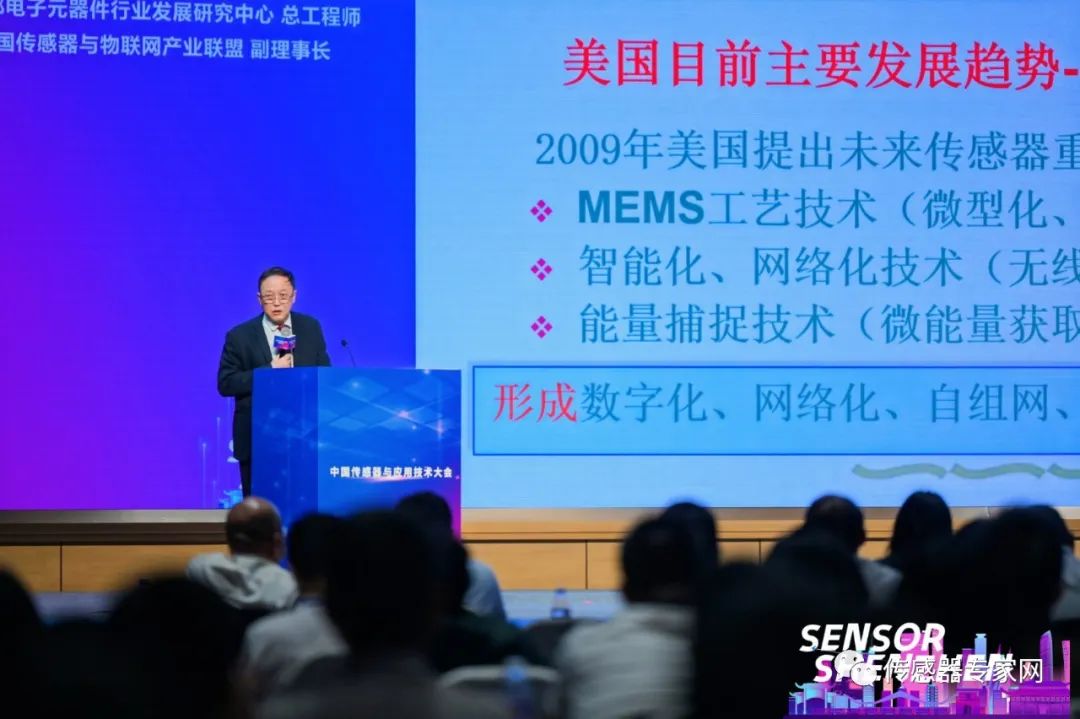
There Are Four Major Trends in International Sensor Development:
First, MEMS technology (miniaturization, integration, low power consumption, strong industrialization capability) has commonality and can support industrialization;
Second, intelligent and networked technologies (wireless) break the bottleneck between production and application;
Third, energy harvesting technologies (micro-energy harvesting technologies);
Fourth, multi-dimensional collaborative scene data description (same object with different information; different objects with the same information; different objects with different information):
In other words, to judge a scene, one cannot rely solely on a single-dimensional sensor; a multi-dimensional comprehensive description is necessary.
Innovation of Concepts Is More Important Than Product and Technology Innovation
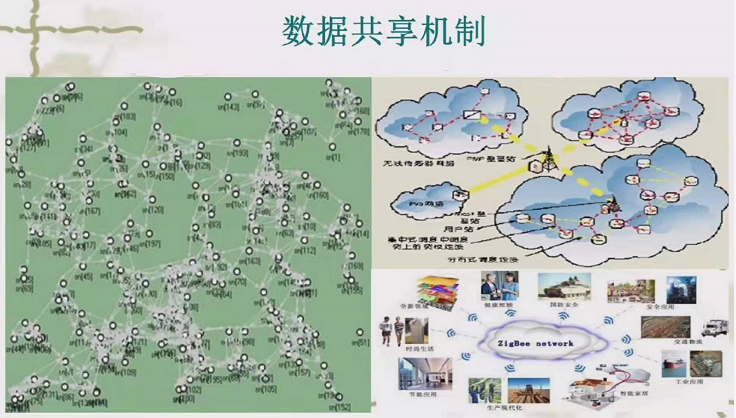
The innovation of concepts is not only based on products and the markets created but must also be realized based on a people-oriented approach.Interests breed monopolies and can drive artificial barriers in the industry, hindering technological innovation, thus requiring the breaking of these barriers and accelerating the formation of data-sharing mechanisms.
How to Innovate Concepts? For example, for smart home terminal prototypes, we must first create a prototype, then optimize engineering design, select functions, and modularize it, transforming it into different products. This is what concept innovation aims to address. We say that transformation and upgrading must shift to a truly people-centered service concept, so this innovation is collaborative, integrated, permeated, and applied.
While innovating concepts, we must also break through resources, technology, and regulatory systems to achieve product innovation. Sensor technology determines the quality of system functions and services, whether flying in the sky or running on the ground; the performance and intelligence level depend not only on how many microprocessors and algorithms are installed but also on how many and what types of sensors are installed.
The Industrialization of Sensors Must Focus on Building a “Dual Ecosystem”
The industrialization of sensors lies in how to build the industrial chain, how to create an industrial ecosystem, how to form industrial clusters, and how to construct an industrial ecosystem. It is necessary to build a dual ecosystem: Ecosystem One: Integrity of the industrial chain, clustering (characteristic industrial chain); Ecosystem Two: Modern service industry, platformization (business environment).
The construction of the industrial system requires a complete design plan to achieve a six-in-one integration of government, industry, academia, research, application, and service. Many local governments do not deeply understand this industrial system; they focus solely on attracting investment without clear plans for subsequent actions. Production is targeted at the industrial chain system, where enterprises build the industrial chain, industries create industrial clusters, and regions develop industrial ecosystems. At the same time, the industrial chain requires collaborative problem-solving, where two fundamental elements must be addressed—physical space and industrial funds.
This requires government promotion and guidance, associations, and alliance organizations to collaborate in service, and corporate groups to actively participate in building product manufacturing technology innovation centers, effectively promoting market development and application, and establishing public service institutions such as testing and standards.
From historical experience, industry development, and the path of international development, the industrialization of sensors is challenging but not impossible. It is an industrial chain and an industrial system, representing two ecosystem systems.
There Are Problems in the Three Layers of IoT Perception, Transmission, and Application Technologies
The IoT’s hierarchical structure consists of the perception layer, transmission layer, and application layer from bottom to top. Guo Yuansheng believes that from the bottom layer, the IoT industry faces issues of technological development and standardization. The top-level design of the sensor industry, including standards and specifications, has not yet been formally established, and there is often no consensus on many issues.
Understanding complex application scenarios, forming norms, and standardizing scene descriptions are essential tasks for achieving upstream and downstream collaboration in the IoT. Only through multi-dimensional parameter settings and standardized descriptions of specific scenarios can corresponding data models be generated and suitable technical routes designed. Determining how to select dimensions and parameters and forming modular products in conjunction with algorithms is key to realizing the industrialization of the IoT perception layer. “Finding the dimensions and computational methods to describe application scenarios is the primary issue for the promotion and application of the IoT,” Guo Yuansheng stated.
At the network layer, building the IoT requires support from technologies such as the Internet, mobile communication networks, and wireless sensor networks. Currently, the construction of 5G networks has largely resolved transmission speed issues at the IoT network layer, enabling low-latency IoT applications; however, costs remain a bottleneck hindering market expansion. Guo Yuansheng stated: “If the cost of 5G data far exceeds what users can bear, then the application of 5G will be very difficult to promote or will encounter significant obstacles.”
 Smart transportation, smart homes, smart retail, smart agriculture… the application scenarios of the IoT are very rich, but due to management segmentation and interests, these data become monopolized resources, exacerbating the issues of isolated applications and fragmented product technologies. Guo Yuansheng cited highway toll booths as an example, believing that the toll scene can be entirely dismantled, enabling unattended and barrier-free passage.
Guo Yuansheng believes that ETC cards and toll barriers are manifestations of the complexity of toll scenes, which not only increase costs but also create obstacles for smooth passage, being neither environmentally friendly nor economical. “Since we have adopted ETC, what is the use of toll barriers?” he stated. If integration of land, air, and sky can be achieved, vehicles would automatically be charged upon entering the highway, generating monthly or single-instance toll bills automatically, thereby thoroughly resolving congestion at highway entrances and making toll scene descriptions more scientific, rational, and humane.
Non-perceptive Governance Enhances Smart City Experience
“98% of people in cities are not targets of urban ‘governance’; what they need more is service.” Guo Yuansheng believes that using sensors, big data computing, and other intelligent means to build smart governance, making people feel ungoverned, will enhance residents’ experience of smart cities.
Smart transportation, smart homes, smart retail, smart agriculture… the application scenarios of the IoT are very rich, but due to management segmentation and interests, these data become monopolized resources, exacerbating the issues of isolated applications and fragmented product technologies. Guo Yuansheng cited highway toll booths as an example, believing that the toll scene can be entirely dismantled, enabling unattended and barrier-free passage.
Guo Yuansheng believes that ETC cards and toll barriers are manifestations of the complexity of toll scenes, which not only increase costs but also create obstacles for smooth passage, being neither environmentally friendly nor economical. “Since we have adopted ETC, what is the use of toll barriers?” he stated. If integration of land, air, and sky can be achieved, vehicles would automatically be charged upon entering the highway, generating monthly or single-instance toll bills automatically, thereby thoroughly resolving congestion at highway entrances and making toll scene descriptions more scientific, rational, and humane.
Non-perceptive Governance Enhances Smart City Experience
“98% of people in cities are not targets of urban ‘governance’; what they need more is service.” Guo Yuansheng believes that using sensors, big data computing, and other intelligent means to build smart governance, making people feel ungoverned, will enhance residents’ experience of smart cities.
 Currently, the phenomenon of “the higher the level of intelligence, the less convenient life becomes” indicates that intelligent methods and concepts have problems to varying degrees. Various so-called “intelligent systems” hinder the mobility of the elderly; patients spend considerable time learning how to use registration and payment devices; individuals must manage multiple bank cards for financial and social security matters; elderly individuals are often confused by various technological products… Technologies that should bring convenience to people’s lives have instead added many obstacles. Guo Yuansheng believes that these are products and technologies designed for management, lacking genuine intelligence and humanity.
Regarding how to break the data island problem, Guo Yuansheng suggested forming city data operators to aggregate big data collected by 5G and Beidou, forming an integrated network framework for logistics, human flow, and information flow, and then distributing the data to different departments according to industry classifications. This clarifies responsibilities and benefits from design, operation, management, service, and safety.
Further Building Industrial Clusters
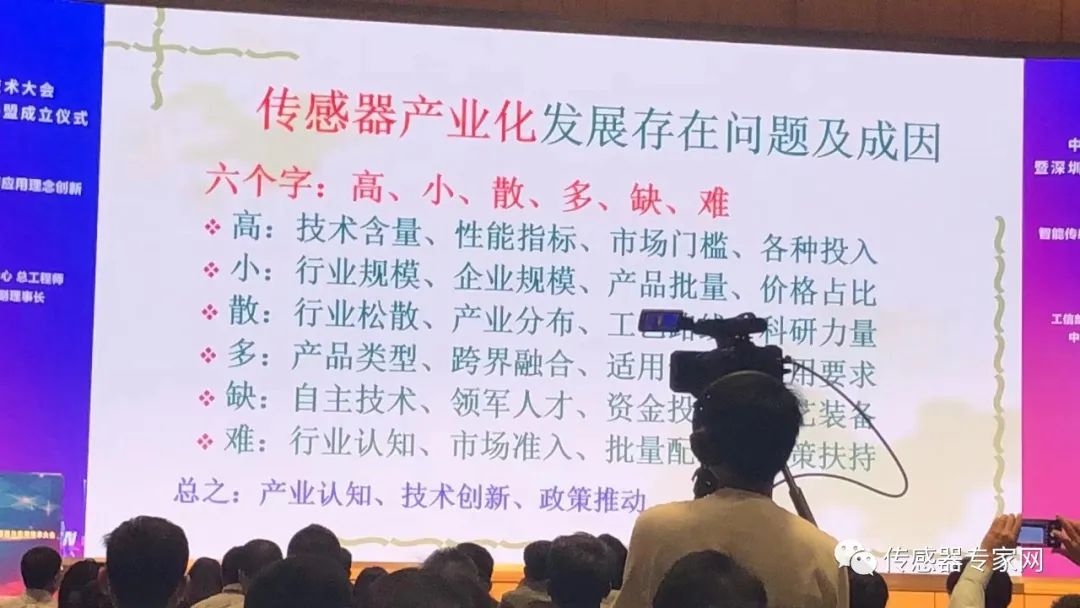
For the current Chinese sensor industry, Guo Yuansheng summarized the issues faced by the industry with six words: high, small, scattered, many, lacking, and difficult. The contradictions between high technical content, high technical indicators, and the scarcity of independent technology, the shortage of leading talents, the loose industrial distribution, the small scale of enterprises, and limited product output are very prominent.
Sensor products are diverse, applicable in various fields, rich in cross-industry integration, and have complex usage requirements. In light of this situation, Guo Yuansheng offered the following advice to enterprises: they must understand the industrial chain and the supply and demand conditions of the upstream and downstream.
“Those who use sensors do not know the manufacturing process of sensors, and those who manufacture sensors do not know specific applications. This is the biggest problem in the Chinese sensor industry.” Guo Yuansheng believes that the biggest obstacle to the industrialization of sensors is the disconnection between product design, production, manufacturing, and usage. Sensor manufacturers must delve into the application end, comprehensively understanding the parameters and performance that products need to achieve.
The sensor industry requires high technical content, high performance indicators, high market entry barriers, and high investment, but it also faces the challenge of a limited variety of products provided by suppliers, small enterprise scales, low product output, and a relatively loose distribution of the industry and research capabilities.
In this context, Guo Yuansheng proposed that enterprises should establish industrial chains, industries should create clusters, and regions should build ecosystems, constructing an integrated industrial ecosystem of government, industry, academia, research, application, and service, strengthening industrial concentration, and helping to solve the problem of single customer orders not supporting suppliers’ profitable mass production needs. Building industrial clusters requires helping enterprises form industrial chains and achieve upstream and downstream connections.
Currently, the sensor industry lacks independent innovative technologies, and leading talents are a scarce resource in the industry. In light of the tight talent resources in the sensor industry, Guo Yuansheng believes that to enhance the independent innovation technology level of the entire industry, it is crucial to eliminate vicious competition among similar enterprises. If companies focus on poaching talents from each other, and after poaching, they merely replicate the work at their original units, it will lead to a stagnation in industry technology upgrades, which must be avoided.
As the source of “big data” and the “window” of control systems, the quality of sensors determines the degree and level of intelligence of all equipment and devices and has become a new focal point of international competition, as well as an important indicator of a country’s foundational strength.
In the context of the comprehensive enhancement of the digital economy and industrial transformation, how to achieve the industrialization and large-scale application of sensors is key to realizing the Internet of Things and the intelligent era. In the intelligent process of various industries, the description of application scenarios and concept innovation have become prerequisites and guarantees for leading and promoting sensor technology and application innovation. Therefore, it is crucial to emphasize concept innovation in technological innovation across industries.
In the Digital Age, Sensors Are Everywhere
It is well known that in modern control systems, sensors serve as the interface connecting the measured objects and the testing system, becoming the primary “window” for system information input, providing original information for control, processing, decision-making, and execution. It can be said that sensors directly affect and determine system performance.
With the development of technologies in electronics, materials, physics, and chemistry, especially with the maturity and application of MEMS technology, multifunctional, miniaturized, digitalized, systematized, networked, and intelligent sensors that meet market demands are continuously emerging, becoming new hotspots in sensor industry development. This also provides strong support and technological innovation basis for the development of integrated circuits from general-purpose to specialized.
Currently, among the more than 1,700 sensor enterprises and institutions in our country, products cover 10 major categories, 42 subcategories, and over 7,000 varieties. Among them, mainstream products in the eight major categories—acoustic, force-sensitive, light-sensitive, gas-sensitive, magnetic, temperature and humidity, RFID, and biological—have established a technological foundation for industrialization and possess vast market demand, capable of forming industrial-scale production. Moreover, driven by the application of the Internet of Things, the trend of collaborative technology across different systems and the intelligent standard requirements, multi-dimensional data descriptions in various scenarios and intelligent nodes, as well as complex environmental detection and edge computing microsystem products will become the trend of future technological and industrial development.
In terms of applications, whether in aerospace vehicles, trains, high-speed rail, automobiles, or mobile terminals, including robots, they serve as platforms for multi-technology integration and multi-dimensional data aggregation, which is a tangible platform for installing sensors. The quality and advancement of their performance are determined by how many sensors are installed and what types of sensors are used; without sensors, there is no big data, and consequently, no control models.
For instance, new high-speed trains have over 2,400 sensors installed in each carriage, and with road and environmental monitoring, even more sensors will be used with operating vehicles; cars will become mobile offices, comfortable leisure spaces, and intelligent nodes, also utilizing a large number of intelligent sensors; smart appliances and wearable devices also have numerous sensors installed to detect human physiological parameters and achieve chronic disease monitoring and management functions. Therefore, it can be said that automated equipment and intelligent devices, as well as digital descriptions of complex environments and scene monitoring, will undoubtedly provide market demand and application guarantees for sensor industrialization.
Currently, various IoT demonstration projects, such as smart grids, smart transportation, environmental monitoring, public safety, smart homes, and smart hospitals, totaling over 400 demonstration projects, are the main markets for applying various sensor technologies and products, undoubtedly providing ample imaginative space for sensor technology innovation and industrialization development.
Four Major Trends in Sensor Technology Innovation
It can be seen that sensor technology innovation and industrialization are not only the focal points of international strategic competition but also fundamental guarantees concerning national economy, people’s livelihood, and social safety and stability. This is essential for the development of sensors themselves and for the innovation and development of integrated circuits.
Trends in sensor technology innovation and development can be summarized in the following four aspects:
First, innovation in sensitive mechanisms and materials, as the birth of a sensitive mechanism will lead to new devices, which can quickly break through and create new applications, formed by sensitive materials and mechanisms.
Second, MEMS technology, which is interpenetrated, interdependent, and closely related to semiconductor technology.
Third, innovation in devices, focusing on different devices and packaging structures formed around MEMS technology. On the same MEMS chip, different sensitive elements and sensors with different packaging structures and types can be designed according to different applications and can be integrated with integrated circuits for synchronous design and integrated production, achieving collaborative innovation.
Fourth, networking and intelligence, where one or more sensitive components, along with digital circuits and network interfaces, combined with algorithm software, form intelligent modules.
From the application perspective, wearable devices are a complex, multifunctional smart sensor realized through algorithms. In the industrial field, “wearable devices” can achieve intelligent and node-based applications, with more specific integration with the semiconductor industry.
Collaborative Development of Sensors and Integrated Circuits
No matter which industry or field, and regardless of the type of intelligent equipment, facilities, and systems, the level of automation and intelligence requires the collaboration and integration of microprocessors and sensors, forming micro-systems with highly concentrated functions, precise control, and standardized algorithms, achieving modular, personalized, precise, standardized, regulated, and industrialized production and application.
From the current industrial status and actual situation, it is challenging to break through the bottlenecks of industrialized matching and marketization of basic materials, as there is no common foundational process technology support, nor is there an atmosphere of capital pursuit, leading to a slow industrialization process. Further consensus must be reached on market access, policy support, standard formulation, industrial integration, technological innovation, and strategic positioning to accelerate industry development, enhance industrialization capabilities, and improve international competitiveness.
Therefore, it is necessary to further clarify the strategic positioning of sensors and enhance their strategic status and industry influence.
First, the development of sensors needs to be elevated to a strategic height for re-recognition. At the same time, top-level design for industrial development is needed, along with corresponding industrial support policies and appropriate allocation of human and material resources, to create a sensor industry ecosystem and form a national-level sensor industry cluster, concentrating and increasing funding investment;
Second, leverage regional policy advantages, utilizing local economic development’s demand for high-tech industries and resource advantages to focus on developing characteristic industrial clusters, fostering and creating regional industrial ecosystems;
Lastly, increase financial subsidies for product technology innovation.
Additionally, talent policies must be coordinated, with special talent cultivation policies to support high-tech SMEs, particularly those developing data collection and perception technologies in sensor enterprises.
“Without sensitive components, sensor enterprises have no core technology; without applications, there are no economic benefits.” This statement reveals the relationships within the industrial chain and the characteristics of industrial development. Therefore, building China’s sensor industry ecosystem to form a scale advantage in sensor industrialization is imperative and urgent, and collaborating with integrated circuits is the only path and hope for establishing a dual-ecosystem industrial chain and a “Sensor Valley.”
The industrialization of sensors requires collaborative development with integrated circuits, necessitating the establishment of an industrial ecosystem from data acquisition to data transmission and data processing. This entails constructing a complete industrial chain from raw materials and equipment processes to the final node, creating a modern service platform integrating government, industry, academia, research, application, and service.
For example, establishing sensor industrial parks for force-sensitive, gas-sensitive, magnetic, light-sensitive, biological, etc., in regions, from design, materials, processes, to even MEMS technology, to build public platforms. Developing the sensor industry in a clustered manner can form effective synergy and create scale effects, facing the opportunities and challenges of international sensor competition.
Simultaneously, through national and local policy support and linkage, synchronizing industrial funds with physical spaces, forming an ecosystem and industrial park with international competitiveness, gathering advantageous enterprises in the domestic and international sensor field, and achieving genuine industrial clusters according to upstream and downstream relationships in the industrial chain will undoubtedly create a high ground for digital industrialization with competitive strength at home and abroad, and will also become a shining business card for national and regional digital industrialization.
We must clearly recognize that in the process of digital economy development, digital industrialization is an inevitable path that cannot be delayed, and it is the core and focus of competition. We must confront and rise to the challenges, forming a high-tech industrial capability with our own characteristics to address the impacts and shocks of technology blockades and high-tech industrial competition, providing a solid guarantee for industrial digitalization and high-quality development, and exploring new paths for innovative development in digital industrialization.
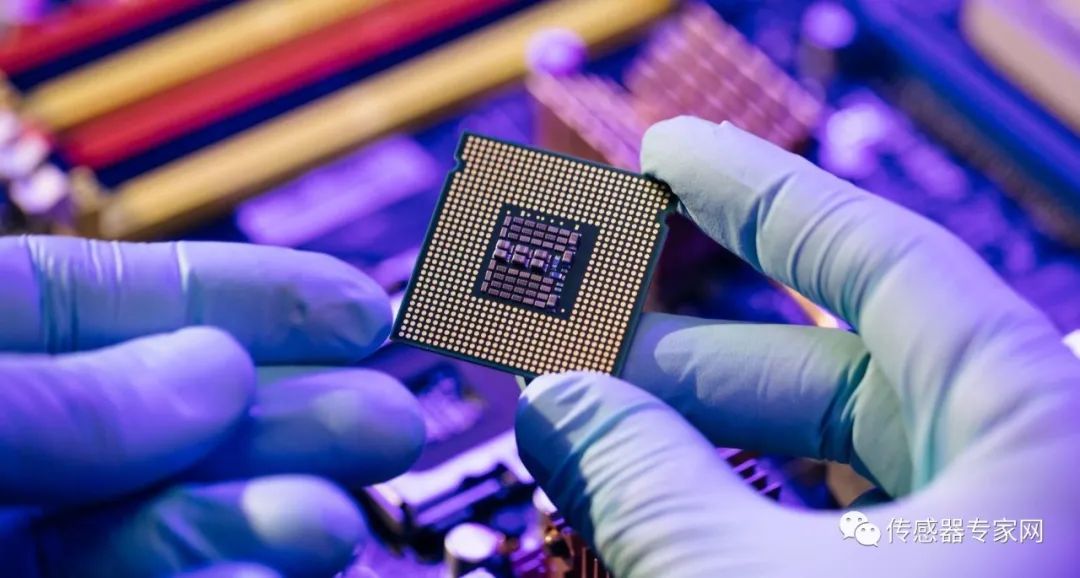
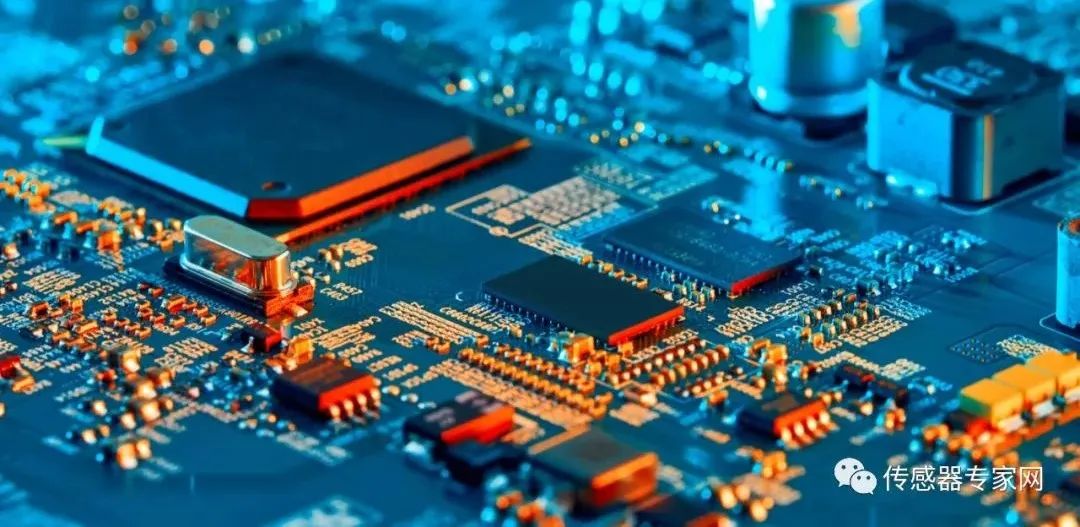
In summary, perceptive technology is the foundation of information technology, serving as the “electronic five senses” for information acquisition in intelligent systems; chips are the core of the semiconductor industry, acting as the “brain” for data processing; and communication technologies like 5G perform the “nerve” transmission function of the system. Together, they form the pillars of informatization and intelligence, mutually supporting and empowering the rapid adjustment and transformation of China’s industrial structure towards a new future.
We look forward to the arrival of the intelligent era and even more to the industrialization of sensors creating new brilliance for the intelligent era and high-quality development.
Currently, the phenomenon of “the higher the level of intelligence, the less convenient life becomes” indicates that intelligent methods and concepts have problems to varying degrees. Various so-called “intelligent systems” hinder the mobility of the elderly; patients spend considerable time learning how to use registration and payment devices; individuals must manage multiple bank cards for financial and social security matters; elderly individuals are often confused by various technological products… Technologies that should bring convenience to people’s lives have instead added many obstacles. Guo Yuansheng believes that these are products and technologies designed for management, lacking genuine intelligence and humanity.
Regarding how to break the data island problem, Guo Yuansheng suggested forming city data operators to aggregate big data collected by 5G and Beidou, forming an integrated network framework for logistics, human flow, and information flow, and then distributing the data to different departments according to industry classifications. This clarifies responsibilities and benefits from design, operation, management, service, and safety.
Further Building Industrial Clusters
For the current Chinese sensor industry, Guo Yuansheng summarized the issues faced by the industry with six words: high, small, scattered, many, lacking, and difficult. The contradictions between high technical content, high technical indicators, and the scarcity of independent technology, the shortage of leading talents, the loose industrial distribution, the small scale of enterprises, and limited product output are very prominent.
Sensor products are diverse, applicable in various fields, rich in cross-industry integration, and have complex usage requirements. In light of this situation, Guo Yuansheng offered the following advice to enterprises: they must understand the industrial chain and the supply and demand conditions of the upstream and downstream.
“Those who use sensors do not know the manufacturing process of sensors, and those who manufacture sensors do not know specific applications. This is the biggest problem in the Chinese sensor industry.” Guo Yuansheng believes that the biggest obstacle to the industrialization of sensors is the disconnection between product design, production, manufacturing, and usage. Sensor manufacturers must delve into the application end, comprehensively understanding the parameters and performance that products need to achieve.
The sensor industry requires high technical content, high performance indicators, high market entry barriers, and high investment, but it also faces the challenge of a limited variety of products provided by suppliers, small enterprise scales, low product output, and a relatively loose distribution of the industry and research capabilities.
In this context, Guo Yuansheng proposed that enterprises should establish industrial chains, industries should create clusters, and regions should build ecosystems, constructing an integrated industrial ecosystem of government, industry, academia, research, application, and service, strengthening industrial concentration, and helping to solve the problem of single customer orders not supporting suppliers’ profitable mass production needs. Building industrial clusters requires helping enterprises form industrial chains and achieve upstream and downstream connections.
Currently, the sensor industry lacks independent innovative technologies, and leading talents are a scarce resource in the industry. In light of the tight talent resources in the sensor industry, Guo Yuansheng believes that to enhance the independent innovation technology level of the entire industry, it is crucial to eliminate vicious competition among similar enterprises. If companies focus on poaching talents from each other, and after poaching, they merely replicate the work at their original units, it will lead to a stagnation in industry technology upgrades, which must be avoided.
As the source of “big data” and the “window” of control systems, the quality of sensors determines the degree and level of intelligence of all equipment and devices and has become a new focal point of international competition, as well as an important indicator of a country’s foundational strength.
In the context of the comprehensive enhancement of the digital economy and industrial transformation, how to achieve the industrialization and large-scale application of sensors is key to realizing the Internet of Things and the intelligent era. In the intelligent process of various industries, the description of application scenarios and concept innovation have become prerequisites and guarantees for leading and promoting sensor technology and application innovation. Therefore, it is crucial to emphasize concept innovation in technological innovation across industries.
In the Digital Age, Sensors Are Everywhere
It is well known that in modern control systems, sensors serve as the interface connecting the measured objects and the testing system, becoming the primary “window” for system information input, providing original information for control, processing, decision-making, and execution. It can be said that sensors directly affect and determine system performance.
With the development of technologies in electronics, materials, physics, and chemistry, especially with the maturity and application of MEMS technology, multifunctional, miniaturized, digitalized, systematized, networked, and intelligent sensors that meet market demands are continuously emerging, becoming new hotspots in sensor industry development. This also provides strong support and technological innovation basis for the development of integrated circuits from general-purpose to specialized.
Currently, among the more than 1,700 sensor enterprises and institutions in our country, products cover 10 major categories, 42 subcategories, and over 7,000 varieties. Among them, mainstream products in the eight major categories—acoustic, force-sensitive, light-sensitive, gas-sensitive, magnetic, temperature and humidity, RFID, and biological—have established a technological foundation for industrialization and possess vast market demand, capable of forming industrial-scale production. Moreover, driven by the application of the Internet of Things, the trend of collaborative technology across different systems and the intelligent standard requirements, multi-dimensional data descriptions in various scenarios and intelligent nodes, as well as complex environmental detection and edge computing microsystem products will become the trend of future technological and industrial development.
In terms of applications, whether in aerospace vehicles, trains, high-speed rail, automobiles, or mobile terminals, including robots, they serve as platforms for multi-technology integration and multi-dimensional data aggregation, which is a tangible platform for installing sensors. The quality and advancement of their performance are determined by how many sensors are installed and what types of sensors are used; without sensors, there is no big data, and consequently, no control models.
For instance, new high-speed trains have over 2,400 sensors installed in each carriage, and with road and environmental monitoring, even more sensors will be used with operating vehicles; cars will become mobile offices, comfortable leisure spaces, and intelligent nodes, also utilizing a large number of intelligent sensors; smart appliances and wearable devices also have numerous sensors installed to detect human physiological parameters and achieve chronic disease monitoring and management functions. Therefore, it can be said that automated equipment and intelligent devices, as well as digital descriptions of complex environments and scene monitoring, will undoubtedly provide market demand and application guarantees for sensor industrialization.
Currently, various IoT demonstration projects, such as smart grids, smart transportation, environmental monitoring, public safety, smart homes, and smart hospitals, totaling over 400 demonstration projects, are the main markets for applying various sensor technologies and products, undoubtedly providing ample imaginative space for sensor technology innovation and industrialization development.
Four Major Trends in Sensor Technology Innovation
It can be seen that sensor technology innovation and industrialization are not only the focal points of international strategic competition but also fundamental guarantees concerning national economy, people’s livelihood, and social safety and stability. This is essential for the development of sensors themselves and for the innovation and development of integrated circuits.
Trends in sensor technology innovation and development can be summarized in the following four aspects:
First, innovation in sensitive mechanisms and materials, as the birth of a sensitive mechanism will lead to new devices, which can quickly break through and create new applications, formed by sensitive materials and mechanisms.
Second, MEMS technology, which is interpenetrated, interdependent, and closely related to semiconductor technology.
Third, innovation in devices, focusing on different devices and packaging structures formed around MEMS technology. On the same MEMS chip, different sensitive elements and sensors with different packaging structures and types can be designed according to different applications and can be integrated with integrated circuits for synchronous design and integrated production, achieving collaborative innovation.
Fourth, networking and intelligence, where one or more sensitive components, along with digital circuits and network interfaces, combined with algorithm software, form intelligent modules.
From the application perspective, wearable devices are a complex, multifunctional smart sensor realized through algorithms. In the industrial field, “wearable devices” can achieve intelligent and node-based applications, with more specific integration with the semiconductor industry.
Collaborative Development of Sensors and Integrated Circuits
No matter which industry or field, and regardless of the type of intelligent equipment, facilities, and systems, the level of automation and intelligence requires the collaboration and integration of microprocessors and sensors, forming micro-systems with highly concentrated functions, precise control, and standardized algorithms, achieving modular, personalized, precise, standardized, regulated, and industrialized production and application.
From the current industrial status and actual situation, it is challenging to break through the bottlenecks of industrialized matching and marketization of basic materials, as there is no common foundational process technology support, nor is there an atmosphere of capital pursuit, leading to a slow industrialization process. Further consensus must be reached on market access, policy support, standard formulation, industrial integration, technological innovation, and strategic positioning to accelerate industry development, enhance industrialization capabilities, and improve international competitiveness.
Therefore, it is necessary to further clarify the strategic positioning of sensors and enhance their strategic status and industry influence.
First, the development of sensors needs to be elevated to a strategic height for re-recognition. At the same time, top-level design for industrial development is needed, along with corresponding industrial support policies and appropriate allocation of human and material resources, to create a sensor industry ecosystem and form a national-level sensor industry cluster, concentrating and increasing funding investment;
Second, leverage regional policy advantages, utilizing local economic development’s demand for high-tech industries and resource advantages to focus on developing characteristic industrial clusters, fostering and creating regional industrial ecosystems;
Lastly, increase financial subsidies for product technology innovation.
Additionally, talent policies must be coordinated, with special talent cultivation policies to support high-tech SMEs, particularly those developing data collection and perception technologies in sensor enterprises.
“Without sensitive components, sensor enterprises have no core technology; without applications, there are no economic benefits.” This statement reveals the relationships within the industrial chain and the characteristics of industrial development. Therefore, building China’s sensor industry ecosystem to form a scale advantage in sensor industrialization is imperative and urgent, and collaborating with integrated circuits is the only path and hope for establishing a dual-ecosystem industrial chain and a “Sensor Valley.”
The industrialization of sensors requires collaborative development with integrated circuits, necessitating the establishment of an industrial ecosystem from data acquisition to data transmission and data processing. This entails constructing a complete industrial chain from raw materials and equipment processes to the final node, creating a modern service platform integrating government, industry, academia, research, application, and service.
For example, establishing sensor industrial parks for force-sensitive, gas-sensitive, magnetic, light-sensitive, biological, etc., in regions, from design, materials, processes, to even MEMS technology, to build public platforms. Developing the sensor industry in a clustered manner can form effective synergy and create scale effects, facing the opportunities and challenges of international sensor competition.
Simultaneously, through national and local policy support and linkage, synchronizing industrial funds with physical spaces, forming an ecosystem and industrial park with international competitiveness, gathering advantageous enterprises in the domestic and international sensor field, and achieving genuine industrial clusters according to upstream and downstream relationships in the industrial chain will undoubtedly create a high ground for digital industrialization with competitive strength at home and abroad, and will also become a shining business card for national and regional digital industrialization.
We must clearly recognize that in the process of digital economy development, digital industrialization is an inevitable path that cannot be delayed, and it is the core and focus of competition. We must confront and rise to the challenges, forming a high-tech industrial capability with our own characteristics to address the impacts and shocks of technology blockades and high-tech industrial competition, providing a solid guarantee for industrial digitalization and high-quality development, and exploring new paths for innovative development in digital industrialization.
In summary, perceptive technology is the foundation of information technology, serving as the “electronic five senses” for information acquisition in intelligent systems; chips are the core of the semiconductor industry, acting as the “brain” for data processing; and communication technologies like 5G perform the “nerve” transmission function of the system. Together, they form the pillars of informatization and intelligence, mutually supporting and empowering the rapid adjustment and transformation of China’s industrial structure towards a new future.
We look forward to the arrival of the intelligent era and even more to the industrialization of sensors creating new brilliance for the intelligent era and high-quality development.
Column Call for Contributions
To showcase the hard support and soft power of the instrument and meter industry from more dimensions, the association is currently striving to create the column “‘Instrument’ Attitude in All Directions.” In this column, we have published articles covering corporate history, excellent business/management experiences, classic products, and personal stories. We sincerely invite your participation. Articles should be within 4,000 words, and can include images, text, videos, or a combination of these. We also eagerly await your valuable opinions and suggestions. Contact: 13810034429 (WeChat same number), submission email: [email protected].
Source: China Sensor and Application Technology Conference, Henan Intelligent Sensor Industry Association, China Electronics News, Sensor Expert Network
Editor: Zhang Jingwei
Reviewer: Zhang Jingwei, Wang Jing, Heng Gege