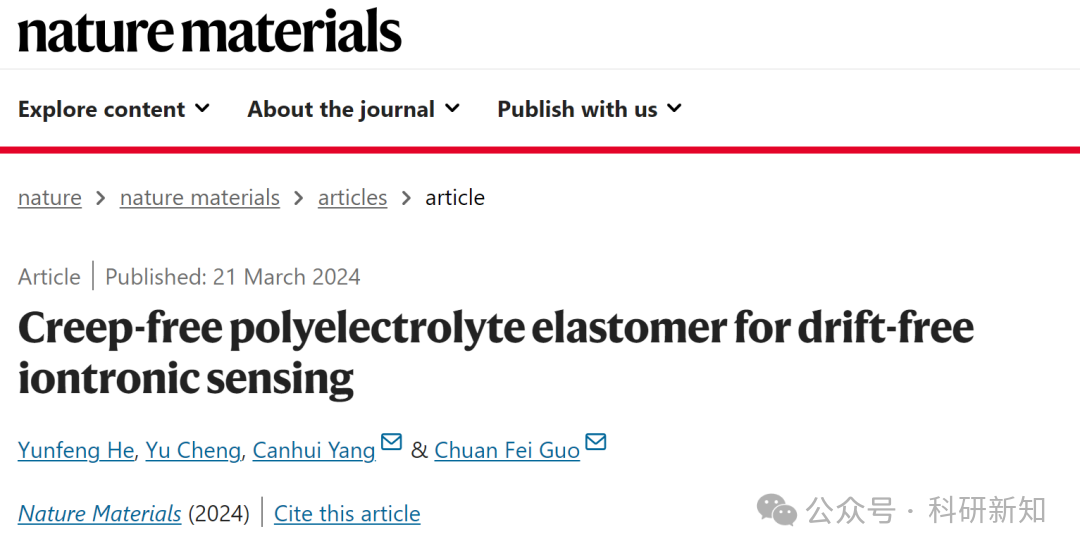
Artificial tactile technology based on skin-like sensors is rapidly developing, enabling quick perception of the surrounding environment and interaction capabilities. This technology has immense application potential in fields such as robotic tactile perception (especially humanoid robots), embodied intelligence, virtual reality (VR), and wearable devices. Flexible pressure sensors often utilize soft materials to achieve skin-like flexibility; however, the viscoelastic creep of soft materials and the unique ionic leakage issues of ionic gels are challenging to resolve, leading to sensor signal drift and measurement inaccuracies.
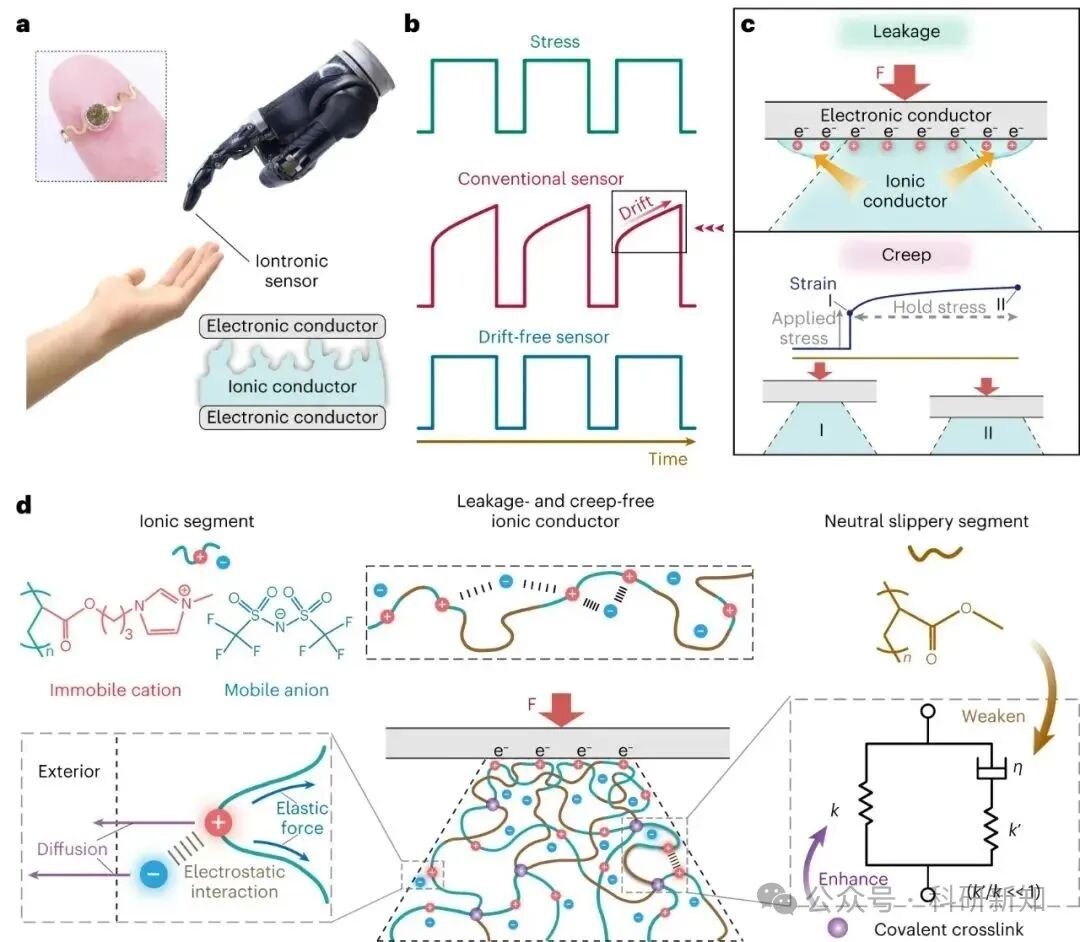
Figure 1: Principles, materials, and chemistry of drift-free iontronic sensors
In this article, we report a design at the molecular level that co-polymerizes a leak-free, creep-free polyelectrolyte elastomer, effectively suppressing signal drift in iontronic flexible pressure sensors, resulting in drift-free iontronic flexible pressure sensors. This elastomer comprises two types of segments: charged molecular segments with fixed cations to prevent ionic leakage, and neutral segments with high crosslink density to achieve low creep. The results demonstrate that the iontronic flexible pressure sensors using this polyelectrolyte elastomer exhibit almost no drift under high static loads (500 kPa, close to its Young’s modulus, initial drift rate of 0.01–0.1% min−1, decreasing to 0.001% min−1 within 10 minutes) over 48 hours of operation, with a drift rate 2 to 3 orders of magnitude lower than sensors using traditional ionic conductors, enabling stable and precise control in robotic manipulation.
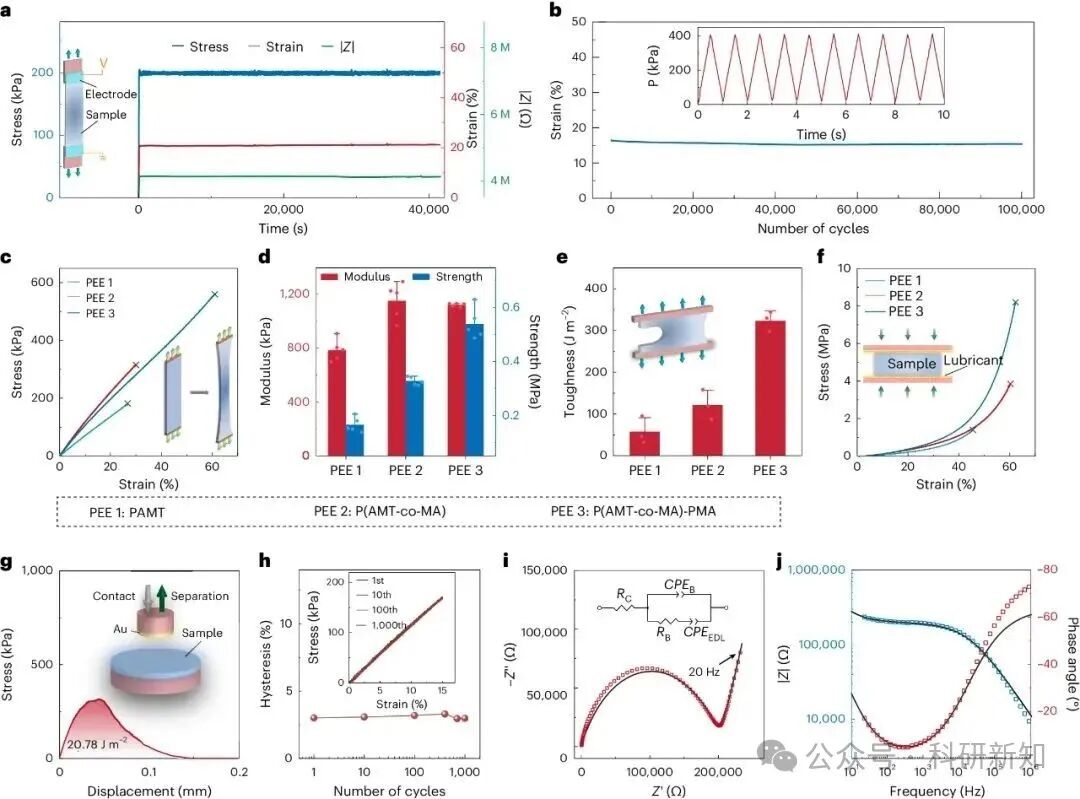
Figure 2: Characterization of polyelectrolyte elastomer properties
The proposed drift-free iontronic flexible pressure sensor effectively addresses the common challenge of accurately measuring static pressure in such devices. This technology not only enhances the stability and accuracy of flexible pressure sensors but also demonstrates its broad application potential in fields such as precise robotic manipulation, providing a novel material and design strategy for the development of high-precision artificial tactile technology.
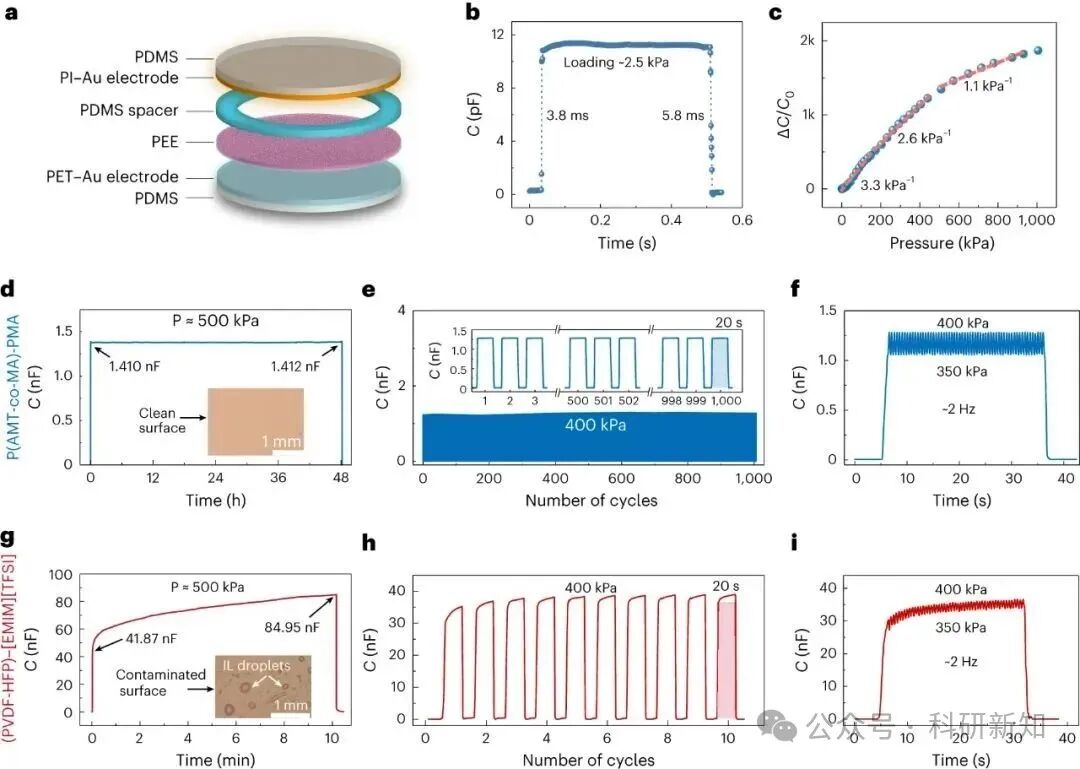 Figure 3: Sensing characteristics of iontronic sensors
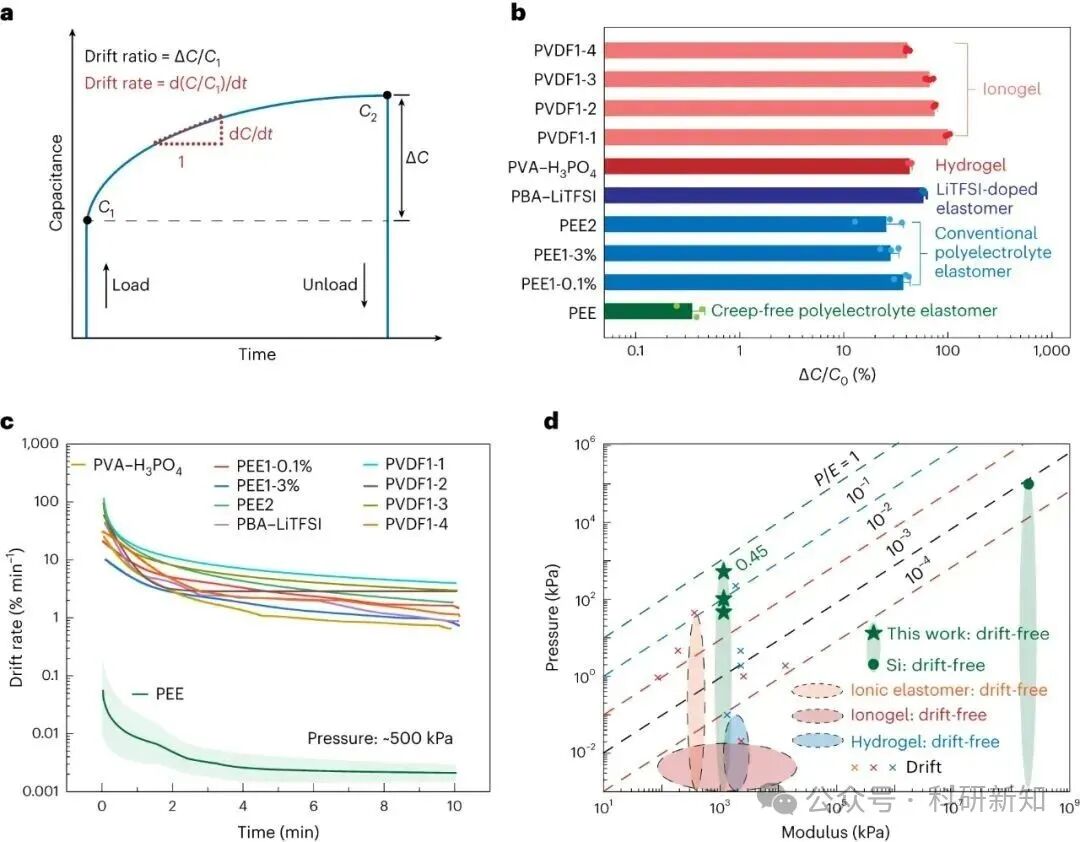 Figure 4. Drift comparison and drift rates of various iontronic sensors
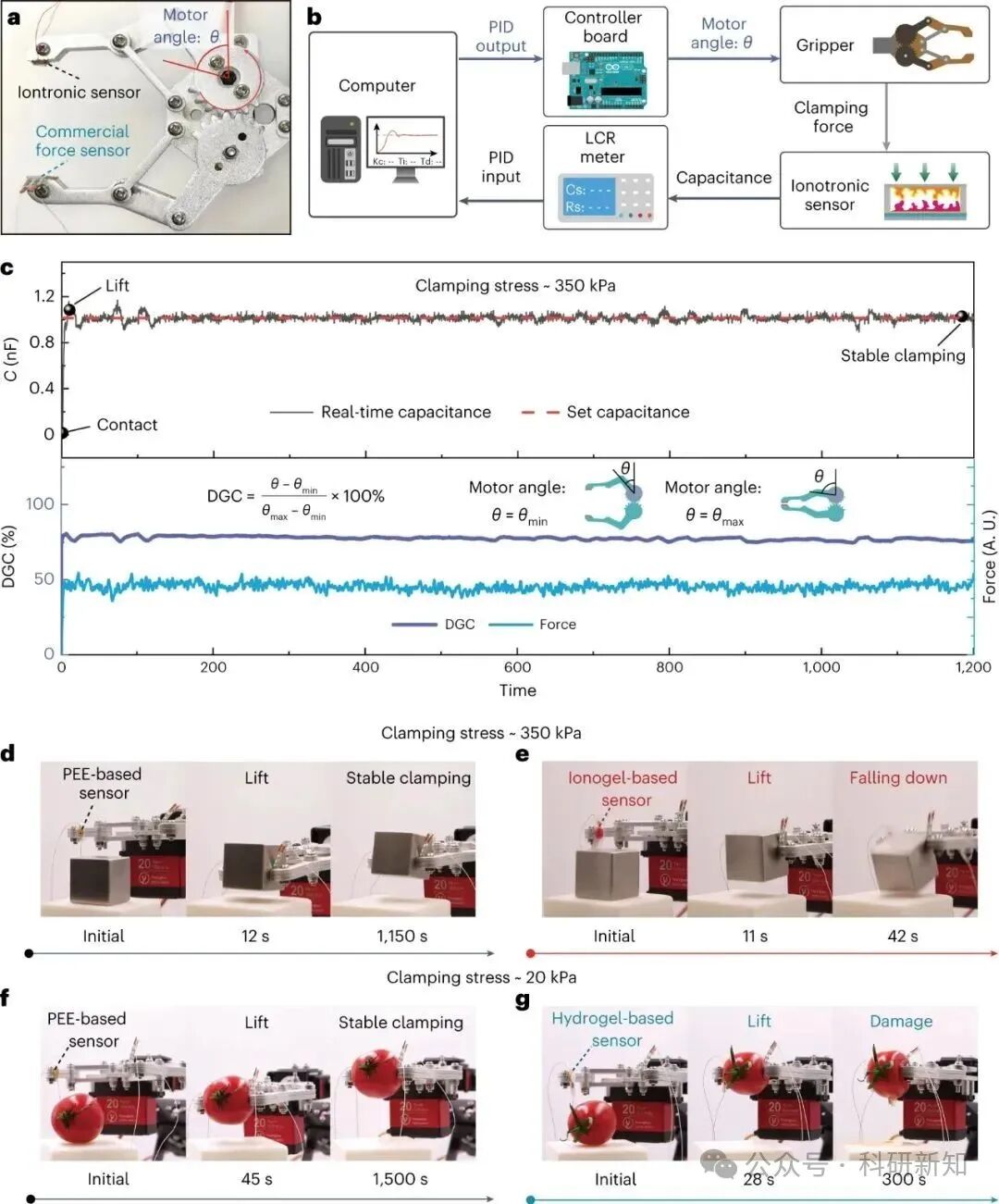 Figure 5. Precise force sensing for stable robotic controlArticle Title: Creep-free polyelectrolyte elastomer for drift-free iontronic sensingArticle Link: https://www.nature.com/articles/s41563-024-01848-6Disclaimer: This article is for educational purposes only. If there are any copyright issues with the videos, images, or text used in this article, or if the content is incorrect or inconsistent with the original journal article’s views and conclusions, please contact us for modifications or deletions. We also welcome contributions, recommendations, and collaborations from researchers and science enthusiasts.