Anhui Province Electronic and Electrical Service Industry Association
Industry organization serving smart living
Self-discipline | Coordination | Rights Protection | Training | Standards | Evaluation |Competition | Exhibition | Promotion

Smart home remote control
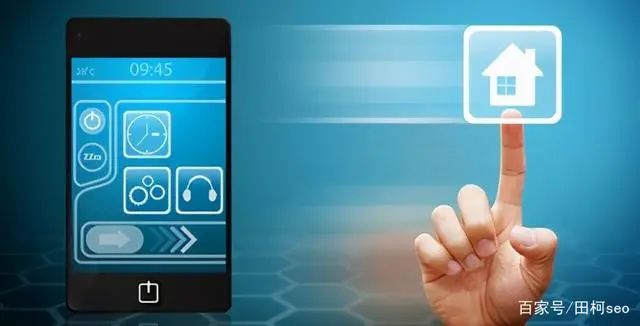
When leaving for work in the morning, just pick up your phone and press a button, and the home devices gradually turn off, security devices activate, and electric windows close. When preparing to return home from work, simply press a button on your phone, and the water heater has already started, and the air conditioning has automatically turned on. Before going to sleep, the curtains gently close under the command of the phone, and the indoor lights quietly turn off. With the popularity of smartphones, smart homes are no longer a dream; as long as you have infrared functionality, you can easily control household appliances remotely, bringing convenience to life.
Working principle of infrared remote control:
The visible light that the human eye can see is arranged by wavelength from long to short as red, orange, yellow, green, cyan, blue, and purple. The wavelength range of red light is 0.62-0.76μm; the wavelength range of purple light is 0.38-0.46μm. Light with a wavelength shorter than purple light is called ultraviolet, and light with a longer wavelength than red light is called infrared. Infrared remote control uses near-infrared light with a wavelength between 0.76-1.5μm to transmit control signals. Common infrared remote control systems are generally divided into two parts: transmission and reception. The infrared transmission circuit uses an infrared light-emitting diode to emit modulated infrared light waves; the infrared receiving circuit consists of infrared receiving diodes, transistors, or silicon photoelectric cells, which convert the infrared light emitted by the infrared transmitter into corresponding electrical signals and send them to a post-amplifier.
For smart lighting control systems, their functions include soft start, dimming, brightness memory, all-on/all-off, and customized living scenes. Whether for newly renovated homes or already renovated homes, smart lighting systems can be installed as long as a small module is connected to the ordinary panel, enabling smart lighting.
LCD smart touch switches have a night light effect at night, allowing users to clearly see the panel even in a dark room for easy operation.
Additionally, smart lighting systems achieve intelligent operation through BUS power line carrier communication modules, completing lighting functions through the transmission sensing of buttons, ensuring that each button function is realized between sending signals and receiving execution.
For this small crystal lamp controller, the electronic components inside receive BUS smart home control commands, with up to 32 commands that can perform basic operations like remote switching, dimming, and all-on/all-off, as well as querying light status and setting scenes.

Advantages of smartphone infrared remote control:
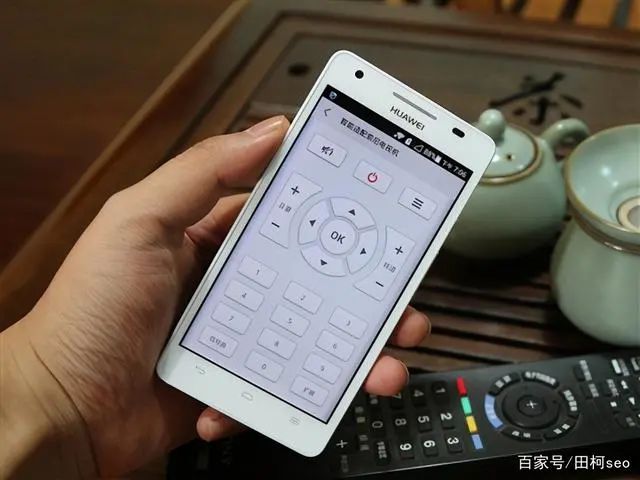
The characteristics of infrared remote control do not affect the surrounding environment and do not interfere with other electrical devices. However, it cannot penetrate walls. Moreover, most household appliances now come with their own remote controls. Air conditioners, fans, lights, televisions, etc., all have their own remote controls; how can we centralize so many remote controls? Smartphones with infrared functionality solve this problem.
As long as your smartphone has infrared remote control functionality, you can learn to centralize all household appliance remotes onto your phone, truly achieving the control of all household appliances with one phone. Moms no longer have to worry about losing the remote control.
Wireless remote control for PC power on/off:
Although PCs are called intelligent, high-tech products, when other household appliances have achieved wireless remote control, PCs still rely on manual power on/off, which has become a joke. Recently, the attention-grabbing Bubalus smart control power component will end this embarrassing situation and officially announce that PCs have entered the “smart remote control era.” Usually, pressing the POWER button sends the power pulse width to activate the power supply. The main power then begins to work, providing basic operating power for the motherboard and various peripherals, thus enabling the PC to power on. The Bubalus smart control power remote component simulates the normal power on/off principle of the computer, completing the PC power on/off via infrared remote control. This operation is akin to direct remote control.
Smart control is more fun:
To avoid the loss of remote controls, the Bubalus smart control power remote component uses a two-way learning design. It can “self-learn” various remote controls. Whether it’s a TV remote, air conditioning remote, fan remote, or chandelier remote, as long as you can find any infrared remote, it can be controlled through the “self-learning” function to power the computer on/off. Moreover, various smart devices with infrared remote functionality, such as smartphones and tablets, can also use the “education” feature to control the computer’s power on/off. This user-friendly design allows users to avoid purchasing additional remotes and saves resources in home life. Moms no longer have to worry about losing remote controls. One phone can control all smart appliances at home, making it an unprecedented experience.
Introduction to smart home lighting control systems
1. Sensing
The lighting control system has a certain sensing range. In real life, we often encounter lighting control systems where the lights do not activate outside the magnetic field of the sensor. However, it is essential to know that the lighting functionality is intelligently sensed within a specific range, so the lighting control system should be installed within the verified range.
2. Infrared
The lighting infrared has infrared settings; as long as it touches the infrared, the device will automatically turn on. However, infrared can have self-impacts to a certain extent, so smart home products generally do not use infrared control in their control systems.
3. Energy-saving
The most significant feature of smart home products is energy-saving. For example, lighting control can turn on and off based on human sensing. If the lights are not manually controlled, they may be left on, leading to energy waste. Therefore, using smart home lighting control systems can save resources.
4. Intelligence
Intelligence is the product’s most significant feature. Since the smart home control system actively controls devices, it ensures that equipment can operate automatically without manual operation. Therefore, intelligent products facilitate user experience, providing a technological experience and showcasing the advantages of intelligent devices.
About Smart Homes
Smart homes, or smart residences, are closely related to terms like home automation, electronic homes, digital homes, networked homes, and smart buildings. Smart homes use the residence as a platform, integrating architecture, network communication, information appliances, and device automation to create an efficient, comfortable, safe, convenient, and environmentally friendly living environment. Based on household product automation and intelligence, it is realized through networks according to humanized requirements.
Smart homes can also be defined as a process or a system that uses advanced computer technology, network communication technology, structured wiring technology, and wireless technology to organically combine various subsystems related to home life. Compared to ordinary homes, they shift from passive static structures to dynamic intelligent tools, providing comprehensive information exchange functions to help families maintain smooth communication with the outside. Smart homes emphasize human initiative, requiring attention to the coordination between people and the living environment, allowing control of the indoor living environment at will.