Click↑↑Technical Training, follow and pinto subscribe for free long-term
170,000+people in industrial control follow this WeChat platform: technical sharing, learning exchange, industrial control videos
Many people have worked as salespeople, repairmen, electricians, taxi drivers… before learning PLC. Once they enter society, learning becomes a rare task; lacking teachers, books, and guidance, especially in such a highly specialized industry. Many even start off confused and go down the wrong path.
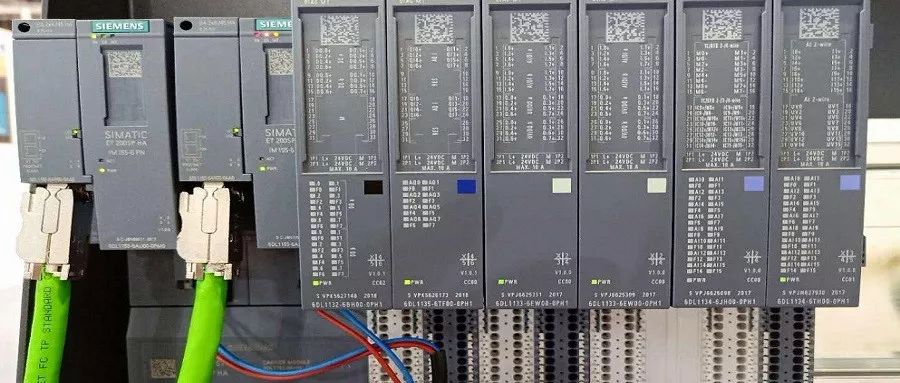
The first question many beginners ask is: what basics are needed to learn PLC? This is a good question, indicating that you have some common sense about learning. A solid foundation plays a crucial role. If you get this part right, you will be much more effective than those who disregard the basics and dive straight into PLC.
Now, let’s get to the point.
1. To learn PLC, you must have a foundation in electrical work,understanding some low-voltage electrical appliances and control technologies. This is essential basic knowledge for learning PLC.

Reason:
When faced with a new machine, the first thing you need to understand is the hardware structure of the machine, CPU, module parameters, etc. You also need to assemble the PLC and practice wiring with peripheral devices.
PLC is the brain of the control device, equivalent to the CPU of a computer. It certainly requires hardware connections plus software programming operations to control the device.
Since it’s a control device, there are strong electrical devices like elevators and motors, as well as weak electrical devices. Installation and wiring belong to the basic knowledge and skills of electricians. If the device is not powered, that’s fine; but once it is powered, if the wiring is incorrect, damaging the device is a minor issue; if electricity reaches a person, that’s a serious matter.
If you have a foundation in electrical work, you will understand some basic AC and DC circuits, and basic electrical knowledge like resistors and capacitors. This way, questions like whether the capacitor used for connecting an AC motor has polarity will not arise, and you won’t be looked down upon, nor will you endanger your life unnecessarily.
2. A basic understanding of computers is also necessary for learning PLC.
As mentioned earlier, PLCs must be programmed to control devices, and programming will definitely involve using a computer. First, there’s the installation of PLC software. It may seem simple, but many people struggle for two days without success. They can’t find the correct download path, can’t locate where it’s stored after downloading, can’t extract the installation package, and then face issues like missing plugins or installation failures. This may require deleting the registry or cleaning the computer to start over, which is like leveling up in a game. If you have no computer skills, it’s advisable to let someone help you; otherwise, you might go crazy before you even start learning. If you don’t practice your computer skills now, when will you?

However, don’t think that once you’ve installed the software, you’re all set. The real challenge lies in programming with the software. Common programming languages include JAVA, C, C++, etc. The programming languages used in the electrical field include: Ladder Diagram Language (LD), Instruction List Language (IL), Function Block Diagram Language (FBD), Sequential Function Chart Language (SFC), and Structured Text Language (ST). Among them, Ladder Diagram is used more frequently and is easier to learn.
So, it can be said that PLCs are dependent on computers. If you have no knowledge of computers, it’s best to practice some basic operations; otherwise, you will waste a lot of time.
The two foundational aspects mentioned above are essential for learning PLC. Some may say: once these two foundations are established, who knows how long it will take! As the saying goes, a thousand-mile dam collapses from an ant hole. Building a building requires a foundation; if the foundation is unstable, the building will collapse one day, and all the sweat and effort will be in vain. Different methods yield different returns. Those who skip the basics will eventually have to go back and fill in the gaps after countless failures. The difference is: the lucky ones have the chance to catch up, while many others miss success due to one mistake.
Therefore, victory is never about taking shortcuts to save time and effort; it is about relying on ability.

In addition,to learn PLC, you also need a foundation in industrial control data.This term sounds a bit professional because PLC applications often involve calculations, such as simple base number calculations. Although machines can do this directly now, if you don’t understand the conversion between hexadecimal, octal, etc., it can cause confusion in future learning. As the saying goes, once you understand one thing, you understand a hundred.Also, a basic understanding of networks is needed.PLCs are increasingly leaning towards Ethernet communication methods, and having network awareness will definitely benefit you more than it will harm you.
In summary, the last three foundations can be learned and practiced in daily life, but it is recommended that you specifically understand electrical work basics, as this is also for your own responsibility.(Technical Training Original, unauthorized reproduction is prohibited; violators will be prosecuted!)
If you like this article, please give it athumbs up!
Click↓Read Originalto learn electrical knowledge for free, including electrical work, PLC, etc.!