Regarding the role of Vitamin C, I have written two versions based on different needs: a concise version that is straightforward and highlights key points, and a detailed version that may seem verbose but is clear and logical, allowing everyone to choose according to their needs.
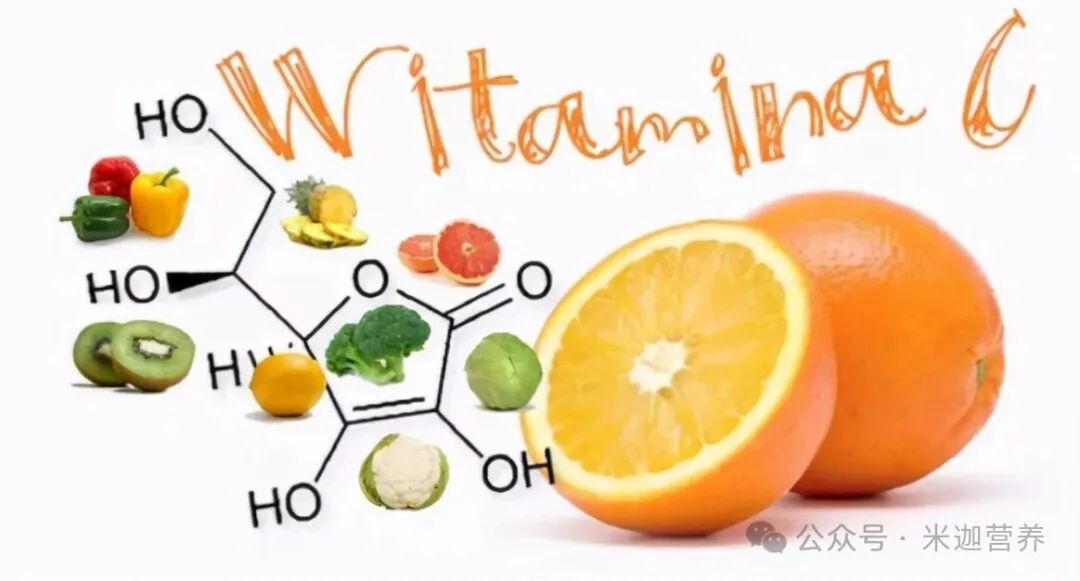
Concise Version:
The functions of Vitamin C can be divided into three main parts. First: it participates in hydroxylation reactions, which promote collagen synthesis, neurotransmitter synthesis, steroid hydroxylation, and detoxification of organic substances or toxins. Second: it has a reducing effect, promoting antibody formation, iron absorption, tetrahydrofolate formation, and maintaining the activity of thiol enzymes. Third: other functions include detoxification, cancer prevention, and scavenging free radicals.
Detailed Version:
Today, I originally wanted to discuss immunity issues, as a friend recently experienced asthma triggered by allergic rhinitis due to thunderstorm weather and consulted me on how to manage asthma. In fact, asthma is a symptom; the essence is that the body’s health is compromised, and the root cause lies in enhancing immunity. When it comes to enhancing immunity, we must mention the role of Vitamin C. So today, let’s talk about Vitamin C.
Vitamin C gained public attention during the three-year COVID-19 pandemic. For example, on January 22, 2020, the Shanghai Health Commission listed Vitamin C as the only nutritional supplement to prevent COVID-19.
On January 27, 2020, the Shandong Provincial COVID-19 Response Work Leadership Group issued a notice urging everyone to minimize the use of air conditioning, strengthen nutritional intake, and appropriately supplement Vitamin C.
In fact, not only during the pandemic, there have been recommendations and reports on supplementing Vitamin C. Various experts and television stations have explained the role of Vitamin C in enhancing immunity, and interested friends can search for more information.
Many people may know about Vitamin C, but are not familiar with its discovery. In fact, the discovery of Vitamin C originated from the treatment of scurvy, which is why Vitamin C is also called ascorbic acid, the anti-scurvy factor. This means that Vitamin C was discovered in the process of treating a disease. Let’s delve into the history of the discovery of Vitamin C.
Scurvy is an ancient disease. As early as the 16th century, the prevalence of this deficiency disease was observed in populations. During long sea voyages and polar explorations, where nutrition was neglected, there were repeated lessons in history regarding scurvy.
In 1740, British Admiral G.A. Anson led six ships and 1955 sailors on a circumnavigation. Upon returning in 1744, he lost five ships and 1050 sailors, with more than half of the crew dying from scurvy.
Before the existence of ascorbic acid was known, clinical observations were made regarding the effects of different foods on scurvy. It was known early on that certain plants could cure and prevent scurvy, including cabbage, onions, wild strawberries, oranges, and lemons. In Northern Europe and Russia, pine needles and wild rose fruit extracts were used for this purpose, consistent with the method used by Native Americans who brewed tea from cedar leaves. Based on maritime experience, various remedies were tried and officially applied. Citrus fruits were early confirmed to be effective. Captain James Lind conducted the first clinical experiment in 1747 when scurvy broke out. He selected 12 patients with similar symptoms and placed them in the ship’s hospital, providing a basic diet and dividing them into six treatment groups.
1) One quart of soda water daily (British measure 1136 ml); 2) Three doses of 25 drops of vitriol daily; 3) Three doses of vinegar daily; 4) Three doses of half a pint of seawater daily (half a pint is about 285 ml); 5) A mixture of garlic, mustard, horseradish, and Peru balsam, three times a day; 6) Two citrus fruits and one lemon daily. The citrus fruits led to remarkably rapid recovery. The first group also showed some improvement.
James Lind’s publication in 1753, “A Treatise on Scurvy,” can be considered a medical classic, systematically studying scurvy among British sailors and its prevention. It established measures for preventing and treating scurvy using citrus fruits and lemons.
In 1772, explorer James Cook adopted Lind’s recommendations and paid attention to dietary prevention of scurvy. When he completed his three-year circumnavigation, only one person died from other diseases. The British Navy took 40 years and suffered countless deaths before, in 1975, they included lemon juice in the British Navy’s rations, which is why British sailors are nicknamed “limeys” (due to lime juice).
However, a century later, Captain Scoff led the British Navy on an Antarctic expedition but neglected this issue, resulting in the deaths of him and his crew from the disease. In fact, such long voyages not only caused deaths but also led to varying degrees of reduced work capacity among surviving sailors due to Vitamin C deficiency. However, the navies of France, Spain, and Portugal did not face such severe issues because their rations included foods containing Vitamin C, such as the French Navy’s rations, which included a barrel of sour fruit juice per person.
Interestingly, during the Ming Dynasty, China was also a maritime power. Between 1405 and 1433, Zheng He led expeditions to the West six times, traveling through the Strait of Malacca and the Indian Ocean to countries like Kenya and Tanzania, with a fleet of 20,000 to 27,000 people, some voyages lasting up to 149 days, yet there are no records of scurvy outbreaks during these voyages. The reason is the different dietary structure; Chinese ships carried a large amount of preserved vegetables and even practiced growing vegetables on deck, which may have been a reason for the absence and prevention of this disease.
By the early 20th century, people had already understood the role of fruits and vegetables in preventing and treating scurvy. Many scholars attempted to study which substances in these foods could prevent and treat scurvy and the properties of these substances. Since most experimental animals can synthesize Vitamin C themselves, the discovery of the principle of treating scurvy was delayed. In 1907, two Norwegian chemists reported that guinea pigs exhibited fatal symptoms similar to human scurvy: loose teeth, multiple bleeding points, and skeletal damage, selecting guinea pigs as experimental animals.
From 1928 to 1932, Albert Szent-Gyorgyi and C.C. King’s laboratories respectively isolated Vitamin C and demonstrated its anti-scurvy effect. In 1937, Albert Szent-Gyorgyi was awarded the Nobel Prize for discovering the structure of ascorbic acid.
As research on Vitamin C deepened, its functions gradually became evident. Here, I will not only explain the role of Vitamin C but also clarify the underlying principles.
1. Vitamin C participates in hydroxylation reactions. To put it simply, many may not understand this, so let’s discuss it in detail.
1) Vitamin C can promote collagen synthesis.
The human body has four basic tissues: connective tissue, muscle tissue, nervous tissue, and epithelial tissue, among which the main component of connective tissue is collagen. During the synthesis of collagen, Vitamin C acts as a cofactor for prolyl hydroxylase and lysyl hydroxylase, helping proline and lysine hydroxylate to form hydroxyproline and hydroxylysine, thus promoting collagen synthesis. Collagen is present in many structural tissues of the human body, such as the skin, which serves as the first line of defense for the immune system, effectively blocking the invasion of external bacteria and viruses. If Vitamin C is deficient, collagen synthesis is impaired, leading to abnormal skin structure and function, affecting immunity.
2) Vitamin C promotes neurotransmitter synthesis.
Neurotransmitters are chemicals in the nervous system that participate in its regulation and can transmit information to other neurons, allowing them to function normally. Simply put, neurotransmitters are the chemical substances responsible for transmitting messages in the nervous system, known as “messengers of the nervous system.” For example, 5-hydroxytryptamine is a type of neurotransmitter that requires hydroxylation to complete its synthesis. The hydroxylation process requires Vitamin C, and when Vitamin C is deficient, the synthesis of these neurotransmitters will be affected. If the synthesis of 5-hydroxytryptamine is impaired, it can lead to sluggish reactions, sleep disorders, and emotional sensitivity.
3) Vitamin C promotes steroid hydroxylation.
Steroids are compounds containing cyclopentane polyhydrophenanthrene. Steroids with free hydroxyl groups are considered polyalcohols, known as sterols. Common sterols include cholesterol in animal tissues and stigmasterol in plant tissues. The conversion of cholesterol to bile acids also requires hydroxylation, which is influenced by Vitamin C. When Vitamin C is deficient, the conversion of cholesterol to bile acids decreases, leading to cholesterol accumulation in the liver and elevated blood cholesterol levels. Therefore, patients with high cholesterol should supplement with adequate Vitamin C.
4) Promotes the hydroxylation and detoxification of organic substances or toxins.
The hydroxylation process of drugs or toxins in the endoplasmic reticulum is an important reaction in biotransformation, completed by mixed-function oxidases. Vitamin C can enhance enzyme activity, improving the detoxification process of drugs or toxins. Therefore, it is advisable to consume more Vitamin C in daily life to assist the body in detoxification.
Thus, hydroxylation reactions are necessary steps for the synthesis or decomposition of many important substances in the body. For example, the synthesis of collagen and neurotransmitters, as well as the conversion of cholesterol, all require hydroxylation. Vitamin C must be involved in these hydroxylation processes.
2. Vitamin C participates in reduction reactions. Vitamin C can exist in both oxidized and reduced forms in the body. Therefore, it can act as a hydrogen donor or acceptor, playing an important role in redox reactions in the body.
1) Vitamin C promotes antibody formation.
Antibodies are the third line of defense in the human immune system. Antibodies are immunoglobulins produced by plasma cells differentiated from B lymphocytes in response to antigen stimulation, which can specifically bind to corresponding antigens. Antibodies can be simply understood as immunoglobulins that help the body eliminate invading foreign substances. Therefore, in daily life or during illness, we hope the body can produce more antibodies. Antibody molecules contain a large number of disulfide bonds, which are formed by two cysteine residues, and cysteine is derived from the reduction of cystine. The proteins ingested by the body contain a large amount of cystine, which needs to be reduced to cysteine to participate in antibody synthesis. High concentrations of Vitamin C in the body help reduce cystine to cysteine. This is the reason why Vitamin C can promote antibody synthesis.
2) Vitamin C promotes iron absorption.
Vitamin C can reduce poorly absorbed trivalent iron (Fe3+) to easily absorbed divalent iron (Fe2+), thus promoting iron absorption. Additionally, it can keep the thiol groups of enzymes like ferrous chelate in an active state to function effectively, making Vitamin C an important adjunct in the treatment of anemia.
3) Vitamin C promotes the formation of tetrahydrofolate.
Folic acid must be reduced to tetrahydrofolate to exert its physiological activity. Vitamin C can promote the reduction of folic acid, thus having a certain effect on megaloblastic anemia. We usually advise women during pregnancy or planning for pregnancy to supplement folic acid while also suggesting additional Vitamin C supplementation.
4) Vitamin C maintains the activity of thiol enzymes.
3. Other functions of Vitamin C
1) Vitamin C has detoxifying effects.
Certain heavy metal ions, such as lead, mercury, cadmium, and arsenic, are toxic to the body. Supplementing with large amounts of Vitamin C can often alleviate their toxicity. The detoxifying effect of Vitamin C on heavy metal ions: on one hand, it reduces oxidized glutathione to reduced glutathione, which then binds with heavy metal ions to form complexes that are excreted from the body, preventing poisoning; on the other hand, Vitamin C can bind with metal ions to be excreted in urine.
2) Preventing cancer.
Many studies have shown that Vitamin C can block the synthesis of carcinogenic N-nitroso compounds, thus preventing cancer.
3) Scavenging free radicals.
Vitamin C can scavenge superoxide anions (O2·), hydroxyl radicals (OH·), organic radicals (R·), and organic peroxides (ROO·) through a stepwise electron donation process, converting to cysteine ascorbate and dehydroascorbic acid. Vitamin C can also reduce tocopherol radicals back to tocopherol, and the ascorbate radicals generated in the reaction can, under certain conditions, be reduced back to ascorbic acid by NADH2 systems. Therefore, tocopherol (Vitamin E), Vitamin C, and NADH2 can work together to scavenge free radicals in the body.
That concludes the functions of Vitamin C.
Vitamin C is a water-soluble vitamin that generally does not lead to overdose, as excess amounts are excreted in urine. The recommended dietary allowance for adults is 100 mg/d, with a tolerable upper intake level of 1800 mg/d. During disease management, the dosage can be adjusted based on the patient’s condition.
Vitamin C is mainly sourced from fresh vegetables and fruits. Common foods high in Vitamin C include peppers, chrysanthemum greens, bitter melon, cabbage, and green beans among vegetables, and sour dates, red dates, strawberries, citrus fruits, and lemons among fruits. Animal organs also contain small amounts of Vitamin C.
~~END~~
Previous: Q&A丨Calcium Requirements for Different Age Groups
Thank you for accompanying us on the journey of nutrition and health! Thank you for your attention, likes, and welcome to share~~