(In the control room of a food packaging workshop, a small A frowns at the modules in the PLC control cabinet, while Zhang, holding a multimeter, approaches, accompanied by the sound of the packaging machine in operation.)
Small A (pointing at the modules in the control cabinet): Zhang, when we learned about PLCs, we always talked about AI, AO, DI, and DO modules, but there are so many modules in this cabinet that look completely different. What about this one with the gear symbol, and that one with the thermocouple wire plugged in? What are they used for?
Zhang (bending down to check the module model): These are all special function modules of the PLC, specifically designed to handle complex tasks in production. Ordinary I/O modules can only read switch signals and transmit analog signals simply; they are powerless when it comes to high-speed counting or precise temperature control. For instance, in our packaging line, the can counting requires counting 20 cans per second, which the DI module cannot respond to; we need a high-speed counting module for that.
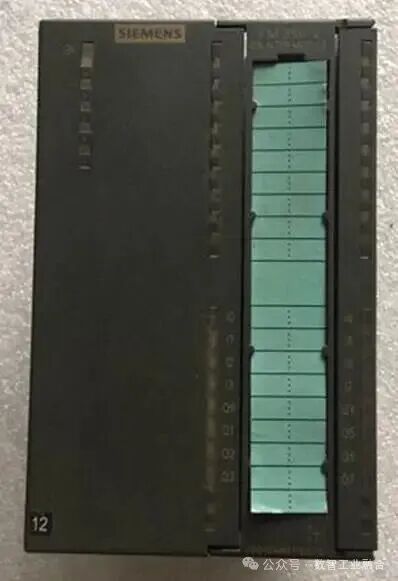
Zhang (pointing to the module labeled “FM350”): Look at this Siemens FM 350, which is a high-speed counting module. It has a dedicated counting chip inside, with a response speed of up to 100kHz, while an ordinary DI module only reaches 1kHz, which is a difference of 100 times. Last time we debugged the automatic packing machine, the DI module always missed counts when the cans passed through the photoelectric sensor. After switching to this module, the accuracy immediately reached 100%.
Small A (confused): Isn’t it just counting? Why do we need a dedicated module?
Zhang (taking out an oscilloscope): Look at this waveform — when the can passes the sensor, the signal duration is only 50 milliseconds. By the time the DI module finishes reading, the next signal has already arrived, making it easy to miss counts. The high-speed counting module has hardware debounce circuits that can recognize narrow pulses of 10 microseconds, so even if the cans are very close together, it can distinguish them. It can also calculate frequency; when the packaging machine speed suddenly increases, the module will send a signal to the PLC in advance to prepare subsequent equipment.
(The two walk to the fermentation tank control cabinet)
Zhang (pointing to the module with temperature scales): This is a temperature control module, which is much more specialized than the AI module. The AI module can read 4-20mA signals, but for precise temperature control, we need this one. You see, it is directly connected to the thermocouple wire, and it has a cold junction compensation circuit inside, making it three times more accurate than the AI module for measuring the temperature of the fermentation tank.
Small A (touching the terminal on the module): I thought it would be fine to use the AI module to connect the temperature sensor. Last time when adjusting the yogurt fermentation tank, the temperature always differed by 2°C. Is that related to this?
Zhang: Absolutely! When ordinary AI modules read sensor signals, the error can reach ±0.5%, which translates to ±1°C in temperature. In contrast, the dedicated temperature module has an error of only ±0.1%. It also comes with a PID control function, allowing it to directly control the heating rod without needing the PLC program to calculate. Last time, when we replaced the fermentation tank’s AI module with this Omron E5CC module, the temperature fluctuation dropped from ±1.5°C to ±0.3°C, significantly improving the acidity stability of the yogurt.
Zhang (flipping through the module manual): You see, it supports 8 types of thermocouples, whether it’s a PT100 for measuring room temperature or a K-type thermocouple for sterilizers, just plug it in and it works. The AI module still requires manual calculation of conversion formulas, which is quite troublesome.
Small A (pointing towards the ingredient workshop): What about that module with the “kg” symbol in the batching system? Is it used for weighing?
Zhang (nodding): That’s a weighing module, essential for batching in food factories. An ordinary AO module can control valves, but for precise material dispensing according to recipes, we need it. For example, when making jam, we need to add 3.52kg of sugar, and the error cannot exceed 5g. An AO module-controlled valve simply cannot achieve this level of precision.
(The two arrive at the batching control cabinet)
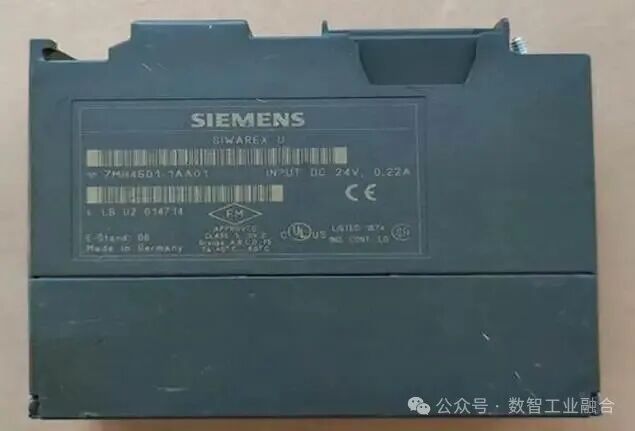
Zhang (showing the calibration records of the module): This Siemens SIWAREX U module can connect directly to weighing sensors, with an internal 24-bit AD conversion, which is much higher precision than the 12-bit of the AI module. It can also automatically tare and accumulate weight. Last time when adjusting the honey dispensing, we used to add 10g too much with the AI module, but after switching to the weighing module, every batch was accurate to ±2g, saving a lot of raw material costs over the year.
Small A: What’s the difference between it and a platform scale? Can’t we just read the numbers directly from a platform scale?
Zhang (pulling up the monitoring screen): There’s a big difference! It can communicate with the PLC in real-time. When the weight reaches 3kg, it slows down in advance, and when it reaches 3.5kg, it stops precisely, completing the entire process in 10 seconds. With a platform scale, someone has to watch the numbers, taking at least 30 seconds, and it’s prone to errors. Last time when the auditor came to check, they praised this module’s traceability function — the weight data for each batch is automatically stored in the module, allowing us to check records from six months ago, which is much more reliable than manually keeping a ledger.
Zhang (pointing to a module with a network cable interface): This communication module is also crucial. Ordinary PLCs have slow serial communication speeds and are prone to disconnections. Look at this PROFINET module; it can connect to 8 devices simultaneously, with a speed 100 times that of serial communication. Last time, when we added a coding machine and labeling machine to the packaging line, we lost data using serial communication, but after switching to this module, we haven’t had any communication failures for six months.
Small A (counting the indicator lights on the module): It seems to support a lot of protocols; what’s the use of that?
Zhang: In food factories, there are various devices, including Siemens PLCs, Mitsubishi servos, and domestic instruments, which need the communication module to act as a “translator.” This module can run PROFINET, Modbus, and EtherNet/IP protocols simultaneously, acting like a multilingual translator, allowing different devices to understand each other. Last time, we transmitted the sterilizer data to the MES system, and it helped convert the protocol, saving us the cost of installing a gateway.
(The two arrive at the conveyor control cabinet)
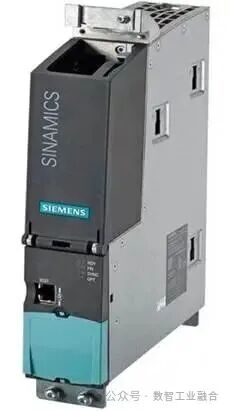
Zhang (pointing to the module with pulse output): This is a motion control module, which is 100 times more precise than an ordinary DO module for controlling motors. You see, it can send pulses to control servo motors, allowing the conveyor belt to start and stop smoothly without impact. An ordinary DO module just cuts off power, causing the cans to wobble on the conveyor belt and easily fall off.
Small A (looking at the parameter settings on the module): What does the “electronic gear ratio” mean?
Zhang: This is key to control precision. For example, to make the motor turn 1 revolution, an ordinary DO module would send 1000 pulses, but this module can send 100,000 pulses and can fine-tune through the electronic gear ratio. Last time, when adjusting the positioning conveyor belt, the cans had to stop at the coding position with an error not exceeding 1mm. Using an ordinary module, the error was always 5mm, but after switching to this module and adjusting the gear ratio, it met the standard. It can also perform arc interpolation, making the circular packaging line in our workshop turn very smoothly, thanks to its control.
Zhang (taking out a module with a safety symbol): This safety module is crucial; the entire safety production in the food factory relies on it. An ordinary DI module connects to the emergency stop button, but it may misjudge if there’s a broken wire. This module has dual-channel detection; if one wire breaks, it immediately alarms, preventing the equipment from malfunctioning.
Small A (touching the emergency stop wiring on the module): Isn’t our workshop’s emergency stop button connected to an ordinary DI module?
Zhang (becoming serious): It used to be, but last time the audit found it did not meet safety standards. This module complies with SIL2 certification, with an emergency stop signal response time of only 10 milliseconds, while an ordinary DI module takes 50 milliseconds, which can be life-saving in critical moments. It can also record safety events; last time when there was an accident with the packaging machine, it was through its logs that we found out it was due to a loose emergency stop button connection, which an ordinary module would never have revealed.
Small A (the two return to the control room, pointing at a module with a battery): What is this module that keeps flashing red? It seems different from the others.
Zhang: This is a redundancy module, ensuring that the PLC does not crash suddenly. You see, it has two CPUs, one working and one standby. If the main CPU fails, the backup can take over within 0.1 seconds, preventing production from stopping. Our sterilizer cannot be stopped casually; if it stops, an entire batch of cans will be wasted. With this module, when the CPU failed last year, production was not delayed, saving us a loss of 100,000 yuan.
Small A (flipping through the module manual): These special modules seem quite expensive. When should we use them?
Zhang (drawing a selection flowchart): Remember three principles: when ordinary I/O cannot handle it, when high precision is required, and when safety is involved. For example, if the counting speed exceeds 1kHz, you must use a high-speed counting module; if the temperature control error requirement is within ±0.5°C, you need a temperature module; for emergency stops and overload protection, you must use a safety module.
Zhang (pointing to the packaging line): Look at that old packaging line; it still uses ordinary modules, resulting in inaccurate counts and slow speeds. Next month, we will replace it entirely with special modules. In food production, precision and safety cannot be taken lightly. These modules may seem expensive, but considering the reduced waste and failures, we can break even in half a year.
Small A (summarizing in a notebook): I understand now: the high-speed counting module deals with fast switching signals, the temperature module ensures precise temperature control, the weighing module guarantees batching accuracy, the communication module enables device interoperability, the motion control module controls motors, the safety module ensures safety, and the redundancy module prevents downtime. In the future, I need to look at the requirements first and not just use ordinary I/O modules.
Zhang (nodding): You also need to pay attention to the compatibility between the modules and the PLC. For example, it’s best to use Siemens special modules with Siemens PLCs; third-party modules may have communication issues. Installation also matters; high-speed counting modules should be kept away from strong electrical interference, and temperature modules should have shielded wiring. These details all affect performance. If you have time this afternoon, I’ll take you to actually debug the high-speed counting module; trying it hands-on will help you understand even better.
Small A (picking up the tool bag): Great, Zhang! I’ll go prepare now, aiming to improve the counting accuracy of the packaging line this afternoon.