Source: ZTE Document
Author: ZTE Document
1
Your Fingerprint, My Fingerprint, All Are Different
German philosopher Leibniz once said: “There are no two completely identical leaves in the world.”Our fingerprints are like the unique veins on each leaf, everyone has them, they remain unchanged throughout life, yet they are all different.

It is precisely because of the inherent convenience of fingerprints and the ultra-low repetition rate of about 1 in 150 billion that fingerprint recognition technology has become one of the most widely used biometric technologies today, closely related to our lives.
For example, just a few minutes before you opened this article, did you unlock your phone using your fingerprint?
2
How Does a Phone Recognize a Fingerprint?
A phone needs to be equipped with a fingerprint recognition module, and its working process usually consists of three steps: acquisition, processing, and matching.
 Acquisition
The sensor is responsible for recognizing the fingerprint and acquiring a rough fingerprint image.
According to the acquisition principle, it is mainly divided into optical, capacitive, and ultrasonic types, and according to the acquisition method, it is mainly divided into scraping and pressing types.
Processing
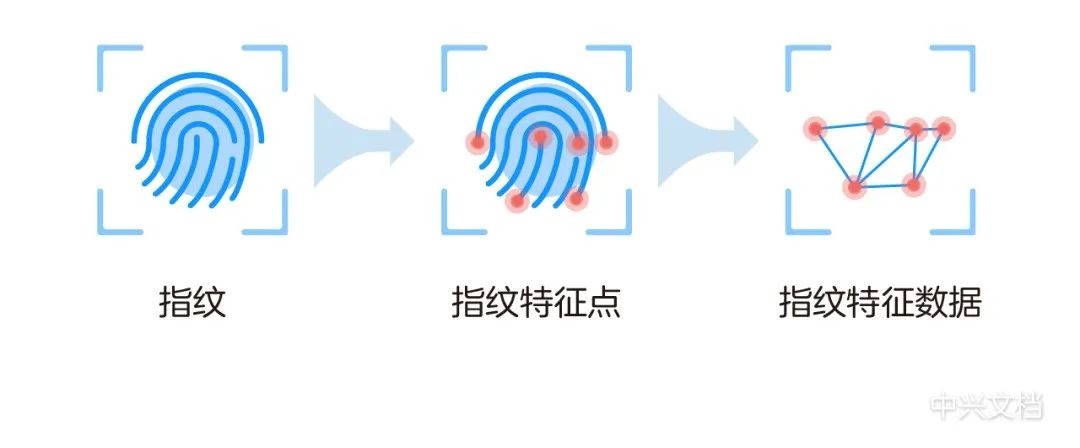
The acquired fingerprint image still needs to be processed. First, methods such as gray scaling, noise reduction, and image enhancement are used to clarify the fingerprint patterns, and then algorithms extract the feature data of the fingerprint.
Ten fingerprints can generate about 4900 independently measurable features, such as core points, triangle points, ridge count, direction, curvature, and position under various ridge and valley patterns.
Finally, these feature data formed by the fingerprint image are stored as templates.
Matching
After re-acquiring and processing the fingerprint, the fingerprint recognition module matches the new fingerprint’s feature data with the existing template using an algorithm. If the matching degree exceeds a threshold, recognition is successful.
3
What Fingerprint Recognition Technologies Are Available for Phones?
This document will mainly introduce the sensor recognition technologies for fingerprints during the above acquisition process.
Capacitive Fingerprint Recognition Technology
A mature traditional fingerprint recognition technology that is widely used in the smartphone field. The principle of realization is as follows:
The capacitive sensor has N small capacitive plates of the same area. The finger can be regarded as a large capacitive plate. When the finger touches the capacitive sensor, N small capacitors are formed, and their capacitance values depend on the distance from the fingerprint to the small capacitive plate.

The “ridges” of the fingerprint are close to the plate, resulting in high capacitance; the “valleys” are further away, resulting in low capacitance.
During the discharge process, due to the different capacitance values, ridges discharge slowly while valleys discharge quickly. The undulating patterns on the fingerprint are converted into electrical signals, which are accurately recognized.
Capacitive fingerprint recognition hasscraping and pressing two acquisition methods.
The scraping method is similar to a panoramic camera. When the finger slides across the sensor surface, the sensor “takes a photo” of the fingerprint and then “stitches” it together.
The downside is that the finger must slide at a constant speed in a specific direction and angle, leading to unsatisfactory recognition rates and convenience. Scraping fingerprint recognition modules have long been absent from phones.
The pressing method is an optimized solution to the former, which everyone is very familiar with. The finger only needs to be pressed on the sensor to quickly recognize the fingerprint, making it easier to operate.
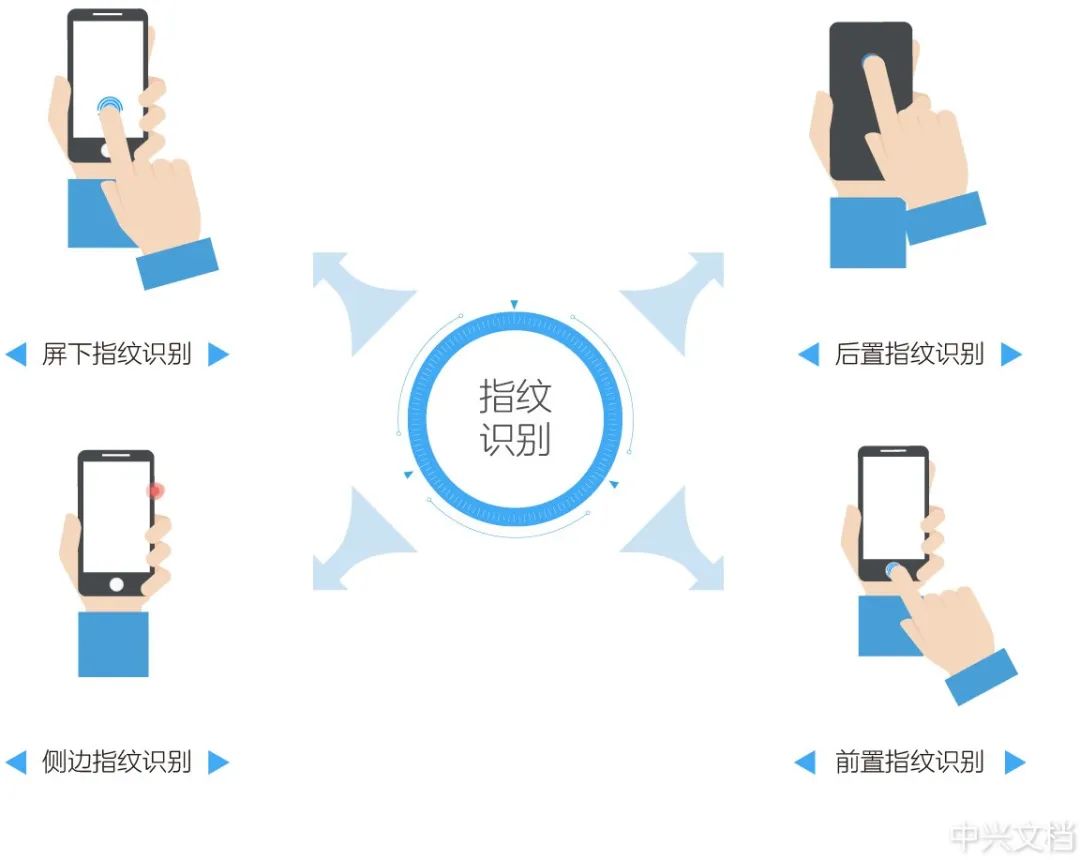
Initially, phones commonly adopted the front-mounted fingerprint recognition method, which combined the sensor with the Home button, but with the rise of large screens and full screens, there was no extra space on the front of the phone to accommodate physical buttons.

To avoid affecting the screen-to-body ratio, the sensor was moved to the back of the phone, but this rear-mounted fingerprint recognition method requires users to press blindly, which may not be accurate and is not very user-friendly.

Many phones have combined the sensor with the power button, leading to a side-mounted fingerprint recognition method, but this can easily lead to accidental touches. Moreover, to increase the effective recognition area of the fingerprint, the phone needs to be thicker, which makes it impossible to balance fingerprint recognition rates with the phone’s thinness.

In fact, for capacitive fingerprint recognition technology, whether scraping or pressing, whether front-mounted, rear-mounted, or side-mounted, there must be a physical sensor on the surface of the phone, which to some extent affects the phone’s appearance.
In recent years, user demands for phones have tended towards large full screens, lightweight bodies, and aesthetically pleasing designs, and phone screens have transitioned from LCD to OLED.
Based on OLED screens, under-screen fingerprint recognition solutions have emerged. Placing the fingerprint sensor under the screen also provides users with a stronger sense of technological experience when performing fingerprint recognition.

Under-Screen Fingerprint Recognition currently hasoptical and ultrasonic two implementation methods.
Optical Fingerprint Recognition Technology
is a common fingerprint recognition technology in daily life, such as in attendance punch-in machines. It mainly utilizes the principle of light reflection:
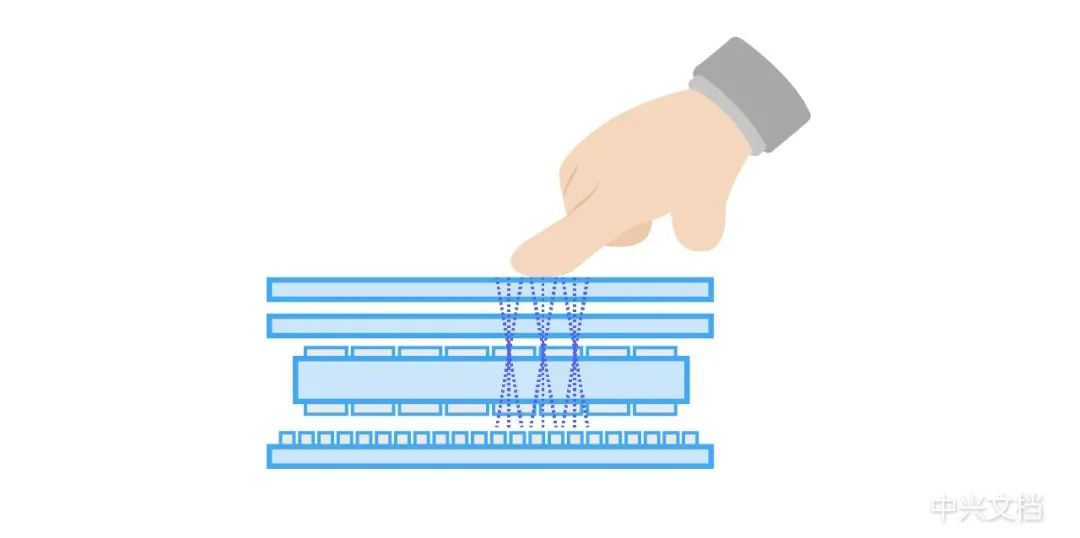
When the finger presses the screen, the screen emits light to illuminate the area where the finger presses. When the light hits the ridges and valleys of the fingerprint, it produces reflected light at different angles and brightness levels, which is received by the optical sensor under the screen through the gaps in the screen pixels, thus recognizing the fingerprint.
The advantages of optical fingerprint recognition technology are: easy operation, good penetration, mature technology, and low cost.
However, it also has significant disadvantages: it cannot identify the dermis layer of the skin, has lower security, poorer anti-counterfeiting capabilities, and requires specific areas of the screen to remain lit for long periods, increasing power consumption and potentially affecting the lifespan of the screen.
Ultrasonic Fingerprint Recognition Technology
is an emerging technology in recent years, similar to sonar principles.
When the finger presses the screen, the sensor under the screen emits ultrasonic waves to the area where the finger is pressed. When the ultrasonic waves contact the ridges and valleys of the fingerprint, the degree of absorption, penetration, and reflection varies, producing different energy echoes that are received by the sensor, thus constructing a 3D fingerprint image.

The advantages of ultrasonic fingerprint recognition technology are: strong penetration, strong interference resistance to water and stains, high recognition rate, and support for liveness detection, making it more secure.
The disadvantages are: high cost, relatively immature technology, and low market share.
4
How Has Mobile Fingerprint Recognition Technology Developed?
It is generally believed that the Motorola MB 860, launched in April 2011, was the first smartphone equipped with fingerprint recognition functionality, where users performed scraping fingerprint recognition on the sensor at the top of the phone.
The most well-known example is Apple’s iPhone 5S, released in September 2013, which supports front-mounted pressing fingerprint recognition, with the sensor embedded in the circular Home button, surrounded by a stainless steel sensing ring.
The iPhone 5S can be said to have led the trend of fingerprint recognition in smartphones, after which various fingerprint recognition-enabled phones flooded the market.
……
In 2014, the first Android phone with rear-mounted fingerprint recognition.
In 2015, the first phone with side-mounted fingerprint recognition.
In 2018, the first mass-produced phone with under-screen optical fingerprint recognition.
In 2019, the first phone with under-screen ultrasonic fingerprint recognition.
……
In March 2023, under-screen optical fingerprint recognition and the fourth generation of under-screen camera technology.
According to statistical data, in recent years, Apple models without fingerprint recognition have continued to sell well, affecting the overall penetration rate of fingerprint recognition, which dropped to 79% for domestic smartphones in 2022.
Among them, rear-mounted fingerprints are gradually fading from the market, while side-mounted fingerprints have captured a large share of the mid-to-low-end LCD screen smartphone market, with a penetration rate of 44%, and under-screen fingerprint recognition has a penetration rate of 30%.
For the vast majority of users, regardless of the type of fingerprint recognition technology, ease of use is the most critical factor.
The current under-screen fingerprint recognition technology not only continues the convenient operation of front-mounted recognition but also eliminates the need for sensor grooves on the body as required by rear-mounted and side-mounted recognition, allowing phones to achieve greater thinness and screen-to-body ratio.
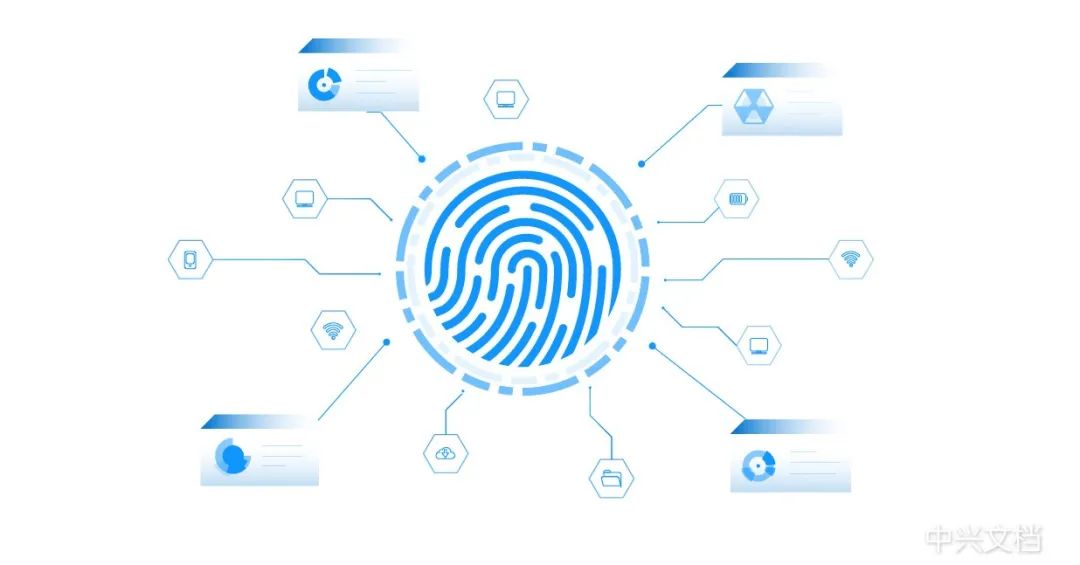
Currently, there are phones on the market equipped with ultrasonic 3D wide-area under-screen fingerprint recognition modules, enabling more interactive functions based on dual fingerprint recognition.
This also opens up our thoughts: fingerprint recognition is not limited to unlocking phones and mobile payments!
Each of us has ten fingers, equivalent to ten unique keys. How can we use these keys to unlock more extensive spaces on our phones? This is a question worth pondering~
5
Outlook
The labels associated with fingerprint recognition technology are numerous: “recognition rate”, “recognition speed”, “convenience”, “security”, “cost performance”… The future direction of fingerprint recognition technology will undoubtedly be a better solution that balances these indicators.
In the near future, ultrasonic fingerprint recognition technology may become mainstream.
In the more distant future, will fingerprint recognition technology evolve to penetrate the skin of fingers to extract more features for recognition?
Mobile fingerprint recognition technology has brought us infinite imaginative space.Reproduced content only represents the author’s viewsand does not represent the position of the Institute of Semiconductors, Chinese Academy of SciencesEditor: Shi Sheng