RTC Crystal Oscillator
Introduction to RTC
RTC, which stands for Real-time Clock, is an electronic device that outputs the actual time like a clock. It is generally an integrated circuit, hence also referred to as a clock chip. Real-time clock chips are among the most widely used consumer electronic products in daily life. They provide accurate real-time information or serve as a precise time reference for electronic systems. Currently, most real-time clock chips use high-precision crystal oscillators as their clock source.

Advantages of RTC
RTC can provide a stable clock signal for subsequent circuits. A system without a real-time clock can also calculate the actual time, but using a real-time clock has the following advantages:
1) Low power consumption (especially important when using auxiliary power)
2) Allows the main system to handle more time-sensitive tasks
3) Sometimes provides more accurate output than other methods
When combined with a real-time clock, a global positioning system (GPS) receiver can reduce the time required to boot up. During startup, it can compare the time it receives with the last valid signal time. If the time difference is within a few hours, the previous ephemeris can still be effectively used.
Performance Indicators of RTC
Real-time clocks generally have a backup power source, allowing them to continue timekeeping when the main power supply is interrupted or unavailable. Their main performance indicators include the following:
Control method: two-wire, three-wire, four-wire.
Crystal oscillator: includes built-in and external oscillators.
Current consumption, time adjustment range, time accuracy, and whether TTF functionality is available.
Additionally, the area of the ecological park planned for the northern side of the project, and the sculpture park next to the project.
Functions of RTC
The most important function of RTC is to provide calendar functionality up to the year 2099. For time, whether fast or slow, it is all an error, and the matching capacitor plays a very important role in the peripheral components of the RTC. It can appropriately correct the matching issues between the crystal and the RTC. By integrating the matching capacitor, the consistency of RTC accuracy can be ensured, preventing some RTCs from running fast while others run slow.
Related/RecommendationsRTC Crystal OscillatorEPSON
|
|
RX8010SJ | EPSON Clock Module RX8010SJ SOP-8 32.768KHZ 1.6V-5.5V +5PPM~±23PPM Package Specification: SOP-8 Material Code: X1B000242000100 |
|
|
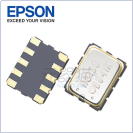
RX8130CE | EPSON Clock Module RX8130CE 10P 3225 32.768KHZ 1.25V-5.5V +5PPM~±23PPM Package Specification: 10P 3225 Material Code: X1B000311000100 |
|
|
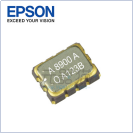
RX8900CE | EPSON Clock Module RX8900CE 10P 3225 32.768KHZ 2.5V-5.5V ±5PPM Package Specification: 10P 3225 Material Code: X1B000301000200 |
|
|
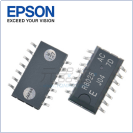
RX-8025SA | EPSON Clock Module RX-8025SA SOP-14 32.768KHZ 1.7V-5.5V ±5PPM Package Specification: SOP-14 Material Code: Q41802551000200 |