I have compiled 3000 sets of electrical materials, contact me if you want them.
(Click the red text above to receive them for free)
RS-232, RS-422, and RS-485 are all serial data interface standards. RS-232 is the most widely used serial interface for PCs in communication. RS-232 is defined as a single-ended standard that increases communication distance in low-speed serial communication. RS-232 uses an unbalanced transmission method, known as single-ended communication, while the RJ45 interface is commonly used for data transmission, with the most common application being network card interfaces.
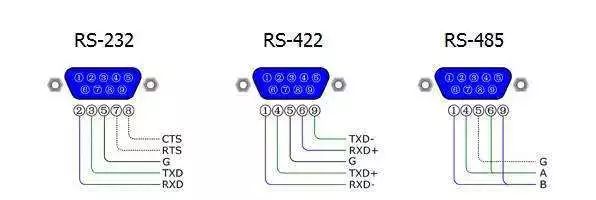
Communication issues, like traffic issues, can vary with high speed, low speed, congestion, interruptions, and other situations. If we compare serial communication to traffic, UART could be likened to a bus station, where a frame of data is like a car. Cars traveling on the road must obey traffic rules. In urban areas, the speed limit is generally 30 or 40, while on highways it can reach 120. The road a car takes and the speed limit depend on how the protocol specifies it. Common serial protocols include RS-232, RS-422, and RS-485. What are the subtle differences between them? Let’s explore together.
1. Explanation of RS232
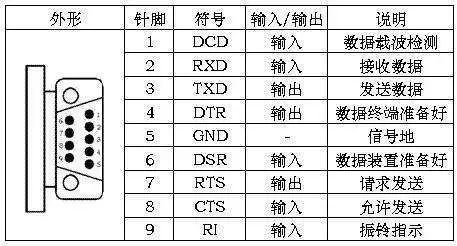
One of the communication interfaces on personal computers, defined by the Electronic Industries Association (EIA) as an asynchronous transmission standard interface. Typically, the RS-232 interface appears in the form of 9 pins (DB-9) or 25 pins (DB-25). Generally, personal computers have two RS-232 interfaces, known as COM1 and COM2.
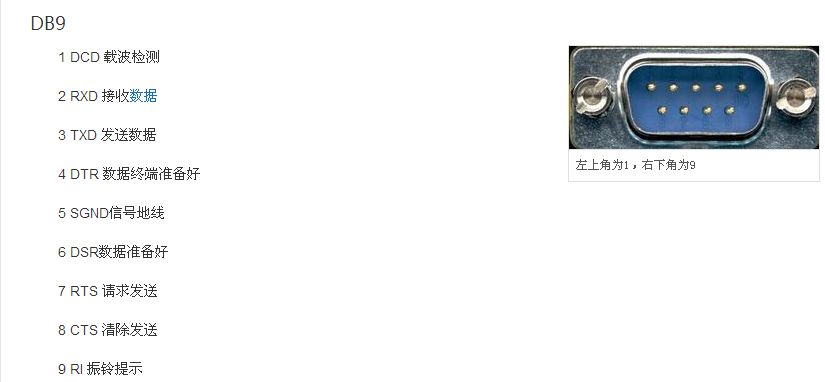
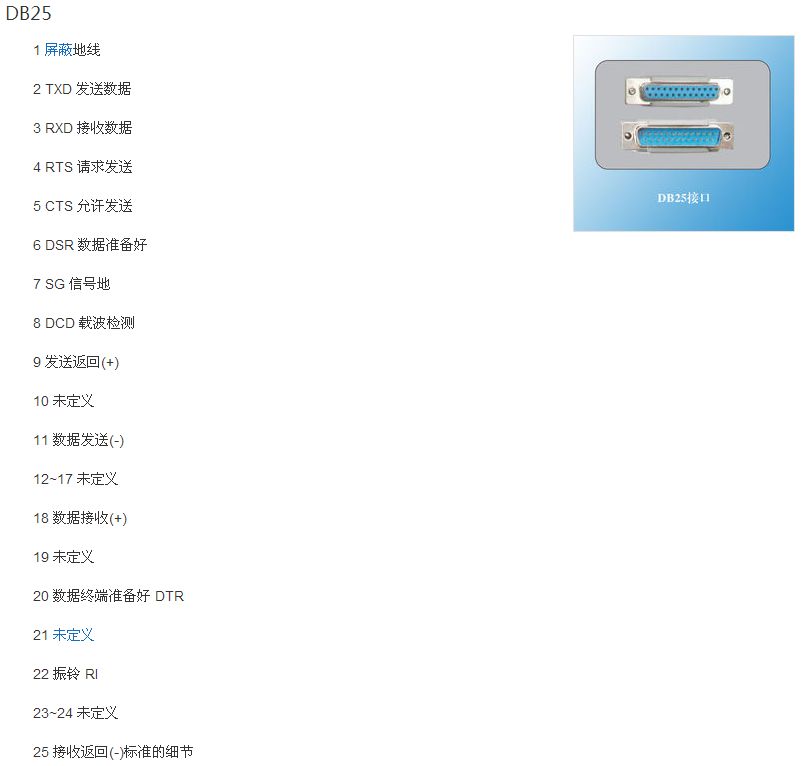
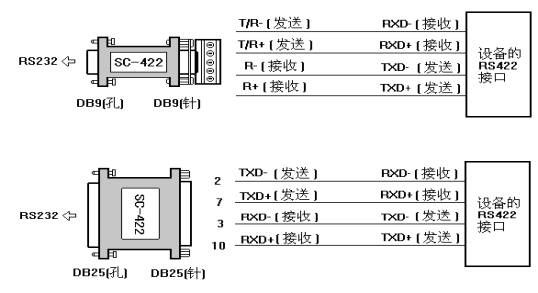
The electrical interface of RS232 is divided into DB9 and DB25, defined as shown in the following images:
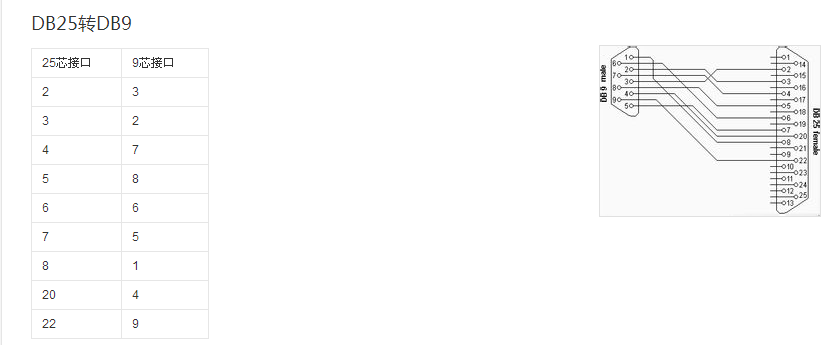
In fact, most of the time not all interfaces need to be soldered; here is a simplified diagram:
2. Explanation of RS422
The full name of the RS-422 standard is “Electrical Characteristics of Balanced Voltage Digital Interface Circuits,” which defines the characteristics of the interface circuit. In fact, there is also a signal ground line, making a total of 5 lines. Due to the receiver’s high input impedance and the transmitter’s stronger driving capability compared to RS232, it allows multiple receiving nodes to be connected on the same transmission line, with a maximum of 10 nodes. There is one master device and the rest are slave devices, which cannot communicate with each other, so RS-422 supports point-to-multipoint bidirectional communication. The input impedance of the receiver is 4k, so the maximum load capacity of the transmitter is 10×4k+100Ω (termination resistance).
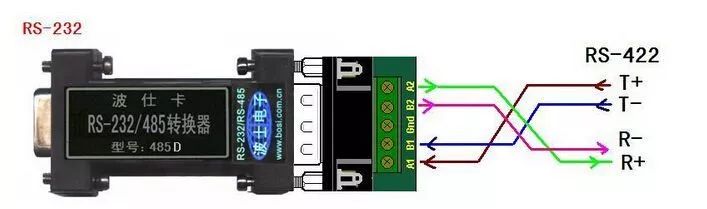
In fact, most of the time not all interfaces need to be soldered; here is a simplified diagram:
3. Explanation of RS485
RS-485, also known as TIA-485-A, ANSI/TIA/EIA-485 or TIA/EIA-485.
RS485 defines the electrical characteristics of drivers and receivers in balanced digital multipoint systems. This standard is defined by the Telecommunications Industry Association and the Electronic Industries Alliance. Digital communication networks using this standard can effectively transmit signals over long distances and in environments with high electronic noise. RS-485 enables the configuration of cheap local networks and multi-branch communication links.
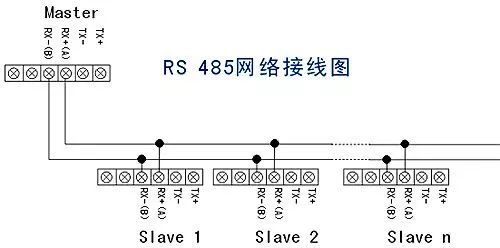
RS485 can be wired in two-wire or four-wire configurations. The four-wire configuration can only achieve point-to-point communication and is rarely used now; the two-wire configuration is commonly used and has a bus topology, allowing a maximum of 32 nodes to be connected on the same bus.
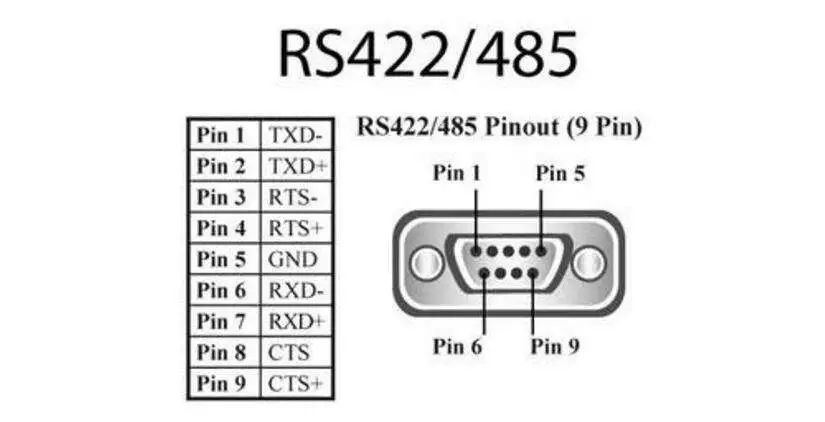
4. Comparison of RS232, RS422, and RS485
All are serial communications with different application scenarios.
RS232 – 3-wire full duplex, point-to-point communication, transmission distance within 25 meters.
RS485 – 2-wire half duplex, point-to-multipoint master-slave communication, transmission distance can reach over 1200 meters.
RS422 – 4-wire full duplex, master-slave communication, transmission distance can reach over 1200 meters.
Recommended by the editor
Revealing the largest gang in industrial control - how has it gained countless fans in just two years? Revealing the little secrets of the industrial control gang... How does machine vision achieve dimensional measurement? 2018 machine vision latest course plan 2018 industrial robot latest course plan 2018 electrical engineer class is hot for registration▣ Source: Electrical Engineering Automation, please contact us for deletion if there is an infringement. ▣ Statement: The materials in this article are collected from the internet and edited by the Industrial Control Cloud Academy. The videos, images, and text used in the article are copyrighted by the original author. However, due to numerous reprints, we cannot confirm the true original author; therefore, only the source of reprint is indicated. If there are copyright issues, please contact 18817120051 (WeChat same number), and we will confirm the copyright and pay royalties according to national regulations immediately! ▣ Suggestion: There may be omissions or errors in the content described in the article; please feel free to express your opinions in the comment area. What you know may be exactly what everyone wants to understand! This way we can help more people learn more! Thank you for your support!