 BFH click the blue text to follow us↑↑↑↑
RS-232, RS-422 and RS-485 are all serial data interface standards. RS-232 is the most widely used serial interface in PC communication. RS-232 is defined as a single-ended standard that increases communication distance in low-speed serial communication. RS-232 uses an unbalanced transmission method, known as single-ended communication, while the RJ45 interface is typically used for data transmission, with the most common application being network card interfaces.
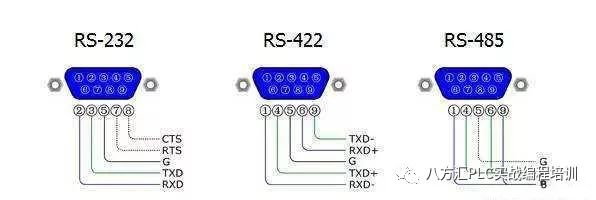
Communication issues, like traffic issues, also have various situations such as high speed, low speed, congestion, and interruptions. If we compare serial communication to traffic, UART can be likened to a station, and a frame of data is like a car. Cars must obey traffic rules while on the road. In a city, the speed limit is generally 30 or 40, while on the highway it can be up to 120. The type of road and speed limit depend on the protocol specifications. Common serial protocols include RS-232, RS-422, RS-485. What are the subtle differences between them? Let’s explore together.
1. Explanation of RS232
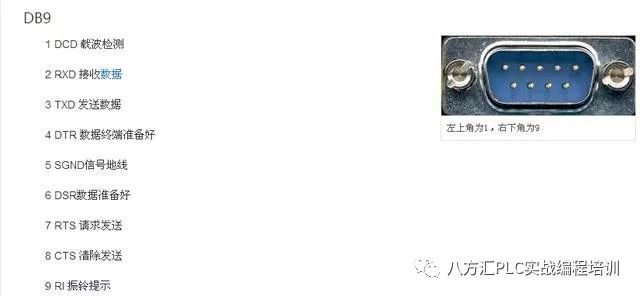
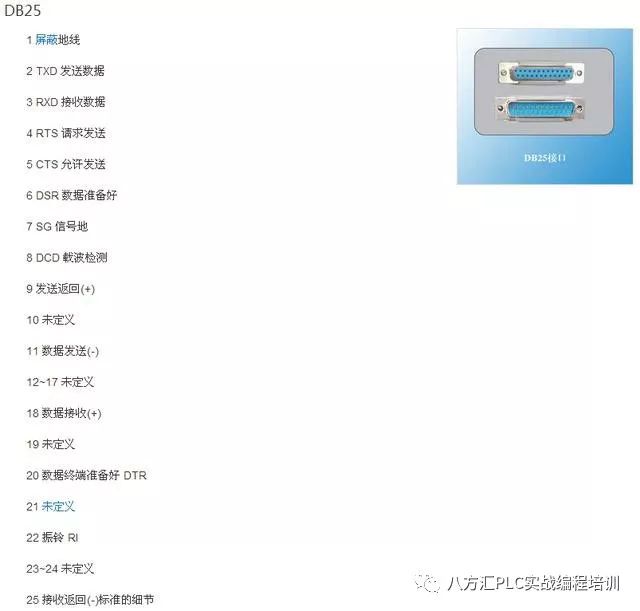
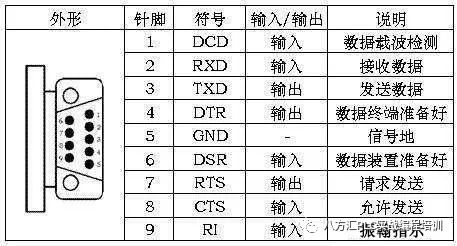
One of the communication interfaces on personal computers, the RS-232 is an asynchronous transmission standard interface defined by the Electronic Industries Association (EIA). Typically, RS-232 interfaces appear in the form of 9 pins (DB-9) or 25 pins (DB-25), and generally, personal computers have two sets of RS-232 interfaces, referred to as COM1 and COM2.
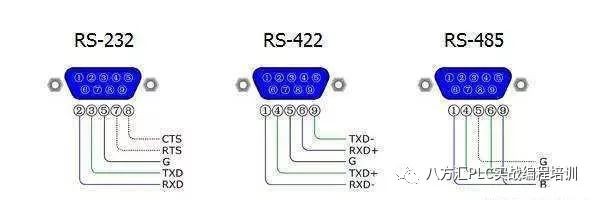
The electrical interface of RS232 is divided into DB9 and DB25, defined as shown in the following diagram:
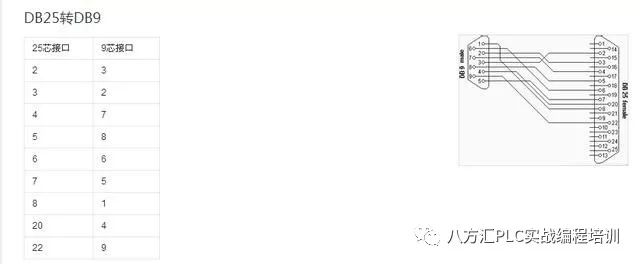
In fact, most of the time, not all interfaces need to be soldered; the simplified diagram is as follows:
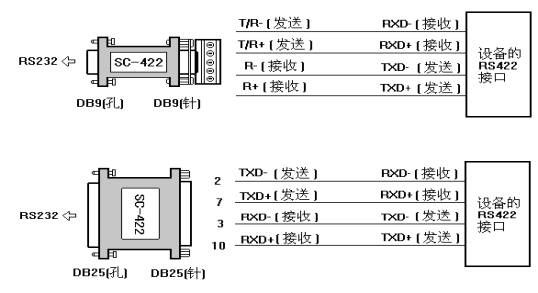
2. Explanation of RS422
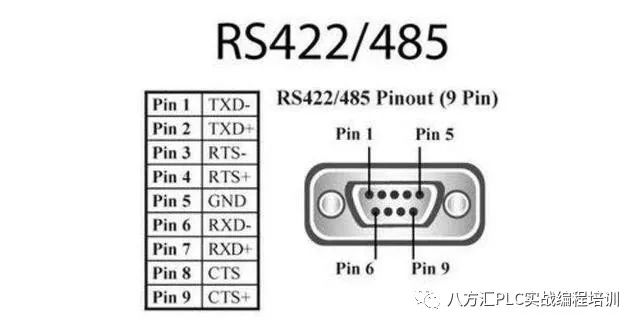
The full name of the RS-422 standard is “Electrical Characteristics of Balanced Voltage Digital Interface Circuits”; it defines the characteristics of the interface circuit. In fact, there is also a signal ground wire, making a total of 5 wires. Due to the high input impedance of the receiver and the stronger driving capability of the transmitter compared to RS232, it allows multiple receiving nodes to be connected on the same transmission line, with a maximum of 10 nodes. One master device and the rest are slave devices; slave devices cannot communicate with each other, so RS-422 supports point-to-multipoint bidirectional communication. The input impedance of the receiver is 4k, thus the maximum load capacity of the transmitter is 10×4k+100Ω (termination resistance).
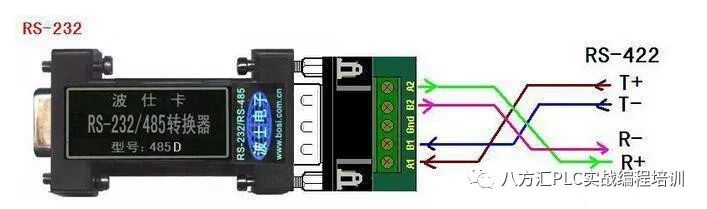
In fact, most of the time, not all interfaces need to be soldered; the simplified diagram is as follows:
3. Explanation of RS485
RS-485 is also known as TIA-485-A, ANSI/TIA/EIA-485, or TIA/EIA-485.
RS485 is a standard that defines the electrical characteristics of drivers and receivers in a balanced digital multipoint system. This standard, defined by the Telecommunications Industry Association and the Electronic Industries Alliance, enables effective signal transmission over long distances and in environments with significant electronic noise. RS-485 makes it possible to configure inexpensive local networks and multipoint communication links.
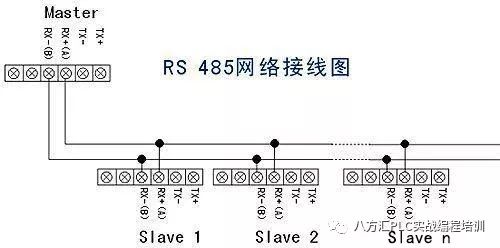
RS485 can be wired in two-wire or four-wire configurations. The four-wire configuration only supports point-to-point communication and is rarely used now; the two-wire configuration is commonly used, which adopts a bus topology, allowing a maximum of 32 nodes to be connected on the same bus.
4. Comparison of RS232, RS422, and RS485
They are all serial communication methods, used in different applications.
RS232 – 3-wire full duplex, point-to-point communication, transmission distance within 25 meters.
RS485 – 2-wire half duplex, point-to-multipoint master-slave communication, transmission distance can reach over 1200 meters.
RS422 – 4-wire full duplex, master-slave communication, transmission distance can reach over 1200 meters.
Previous Highlights
[Content Sharing] Detailed steps for switching between Chinese and English interfaces on touch screens, welcome to bookmark!
All explained! What are PLC, DCS, FCS? This article explains it thoroughly.
[Heavy Content] Modbus communication of Mitsubishi Q series serial port module QJ71C24.

Reply with “Name + Phone” to reserve a spot, limited availability, act now!!!

BFH
Training Courses:
Practical Mitsubishi PLC programming, practical Wecon touch screen programming, practical encoder high-speed counter course, practical inverter programming applications, practical stepper motor programming applications, practical servo motor programming applications, PLC touch screen decryption course, etc. Course content includes a complete process that engineers are responsible for, as well as technical support provided to students after they step into engineering positions. In special circumstances, instructors can provide on-site service.
BFH
Free Courses Offered:
Electromagnetic valve application course,
Electrical CAD drawing course,
Control box wiring wisdom,
Electrical tutoring course,
Computer quick application course,
Electrical engineer interview course,
Electrical engineer career wisdom,
Personal tutoring for electrical engineers course
BFH
Free Courses Offered:
Electrical automation selection course,
Automation programming salon (updated weekly),
Automation project development,
Proficient learning of stepper motors, servo motors
and other motion control. Dozens of real equipment
hands-on practice helps students quickly become engineers; learning skills should not only be theoretical but also practical, combining theory with practice, with the goal of transforming students into engineers.