The “flash memory incident” of the Huawei P10 series was a hot topic in the first half of last year. The issue mainly arose because Huawei advertised UFS 2.1 on some promotional pages (as seen on certain foreign official websites) and sent out UFS flash memory devices to the media, while the Huawei P10 series that was released included a mix of UFS 2.1, UFS 2.0, and eMMC 5.1, misleading countless consumers. So what are the differences between these various specifications of flash memory?

1. eMMC Flash Memory
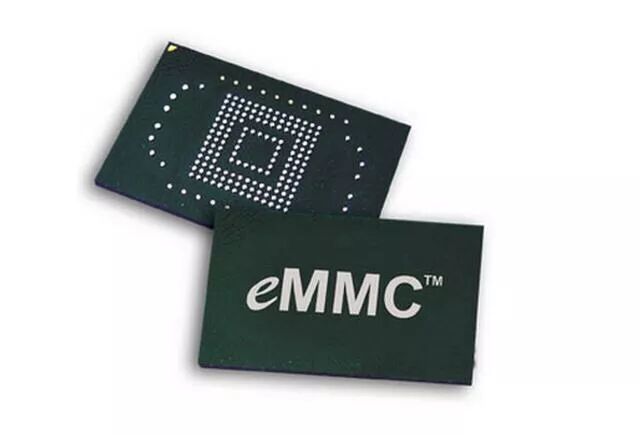
eMMC, short for “embedded Multi Media Card,” is an embedded multimedia storage card. We can understand eMMC literally as it integrates Flash memory and a control chip into one package.
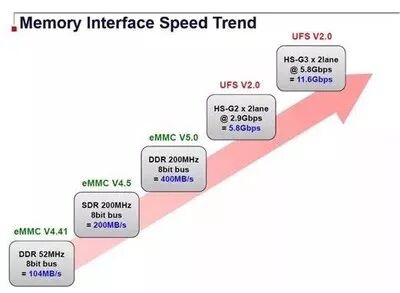
Devices before 2014 typically used flash memory chips below eMMC 4.5. In July 2013, Samsung officially began mass production of eMMC 5.0 flash memory, marking the entry of mobile flash storage into the eMMC 5.0 era the following year. By the end of 2015, all mobile devices were still using eMMC 5.1 and similar eMMC chips. Notably, there are reports that the next generation of eMMC 5.2 is expected to debut in the fourth quarter of this year.
Its advantages include: ①. Simplifying the design of mobile storage; ②. Reducing the time to market and R&D costs for new products, accelerating the pace of product innovation.
2. UFS Flash Memory
UFS, short for “Universal Flash Storage,” is a standard specification for embedded storage that integrates a control chip with flash memory, using the SCSI architecture commonly found on PC platforms and supporting the corresponding SCSI command set.
Development History
In 2011, the Joint Electron Device Engineering Council (JEDEC) released the first generation of Universal Flash Storage (UFS) standards, namely UFS 1.0. However, the first generation of UFS was not popular, as it did not provide sufficient advantages compared to the continuously updated eMMC.
In 2013, JEDEC released the UFS 2.0 standard (JEDEC Standard No. 220B). The theoretical maximum rate of the UFS 2.0 interface can reach 5830.4 Mbps, making UFS 2.0 more promising and likely to become the mainstream configuration for future mobile devices.
In March 2016, JEDEC released the improved UFS 2.1 standard (JEDEC Standard No. 220C). Compared to UFS 2.0, the speed standard remained unchanged at the mandatory HS-G2 and optional HS-G3. The improvements mainly included three aspects: ①. Device health (including preventive maintenance); ②. Performance optimization (including command prioritization and firmware upgrades); ③. Security protection.
Note: Device health information includes remaining reserved blocks and device lifespan information, command prioritization allows higher priority for urgent tasks, and security protection supports fine-grained write protection at the operating system and application levels (including hardware-level encryption of the UFS controller).
3. UFS Flash Memory is the Future
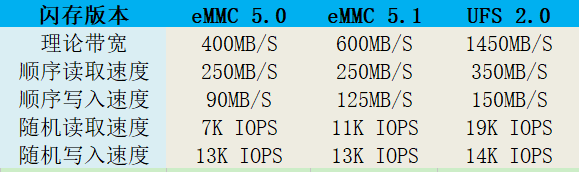
Compared to eMMC, UFS primarily offers faster transfer speeds and lower power consumption. In practical operations, these advantages manifest in faster response times for multitasking, lower latency and smoother gameplay, shorter write (load) times for photos (thumbnails), and better power-saving effects.
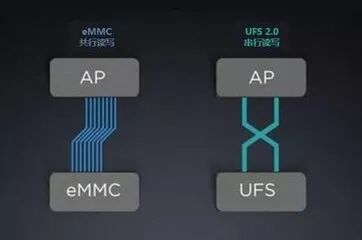
It is important to note that UFS also supports full-duplex operation, allowing for serial read and write, meaning that writing can occur while reading; whereas half-duplex eMMC can only perform parallel read and write, and cannot write while reading.
If we consider them as lanes, eMMC is like a one-way lane where vehicles can only travel in one direction, and vehicles going the opposite way must wait for all vehicles traveling in the same direction to pass before proceeding. In contrast, UFS is not only a two-way lane but also has a much wider road than eMMC. In short, eMMC is akin to a “regular road” (like county roads or rural roads), while UFS is like a “highway,” leading to a significant difference in operational efficiency.
Of course, eMMC also has its advantages, such as more mature technology, large-scale production capabilities, lower costs, and meeting the demand for flash memory chips in mainstream mobile products, while UFS, although stronger, has higher production costs and is mainly used in high-end products.
In summary, based on the development trend of storage chips, UFS is more aligned with the requirements of technological advancement and is bound to become the mainstream in the mobile product market.
Previous Highlights Review

Snapdragon 636 Performance Boost with Excellent Power Control, Redmi Note 5 Endurance Test
Value for Money: Where Does the Huawei P20 Differ from the Huawei P20 PRO?
Snapdragon 636 Performance Rivals Snapdragon 660? Redmi Note 5 Gaming Performance Test
Click to read the original article for discounts on purchasing brand new authentic phones