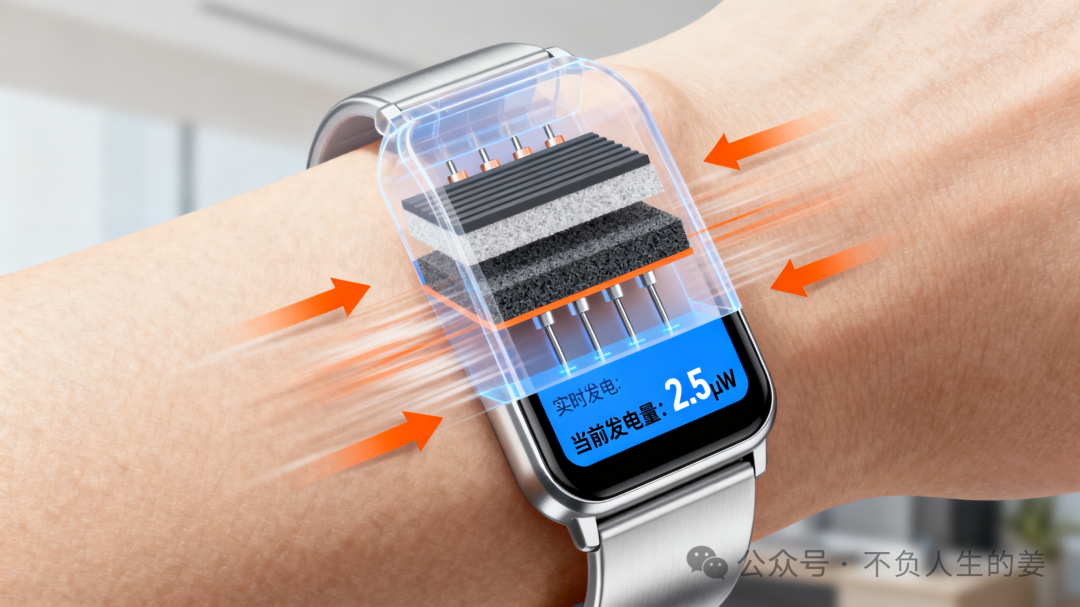
In today’s world of continuous innovation in energy technology, a remarkable technology is quietly emerging: the Triboelectric Nanogenerator (TENG), which acts like a small ‘magic box’ that can easily convert the ubiquitous mechanical energy around us into electrical energy. Today, let us delve into the fascinating world of triboelectric nanogenerators.
Principle Exploration: The Wonderful Duet of Friction and Induction
The working principle of the triboelectric nanogenerator is based on two key effects: triboelectric charging and electrostatic induction.
- Triboelectric Charging: When two objects rub against each other, electrons transfer from one object to the other. The object gaining electrons becomes negatively charged, while the object losing electrons becomes positively charged. For example, when we comb our hair with a plastic comb, the comb becomes statically charged and can attract small pieces of paper, which is a typical phenomenon of triboelectric charging.
- Electrostatic Induction: When a charged object approaches an uncharged conductor, the interaction between charges causes the charges within the conductor to redistribute. Opposite charges are attracted to the charged object, while like charges are repelled to the far end of the conductor.
The triboelectric nanogenerator cleverly combines these two effects. Taking the contact-separation type triboelectric nanogenerator as an example, when two materials come into contact, electron transfer generates triboelectric charging; when the two materials are pulled apart slightly, a potential difference is created across the electrodes at both ends of the materials, allowing electrons to flow from the external circuit, generating current. By continuously opening and closing the two materials, an alternating current signal is produced.
Unique Advantages: Small Size, Big Energy
- Efficient Low-Frequency Energy Harvesting: Traditional electromagnetic generators are inefficient at capturing low-frequency energy, while TENG can maintain over 80% energy conversion efficiency at low frequencies (0.1 – 2Hz). For example, in marine environments, the energy from low-frequency movements such as waves and tides is abundant, and TENG can effectively collect this energy.
- Lightweight, Flexible, and Cost-Effective: TENG is small in size, lightweight, and has a wide range of material options, making it simple to manufacture and low in cost. It can be designed with suitable materials and structures for different application scenarios, capable of being as small as a ping-pong ball for collecting ocean energy, or used in wearable devices to harvest energy from human motion.
- Wide Applications Across Multiple Fields: From the development of blue energy in the ocean to self-powered sensor systems and as a high-voltage power source, TENG demonstrates enormous application potential. For instance, in marine science and engineering, constructing a serpentine TENG array can output continuous power of 3.2kW under 1.5-meter wave height conditions with a 100-meter long array tested in the South China Sea.
Application Areas: Ubiquitous Energy ‘Catchers’
- Energy Sector: In the ocean, TENG can collect energy from waves and tides and convert it into electrical energy. Scientists estimate that deploying power generation units in a net formation at a depth of 5 meters in seawater can generate megawatt-level electrical energy from a surface area of 1 square kilometer. On land, TENG can also be used to harvest wind energy, vibration energy, and more.
- Self-Powered Sensing: It can convert weak mechanical signals into electrical signals, enabling self-powered or active sensing. For example, it can be applied in intelligent transportation systems to monitor vehicle movement, bridge facility monitoring, and can also be used for human health monitoring, collecting energy from human motion while monitoring physiological data.
- High-Voltage Power Source: TENG has the characteristic of high output voltage, capable of achieving voltage outputs up to 10kV, making it an economical, safe, and reliable high-voltage power source for special scenarios requiring high voltage.
Development Challenges and Prospects: Opportunities and Difficulties Coexist
Currently, triboelectric nanogenerators face some challenges, such as material durability issues; during prolonged friction, materials may wear down, affecting power generation efficiency and lifespan. Additionally, energy management is a key issue that needs to be addressed, focusing on how to more efficiently store and utilize the collected electrical energy.
However, with continuous advancements in materials science, nanotechnology, and related fields, these issues are gradually being resolved. In the future, triboelectric nanogenerators are expected to achieve large-scale applications in more fields, bringing more possibilities for our lives and social development. Perhaps in the near future, various mechanical energies around us can be collected by TENG, providing our world with a continuous supply of green energy.
Which field do you expect triboelectric nanogenerators to achieve significant breakthroughs in first? Feel free to leave your thoughts in the comments section.