
Currently, the PCB equipment market is undergoing a third round of capital expenditure expansion driven by the demand for AI computing power. Companies are experiencing a dual-track development trend of “high-endization + regional restructuring.” The specific trends are as follows:
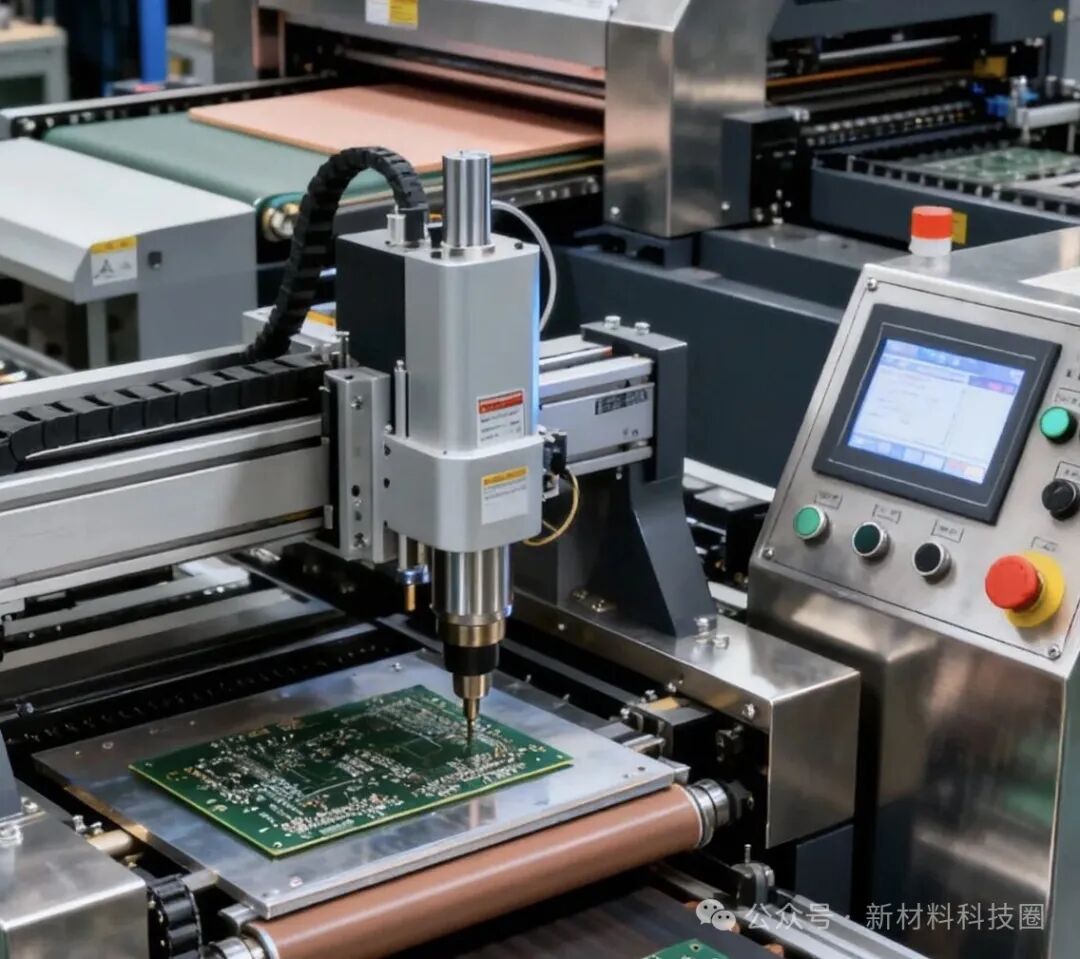
1. The pace of capacity expansion has significantly accelerated. In the first three quarters of 2025, the combined capital expenditure of eight leading PCB companies in China reached 16.3 billion yuan, a year-on-year increase of 85%, setting a new high in recent years. The upstream equipment side is also ramping up production, with Dainippon Screen increasing the annual production capacity of PCB-specific equipment from 2,120 units to 3,780 units, still facing “significant delivery pressure.”
2. High-end equipment has become the focus of expansion. ◦ The four processes with the highest value—drilling, exposure, plating, and inspection—are all upgrading to higher precision and uniformity to match the high-end HDI and multilayer boards required for AI servers (50 μm line width/spacing, 2 μm exposure resolution). ◦ Orders for high-end models such as laser drilling, LDI exposure, and horizontal three-in-one plating have doubled, with gross margins significantly higher than traditional models. Leading companies are generally operating at full capacity and have initiated phase two expansions.
3. Domestic substitution and overseas expansion are progressing simultaneously, with equipment companies rapidly increasing their market share. The localization rate of laser drilling, exposure, and plating remains low. Domestic leaders (Dainippon Screen, New Machine Micro-Assembly, Dongwei Technology) are seizing the opportunity to expand production while increasing their after-sales/assembly center layout in Southeast Asia, following PCB manufacturers “going overseas” to secure orders.
4. Southeast Asia has become the main battlefield for new capacity. According to Prismark statistics for 2025, 1/4 of the top 100 PCB suppliers globally have established factories in Vietnam or Thailand. The PCB output value in Southeast Asia is expected to grow at a CAGR of 12.4% from 2024 to 2029, significantly higher than the global average, driving local equipment investment to exceed $5 billion.
5. Product cycles are shortening, and equipment update frequency is accelerating. Driven by the iteration of AI computing power, the replacement cycle for core equipment such as drilling and exposure has been compressed from 6-7 years to 4-5 years. Coupled with the concentrated delivery of new production lines, the equipment market is expected to maintain high prosperity in 2025-2026.
6. Industry differentiation is intensifying, and concentration is increasing. The window period for high-end capacity is limited, and leading PCB manufacturers are accelerating their positioning in high multilayer, HDI, and SLP. Manufacturers with insufficient scale are struggling to expand simultaneously. It is expected that after 2026, high-end capacity will gradually shift to a buyer’s market, with equipment orders further concentrating on technology-leading and strong delivery-capable equipment leaders.
In summary, the PCB equipment market is experiencing a triple resonance of “high demand growth + technological upgrades + regional restructuring.” The years 2025-2026 will be a critical window for companies to rapidly release capacity, accelerate domestic substitution, and deepen their layout in Southeast Asia.
Disclaimer: The content of this article is compiled and analyzed from publicly available information. All data and opinions are for reference only. If there are any issues related to intellectual property, please leave feedback. Thank you for your corrections on any inappropriate content.