
Image Source: DIGITIMES
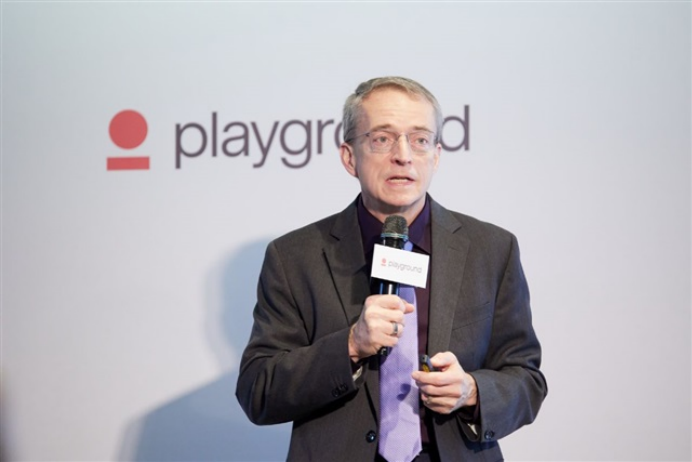
Pat Gelsinger, after stepping down as CEO of Intel, continues to influence the semiconductor industry as a venture capitalist. On November 18, he led seven portfolio companies to Taiwan to showcase cutting-edge technologies and reflect on his forty-year relationship with the semiconductor industry in Taiwan.
During the media Q&A session following the event, Gelsinger discussed core topics such as extreme ultraviolet (EUV) lithography, future light source technologies, the evolution of the AI industry, and his transition from corporate management to venture capital.
Advancements in EUV Technology and Challenges in Chip Manufacturing
Gelsinger stated that EUV technology is an extraordinary achievement and is crucial for the production of next-generation chips. Currently, EUV light source systems operate by bombarding tin droplets with high-energy laser beams, but the equipment is large, complex, and energy-intensive. In Taiwan, the semiconductor manufacturing industry consumes about 10% of the total electricity, with exposure equipment accounting for about half of that energy consumption. This highlights the industry’s urgent need for more energy-efficient and scalable lithography solutions.
Among the companies Gelsinger has invested in, xLight is developing high-power free electron laser (FEL) technology. This innovation aims to support chip production at process nodes below 2 nanometers by increasing output power while reducing energy consumption. Gelsinger noted that such technological breakthroughs could double wafer manufacturing capacity and inject new vitality into future semiconductor manufacturing capabilities.
When asked about the recent announcement from the American startup Substrate regarding a new type of EUV light source, Gelsinger refrained from commenting directly due to the controversy surrounding the technology. He emphasized that focusing on the critical challenge of EUV light sources is the right direction, and once this problem is solved, subsequent issues in chip production will be resolved.
Investment in the AI Industry and Energy Constraints
Regarding AI deployment, Gelsinger acknowledged that there is currently inefficiency in capital allocation but still believes that AI is a foundational and evolving technology. Although some investments related to foundational models may not yield returns, the long-term practical impact of AI is expected to be significant. He compared the current stage of AI development to the early “DOS era” of computing, emphasizing that the technology is still in its infancy and demand is continuously evolving.
Regarding the surge in capital expenditures by cloud service providers and strategic investments by companies like Nvidia in OpenAI, Gelsinger believes that this level of expenditure is reasonable and not exaggerated. He stated that the main limiting factor is the availability of energy rather than financial resources. Building a 2-gigawatt AI data center may require hundreds of millions of dollars in upfront investment, but without sufficient energy infrastructure, large-scale chip procurement and expansion will be difficult to achieve.
The current global energy growth rate hovers between 3% and 4%, and demand growth driven by AI could push this rate up to 5%. The limitations on the expansion of nuclear power, renewable energy, and gas turbine energy infrastructure serve as a natural barrier to excessive investment bubbles. Gelsinger pointed out that unlike the internet bubble era, today’s cloud service providers all follow sustainable business models.
Transition from Corporate Management to Venture Capital
Reflecting on his transition from Intel CEO to venture capitalist, Gelsinger explained that his role has shifted from a decision-making leader to more of an advisory position. He no longer directly issues commands but provides advice and guidance to the CEOs of portfolio companies as a mentor or partner, without participating in final decisions.
He admitted that he is still adapting to this transition but is optimistic about the opportunity to support multiple companies in creating value. He stated that this new phase of his career is one of the most vibrant and productive stages he has experienced.
Gelsinger also shared leadership lessons learned early in his career from Paul Otellini, who advised him to take on a sales representative role to broaden his management skills. Although he was initially resistant, after gaining experience in finance and sales, Gelsinger gradually understood the depth of this advice. He emphasized that being open to feedback and diverse perspectives is crucial in leadership development.
Original Title:
Pat Gelsinger showcases semiconductor innovations for Taiwan visit; discusses AI and post-Intel adjustments
Original Media:digitimes asia