Long ago in France, Nice was the first city to invest in a smart society. In June 2013, it built the world’s first “smart tree-lined avenue.” Since then, the city’s waste management has been upgraded: trash bins automatically report when they need to be emptied, streetlights can adjust their brightness based on objective conditions, and parking lots are equipped with contactless parking meters. Particularly convenient is that drivers no longer have to circle blindly looking for parking spaces; the meter will inform them where there are available spots, making it clear at a glance. Lyon and Échirolles are gradually showing the future appearance of “smart cities.”
As smart living becomes increasingly common, how do we explain the Internet of Things (IoT) to others?
In this article, we primarily discuss how to introduce the IoT in the best way. Perhaps in the process, it will also help you fully understand the IoT, from explaining its true meaning to comprehensively realizing how it benefits our lives.
What Does the Internet of Things (IoT) Mean?
IoT is the abbreviation for the English term Internet of Things, which means the Internet of Things.
In simple terms, it refers to the connection of all devices to the Internet in some way:
From smartphones and tablets (common) to cars and refrigerators.
The main function of the IoT lies in how to connect devices, services, and applications to the Internet, allowing them to play a greater role, and there are virtually no restrictions on what devices can be connected to the IoT and the reasons for connecting them.
One of the important ways the IoT improves quality of life is by making data sharing easier: the IoT will help simplify our lives and, in the long run, can handle some trivial matters for us.
Still Not Clear? Look at the Following Examples:
Health Monitoring: The IoT means that patients can monitor their health status at any time, quickly detect problems, and thus avoid more serious issues. If problems arise, healthcare professionals will be informed immediately.
Autonomous Driving: Have you heard of self-driving cars? They connect to the Internet to access constantly updated map databases in real time to ensure the best route to their destination. They can sense other autonomous vehicles, detect obstacles and traffic signs on the road through special sensors, and they are actually safer than human-driven cars (believe it or not).
Smart Agriculture: Borrowing from a previous example, farmers can also benefit from the IoT by using special sensors to tell crops when they need watering (and how much), and then precisely completing the watering through an automatic irrigation system, allowing farmers to focus on other tasks.
Thus, the IoT is actively improving application standards across various industries. The three examples above are just a small part of what the IoT can achieve.
How Does the IoT Change Daily Life?
In fact, the IoT is not only applicable to professional fields or large enterprises; it can also benefit everyone. For example:
Handheld Smart Devices: Remember your Christmas gift tablet? Yes, you can shop using the tablet’s touchscreen. Being able to shop easily on your tablet involves the IoT. (You can also see all the photos I sent you and communicate with distant family members via video).
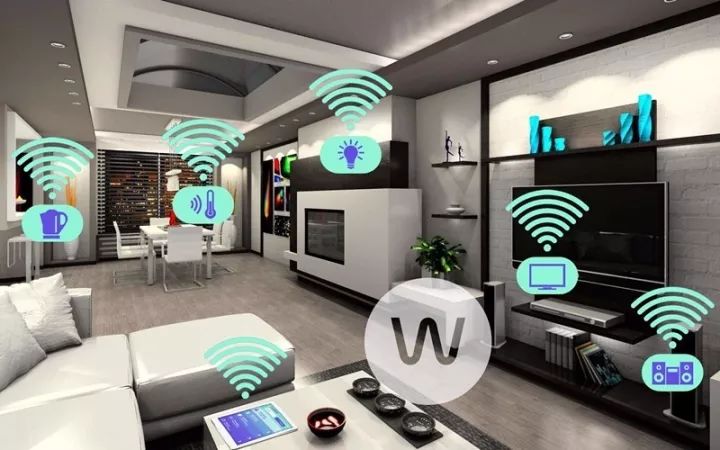
Smart Homes: Amazon (you know, the shopping site) has a smart voice assistant called Alexa, which is a very cool AI product. You can talk to it, and it can manage all the electronic devices in your home, including TVs, air conditioning, heating, lights, etc. You can even have it order food! Will Alexa become your next home assistant?
Safety: The IoT can be used to ensure people’s safety. For example, let’s look at the mining industry, which has historically experienced accidents that harm workers. The IoT can address this issue through preventive maintenance. This means that preventive maintenance can be conducted in real-time at the most needed locations before accidents occur. Currently, police departments and hospitals are also using this feature.
Entertainment: People can enjoy any movie, TV show, or music through various devices. You can watch your favorite plays on the bus, and you can play your favorite songs, web series, etc., on your TV.
Transportation: Passengers use public transport cards or NFC-enabled smartphones to pay directly when taking buses, subways, and other transportation. By installing an electronic tag on the vehicle’s windshield and using a microwave antenna at the toll booth, vehicles can pass through toll booths without stopping to pay tolls. These are some of the earliest IoT models.
The IoT has become part of your life, even if you are not aware of it. Connecting all devices to the Internet only makes life more comfortable and better.
What Will the Future Hold?
It will get better! Technologies that currently seem highly advanced will soon become commonplace in our lives. In the future, we look forward to seeing more improvements:
Shopping: Currently, technology has developed to the point where you can use VR (virtual reality) to “try on” clothes. Further developments may lead companies to provide VR services so that customers can comfortably stay at home and view products, with the details displayed being the same as the experience in a physical store.
Cooking: When you wake up in the morning and step into the kitchen, you can immediately have a warm cup of coffee. Let’s imagine what might happen in the future: perhaps ovens can automatically set the appropriate cooking time and temperature based on the food, eliminating the risk of burning food? Will refrigerators alert you when food is about to expire? It would be incredible.
Driving: We have already mentioned self-driving cars, but the future development plans are even more astounding. People want to pave smart roads for these intelligent cars, which can inform drivers of obstacles on the road ahead, ensure that drivers maintain a safe driving speed, and even provide power to the car while driving.
Not to mention that companies and manufacturers will develop more high-tech innovations to make life more convenient and efficient. We are living in an exciting era, and the IoT is a part of it!
In fact, just imagine that almost everything is connected to the Internet, and that is the IoT. Connecting the apps on your phone to devices in your home to ensure that the air conditioning or heating is turned on when you enter is the IoT!
Now, let’s take a closer look at the six major aspects of IoT smart applications.
The Six Major Aspects of IoT Smart Applications:
1. Personal Life
We are no strangers to increasingly powerful portable devices, but most of the devices we carry daily are far from being “smart” from the IoT perspective: your clothes do not know how often they are worn or washed; your shoes do not know how many steps they have taken; your keys do not remind you whether you have locked the door when you leave. All these devices will become smart in the next decade. Currently, these devices can communicate with each other through a “Personal Area Network” (PAN), and they can also connect to your phone, although important security and privacy mechanisms are still lacking.
Next, let’s add two areas centered around people in the IoT:
1. Personal hygiene, fitness, diet, and broader medical diagnosis and treatment industries. With global improvements in nutrition and hygiene and the continued increase in human life expectancy, the market potential in this area is enormous. The traditional event-driven healthcare model does not meet economies of scale, so new predictive and proactive models will be closer to market demands. Continuous monitoring of health and wellness indicators helps identify issues early and respond to them to prevent problems from developing into chronic diseases.
2. Education and training. In addition to the long-criticized field of basic education, the IoT can also make training both in and out of classrooms more personalized. IoT-enabled training can set courses and training content based on individual performance, achieving a tailored educational effect.
2. Vehicles
Another promising application of the IoT is in vehicles. Given the “halo” organizational model used in this article, we will focus on personal transportation tools, including buses. While applications like Uber, Lyft, and ZipCar may change user habits, this article assumes that the usage patterns of vehicles will not undergo fundamental changes. Household cars and light trucks do not have mature computer platforms capable of processing large amounts of data to control engines, transmission systems, and vehicle dynamics while providing assistance and safety to drivers. Naturally, cars will achieve full automation in the future, but the market space during the transition phase is also significant, and innovative ideas in navigation, accident prevention, dynamic route management, and infotainment will have plenty of room for application.
3. Home Environment
The “home environment” category includes four subcategories:
-
Home security (including locks, cameras, motion detectors, fire/smoke/water/gas/intruder alarms, etc.)
-
Information and entertainment (this subfield has made significant progress due to the popularity of smart TVs and personalized streaming services)
-
Environmental control (this subfield has also made some progress with the proliferation of advanced temperature control devices)
-
Measurement of objects
The significant opportunities in the measurement field of the IoT are related to integration and ease of use. We can now achieve many things, but the process is often not simple or standardized. Such processes are not widely adopted because they lack a reliable foundation. The IoT also presents certain business opportunities in home appliances: in addition to achieving performance adjustments, usage optimization, and regular maintenance, the IoT can also provide data sources for automatic inventory management systems, allowing businesses to conduct sales activities more targetedly.
4. Urban Construction
Here, the discussion shifts from the living environment to a broader social environment: communities, towns, and cities. The business opportunities in this area mainly lie in making the structures of social entities like towns smarter while also enhancing the intelligent upgrades of the subfields that connect and support these structures, such as infrastructure, service industries, and public utilities. Once everything is interconnected, we can continuously monitor and analyze it, thereby improving the efficiency of fixed asset utilization (traffic on highways will flow more smoothly; the efficiency of building usage will be optimized; entrances and exits will be more convenient; energy efficiency will be improved; and fixed waste collection and recycling services will be more flexible).
5. Business Logistics
The IoT within the business domain is mostly related to the smartization of the retail industry (including all shops, shelves, and inventory units). It also includes designing large-scale commodity transportation platforms for land, sea, rail, and air transportation, entertainment platforms, personalized digital identification, and real-time personalized pricing (including coupons) in various subfields.
6. Industrial Production
Another massive potential market for the IoT encompasses crops and livestock (here, farming and animal husbandry are classified as subcategories of agriculture), oil and gas production, and transportation. These areas contain numerous business opportunities: existing remote sensing technologies can be enhanced to achieve continuous analysis of individual components or entire systems and collect data for trend analysis, demand management, and capacity planning.
It is evident that these business opportunities will involve (and should involve) interactions among multiple entities. Your digital self, represented by your personal area network, will interact with your transportation tools to estimate travel time (transportation tools often have powerful batteries that can provide energy for long-distance broadcasting to achieve better bandwidth and broader coverage). In this way, you can also find the most convenient parking at the airport, and when you return from your trip, the IoT connection can even remind you where your car is parked or summon an Uber driver for you. If you are dining out, your personal area network can reserve a table for you and arrange for your friends to join for dinner, providing you with meal suggestions and listing the health ratings of menu options. Additionally, your personal area network will remind you to take essential medications and alert you not to drive after having a couple of drinks. All your information, messages, and emails will be automatically presented to you. Your smart home system will schedule repair visits and automatically search for the best prices to replenish daily supplies before they run out.
The application of the IoT can extensively aggregate individual needs and summarize local, regional, and national demand levels, providing demand forecasts for businesses in commerce. In this case, short-term demand fluctuations may be smoothed out, and at least businesses can receive warnings in advance and make response plans: they can adjust prices and capacity to improve production efficiency.
These six intelligent prospects are just the tip of the iceberg of the IoT’s potential. Although there is still a distance to maturity, most of the intelligent effects can already be realized, and we still need to work hard on standardization, interoperability, resilience, and security. The IoT has arrived, and it will bring sweeping changes to the world.
Step into the IoT
NB-IoT| Industrial IoT
Artificial Intelligence & Big Data
Business Models | Environmental Protection | Smart Home | Sharing Economy
Smart Manufacturing | Industry Development Status | IoT Cards | Platform Collaboration
IoT Education