The concept of the Internet of Things (IoT) was proposed long ago. The term was introduced at an international conference on mobile computing and networking in the late 20th century in the United States. The concept was first proposed by Professor Ashton of the MIT Auto-ID Center while researching RFID technology. He suggested a solution that combined item coding, internet technology, and RFID. At that time, the concept was based on RFID technology, the internet, and EPC standards, utilizing wireless data communication technology and radio frequency identification technology to construct an internet that enables global sharing of physical object information. This concept was also the foundation of the first wave of IoT hype in 2003.
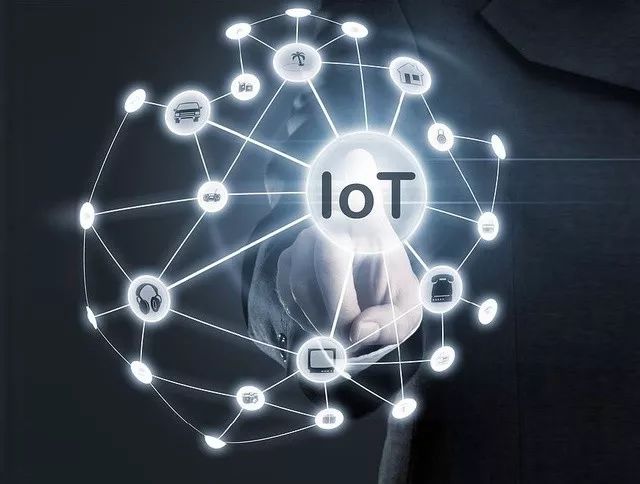
By 2005, the definition and scope of IoT had changed significantly, expanding beyond just RFID-based applications. Although there is currently no unified standard definition for IoT in China, fundamentally, IoT is a conglomerate application and technological advancement that emerges after modern information technology reaches a certain stage. It integrates various sensing technologies, artificial intelligence, modern network technologies, and automation technologies, allowing for intelligent dialogue between people and objects, thereby creating a smart world.

IoT application technology is regarded as the third revolutionary innovation in the information industry. The essence of IoT can be summarized in three aspects: First, the characteristic of the internet, which requires objects to be interconnected through a network; second, the characteristic of identification and communication, meaning that the “objects” included in the IoT concept must have the functionality for automatic identification to enable machine-to-machine communication (M2M); third, the intelligent characteristic, where the network system should possess intelligent control, automation, and self-feedback capabilities.
From a technical architecture perspective, IoT can be divided into three layers: the perception layer, the network layer, and the application layer. Specific details can be seen in the image below.
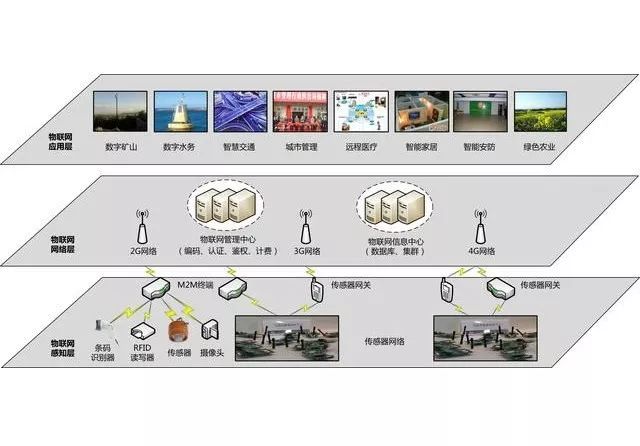
Perception Layer: Composed of various sensor gateways and sensors, including temperature sensors, carbon dioxide concentration sensors, QR code tags, humidity sensors, cameras, RFID tags and readers, GPS, and other sensing terminals. The role of the perception layer is akin to human senses such as vision, touch, taste, and hearing; it serves as the source for the IoT to identify objects and collect information, with the main functions being object identification and information collection.
Network Layer: Composed of the internet, private networks, wireless and wired communication networks, network management systems, and cloud computing platforms. The network layer functions similarly to the human brain and nervous system, primarily responsible for transmitting and processing information obtained from the perception layer.
Application Layer: This serves as the interface between the IoT and users (including individuals, organizations, or other systems). It combines with industry development application needs to realize intelligent service applications of the IoT.