Content Overview
According to Gartner’s prediction, there will be a demand for 6.4 billion connected devices globally in 2016, an increase of 30% compared to 2015. In the future, there will be even more demand for connected devices, primarily in smart homes, smart cities, and industrial applications. Therefore, the IoT sector will generate many new business opportunities.
Recently, the “2016 China International IoT and Smart China Summit Forum” was successfully held at the Shenzhen Convention and Exhibition Center, organized by the International IoT Trade and Application Promotion Association and the Guangdong IoT Association, with Shenzhen IoT Media as the organizer. Mr. Zhou Zhisheng, an IoT technology expert from ARM China, was invited to attend and shared ARM’s understanding of the IoT and the company’s future plans under the theme “The Current Status and Planning of ARM in IoT”.

Mr. Zhou Zhisheng, IoT Technology Expert at ARM China
Mr. Zhou stated that ARM sees two main driving forces behind the current development of IoT. The first is the demand for IoT driven by internal optimization needs, such as predictive maintenance in wind power generation and manufacturing, connected computing for transportation and tracking, and big data analysis across various industries. The second is the focus on improving user experience, which is increasingly about predictive and proactive user engagement.
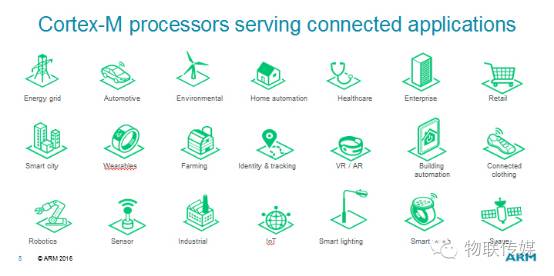
As a global company, ARM’s Cortex-M series CPU IP is widely used in various connected applications, such as smart grids, smart healthcare, smart cities, and smart homes. Additionally, ARM is actively positioning itself in the IoT space, primarily centered around the ARM mbed platform.
According to Mr. Zhou, ARM mbed consists of mbed OS and mbed Device Connector. mbed OS is an open-source IoT device platform based on the ARM Cortex-M architecture, while mbed Device Connector is a cloud-based connection platform responsible for secure device access and management. Using mbed OS on application devices allows for easy connection to the mbed Device Connector cloud. However, mbed Device Connector does not process data itself, leaving big data analysis tasks to ARM’s cloud partners.
Although there are many IoT platforms currently available, ARM mbed has its unique advantages, primarily reflected in four aspects:
1. The ARM mbed platform solution is simple and easy to develop.
mbed itself has dozens of different chip and device manufacturers, with over 100 different development boards, providing developers with a solid foundation for IoT device development. Additionally, mbed is a large ecosystem where hundreds of thousands of developers contribute their well-developed applications and devices, greatly aiding the development of IoT applications.
2. ARM has a vast and comprehensive ecosystem that provides strong support for ARM’s chips and cloud services.
3. High security.
Security mechanisms are embedded from the chip and device level to the cloud in IoT security.
4. Advantages in managing IoT devices.
Firstly, it is compatible with various common communication methods such as Wi-Fi, ZigBee, Bluetooth, and NB-IoT; the ARM mbed platform has implemented common protocols like HTTP, CoAP, and LWM2M based on international standards; different device manufacturers can connect to the cloud in a unified manner, significantly reducing device management costs.
According to ARM’s analysis, the complexity of IoT platforms and middleware has grown exponentially due to the various communication methods and the demand for device management and security. IoT platforms and middleware account for nearly 70% of the development cycle for IoT applications.
So, how does mbed simplify the development of IoT devices?
The mbed platform easily supports third-party tools, with security and connectivity fully meeting the current embedded ecosystem requirements. The latest mbed ecosystem is also fully compatible with the classic mbed ecosystem.
Currently, IoT solutions based on ARM mbed have been widely applied, such as systems for tracking and managing patient treatment times in healthcare.
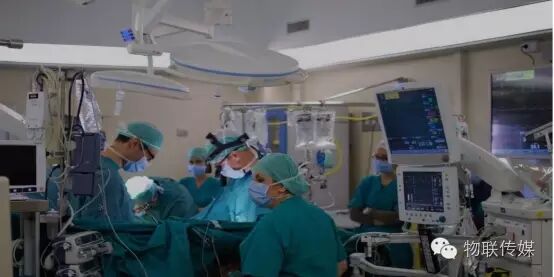
Application of mbed system solutions in healthcare
The BBC’s educational IoT system, Micro:bit, uses visual modular programming to cultivate children’s interest in programming.
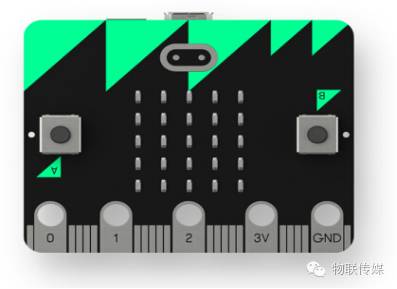
BBC: Micro:bit
There are also applications in ecological monitoring management systems in tea gardens, smart agriculture, smart cities, and intelligent manufacturing.
In the era of IoT, product development is no longer something that can be accomplished by one person or one company. ARM maintains an open stance while continuously moving forward, sharing achievements with industry chain partners. Through the open ARM mbed platform, it creates a secure and efficient development environment for users, promoting continuous innovation in IoT applications and the rapid development and maturity of the industry.
We would like to hear from you.
Dear readers, what do you think of this article that I have shared today?
If you find it good, please give it a thumbs up below; your affirmation will encourage us to keep improving.
If you think there are areas for improvement, please leave your valuable suggestions in the comment section below, and we will continue to improve to provide you with more valuable insights and information!

Scan the QR code above to follow RFID Headlines, and you will receive new, comprehensive, and unique industry information about RFID!
Friendly Reminder:
For the download of the 2016 (8th) Shenzhen International IoT and Smart China Expo (IOTE) conference proceedings, please click “Read the original text”.