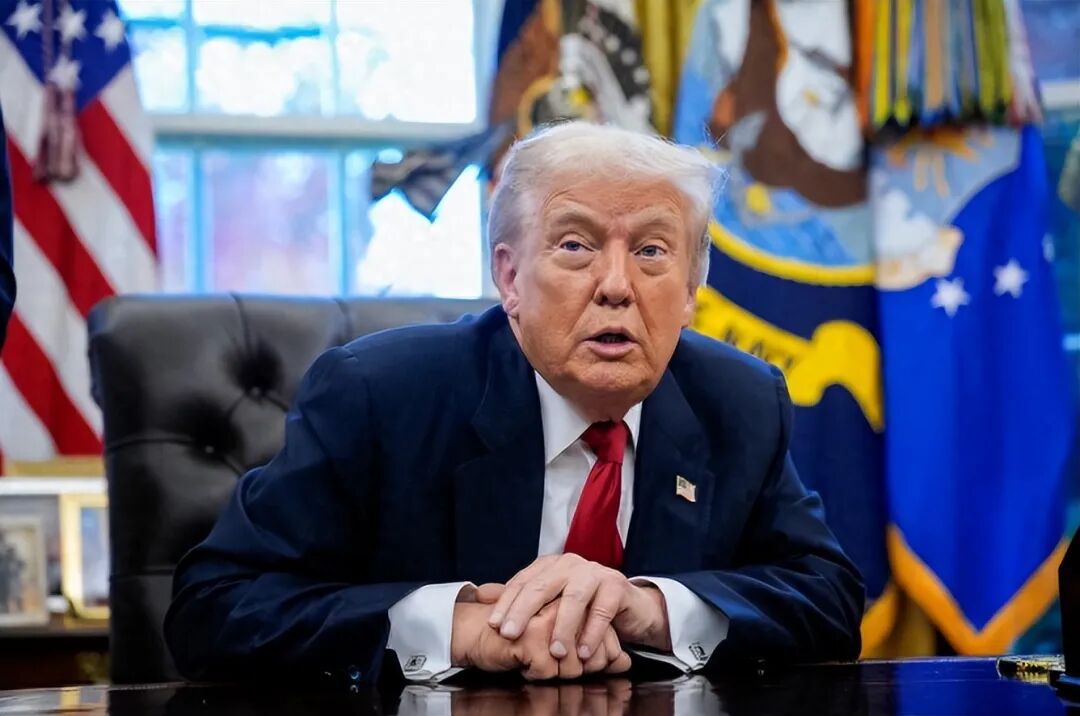
Reuters has reported on significant news from private sources within the U.S. government, indicating that the Trump administration’s previously announced policy of imposing a 100% tariff on imported semiconductors may not be implemented quickly, as the U.S. stance is becoming more cautious. This news has caused a stir globally, especially considering that the Trump administration had previously positioned this tariff policy as a core part of its economic agenda, explicitly stating that only companies producing domestically or committing to production in the U.S. would be exempt. There were even threats to impose high tariffs on pharmaceuticals, showcasing a very aggressive posture. Interestingly, when pressed by the media, officials from the White House and the Department of Commerce neither confirmed a change in stance nor were willing to clarify the timeline for tariff implementation. Insiders have directly reminded that any decision is not final, and the U.S. could restart tariffs at any time. This ambiguous statement reflects not so much a policy flip-flop but rather a direct manifestation of a lack of confidence.
Many people’s first reaction might be to think that China’s countermeasure trump card is rare earths, as rare earths are a key resource in the semiconductor industry, and the U.S. has always been concerned about potential countermeasures from China. However, this time the situation is quite the opposite. China’s real trump card is the irreplaceability of the global semiconductor supply chain and the ongoing pressure in the financial sector. This combination directly strikes at America’s soft underbelly. Looking at the supply chain aspect, China’s market share in mature process semiconductors is expanding at an astonishing rate, with predictions that this share will reach 50% by 2030. Moreover, 70% of NVIDIA’s mature chip packaging business relies on Chinese companies. More critically, the U.S. semiconductor industry has a fatal shortcoming—strong technology but weak production capacity. Behind the glamorous 60% share of the design side lies a deep reliance on overseas manufacturing. SMIC’s monthly production capacity has already surpassed one million wafers in Q3 2025, reaching one-third of TSMC’s monthly capacity, making it difficult for the U.S. to easily sever the supply chain.
The landscape in the wafer foundry sector further illustrates the issue. According to Yole Group, by 2024, mainland China will surpass South Korea to become the world’s second-largest wafer manufacturing base, with a market share of 21%, and is expected to further increase to 30% by 2030, surpassing Taiwan to become the largest globally. In the competition for mature processes, Chinese companies are no longer followers. SMIC’s ultra-low power 28nm logic process has entered mass production, and Hua Hong Semiconductor’s revenue from processes of 65nm and below has increased by 47.7% year-on-year. These technological achievements are directly related to the core supply chains of U.S. electronics, automotive industries, and even military sectors. Industry estimates indicate that if a 100% tariff is implemented, the cost of U.S. smartphones will increase by $200, and refrigerator prices will rise by 15%. Given that electronics account for 7.2% of the core CPI in the U.S., the approaching holiday shopping season could exacerbate inflationary pressures, further damaging the Trump administration’s approval ratings.
Financial pressure is equally lethal. In September 2025, China again reduced its holdings of U.S. Treasury bonds by $500 million, bringing its total holdings down to $700.5 billion. This marks the fifth reduction this year, with cumulative reductions from 2022 to 2024 reaching as high as $281.3 billion. Some may think that a $500 million reduction in a single month is not significant, but the ongoing sell-off is shaking the foundations of the U.S. Treasury market. It is important to note that the total U.S. debt has surpassed $38 trillion, with interest payments exceeding the massive military budget. More strategically significant is the continuous expansion of the issuance scale of “dim sum bonds,” with several domestic tech companies issuing over 47 billion yuan in dim sum bonds in Hong Kong, accelerating the internationalization of the renminbi. This is akin to cutting the roots of U.S. reliance on dollar hegemony. Elon Musk has bluntly stated that the U.S. government is essentially doomed, and unless a miracle occurs, it cannot resolve the exorbitant national debt issue.
The Trump administration’s initial calculation in launching the tariff policy was clear: to exert extreme pressure to force semiconductor companies from Japan, South Korea, and Taiwan to relocate to the U.S., thereby revitalizing domestic manufacturing jobs. However, reality has given them a resounding slap in the face. The U.S. semiconductor industry faces a shortage of 300,000 skilled workers. Even if production capacity is relocated, it is futile without a workforce. Ironically, Trump himself admitted in a program that high tariffs on China are “unsustainable” and expressed a desire to “engage in dialogue with China.” This contradictory statement exposes his inner turmoil and helplessness. On October 27, China confirmed that the U.S. and China had reached a basic consensus on economic and trade issues. Advancing the tariff policy recklessly at this time would undoubtedly undermine the hard-won easing of tensions, which is something the Trump administration does not want to see.
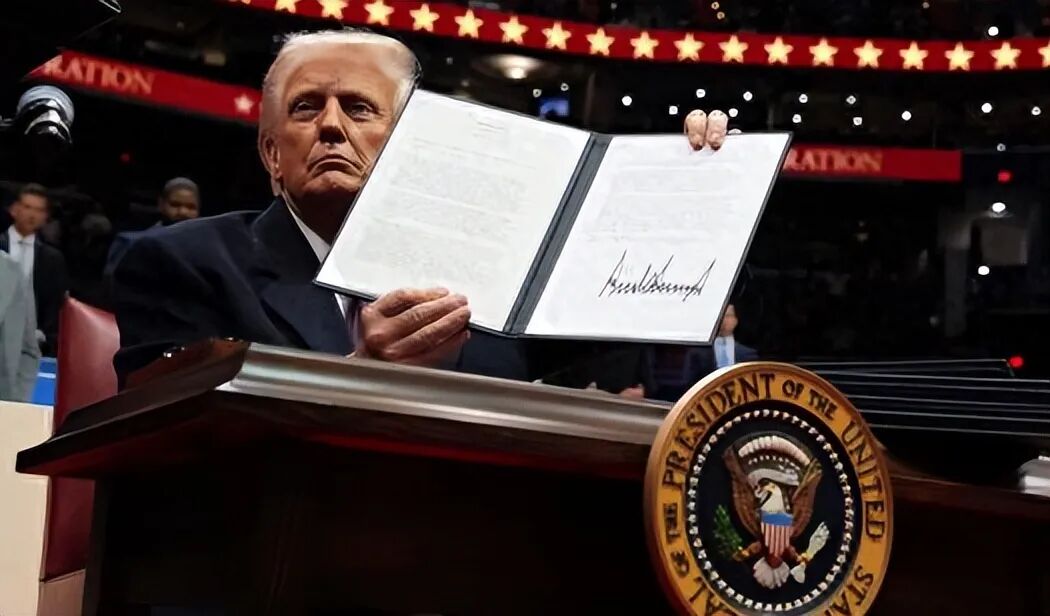
The U.S. so-called “threat-delay-rethreat” tactic is essentially a means of negotiating pressure, but this time they have clearly miscalculated. China’s countermeasures have never relied on emotional retaliation but are based on precise strategies leveraging its industrial advantages and financial strength. In today’s deeply interconnected global supply chain, there are no winners in a trade war. Every cost of the U.S. imposing tariffs will ultimately be passed on to domestic companies and consumers. China’s advantages in mature process production capacity, its technological positioning in key components like optical modules, and its steady progress in the financial sector collectively form a protective net that is difficult to breach. The power of this trump card is far more enduring and lethal than rare earth countermeasures.
The essence of international competition has always been a contest of strength. The farce of the Trump administration’s tariff policy once again proves that actions contrary to the trend of globalization and against objective economic laws will ultimately backfire. China maintains calm and restraint, preserving its countermeasure capabilities while demonstrating a willingness to negotiate. This balanced response is quietly shifting the initiative in the U.S.-China economic and trade competition. In the future, the U.S. may still engage in various small maneuvers, but as long as China continues to consolidate its supply chain advantages and steadily advance financial openness, it will not fear any external pressure. After all, in the face of absolute disparities in strength, all threats and coercion will ultimately become mere jokes on the international stage.