On July 9, mobile robot manufacturer Geek+ was listed on the Hong Kong Stock Exchange, closing at HKD 17.7 per share, up 5.36%. This is the latest case of a robotics company going public in Hong Kong. According to reports from Yicai, 12 other robotics companies have submitted listing applications to the Hong Kong Stock Exchange this year, marking a surge in public offerings in the robotics sector.
The surge in listings is partly due to the Hong Kong Stock Exchange’s continuous relaxation of special technology listing regulations. Four companies, including CloudMinds, XianGong Intelligent, Stand Robot, and Yifei Intelligent, have submitted listing applications based on the relevant Chapter 18C listing rules. Meanwhile, four other companies, including Stone Technology, Zhaowei Electromechanical, Guanghetong, and Estun, are seeking “A+H” listings.
However, a review reveals that many of these robotics companies are still facing losses and financial pressures. Industry insiders have analyzed that the reasons behind this wave of listings include some companies facing operational pressures and hoping to expand financing channels, as well as existing models like Youjiang Robotics in the Hong Kong market serving as references, which also drives the push for public offerings.
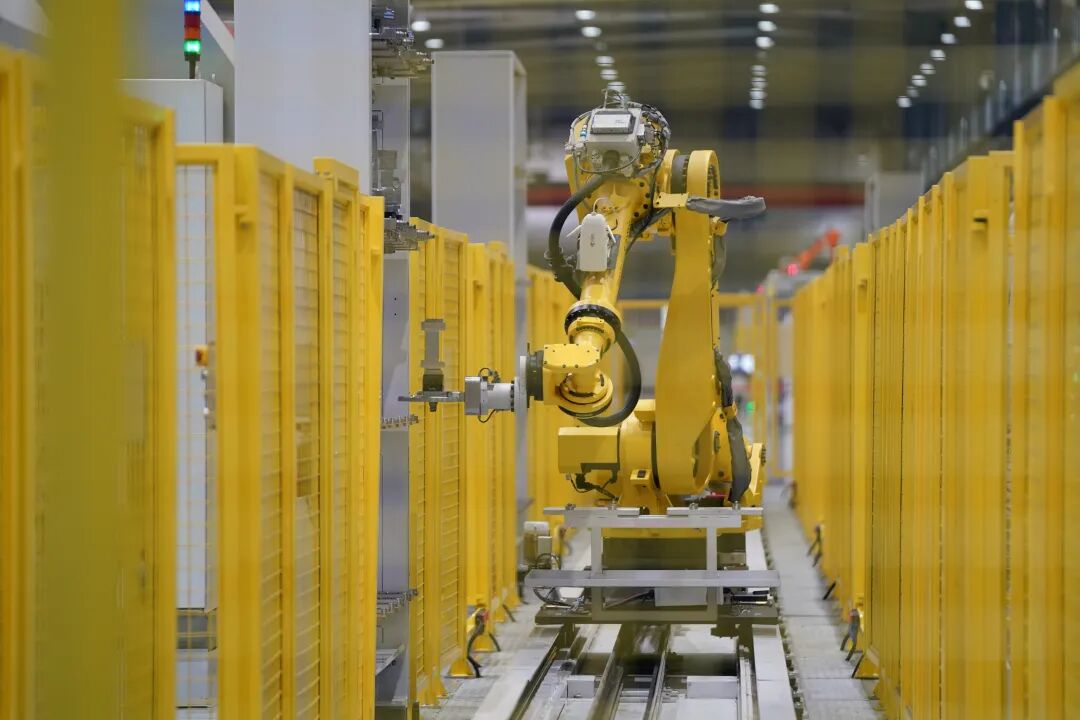
Robot Companies Spark a Surge in Hong Kong Listings
According to reports, including the companies that have submitted listing applications this year and the already listed Geek+, there are a total of 13 robotics companies involved in this wave of public offerings in Hong Kong. Among them, six companies submitted their listing applications in June this year.
By business type, there are four mobile robotics companies targeting industrial scenarios, including Geek+, XianGong Intelligent, Stand Robot, and Keleisi; two industrial robot companies, Estun and Yifei Intelligent; and four companies targeting home or commercial scenarios, including service robot company CloudMinds, vacuum robot company Stone Technology, lawn mower manufacturer LeddarTech, and embodied home robot manufacturer Woan Robotics. There are also two component manufacturers, Zhaowei Electromechanical and Guanghetong, as well as embodied intelligent robot manufacturer Meijia Technology.
These manufacturers have diverse business models, with some being leaders in niche markets. For example, Geek+ is the world’s largest provider of AMR (Autonomous Mobile Robot) solutions for warehousing, while Estun is the largest domestic supplier of industrial robot solutions by shipment volume. However, many companies are facing similar financial issues. According to reports, aside from Stone Technology, Zhaowei Electromechanical, and Guanghetong, which are already listed on the A-share market, the other 10 robotics companies are projected to incur losses in 2024. Among them, Estun turned from profit to loss last year, and nine companies have reported losses for three consecutive years.
Taking mobile robots as an example, Geek+’s main business is AMR, with projected revenues of 1.452 billion, 2.143 billion, and 2.409 billion yuan from 2022 to 2024, showing gradual revenue growth and a narrowing loss, but still not profitable. The company’s cumulative losses from 2022 to 2024 exceed 3.5 billion yuan. Geek+ attributes its historical losses largely to the uniqueness and early development stage of the global AMR solutions market, stating that both Geek+ and many of its peers have yet to achieve profitability.
Among other mobile robotics companies, XianGong Intelligent has seen continuous revenue growth over the past three years, with a compound annual growth rate of 35.7%, but it has also sustained losses, totaling 120 million yuan over three years; Stand Robot has also experienced revenue growth, with losses narrowing, but still incurred 273 million yuan in losses over three years; Keleisi has seen revenue growth over three years but has lost 630 million yuan during that period.
In the industrial robotics sector, Estun reported revenues of 4.01 billion yuan last year, a decrease of nearly 600 million yuan year-on-year, with losses of 800 million yuan for the year; Yifei Intelligent has also seen continuous revenue growth over three years, with total losses of 240 million yuan.
Some companies targeting home or commercial scenarios are also facing losses. CloudMinds has incurred losses of 800 million yuan over the past three years, LeddarTech has lost 200 million yuan, and Woan Robotics has lost 100 million yuan. Stone Technology has seen continuous revenue growth over the past three years, but its net profit is projected to decline year-on-year in 2024. Additionally, Meijia Technology has seen continuous revenue growth from 2022 to 2024, but its profitability has not improved, with losses totaling 2.28 billion yuan over three years.
According to reports, some robotics companies preparing for a Hong Kong listing have only recently met the relevant listing standards. For example, Stand Robot and Yifei Intelligent are seeking listings based on the Chapter 18C listing rules, and both companies only met the revenue requirements stipulated in 18C in 2024.
Not only are they facing losses, but many robotics companies also have other financial pressures. Among mobile robotics companies, from 2022 to 2024, Geek+’s cash and cash equivalents have decreased year-on-year. As of the end of April this year, Geek+ had total current liabilities of 9.83 billion yuan, exceeding total current assets of 3.21 billion yuan. Similarly, Keleisi’s total current liabilities at the end of 2024 also exceeded its total current assets, with cash and cash equivalents decreasing from 190 million yuan at the end of 2022 to 110 million yuan at the end of 2024.
Moreover, by the end of 2024, CloudMinds and Meijia Technology also reported current liabilities exceeding current assets, with cash and cash equivalents lower than the previous two years. Woan Robotics saw its cash and cash equivalents decrease from 145 million yuan at the end of 2022 to 60 million yuan at the end of 2024.
In seeking to go public to expand financing channels, it has also been noted that some robotics companies have previously slowed their financing pace in the primary market, especially mobile robotics manufacturers and those targeting home and commercial scenarios.
Among mobile robotics companies, Geek+ has undergone 11 rounds of financing, completing at least one round of financing each year since 2016, with the last round completed in 2022 and no further financing since; XianGong Intelligent, established in 2020, completed rounds of financing in 2020 and 2022, but had gaps in 2023 and 2024, only securing one round of financing this year; Keleisi and its predecessor have completed six rounds of financing, but have not secured further financing since the E round in 2022.
Additionally, among companies targeting home or commercial scenarios, CloudMinds secured one round of financing each year from 2014 to 2019, two rounds in 2021, but has not secured further financing since; LeddarTech secured three rounds and one round of financing in 2021 and 2022, respectively, but has not secured further financing since; Woan Robotics has secured financing every year from 2017 to 2022, but has not secured further financing since 2023.
Where Does the Pressure Come From?
Some robotics manufacturers seeking to go public in Hong Kong may be facing operational pressures and hoping to expand financing channels. Lu Hancheng, director of the High-tech Robotics Industry Research Institute, told reporters that whether in mobile robots, industrial robots, or service robots, these sectors are not particularly new, and the market is becoming increasingly competitive.
“In the past two years, it has been relatively difficult for mobile and industrial robot companies to obtain financing in the primary market, especially for large amounts. The industry technology has also begun to reach a bottleneck. Additionally, most of the funding in the robotics sector has been absorbed by embodied and humanoid robotics, with much of the money in the market already directed towards the hottest and most promising sectors,” Lu Hancheng stated. “If companies cannot secure financing in the primary market and continue to incur losses, this situation is unsustainable. Seeking a secondary market listing may provide investors with an exit opportunity and ‘blood transfusion’ for the companies.”
From the perspective of industry development, the current mobile robotics market is characterized by a fragmented landscape and difficulty in financing for companies. According to data from Zhaoshang Consulting, the top four participants in the global AMR solutions market hold only 23.5% of the market share in 2024. Data from the High-tech Robotics Industry Research Institute indicates that the sales of AMRs in China’s mobile robotics market nearly doubled year-on-year in 2023, but due to sluggish downstream market conditions, the growth rate is expected to decline to 10.64% in 2024, making it increasingly difficult for mobile robotics companies to secure large-scale financing, with issues such as fewer orders and difficulty in achieving profitability becoming more pronounced.
The industrial robotics market is also fragmented, with intense competition and the onset of an industry elimination phase. According to Frost & Sullivan data, there are over 3,000 industrial robot solution providers globally in 2024, with the top five holding only 28.7% of the market share. Data from MIR indicates that the domestic industrial robot market is at a critical stage of destocking and industry elimination, with a slight year-on-year increase of 3.9% in sales in 2024, while overall prices of industrial robots continue to decline, with prices still decreasing in the first quarter of 2025.
The price war is reflected in the gross margins of industrial robot manufacturers. Estun’s gross margin fell from 32.9% in 2022 to 28.3% in 2024. The company’s prospectus indicates that the decline in gross margin reflects a contraction in profitability across all business segments, with a particularly noticeable decline in domestic business gross margins, primarily due to price adjustments made to attract key customers.
Lu Hancheng noted that not only in industrial robotics but also in the mobile robotics sector, there is a price war, especially in the domestic market, where many companies are still incurring losses. As market competition intensifies, profitability pressures are further highlighted.
A representative from an industrial robotics manufacturer also mentioned that the challenges faced in their sector include intense competition, with some manufacturers being somewhat shortsighted. While creating a product is relatively simple, refining it requires a long accumulation of experience. His company actively avoids low-margin projects with stringent requirements, but some companies in the industry signed many project contracts early in their development, only to find later that they could not fulfill these projects, leading to difficulties in product iteration and financing.
Other companies seeking to go public in Hong Kong are also looking to expand their business. Lu Hancheng stated that service robots are also in a relatively competitive sector. For example, CloudMinds has already reached a market ceiling in the hotel delivery sector, and major players in this field are expanding into new scenarios, moving from delivery to commercial cleaning and other applications. As for component manufacturers Zhaowei Electromechanical and Guanghetong, their motivation for seeking a Hong Kong listing includes their strong association with humanoid robots and embodied intelligence concepts, which may lead to higher market valuations when listed in a high-attention market.
Editor on duty: Grace