Click the blue text to follow us
The continuous advancement of chips relies on better designs, smaller transistor sizes (Moore’s Law), higher transistor densities, innovative process architectures (FinFET, GAA), and high-performance materials or better packaging strategies. The realization of smaller, faster, and cheaper chips comes from improvements in semiconductor manufacturing technology.
To produce these chips quickly, efficiently, and at low cost, we need new lithography technologies, new optical mask technologies, and breakthroughs in new materials.
The application scope of intelligent manufacturing industrial software is broad, especially in industries that place a high emphasis on quality, yield, and capacity, and where production processes are complex. Intelligent manufacturing industrial software is essential, and the semiconductor manufacturing industry is a representative of such industries.
Engineering Intelligence of Intelligent Manufacturing Industrial Software
Typically, we divide intelligent manufacturing industrial software into three main components: manufacturing systems (represented by MES – Manufacturing Execution System, responsible for scheduling/tracking/reporting), engineering systems (represented by EES – Equipment Engineering System, responsible for monitoring/analyzing/control), and product systems (represented by YMS – Yield Management System, responsible for yield improvement/enhanced management). The manufacturing system can automate factory production and maintain continuous operation; the engineering and product management systems determine whether the factory can ultimately maintain a leading position. For example, the manufacturing system is like a human hand, moving manufactured items, while the engineering and product systems, through the integration of experiential models and artificial intelligence, create functions similar to a human brain, determining the next actions of the entire body. The engineering and product systems need to transform long-term application knowledge from a vast amount of underlying engineering data into models and algorithms, forming a continuously evolving engineering intelligence solution.
So, why is engineering intelligence software so difficult?
The semiconductor manufacturing industry represents the highest level of industrial manufacturing, with 2nm processes involving thousands of production steps, and production cycles often taking two to three months. The numerous parameter variables involved in the production process generate a vast amount of data.[2] Due to these factors, conventional experimental design methods, which rely solely on human adjustments to parameter spaces to find optimal solutions, cannot be used. As Siemens describes in its vision for software used in smart electronic factories: analyzing massive amounts of data is not an easy task, but it is necessary to identify problems, predict, and resolve quality issues.[3] Therefore, a qualified engineering intelligence software system must continuously monitor and locate equipment issues during the production process, optimizing production line performance to reduce the time for new product introduction and achieve rapid yield improvement. To achieve this goal, several performance criteria must be met:
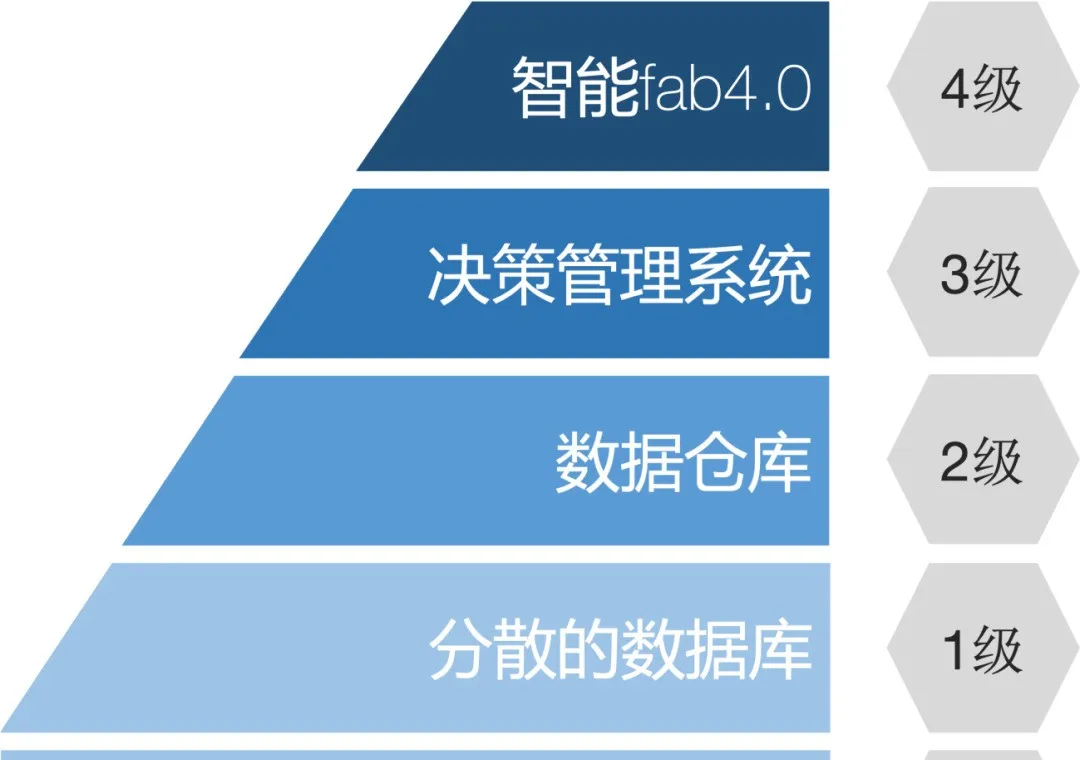 Figure 1: Hierarchy of Intelligent Manufacturing Data[4]
Technological Innovation Path for Yield Solutions in Semiconductor Production
In the entire process of design-manufacturing-packaging in the semiconductor industry, there are multiple stages where yield loss occurs, such as narrow process windows in design and manufacturing, machines operating out of normal conditions, fatal errors caused by incorrect operations, defects, and packaging yield, all of which can affect yield.
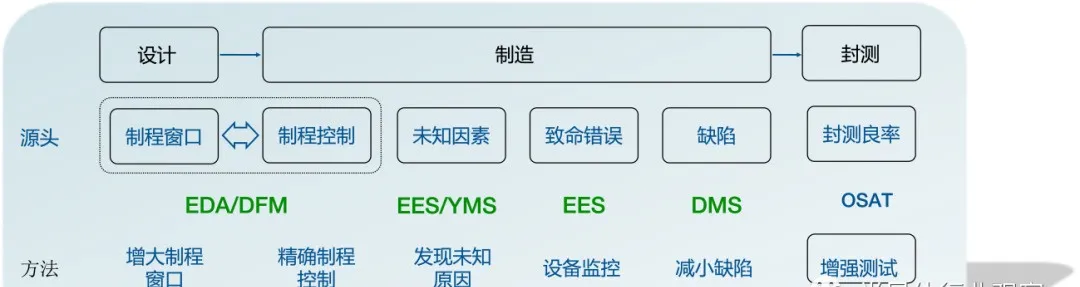 Figure 2: Factors Affecting Yield in Chip Production and Improvement Methods
During the manufacturing process, equipment efficiency, stability, and process consistency are crucial factors for ensuring high product quality and yield. The engineering system, primarily based on EES, achieves comprehensive fine control of process production equipment. In the production process involving thousands of process equipment in the factory, engineers must have the ability to monitor and control process changes in real-time, with the most representative application in EES being the Fault Detection and Classification (FDC) system. The FDC system, which combines embedded functions such as Statistical Process Control (SPC) and multivariate analysis, can effectively monitor real-time flow data from thousands of process equipment sensors and provide notifications of process anomalies. With a well-functioning FDC system, engineers can gain timely insights, quickly control process issues, and intervene promptly.
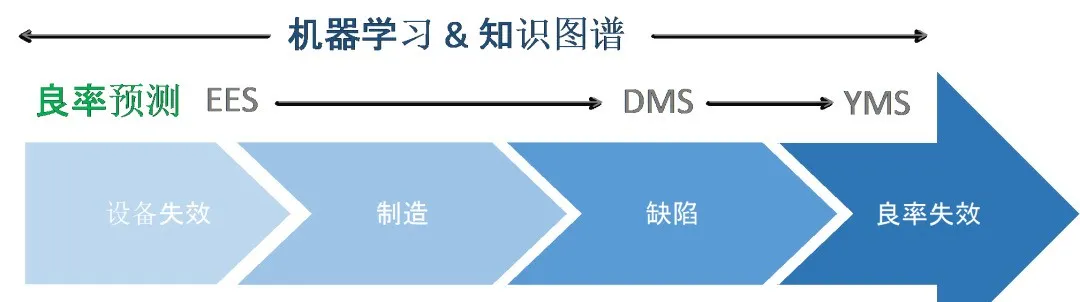 Figure 3: Yield Prediction Analysis Map
Yield management needs to start from controlling the qualification rate of each product, combining all production data, equipment data, product data, defect data, and even environmental data in the factory, supported by dozens of algorithms, to quickly uncover relationships between data; especially the analysis of sensor data (Trace Data) based on artificial intelligence can help engineers achieve root cause analysis in one go, which traditional YMS/DMS analysis systems cannot accomplish, thus aiding engineers in rapid improvements.Additionally, by simplifying the root cause analysis process and combining distributed computing technology with data mining technology, the analysis time for engineers is significantly reduced, greatly enhancing engineering analysis efficiency and helping manufacturers improve response speed and productivity.
The flexibility, reliability, and security brought by cloud computing have already permeated the manufacturing industry. Future factories will adopt cloud computing to replace traditional IT fixed asset ownership methods. This will also allow decision-makers to refocus on core competitive technologies and strategies such as time and labor costs. The Dynamic Fault Detection (DFD) system, a dynamic process anomaly monitoring system, is a more intelligent FDC system based on cloud and artificial intelligence algorithms. It does not rely on engineers’ process experience models; through algorithms, it achieves full automatic monitoring of all parameters and processes during equipment production, leaving no room for production anomalies to hide. Moreover, DFD has begun to adopt private or public cloud deployments, breaking away from traditional local deployments, reducing security and operational costs, and increasing overall system scalability.

Wuxi Qixin Semiconductor Technology Co., Ltd. is a high-tech enterprise specializing in the research, development, production, and sales of intelligent production equipment for the chip industry. Established in 2020, it is located in the Wuxi Huishan Economic and Technological Development Zone. The company has received multiple honors such as Wuxi Huishan District Pioneer Talent and Wuxi Taihu Talent, and is a council member of the Wuxi Semiconductor Association. The core members of the company’s R&D team all have over 20 years of experience in semiconductor equipment, with rich R&D experience in packaging processes and related equipment industrialization, holding multiple national-level technology invention, utility model patents, and software copyrights. The company has long-term industry-university-research cooperation with well-known domestic institutions such as Tsinghua University and the Chinese Academy of Sciences.
The self-developed MGP intelligent chip packaging system, AM fully automatic chip packaging system, TF unit modular chip automatic cutting and forming system, and other intelligent production equipment for chips have all received market recognition and unanimous praise from customers.
Wuxi Qixin Semiconductor Technology Co., Ltd. adheres to the values of innovation, efficiency, quality, and integrity, based in Wuxi, with the mission of creating intelligent equipment for China’s independent brand chips, supporting the chip industry, and building smart factories. It aims to become a leader in the chip packaging and testing equipment industry!

Disclaimer: This article is a network reprint or adaptation, and the copyright belongs to the original author. However, due to numerous reprints, it is impossible to confirm the true original author, hence the source is indicated. If there are any copyright issues, please contact us for deletion! The content of this article reflects the original author’s views and does not represent the views of this public account or its responsibility for authenticity.