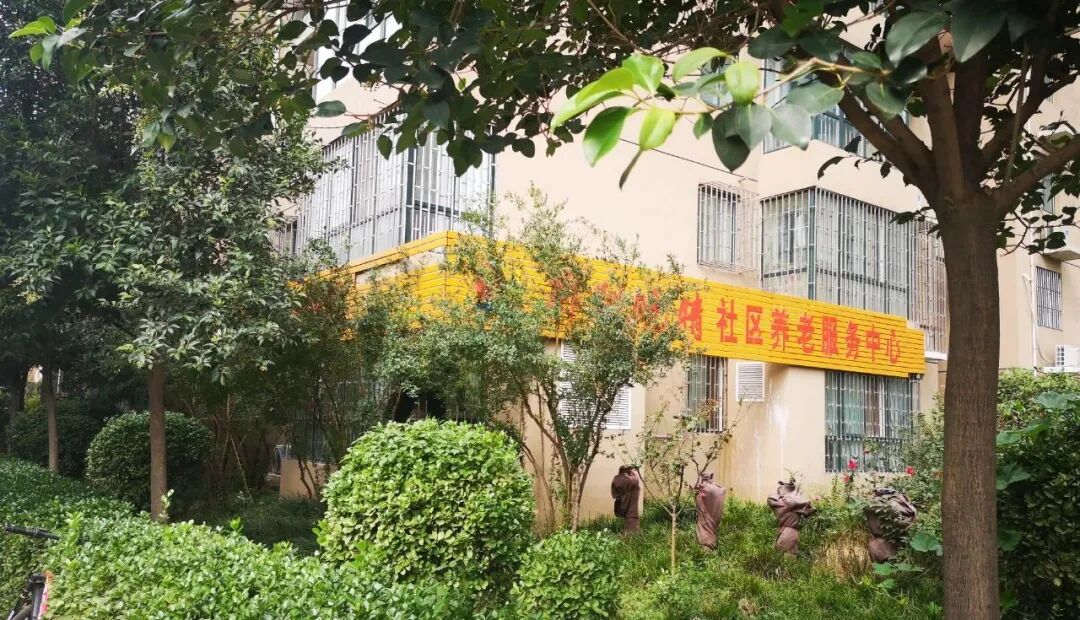
 Senior care center in a community in ZhengzhouCommunity embedded elderly care refers to “embedding corresponding functional facilities, adaptive services, and emotional support around the basic needs of elderly people, such as daily care, rehabilitation, and mental comfort, within the community. This allows communities facing deep aging to maintain continuous care capabilities, enabling the elderly to live in a familiar environment, accompanied by family members, and enjoy their later years at home.The concept of “community embedded elderly care” originated from the exploration of elderly care methods in Zhuanqiao Town, Minhang District, Shanghai in 2013.To meet the elderly’s desire for “aging in place near home,” the Zhuanqiao Town government utilized idle public facilities in the community to build a “mini” nursing home with a planned area of 623 square meters and only 30 beds. This facility adopts a model of government purchasing specialized operational services to provide around-the-clock care for elderly residents who are semi-self-sufficient or have mild cognitive impairments, and it extends services to other elderly community members in need through day care and meal assistance. This operational model became a typical model for the later “Elderly Care Home,” thus giving birth to the concept of “community embedded elderly care.”The community embedded elderly care model, due to its small scale, addresses the land use difficulties faced by traditional elderly care institutions and is more acceptable to the elderly as it is closer to home, providing community service support for home-based elderly care. It has received widespread recognition and welcome. In recent years, cities such as Beijing, Chongqing, Zhejiang, Jiangsu, Anhui, Hebei, and Hubei have also drawn on Shanghai’s experience to explore the development of embedded elderly care.01Advantages of Community Embedded Elderly CareThe key to “embedded elderly care” lies in “embedding”.We can understand this from three dimensions:First, embedding facilities in the community at the doorstep of the elderly; second, embedding services into the actual needs of the elderly; and third, embedding the individual actions of the elderly into the social relationship network. From the “three embeddings,” we can see the difference between community embedded elderly care and the closed-off care provided by traditional elderly care institutions, where elderly care services revolve around the needs of the elderly, allowing them to stay in the community while still participating in community life and integrating into society.Therefore, the advantages of community embedded elderly care can be summarized as follows:1. Small scale, easy to deployAs we all know, land in urban centers is extremely valuable, and the potential for traditional elderly care institutions to expand is very limited, with high construction costs; while in suburban areas, bed vacancy rates are high, but elderly residents in urban centers are often unwilling to move to suburban care facilities. The emergence of community embedded elderly care alleviates the difficulties in bed supply in urban centers and the mismatch between supply and demand.On one hand, community embedded elderly care institutions have fewer beds and are miniaturized, allowing them to discover space within fragmented community resources, utilizing existing facilities for renovation and construction, and addressing space issues in a localized manner, promoting the sustainable development of standardized elderly care.On the other hand, community embedded elderly care institutions provide family caregiver training, professional home services, assistive device promotion, remote care, health management, and other services, providing strong support for family-based elderly care and alleviating the demand for institutional beds to some extent.2. Small footprint, large functionalityCommunity embedded elderly care operates effectively in a small space, meeting the requirements for multi-level and diverse elderly care services.From the service level, community embedded elderly care breaks down the barriers of the “9073” model through a “one-stop” service supply method, integrating resources from institutions, communities, and home-based elderly care. Community embedded elderly care service institutions can provide both long-term and short-term care beds for the elderly, while also offering social, cultural, daily care, and rehabilitation services within the community, extending care functions into the homes of the elderly.From the service content perspective, it meets various elderly care service needs. Various community embedded elderly care facilities provide specialized elderly care, health management, and integrated medical and elderly care services to meet the elderly’s demands for “being cared for in old age and receiving medical care,” while a variety of cultural activities satisfy the elderly’s needs for “learning, engaging in activities, and enjoying life.”3. Close to home, more reassuringCommunity embedded elderly care institutions remain within the community, providing significant emotional advantages:First, the elderly can “stay in the community while being close to home,” continuing to live in a familiar community environment, which aligns with the wishes of most elderly individuals for aging in place;Second, being “just a bowl of soup away” facilitates visits from children, enhances communication, and even allows for continued home-based elderly care, which is beneficial for maintaining family functions and the transmission of Chinese family culture and filial piety;Third, community embedded institutions are closer to high-quality medical resources in urban centers, making it easier for the elderly to access timely medical care.
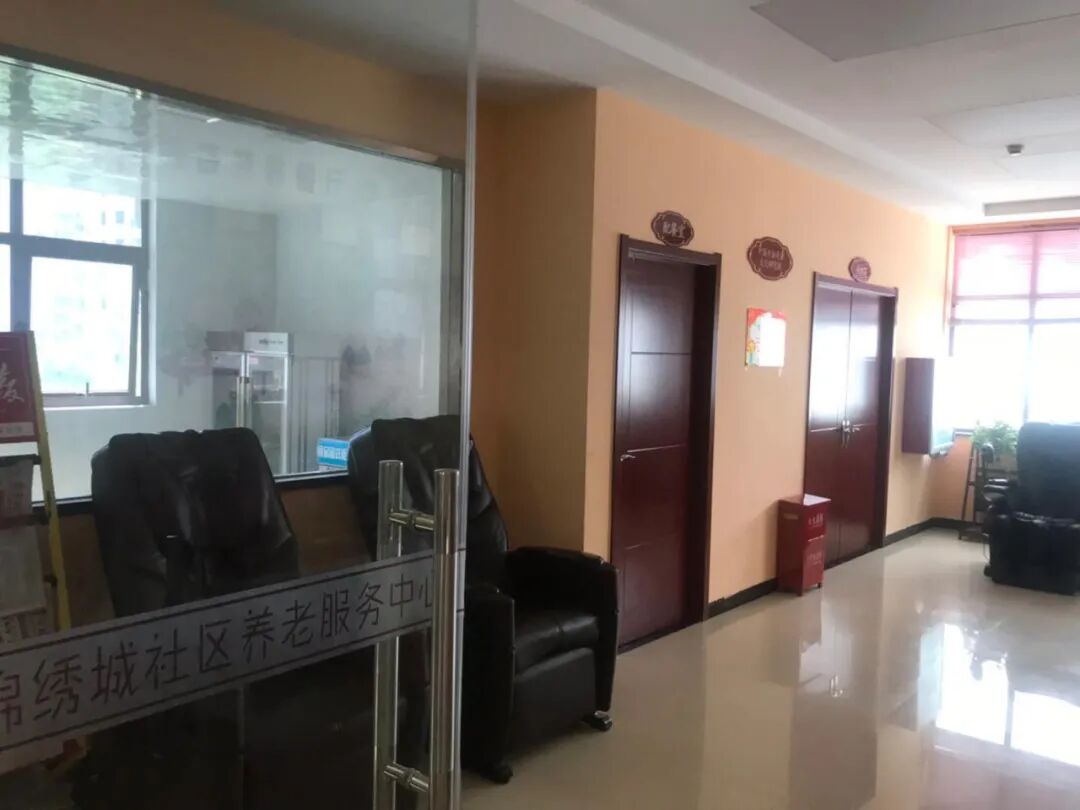 Senior care center in a community in Zhengzhou02Challenges in the Development of Community Embedded Elderly CareCommunity embedded elderly care faces common issues in the elderly care industry, such as low bed turnover rates, significant neighbor avoidance effects, unreasonable subsidies limited to non-profit organizations, and the need to streamline pricing mechanisms. It also faces challenges such as the need for detailed policy standards and difficulties in implementing supportive policies.1. Low bed turnover rates affect the benefits for the elderlyTaking the development of community embedded elderly care in Shanghai as an example. According to relevant documents from Shanghai, the Elderly Care Home serves both long-term care and short-term respite care functions, with respite services being a distinguishing feature of the Elderly Care Home compared to traditional elderly care institutions. However, in practice, the turnover of beds in the Elderly Care Home is very challenging, and the respite care function has not been effectively utilized.From the demand side, once the elderly settle in, they are often reluctant to leave, especially in some Elderly Care Homes with lower fees. From the supply side, some districts do not have turnover requirements for beds in Elderly Care Homes, and some operators prefer not to turn over beds for easier management and cost reduction.Some districts require that the maximum stay in Elderly Care Homes not exceed six months, but enforcement is difficult; because there is no prior agreement between the community and the institution regarding the ratio of long-term to respite beds, and there are no documented regulations on “maximum stay not exceeding six months” or the minimum interval between two stays, leading to difficulties in communication and negotiation between operators and the elderly and their families.2. Significant neighbor avoidance effects increase uncertainty in construction and operationThe “embedded” elderly care service model frequently encounters resistance from community residents, resulting in many projects being forced to halt, leading to a neighbor avoidance crisis. In August 2015, a community “embedded” elderly care project in Shanghai faced strong opposition from residents, who displayed banners stating “Get the death house out of our community.” Due to strong resistance from homeowners, local government departments’ repeated coordination efforts were ineffective, and the nursing home project was ultimately canceled.According to research by Zhang Song and others from Southeast University on seven elderly care service operators, over 80% (67 out of 83) of various elderly care facilities planned for construction in existing urban areas from 2015 to 2016 faced varying degrees of resident resistance, with more than one-third (29 projects) ultimately abandoned or halted.3. Communities lack suitable facilities for renovation and constructionCurrently, the new construction and renovation of “embedded” elderly care facilities mainly occur through three methods: first, renovating idle properties in the community; second, applying for self-construction on vacant land; and third, renting properties from community homeowners.For most old communities, the initial planning and construction did not consider the aging population issue, so there are no supporting public elderly care facilities or designated elderly care land. Currently, finding suitable properties for renovation is very challenging. There is also limited vacant land suitable for constructing “embedded” elderly care facilities, and land rental costs are high, making it difficult for most elderly care enterprises to bear.For new communities, central and local governments have issued corresponding policy documents requiring that new communities must include elderly care facilities. However, due to concerns that the delivery of elderly care facilities will provoke resident resistance and affect the sale of properties, most real estate companies tend to conceal the presence and specific location of elderly care facilities from potential buyers during the sale process, resulting in many community elderly care facilities not being delivered for use.4. Construction and service quality monitoring standards do not match embedded institutionsCurrently, many places still apply the construction and service quality monitoring standards for community embedded elderly care facilities based on traditional elderly care institutions, which does not align with the actual situation of embedded institutions. Taking Shanghai as an example: in terms of facility construction, due to limited total area, it is quite challenging for Elderly Care Homes to configure kitchens, fire safety facilities, laundry rooms, and waste disposal rooms according to the requirements for large elderly care institutions, where fire safety facilities may involve redundant configurations based on existing community provisions, and kitchens must meet the general desire of elderly residents for freshly cooked meals. In terms of service quality monitoring, operators report that meeting standards for greenery, elevators, doctors, and security personnel is quite challenging, and how to respond to monitoring evaluations is one of the biggest confusions for embedded institutions.5. Operational subsidies limited to non-profits restrict industry developmentDue to the public welfare nature of elderly care services, many local elderly care institutions have historically limited operational subsidies to non-profit organizations. As circumstances change, this regulation is gradually becoming incompatible with the development needs of the elderly care industry.First, while non-profits can receive subsidies for providing elderly care services, for-profit organizations cannot, which contradicts the national requirement that “for-profit elderly care institutions providing the same services should receive equal subsidy policies as non-profit institutions.”Second, to obtain subsidies, many operators choose to register as non-profit organizations with the civil affairs bureau. However, as non-profit institutions, they face many restrictions regarding profit distribution and public financing, which is not conducive to encouraging social forces to actively participate in multi-level elderly care service provision and cultivating brand elderly care enterprises.Third, in the context of community embedded elderly care, embedded institutions renovated by street towns are usually registered as non-profits by the street towns, and relevant subsidies are allocated to the street town’s account, meaning that operators cannot directly enjoy operational subsidies and compensatory subsidies, which are often distributed in batches and with uncertain timing through the street town.
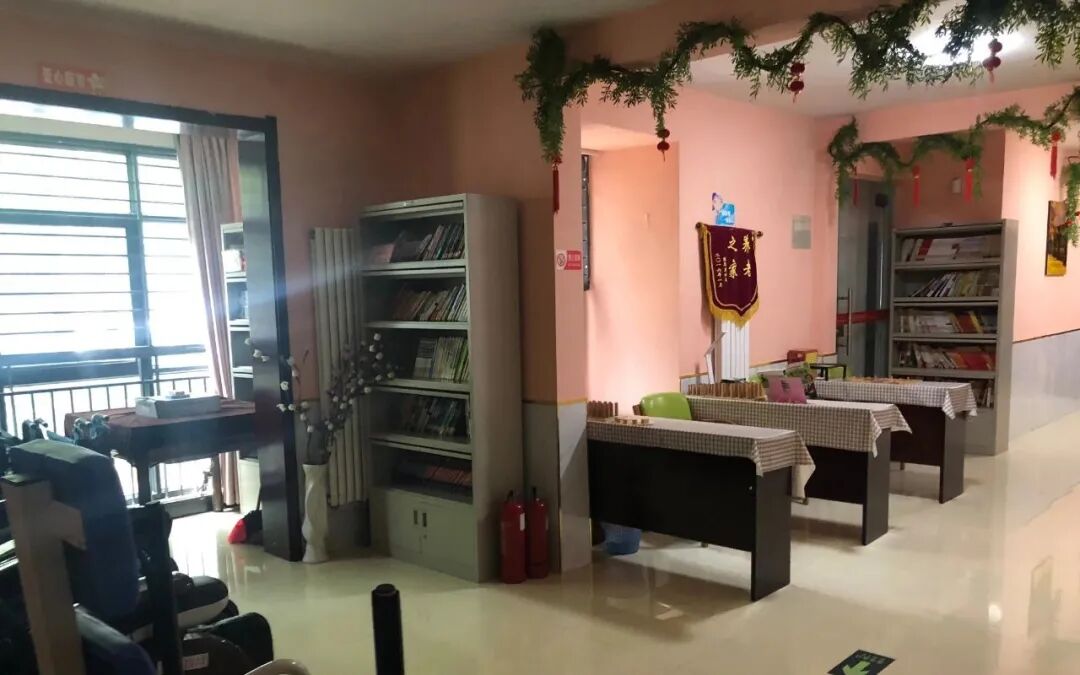 Senior care center in a community in Zhengzhou6. Public utility charges executed at residential standards face obstaclesAccording to regulations, public utility charges for elderly care institutions can be executed at residential standards. However, many community embedded elderly care institutions are transformed from commercial or office buildings, occupying only one or two floors of the entire building.Due to the lack of independent property certificates and recognized independent metering devices by public utility companies, public utility charges can only be executed at commercial rates based on the entire building’s property certificate. Among water, electricity, and gas, the issue of high electricity costs is particularly pronounced: the electricity department does not recognize the “small meters” installed separately for embedded institutions by property companies, and to execute residential standards, the electricity department requires a dedicated line and installation of independent metering devices, with one-time installation costs ranging from 800,000 to 1,000,000 yuan.7. Long investment recovery periodThe elderly care service industry is inherently a low-profit sector, characterized by high initial investment, long recovery periods, and low returns. This issue is prevalent in both nursing homes and community elderly care service centers.Since elderly care institutions are built within communities, they are limited by idle facilities and land, resulting in smaller scales and fewer beds, often below 30, or even fewer than 10. However, as an elderly care institution, they must be fully equipped despite their small size.Thus, from the aging-friendly renovations of facilities to internal decoration, equipment procurement, and personnel configuration, they are almost on par with nursing homes. In terms of scale efficiency, they do not have the advantage of scale, and the cost recovery cycle for individual beds will be longer.Currently, community “embedded” elderly care facilities mainly operate under two models:First, the “public construction and private operation” model in Shanghai, where the government invests in renovations and the operation is handed over to private elderly care service institutions, with the government providing certain subsidies. Under this model, the operating elderly care service institutions can function normally.Second, the enterprise-led model represented by Shoukai Cuncao in Beijing, where enterprises invest in construction and operation, and the government provides appropriate subsidies and rewards. In this model, enterprises need to lease and invest in idle properties within the community, with high initial investment costs, requiring over 1 million yuan for 10 beds, and full recovery taking about 10 years. According to calculations by reporters from the 21st Century Business Herald, with support from major shareholders, considering cost fluctuations, the profitability of elderly care institutions should be around 5% to 10%, with a return period of about 10 years, leading to significant financial pressure on some community “embedded” elderly care institutions during later operational phases.8. High operating costs and low profit marginsCommunity “embedded” elderly care institutions face high operating costs, primarily due to the significant proportion of labor costs. For example, in Shijiazhuang, the average monthly expenditure for a staff member, including wages and social security, is around 5,000 yuan. For an institution with 10 beds, at least four staff members are needed, resulting in a total monthly labor cost of 20,000 yuan. This means that the average labor cost per bed is as high as 2,000 yuan.In addition, there are costs related to site leasing, bed procurement, and daily expenses such as water, electricity, and gas. Most elderly care institutions charge each elderly resident around 3,000 yuan, leaving almost no profit after deducting various costs, making sustainable operation very challenging. Even under the “public construction and private operation” model, the operating elderly care service institutions can only achieve minimal profits.To alleviate cost pressures, some institutions choose to raise their fees. For example, in Beijing, the total monthly fees range from 5,000 to 15,000 yuan, making it difficult for this model to achieve universality. Other institutions may lower service standards, such as reducing the number of caregivers or employing unskilled rural workers as caregivers, leading to a decline in overall service quality.
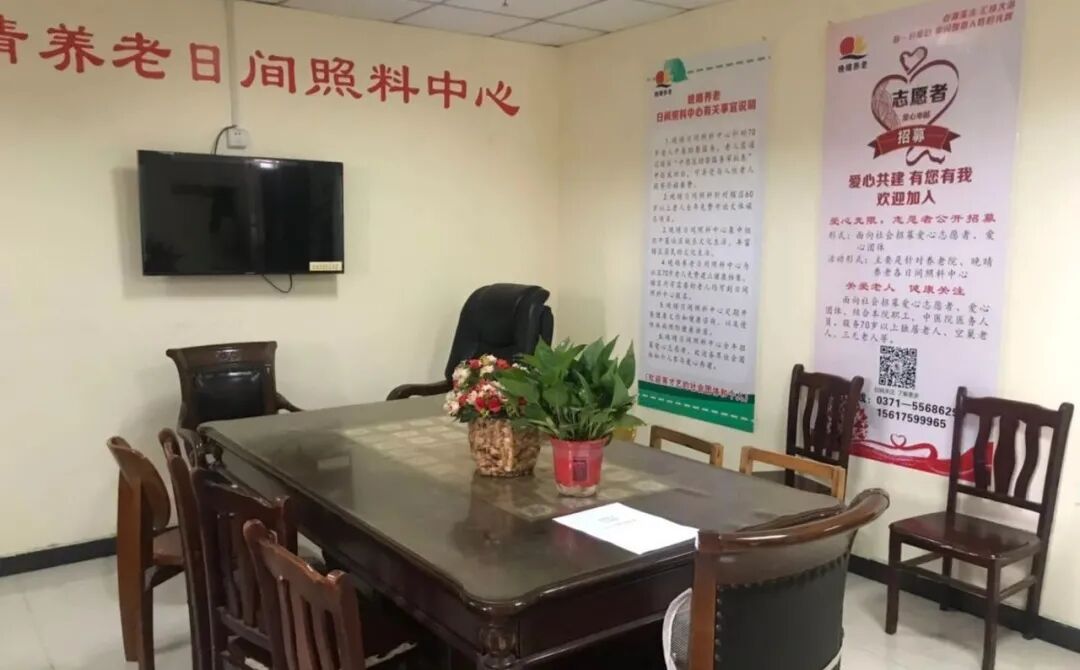 Senior care center in a community in Zhengzhou03Experiences and Practices in Community Embedded Elderly Care1. Shanghai ExperienceSince the second half of 2014, Shanghai has focused on Elderly Care Homes and community comprehensive elderly service centers, initiating pilot projects for community embedded, multifunctional, and comprehensive elderly care service institutions. Currently, the community embedded elderly care services promoted in Shanghai mainly consist of two types: ① single-type, namely Elderly Care Homes; ② comprehensive-type, namely community comprehensive elderly service centers.(1)Single-type: Elderly Care HomesThe single-type Elderly Care Home is a community elderly care facility that provides concentrated care services for the elderly nearby, generally set up in a community embedded manner, serving surrounding communities. Typically, the area is between 300-500 square meters, and the main services include: providing short-term care for elderly individuals assessed as level three or above in unified elderly care needs; offering short-term foster care for elderly individuals recovering from serious illnesses or requiring respite services; and, if conditions permit, Elderly Care Homes can provide other services that can extend to the community and residents’ homes, such as training for family caregivers.For example, the Fuyuan Elderly Care Home in Puxing Community, Pudong New District, is one of the earliest established and fully operational community micro-institutions in Shanghai, with a total indoor area of 340 square meters and an outdoor garden area of 130 square meters, with a certified bed capacity of 14. It mainly serves elderly individuals assessed at levels 3-5 for care needs in the community and provides 24-hour care, respite services, home-based services, and training for family caregivers.In general, Elderly Care Homes do not encourage elderly individuals to stay continuously; for those in transitional recovery after surgery or serious illness who require medical staff accompaniment and some rehabilitation training, arrangements can be made for their stay; subsequently, for those who receive timely care and recover well, services can be delivered at home through regular nurse visits, training for family caregivers, and daily assistance with meals and bathing. An increasing number of elderly individuals are choosing home services.(2)Comprehensive-type: Community Comprehensive Elderly Service CentersCommunity Comprehensive Elderly Service Centers refer to facilities that concentrate various elderly service facilities within the community, relying on an information management platform to coordinate elderly service resources, provide diverse services, and facilitate community residents’ access to services.The construction of community comprehensive elderly service centers helps balance the layout of elderly care service facilities, forming a “one-stop multi-point” facility network; it helps break through existing bottlenecks in elderly care services and enhance community comprehensive elderly service and management capabilities; it also deepens the development of community home-based elderly care service systems, meeting the increasingly diverse and multi-level elderly care service needs.For example, the Zhijiang West Road Comprehensive Elderly Service Center in Jing’an District opened at the end of 2015, covering nearly 2,000 square meters, housing the street elderly association, home-based elderly service center, community health service station, and other community “standard configurations,” and introducing professional institutions such as Le Ci Elderly Care Service Center and Fushou Kang Home-based Rehabilitation Nursing Service Institution, with six major areas including daytime care, rehabilitation nursing, convenience stations, leisure and entertainment, dining services, and medical treatment, along with various salons and technology-assisted elderly training courses.Here, elderly residents can enjoy a variety of services: the elderly restaurant provides lunch at noon and transforms into a nostalgic café in the afternoon, where the elderly can enjoy coffee and music. The community elderly classroom offers dozens of courses, including drama salons, film and television recordings, technology-assisted elderly lectures, and psychological counseling… the concept of lifelong learning is vividly illustrated here.The convenience station provides essential services such as haircuts, small appliance repairs, and sewing. In addition to professional service personnel, there are many volunteers, including psychological counselors and lawyers. The community comprehensive elderly service center plays four key functions: first, it concentrates various facilities closely related to the daily care needs of the elderly, achieving “one-stop comprehensive services”; second, it integrates elderly service resources, achieving “integrated resource coordination”; third, it establishes a technology-assisted elderly platform, achieving “network coverage of information management”; fourth, it facilitates community residents’ access to services, creating a “one-stop service window” for elderly services.2. Hefei ExperienceFirst, government provision of free or low-cost housing is a fundamental guarantee for the development of the embedded elderly care model.For example, the Elderly Care Home in Gongdatang, Luyang District, Hefei, has only 12 beds, while there are 7 staff members, including 1 administrator, 2 nurses, and 4 caregivers. If market rental costs are included, it would not only be unprofitable but also difficult to maintain basic financial balance, let alone the sustainable development of community embedded elderly care services.The current community embedded elderly care model in Luyang District, Hefei, primarily relies on free or low-cost housing provided by the street (community). To ensure the peaceful development of embedded elderly care institutions, housing contracts are generally signed for longer periods, such as the 10-year free use period for the Elderly Care Home in Gongdatang.Second, the chain operation of comprehensive elderly care institutions is an important support for the development of the embedded elderly care model.Considering the admission criteria, evaluation standards, functional settings, and operational costs of embedded elderly care institutions, those embedded in communities generally rely on elderly care enterprise groups. Surveys of existing community embedded elderly care institutions in Luyang District, Hefei, reveal that chain operation is a significant characteristic of these institutions.For example, the Elderly Care Home in Gongdatang and the Xiaoyaojin Elderly Service Center are established by the Anhui Lianian Health Elderly Care Industry Group. The Wanyi Luyuan Elderly Care Center is supported by Vanke Group’s elderly care service institution, which has launched community embedded elderly care service projects in cities like Beijing and Shanghai in recent years. The chain operation of comprehensive elderly care institutions has outstanding advantages in service quality and scale effects, making it the best choice for the development of community embedded elderly care service models.Third, “integrated” development and multifunctional operation are essential paths for the development of the embedded elderly care model.Embedded elderly care institutions not only provide services for elderly residents but also extend services to the entire community and surrounding elderly individuals. Community embedded elderly care service centers also serve as activity venues for elderly residents, with multifunctional activity areas open to community elderly residents, providing socializing, entertainment, and free health services, as well as various home-based services such as meal delivery, bathing assistance, and day care.The integration of medical services is a key feature of community embedded elderly care services, as the elderly residents in these centers are primarily those with disabilities or cognitive impairments, making medical services a priority, and the integration of medical and elderly care a distinctive feature. Embedded institutions must be equipped with professional doctors and nurses, and they also sign agreements with nearby comprehensive hospitals to establish a “green channel” for two-way referrals, becoming a micro “medical and elderly care integration body.”For example, the Elderly Care Home in Gongdatang has signed a service agreement with the Luyang Branch of Hefei First People’s Hospital; the Wanyi Luyuan Elderly Care Center has not only established a clinic but also equipped it with general practitioners and professional nurses, and has signed a service agreement with the Silihe Street Community Health Service Center.04Development Paths for Community “Embedded” Elderly Care1. Precise positioning and detailed functionsFrom a positioning perspective, community “embedded” elderly care provides a gradient choice from home-based elderly care to institutional elderly care based on the elderly’s different age groups and health conditions. Home-based elderly care requires certain conditions to be met, such as having suitable housing for the elderly, the elderly being able to care for themselves, and the family having the human resources and capacity to care for the elderly. Thus, younger self-sufficient elderly individuals and semi-self-sufficient elderly individuals with family care resources should primarily choose home-based elderly care.Elderly individuals with disabilities, cognitive impairments, or those entering end-of-life care should opt for institutional elderly care (nursing homes) to receive comprehensive care and emotional support. Meanwhile, elderly individuals living alone, those needing rehabilitation care after discharge from the hospital, and semi-self-sufficient elderly individuals temporarily lacking family care resources should choose community “embedded” elderly care, allowing them to enjoy professional care services while meeting their desire for aging in place and alleviating the burden on family caregivers.In terms of functions, the first is to provide home-based elderly individuals with home-based extension services; the second is to provide residential care services for the elderly; and the third is to offer daytime care services for the elderly.One of the important functions of community “embedded” elderly care is to provide home-based extension services for elderly individuals, meeting their home-based elderly care needs. This includes comprehensive services such as daily care, housekeeping, rehabilitation care, legal consultation, emotional support, and emergency assistance.The second function is to provide foster care services for community elderly individuals, which is the biggest distinction between “embedded” elderly care institutions and daytime care centers. However, since community “embedded” elderly care service beds are generally fewer than 30, which are scarce resources, it is necessary to screen and divert elderly individuals. The target service recipients should be those lacking home-based care but not entirely dependent on institutional care or unwilling to go to nursing homes, such as elderly individuals needing rehabilitation care after serious illnesses, those requiring respite services for family caregivers, and self-sufficient or semi-self-sufficient elderly individuals living alone; for elderly individuals with good recovery conditions, they should be encouraged to return home, with caregivers providing regular home visits for rehabilitation training and housekeeping services, achieving seamless home-based care; for those who are completely dependent or whose conditions are deteriorating, they should be transferred to better-equipped nursing homes, thus freeing up scarce bed resources in the community to provide support for more elderly individuals in need of community elderly care.The third function is to provide self-sufficient elderly individuals with learning, arts, and dance activities during the day in the open areas of the institution.2. Cross-community chain operation to achieve scale efficiencyCross-community chain operation can significantly reduce various operational costs, rapidly expand the scale of services, and achieve scale efficiency. Regardless of the size of the “embedded” service institutions, the requirements for professional personnel are uniform, including management personnel, doctors, nurses, social workers, caregivers, and chefs, all of whom are essential. Therefore, the largest cost for community “embedded” elderly care is human resource costs.With the aging population, especially in the context of declining birth rates, it is expected that human resource costs will continue to rise. The chain operation of community “embedded” elderly care institutions represents a management innovation in elderly care services, enhancing the effectiveness of elderly care services.For example, one manager can oversee the operations of two or more locations, reducing management costs; one healthcare worker can provide health checks, rehabilitation care, and training for elderly individuals across multiple locations, lowering labor costs; a central kitchen can provide meals for all locations, reducing costs associated with dispersed ingredient procurement, etc. As operational costs decrease, fee standards will also decline, benefiting the elderly while allowing enterprises to profit, creating a virtuous cycle.3. Establish a diversified neighbor avoidance conflict resolution mechanism to resolve neighbor avoidance dilemmasThe neighbor avoidance dilemma faced by elderly care service facilities primarily arises from residents’ lack of understanding of the facility, often based on partial knowledge or hearsay, leading to fears and concerns about issues such as death, medical waste, and infectious diseases. Additionally, the inherent fear of death among Chinese people makes them reluctant to confront the elderly. Therefore, it is essential to build trust, consensus, and compensation mechanisms to resolve neighbor avoidance dilemmas.First, establish a mutual trust mechanism.Information asymmetry is a significant cause of residents’ panic regarding embedded community elderly care institutions. This requires the government, community, and elderly care service institutions to conduct thorough publicity before facility renovations, inviting community residents to participate, listening to their opinions, and increasing their understanding of the project to help them accept it with confidence.Moreover, a community elderly care service facility should involve all stakeholders in the selection, construction, and operation processes, establishing systems for public disclosure, evaluation, and monitoring, regularly assessing the project before, during, and after implementation, and publishing monitoring results to ensure residents have sufficient rights to information, which may lead to understanding and trust from community residents.Second, establish a consensus mechanism.First, conduct national education on the realities of population aging to enhance awareness of the aging population, forming a social consensus that “everyone will grow old, and today’s elderly are our future selves,” thereby creating a cultural atmosphere that respects and helps the elderly, promoting the acceptance of elderly individuals in society and sharing stories of respect for the elderly.Second, implement death education. Society needs to engage in death education to foster a profound understanding of “life” and “death” among residents.Education on population aging and death will enable us to face death calmly, accept this new elderly care model, and ultimately allow community embedded elderly care to naturally integrate into the community and its residents.Third, establish a compensation mechanism.The “embedded” elderly care service model can enhance the welfare of the elderly, improve local government performance, and increase profits for service companies, but it may also bring negative impacts to surrounding community residents, especially those in the same building or nearby. This uneven distribution of costs and benefits violates principles of fairness and justice.Based on international experience, a compensation system can be established according to the principle of “who benefits compensates, who is affected is compensated,” achieving a balance of interests among all parties. For example, “embedded” elderly care service institutions can create open areas to provide services for all community residents; they can offer housekeeping and other services at prices below market rates to community residents, promoting welfare and gradually helping residents recognize that the presence of the institution brings not only negative effects but also positive ones. As positive effects increase, residents will come to accept its existence, transforming “neighbor avoidance” into “embrace.”4. Increase government support to promote policy implementationOn one hand, strengthen and optimize government investment in community “embedded” elderly care service institutions to alleviate investment pressures on enterprises and improve profit levels. To this end, the government should promote development through various forms such as “public construction and private operation.”Elderly care services are inherently social undertakings with strong public welfare attributes, especially in providing services to elderly individuals living alone, those with disabilities, and those needing rehabilitation care after serious illnesses, which essentially belong to “public goods” or “quasi-public goods.” Therefore, community elderly care service facilities should be public service facilities, and the government should bear the financial investment responsibility.In terms of the renovation and construction of community “embedded” elderly care service facilities, the Shanghai experience should be promoted, where the government invests funds for renovations and construction, and the operation is handed over to private elderly care service enterprises. This will organically combine government investment with social capital, helping private elderly care service enterprises operate in a “light asset” manner, significantly shortening the investment recovery period and allowing enterprises to achieve reasonable returns.On the other hand, the civil affairs department should take the lead in quickly implementing policies to promote the development of community “embedded” elderly care services, focusing on resolving issues related to the use of elderly care facilities.First, real estate companies must clearly inform buyers about the location and purpose of elderly care service facilities within the community when selling properties, ensuring buyers have sufficient rights to information.Second, prompt supervision of the delivery and use of elderly care facilities in new communities should be enforced, with regular inspections of the delivery status of elderly care service facilities and clear deadlines for the delivery of facilities that have not yet been delivered.Third, for communities that have already been occupied, local civil affairs departments and community committees should jointly take over completed elderly care facilities to ensure they function effectively. Through effective government promotion of community “embedded” elderly care services, the model can truly take root in the community.References:Current Status and Suggestions for the Development of Community Embedded Elderly Care in Shanghai; Song XiaoyuCommunity “Embedded” Elderly Care Service Model: Advantages, Challenges, and Solutions; Zhao Xiaolan, Meng YanchunResearch on the Development Path of Community Embedded Elderly Care Model: Based on the Practical Exploration in Hefei; Guo XiaominSource: Xinhua Elderly Care Weekly, Text and Images: Wan RentaoEND
 ●【Training Materials】 Elderly Caregiver (Part 2) ● New Year Opening: Working in the Elderly Care Industry is Not Easy, Let’s Encourage Each Other! ●【Practical Sharing】 Compilation of Elderly Care Center Management Systems (Part 2) ● Here is a detailed training guide for elderly caregivers, please check! ●【Practical Sharing】 Fourteen Management Systems for Nursing Homes ● Achieving Excellence in Elderly Care: 135 Practical Experiences in Elderly Care Service Details, Come Learn!
Make every payment possible with a credit card
(Click on the title for more details)