Introduction
“2025 may be the year of mass production for humanoid robots.”
Located in the Caohejing Development Zone, a special “supermarket” for humanoid robots was unveiled yesterday within the Shanghai Humanoid Robot Incubator. On the “shelves” are high-precision rotary actuators, dexterous hands, joint modules, and other core components of robots. “Companies can compare and purchase nearby, and intuitively compare the performance, parameters, and prices of products from different suppliers,” said Ding Hongjun, director of the incubator’s marketing department.
The “supermarket” consolidates component suppliers that were previously scattered throughout the industrial chain into a single physical space and trading platform. For many startups, this means eliminating the cumbersome processes of finding suppliers, repeated communications, and logistics coordination, achieving “access at a moment’s notice.” More importantly, the physical space fosters technical exchanges and demand connections between upstream and downstream companies, which will help reconstruct the ecosystem of the robotics industry.
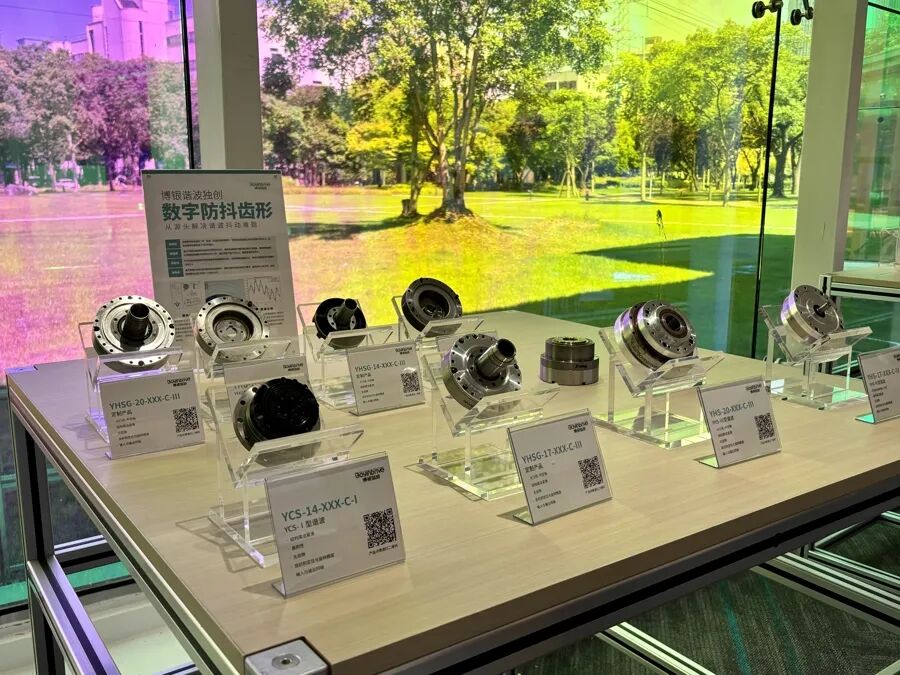 Photo by Wang Wanyi
Qingxinyi Innovation, a company in the park focused on humanoid robot bodies, has its CEO, Niu Tenghao, stating: “Companies need to specialize; they cannot do everything and need empowerment from upstream and downstream companies.” This “supermarket” is precisely designed to empower such specialization.
From its inception, the Qingxinyi Innovation team has settled in the incubator and, with support from various parties, quickly achieved scale expansion and technological breakthroughs. Niu Tenghao cites his company as an example, stating that in the past, they often faced difficulties in finding and procuring key components: scattered channels, information asymmetry, high procurement costs, and challenges in small-batch customization. These issues drained the R&D energy and funds of startups, slowing down the pace of innovation and iteration.
The emergence of the “supermarket” directly addresses these pain points. Its value goes far beyond convenient procurement; the platform that was simultaneously unveiled is closely linked, building a strong industrial empowerment foundation.
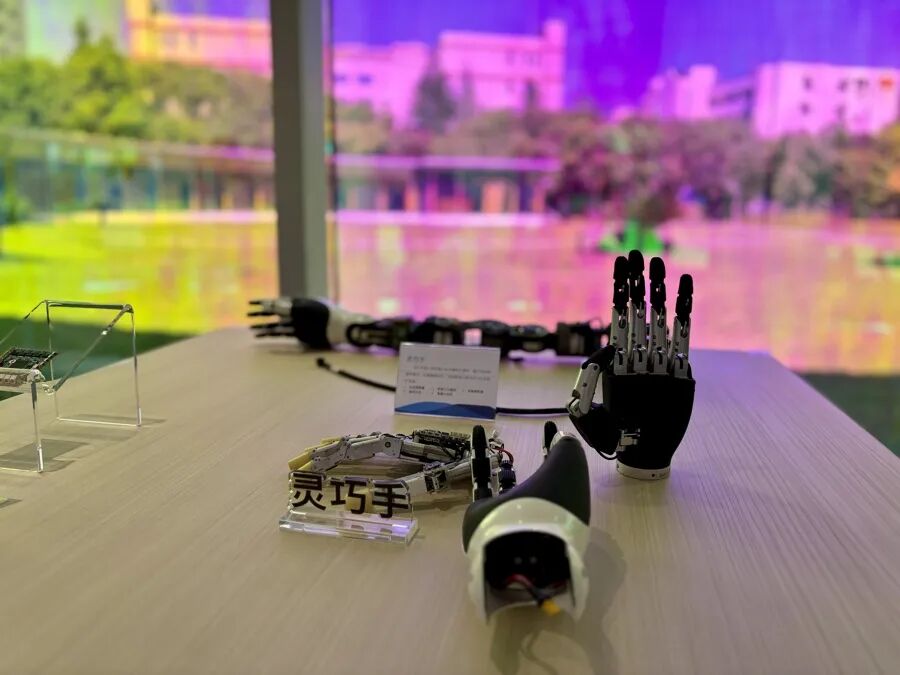 Photo by Wang Wanyi
Adjacent to the “supermarket” is a “future application scenario” experience area, where users can immerse themselves in human-robot interaction, stimulating potential needs that, in turn, accelerate innovation and iteration at the source of technology. When the standard components in the “supermarket” cannot meet unique design requirements, the 3D printing center can provide efficient and flexible customization services, breaking through the bottleneck from “blueprint” to “physical object.”
What excites the companies in the park even more is the simultaneous establishment of the National Robot Testing and Evaluation Center (headquarters) and the outdoor training and testing ground for humanoid robots in Shanghai. Robots assembled from components purchased at the “supermarket” and key parts customized at the 3D printing center must undergo rigorous testing in this complex environment. Climbing, obstacle avoidance, operation, and even recovery from falls… The valuable physical interaction data generated during testing will also help establish industry standards and promote product upgrades.
The “supermarket” has also attracted “sellers”; Zixi Technology, a company providing “robot skins” and joint protection accessories for companies like Yushu and Fourier, expressed interest in settling in the “supermarket,” drawn by the potential collaboration opportunities and market space that come with joining this vibrant ecosystem.
“2025 may be the year of mass production for humanoid robots,” said Ding Hongjun. When innovative elements flow freely, collide, validate, and iterate within an efficient, open, and closed-loop ecosystem, they accumulate crucial “ecological potential” for China in the competition concerning the future of humanoid robots.


Disclaimer
Article Source: Wenhui Daily
Any information sourced from other media is reprinted from those media and does not represent our website’s endorsement of their views, nor does it represent our website’s responsibility for their authenticity. For reprints and business cooperation, please contact Teacher Mu at 159 0176 7989 (WeChat same number).