

According to statistics from CINNO Research, in the first half of 2022, the wholesale sales of new energy passenger vehicles in the Chinese market increased by 128% year-on-year to approximately 2.46 million units, with a penetration rate of 24.2%, an increase of 13 percentage points year-on-year; meanwhile, the global penetration rate of new energy vehicles approached 10.7%, a year-on-year increase of 4.4 percentage points.
New Trends in Automotive Displays
The trend of large screens in automotive displays began with the Tesla Model S, which adopted a 17-inch large touchscreen in the center console. Subsequently, other manufacturers followed suit. The latest Mercedes-Benz EQS electric vehicle features the new MBUX Hyperscreen, which consists of three seamlessly integrated displays with a total size of 56 inches, along with a 12.3-inch instrument cluster. The total width exceeds 142 cm, and there are 12 sensors under the touchscreen for haptic feedback during operation. From the Li Auto ONE to the IM L7 and Ford EVOS, many have adopted this continuous large screen design, creating a visually striking interior with at least three screens combined in the center console.
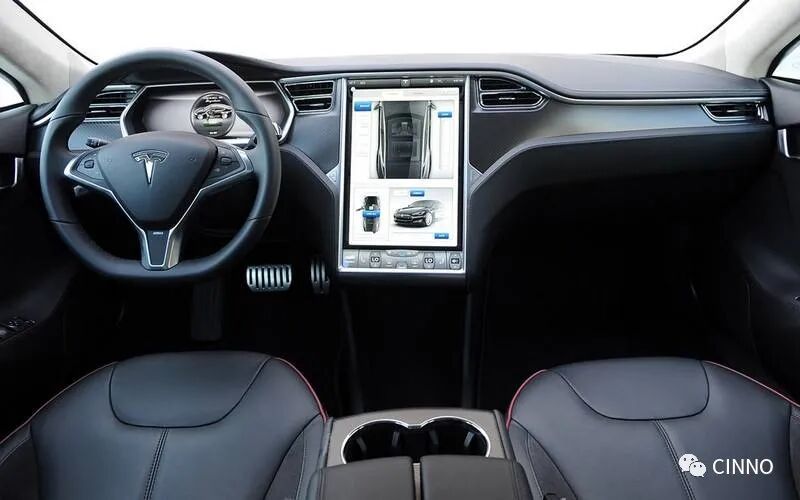
According to CINNO Research statistics, in 2021, the average size of center display screens (CID) in new energy passenger vehicles in the Chinese market was 13.3 inches, significantly higher than the average size of 9.8 inches in fuel vehicles, indicating a clear trend towards larger screens.
The diversification of screen technologies is also a new direction for automotive displays. CINNO Research believes that multiple brands have begun to equip their models with Mini LED displays, and in 2023, Mini LED automotive displays are expected to achieve significant shipments. Meanwhile, Micro LED display technology, with its advantages of transparency, curved shapes, high brightness, and low power consumption, is also beginning to be promoted in automotive displays, with mass production expected after 2025. The penetration rate of OLED display technology in automotive displays is currently still low, expected to be less than 1% in 2022.
CINNO Research predicts that from 2017 to 2025, the global automotive display market will continue to be dominated by TFT-LCD screens, with a compound annual growth rate of 6.4% expected from 2020 to 2025.
It is foreseeable that with the rapid development of the passenger vehicle market and new energy vehicles, the increase in market demand will inevitably drive the development of the corresponding industrial chain. The trends in automotive displays will certainly give rise to new technologies to meet the demands for industrial and product upgrades, such as how to reduce product thickness and power consumption in response to larger screens; how to lower unit costs in multi-screen setups; and how to improve resolution, contrast, and touch sampling rates in high-definition and interactive displays.
The Trend of Lightweight and Thin Automotive Screens
In the face of trends towards larger and multi-screen automotive displays, coupled with consumers’ increasing aesthetic expectations for vehicle interiors, the thinness and design of automotive screens directly affect the interior atmosphere, becoming a significant consideration for consumers when purchasing vehicles.

Moreover, the increase in human-machine interaction information leads to an increase in the display area and interactive touch operation area, which will raise the cost and weight of vehicle displays. An automotive supply chain insider stated: “Both OEMs and module manufacturers are gradually shifting from traditional OGS and On Cell panels to In Cell panels due to the demand for thinner displays.”
The lightweight design of automotive display products can reduce vehicle weight and improve energy efficiency; at the same time, thin bezels and high screen-to-body ratios are also the current mainstream design styles in automotive interiors. CINNO Research observes that in recent years, to meet the demands for high clarity, high contrast, low power consumption, low reflectivity, and the integration of touch/display functions in automotive displays, the application of TFT-LCD In Cell display technology in automotive displays has gradually increased.
Similar to the development of mobile phone display panel technology, automotive displays are also evolving. Both On Cell and In Cell technologies integrate the touch layer with the display panel, further reducing the overall thickness of the screen, making it lighter and thinner. OCA only needs to be applied once to bond the protective glass and the “touch-display layer” structure, ensuring the touch function operates normally by adding separate touch lines to the display layer.

The main difference between On Cell and In Cell lies in whether the touch unit/module is located above or below the “CF (color filter)”. In the On Cell design, the touch layer is placed outside the display panel’s CF glass, separated from the liquid crystal pixels by a color filter substrate, unlike In Cell technology, which embeds the touch unit within the liquid crystal layer. On Cell requires separate display driver and touch driver chips, while In Cell can use a single TDDI chip to achieve both display and touch driving.
In summary, In Cell screen technology is the most complex, but it offers superior color balance in display effects. By reducing the touch layer and air layer, it also achieves a more consistent visual experience in the off state. “In Cell screens can reduce the number of panel layers and corresponding materials, lowering certain costs. With the gradual maturation of the technology, In Cell screens are increasingly entering the automotive display market, meeting the design requirements for narrow bezels and thin thickness, while their lower reflectivity allows for a more integrated visual experience in daylight, enhancing display contrast to some extent,” said a display technology expert, highlighting the advantages of In Cell screens.
How is Automotive In Cell Technology Developed?
It is understood that in In Cell screen panels, multiple insulated sensing lines are set on the surface of the thin-film transistor substrate facing the liquid crystal layer, and the thin-film transistor substrate works in conjunction with the touch sensing layer to embed the touch panel function into the liquid crystal pixels, reducing the thickness of the touch screen.
By setting a high-resistance film on the surface of the second substrate away from the touch sensing layer and electrically connecting the high-resistance film to the thin-film transistor substrate, the high-resistance film can instantly release the static electricity generated by the thin-film transistor substrate, eliminating static electricity and reducing mutual interference between touch sensors, thereby improving the touch sensitivity of the embedded touch screen.
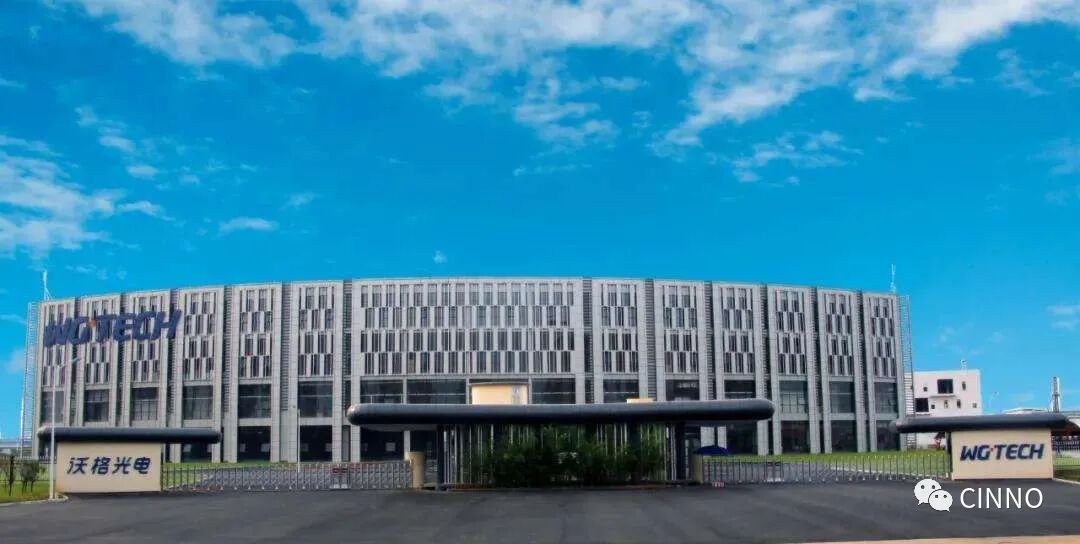
Currently, there are not many companies in China developing high-resistance films for automotive displays, but Woge Optoelectronics has been researching high-resistance films for a long time and has reportedly achieved domestic production of automotive high-resistance films, successfully entering the supply chain of major panel and module manufacturers for automotive display products.
According to reports, Woge Optoelectronics began developing high-resistance films in 2015, primarily to meet the application needs of panel manufacturers for In Cell products. The challenges at that time included the need to develop and validate equipment, materials, and processes separately, requiring the sheet resistance to be in the range of 5E7~5E9Ω while also meeting high optical transmittance requirements.
It seems that the automotive display market is also undergoing a technological upgrade path similar to that of consumer electronics represented by mobile phones. The main technological paths overlap, but upon closer inspection, the challenges faced by automotive displays are even greater. This is due to the stricter automotive-grade testing requirements for components, which differ from consumer and industrial products, as these components require higher reliability, such as working temperature ranges, operational stability, and defect rates.
The technical indicators for high-resistance films include sheet resistance, transmittance, and reflectance. The sheet resistance is generally in the range of 5E7Ω~5E9Ω, serving the purpose of ESD static protection and ensuring no interference with the TP touch function; reflectance should be ≤1.3%, as lower reflectance more easily achieves a unified black effect on the display screen.
Additionally, to ensure the quality of automotive displays for long-term use in various environments, the stability of each unit must be guaranteed. Only through rigorous testing can it be ensured that automotive products do not experience potential issues such as touch failure and ESD failure during processing, assembly, and end-use, thus meeting the durability requirements for automotive applications.
Woge Optoelectronics stated: “The differences in testing and certification for automotive-grade display products compared to general electronic consumer products mainly lie in the differences in usage environments and ensuring reliability over time. The technological accumulation and upgrades of consumer electronics expand into the more stringent automotive environment, with the duration of reliability testing increasing exponentially; for example, the high-resistance film technology for consumer products requires 240 hours of testing, while automotive specifications generally require 1000 hours or longer of testing.”
As more and more technology giants enter the new energy vehicle sector, the automotive industry has entered an era of a hundred flowers blooming. Numerous independent brands are rapidly developing, and a large number of new forces in vehicle manufacturing have emerged. The rapid growth in sales of the automotive industry led by new energy vehicles will inevitably drive the increase and upgrade of the supply chain for automotive displays. The demand for lightweight automotive screens will certainly boost the demand for In Cell screens, benefiting related In Cell supply chain companies.
– END –
Recommended Reading
Click the image to read the full article

For more business cooperation, please contact the editor!
Scan the code and please note: Name + Company + Position

I am the strongest editor at CINNO, waiting for you for a long time!
CINNO was established in Shanghai at the end of 2012 and is dedicated to promoting the development of the domestic electronic information and technology industry as an independent third-party professional industry consulting service platform. Over the past ten years, the company has consistently focused on the semiconductor industry chain, providing authoritative and professional consulting services to enterprises, governments, and investors across various dimensions, including but not limited to industry information, market consulting, due diligence, project feasibility studies, management consulting, and investment and financing, covering the core interests of enterprises at all stages of their growth cycle, and accumulating hundreds of high-quality core clients from high-tech companies in mainland China, Taiwan, Japan, South Korea, Europe, and the United States in the fields of displays, semiconductors, consumer electronics, intelligent manufacturing, and key components.