Source: New Youth Medical Alliance Author: Big Sword Brother Tells Stories
01Small Characters, Big Roles
Analyzing the subfields of medical devices is one of the directions for this year’s public WeChat account of the New Youth Medical Alliance. Following in vitro diagnosis and medical imaging (“Breaking Through in the Context of Domestic Production: The Path of Ruoyaxi Biotech” and “Flourishing Branches: The Path of GPS Domestic Production”), Big Sword Brother turns his attention to a niche field, pathological diagnosis.
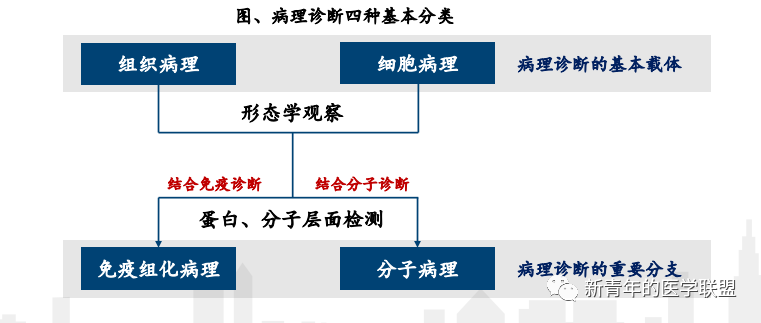
Pathological diagnosis is a branch of in vitro diagnosis, mainly used in pathology departments, with products mainly including: tissue pathology, cell pathology, immunohistochemical pathology, and molecular pathology. Compared to in vitro diagnostic and medical imaging equipment, the barriers to antibody development in pathological diagnosis are relatively low, and the market share among manufacturers is more dispersed. From a global perspective, the top three manufacturers by market share are: Ventana, Dako, and Leica.
 If we apply the story of the Three Kingdoms that we Chinese are familiar with, then Ventana is like Wei, with many troops and high income and market share in China. Dako is like Shu, though currently weaker, it was the first to enter the field of immunohistochemistry and companion diagnostics, and has been engaged in pathological diagnosis for the longest time, possessing the strongest orthodoxy. Leica is like Wu, ranking second in income and market share, adept at collaborating with agents, and thriving in markets like Shanghai, where it has surpassed Ventana in market share.Although the products of pathological diagnosis may seem inconspicuous, they play a crucial role in surgical treatment and cancer therapy, embodying the essence of small characters having big roles. In modern medicine, the earliest pathologists came from surgeons, who, in their spare time, processed tissue specimens from surgical resections and observed them after special staining to better study tumor characteristics. With the rapid development of life sciences, cancer treatment has entered a new era of targeted therapy and immunotherapy, where pathological diagnosis is fundamental to precision treatment of tumors, closely related to the diagnosis of cancer patients, MOA mechanisms, indications, companion diagnostics, and targeted drugs. Therefore, we see that although these three main players in pathological diagnosis are not particularly glamorous, they all marry into wealthy families and come to China with huge dowries.02Marrying into Wealthy Families, Coming to ChinaThe three strong players in pathological diagnosis, although renowned internationally, have low recognition in China. The main reason for this is that due to the particularity of pathological diagnosis, these three players married into wealthy families early on, being acquired by biopharmaceutical giants, and typically conducting various activities in China under the name of their parent companies.Ventana is an American company founded in Arizona, acquired by Roche Diagnostics in 2008, and subsequently developed into Roche Diagnostics’ Tissue Diagnostics division. In 2009, Ventana officially entered the Chinese market in partnership with Roche, bringing over 250 high-value antibodies to China, covering multiple cancer types including lung cancer, breast cancer, gastric cancer, and urothelial carcinoma. Ventana mainly provides immunohistochemical pathological antibody testing. In recent years, Roche’s Tissue Diagnostics has introduced DP200 digital pathology and Vantage lean workflows in China, aiding in the intelligentization of pathological diagnosis.Dako is a cancer diagnostics company headquartered in Denmark, acquired by Agilent Technologies in 2012, and subsequently integrated into Agilent’s Diagnostics and Genomics division (DGG). Dako mainly provides immunohistochemical pathological antibody testing, having over 50 years of deep experience in antibody standardization, and as a leading supplier of pathological solutions, it offers a comprehensive range of high-quality diagnostic antibody reagents, instruments, and software, helping research laboratories and clinical institutions make accurate cancer diagnoses based on tissue cytology for the most effective treatment of cancer patients. After entering the Chinese market, Dako actively collaborates with various academic organizations in China to promote the standardization of pathological testing, working together to improve the level of pathological diagnosis in China.Leica Biosystems is also a cancer diagnostics company headquartered in Germany, acquired by Danaher in 2005, becoming part of Danaher’s life sciences platform, while retaining the Leica sub-brand for operations. Unlike Ventana and Dako, Leica not only provides immunohistochemical pathological antibody testing but also medical devices such as microtomes and embedding machines. Leica Biosystems offers the most comprehensive product and service portfolio, covering the entire workflow from biopsy to diagnosis. In the field of pathological equipment, with the significant rise of domestic alternatives, many excellent domestic pathological devices are competing with Leica’s equipment due to their outstanding cost-effectiveness.03The Significance of Pathological Diagnosis for Cancer TreatmentPathological diagnosis provides a solid foundation for the precision treatment of cancer patients. Taking immunohistochemical antibodies as an example, immunohistochemistry can assist in diagnosis and differential diagnosis, providing objective evidence for pathological diagnosis and differential diagnosis. For tumor diseases, immunohistochemistry can provide objective diagnostic evidence through various means to assist pathological diagnosis:(1) Determining tumor benign or malignant; (2) Identifying the source of tumor cells, where immunohistochemistry can provide tissue differentiation information to help pathologists determine if it is primary or metastatic; (3) Differentiating tumor types. Low-differentiated or undifferentiated tumors, as well as those with relatively consistent morphological characteristics, are usually difficult to distinguish, and immunohistochemistry can provide effective tumor differentiation features to assist in tumor differential diagnosis; (4) Tumor grading, for example, Ki-67 antibodies can be used for grading gliomas; (5) Discovering and determining small metastatic foci in lymph nodes or other tissues, where due to the presence of many different cells in the tissue, small or few metastatic tumors can easily be overlooked, leading to missed diagnoses; immunohistochemistry can highlight tumor cells in a blue background through specific staining.However, for a long time, the foundational role of pathological diagnosis in cancer treatment has been easily overlooked. Especially in recent years, new anti-tumor drugs such as targeted therapy and immunotherapy have become more common in clinical use, and blindly administering drugs without following pathological diagnosis can lead to problems. Therefore, at the end of 2020, the National Health Commission issued the “Guidelines for Clinical Application of New Anti-Tumor Drugs”, emphasizing the role of pathological histology and target detection in the clinical application of anti-tumor drugs.
 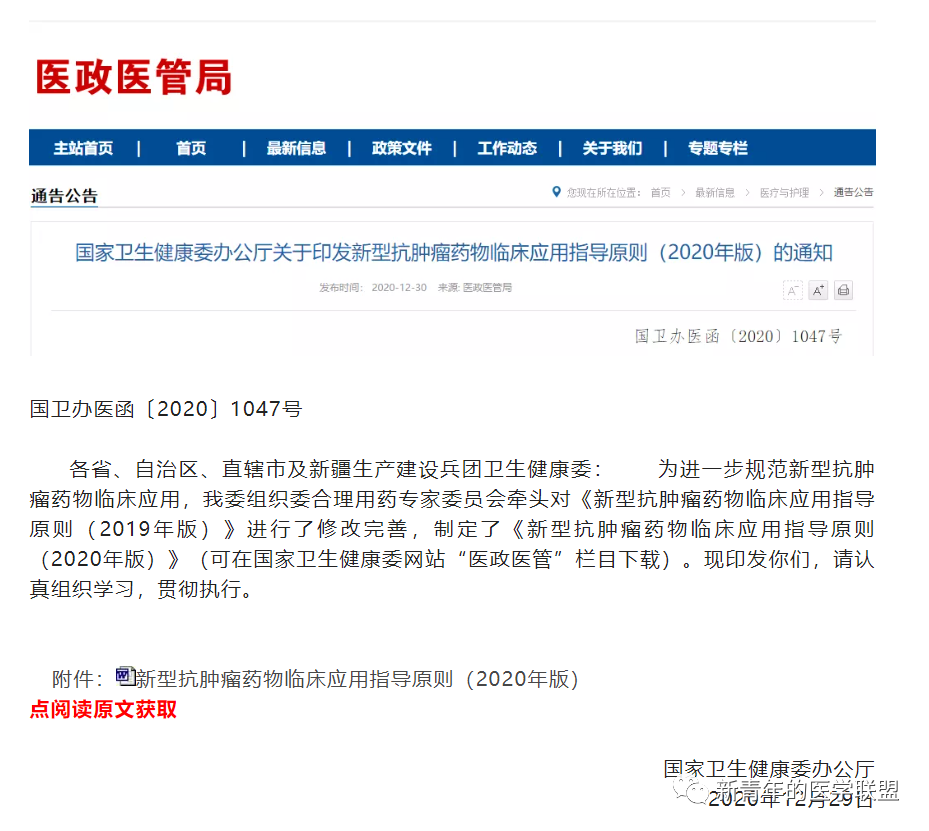 1. Pathological Histology Confirmation Required Before UseOnly malignant tumors confirmed by histological or cytological pathology, or special molecular pathology diagnosis, have indications for the use of anti-tumor drugs. Tumor patients diagnosed solely based on clinical symptoms, signs, and imaging results have no indications for anti-tumor drug treatment. However, for certain tumors where pathological diagnosis is difficult to obtain, such as pancreatic cancer, confirmation can be carried out according to relevant national guidelines or standards. 2. Target Detection Required Before UseFor drugs with clear targets, the principle of target detection must be followed before use. The instruments, diagnostic reagents, and testing methods used for detection must be approved by the National Medical Products Administration, especially those verified through companion diagnostics. Blindly administering drugs without relevant tests is not permitted.Tests related to tumor drug targets are also known as companion diagnostics. They can provide objective guidance for disease treatment based on tumor differentiation and typing. Companion diagnostics are a type of in vitro diagnostic technology that provides information about a patient’s response to specific treatment drugs, helping to identify patient populations that can benefit from a particular treatment product, thereby improving treatment outcomes and reducing healthcare costs.Ventana, Dako, and Leica are also important suppliers of companion diagnostics. According to the FDA’s official website, these three companies have collectively approved 15 companion diagnostic products for market. Among them, Ventana and Dako each have 7 companion diagnostic products approved, with research and development capabilities being closely matched, while Leica has only one HER2 immunohistochemical product approved, indicating slightly weaker R&D strength. Ventana’s post-market commercialization capabilities far exceed Dako, making it the current leader in companion diagnostics in China. The targets covered by companion diagnostics include HER2, PD-L1, EGFR, C-KIT, ALK, MMR, etc., and clinical use can classify tumors into different types based on antibody staining results, each with different prognoses and disease outcomes, thus providing guidance for patient treatment outcomes.
Table 1. Approval Status of Companion Diagnostic Products by Ventana, Dako, and Leica at the FDA
|
No |
Test Reagent |
Manufacturer |
Indications |
Corresponding Tumor Drugs |
|
1 |
PD-L1 IHC 22C3 pharmDx |
Dako North America, Inc. |
Non-small cell lung cancer(NSCLC), gastric or gastroesophageal junction adenocarcinoma, cervical cancer, urothelial carcinoma, head and neck squamous cell carcinoma (HNSCC), esophageal squamous cell carcinoma (ESCC) and triple-negative breast cancer (TNBC) |
KEYTRUDA (pembrolizumab) – BLA 125514 Libtayo (cemiplimab-rwlc) – BLA 761097 |
|
2 |
VENTANA ALK (D5F3) CDx Assay |
Ventana Medical Systems, Inc. |
Non-small cell lung cancer |
Zykadia (ceritinib) – NDA 205755 Xalkori (crizotinib) – NDA 202570 Alecensa (alectinib) – NDA 208434 Lorbrena (lorlatinib) – NDA 210868 |
|
3 |
Dako EGFR pharmDx Kit |
Dako North America, Inc. |
Colorectal cancer |
Erbitux (cetuximab) – BLA 125084 Vectibix (panitumumab) – BLA 125147 |
|
4 |
Dako c-KIT pharmDx |
Dako North America, Inc. |
Gastrointestinal stromal tumors |
Gleevec (imatinib mesylate) – NDA 021335 Glivec (imatinib mesylate) – NDA 021588 |
|
5 |
INFORM HER-2/neu
|
Ventana Medical Systems, Inc. |
Breast cancer |
Herceptin (trastuzumab) – BLA 103792 |
|
6 |
PATHWAY anti-Her2/neu (4B5) Rabbit Monoclonal Primary Antibody |
Ventana Medical Systems, Inc. |
Breast cancer |
Herceptin (trastuzumab) – BLA 103792 Kadcyla (ado-trastuzumab emtansine) – BLA 125427 |
|
7 |
Bond Oracle HER2 IHC System |
Leica Biosystems |
Breast cancer |
Herceptin (trastuzumab) – BLA 103792
|
|
8 |
HER2 CISH pharmDx Kit |
Dako Denmark A/S |
Breast cancer |
Herceptin (trastuzumab) – BLA 103792 |
|
9 |
INFORM HER2 Dual ISH DNA Probe Cocktail |
Ventana Medical Systems, Inc. |
Breast cancer |
Herceptin (trastuzumab) – BLA 103792 Kadcyla (ado-trastuzumab emtansine) – BLA 125427 |
|
10 |
HercepTest |
Dako Denmark A/S |
Breast cancer
Gastric cancer and gastroesophageal cancer
|
|
|
11 |
HER2 FISH pharmDx Kit
|
Dako Denmark A/S |
Breast cancer
Gastric cancer and gastroesophageal cancer
|
|
|
12 |
VENTANA PD-L1(SP142) Assay |
Ventana Medical Systems, Inc. |
Urothelial carcinoma, triple-negative breast cancer (TNBC) and non-small cell lung cancer (NSCLC) |
TECENTRIQ (atezolizumab) – BLA 761034 |
|
13 |
PD-L1 IHC 28-8 pharmDx |
Dako North America, Inc. |
Non-small cell lung cancer |
OPDIVO (nivolumab) (BLA 125554) combined withYERVOY (ipilimumab) (BLA 125377) |
|
14 |
VENTANA HER2 Dual ISH DNA Probe Cocktail |
Ventana Medical Systems, Inc. |
Breast cancer |
Herceptin (trastuzumab) – BLA 103792 |
|
15 |
VENTANA MMR RxDx Panel |
Ventana Medical Systems, Inc. |
Endometrial cancer
Mismatch repair deficiency (dMMR) solid tumors
|
04Opportunities for Local Pathological Diagnosis CompaniesAs the saying goes: Wei, Shu, Wu, three divisions of the world; Sima family, unified the world. For a long time, Ventana, Dako, and Leica have been competing fiercely, with various strategies and tactics, making the Three Kingdoms very lively. However, Big Sword Brother believes that local pathological diagnosis companies should not become spectators but should actively participate in the competition, as there is a possibility of laughing last. There are three reasons:First, from the perspective of the pathological diagnosis industry chain, local pathological diagnosis companies have layouts and control in the upstream, midstream, and downstream. In the upstream (instrument/reagent manufacturers), it is no longer dominated by foreign companies, as many excellent local pathological companies such as Dako Wei, Anbiping, Maixin, and Aidesheng have developed their own unique products.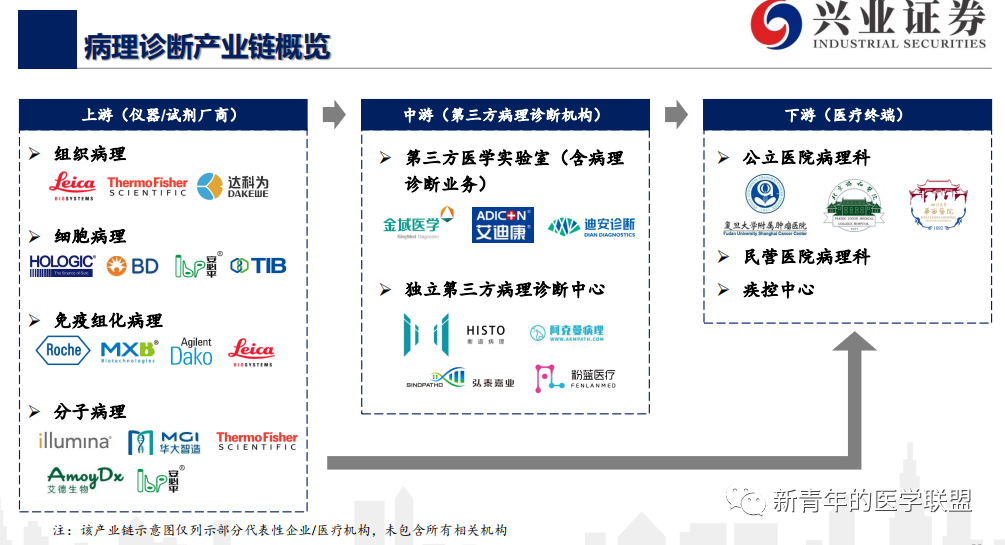 Secondly, the domestic replacement of routine pathological antibodies is accelerating. Most pathological diagnostic antibodies are a type of medical device, with relatively simple processes for research and development, production, approval, and market launch. Existing data indicates that Roche, Agilent, and Danaher currently have no plans to implement domestic production of pathological diagnostic antibodies and can only rely on imports, which are less competitive in terms of cost-effectiveness compared to local pathological diagnosis companies.Thirdly, the development of domestic companion diagnostics is in full swing. Companion diagnostics are the crown jewel of pathological diagnosis. In the past, the forces dominating the direction of companion diagnostics were foreign pharmaceutical companies and FDA guidelines. Now, with the rise of local pharmaceutical companies and the introduction of a series of companion diagnostic guidelines by the NMPA, the old concepts and balances are being broken. We have already seen that in the field of NGS second-generation sequencing, more and more local biopharmaceutical companies are obtaining NMPA and FDA approvals for companion diagnostics. In the near future, more local immunohistochemical companion diagnostic products will be approved for market, contributing to the clinical application of new anti-tumor drugs with the strength of pathology.Recommended Hot Videos📹👇Attention
This is the largest IVD practitioner alliance in China. By scanning the code to join, you can get:1. The most industry connections. 2. The fastest performance growth. 3. The most efficient industry resource docking. 4. Everything you want!