The combination of “New Energy + IoT” is the core path to achieving the energy revolution, while the “Cloud Big Data IoT Mobile Intelligence Chain” (cloud computing, big data, IoT, mobile internet, intelligent technology, and blockchain) serves as the six key technological cornerstones supporting this integration.
These technologies do not exist in isolation; rather, they collaborate to form a complete technological ecosystem that empowers the entire value chain of new energy from production, storage, transmission to consumption. Below, we will detail how they are implemented through a framework and specific applications.
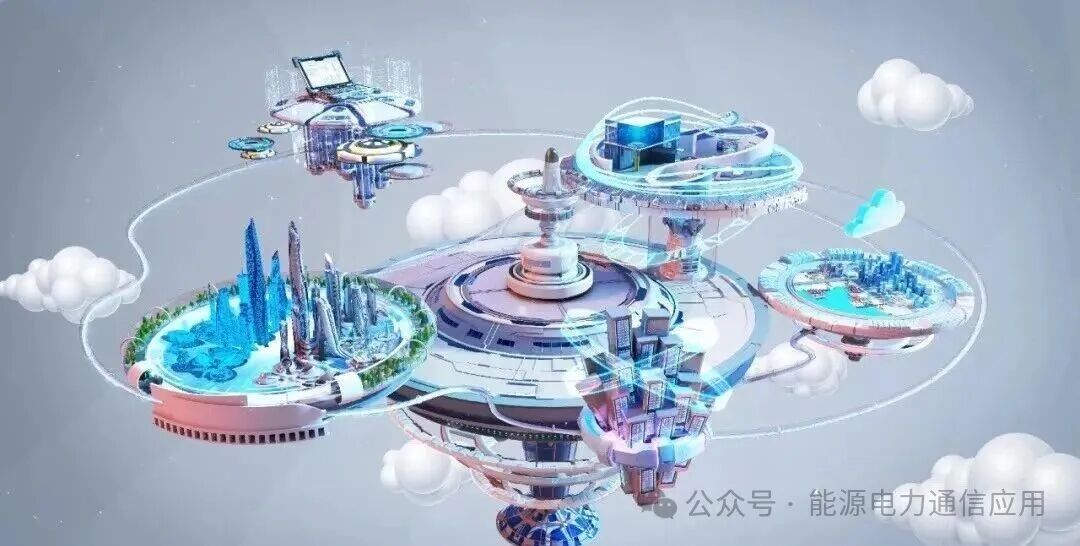
Core Framework: Layered Collaboration
We can view these technologies as a layered collaborative framework, where the Internet of Things (IoT) serves as the perception and execution layer, acting as the source of data and the endpoint of control; mobile internet and cloud computing form the transmission and computing layer; big data and artificial intelligence constitute the decision-making and intelligence layer; and blockchain provides a trusted collaboration layer.
How do these technologies specifically implement and apply?
1. IoT – The Foundation of Perception and Control
Role: The “nerve endings” and “limbs”. Responsible for collecting massive amounts of data and executing control commands.
Implementation:
Perception Layer: Deploy countless sensors, smart terminals, and controllers at new energy sites (solar power plants, wind farms), energy storage stations, charging piles, and user sides (smart meters, smart homes, smart air conditioners).
Data Collection: Real-time collection of data such as power generation, wind speed, light intensity, battery SOC (State of Charge), electricity load, voltage, and current.
Control Execution: Receive commands from the cloud to remotely control the start and stop of inverters, adjust charging pile power, switch energy storage devices, and start or stop non-critical loads for users.
Application Example: Smart meters upload electricity usage data every minute; drones equipped with infrared cameras automatically inspect solar panels for hot spots.
2. Mobile Internet – Ubiquitous Connectivity
Role: The “nervous system”. Provides flexible, wide-coverage data transmission channels.
Implementation:
Provide economical and efficient network access methods (4G/5G Cat.1/NB-IoT) for widely distributed and remote new energy devices (such as scattered charging piles, distributed solar, and wind turbine monitoring).
Support operation and maintenance personnel in remote monitoring, fault diagnosis, and scheduling management through mobile apps, enhancing mobile office capabilities.
Application Example: Operation and maintenance engineers receive alerts and view real-time operation videos of wind turbines via 5G networks while in their vehicles; users remotely start vehicle charging and make payments through mobile apps.
3. Cloud Computing – A Flexible and Powerful Brain
Role: The “central nervous system”. Provides massive data storage, elastic computing resources, and platform services.
Implementation:
IaaS (Infrastructure as a Service): Provides scalable servers, storage, and network resources for new energy monitoring platforms and big data analysis, eliminating the need to build data centers.
PaaS (Platform as a Service): Offers databases, middleware, and big data processing frameworks (such as Hadoop/Spark), allowing developers to quickly build and deploy energy management applications.
SaaS (Software as a Service): Users can directly use energy monitoring systems, operation and maintenance management systems, and electricity trading platforms deployed in the cloud.
Application Example: A provincial-level distributed solar monitoring platform, where all data is stored in the cloud, can dynamically expand storage space based on the growth of connected capacity.
4. Big Data – The Fuel for Insights and Predictions
Role: “Knowledge and Experience”. Extracts value from massive data to provide decision support.
Implementation:
Data Integration: Aggregates structured and unstructured data from multiple sources, including IoT devices, meteorological agencies, and power grid companies.
Data Analysis: Utilizes data warehouses, data lakes, and technologies for storage and batch/stream processing analysis.
Data Applications:
Predictive Maintenance: Analyzes vibration and noise data from wind turbines to predict gearbox failures and provide early warnings.
Power Generation/Load Forecasting: Analyzes historical power generation data and meteorological data (wind speed, irradiance, cloud cover) to accurately predict future short-term and ultra-short-term power output, providing a basis for grid scheduling.
User Profiling: Analyzes user electricity consumption behavior to support demand-side response and personalized energy-saving services.
Application Example: Based on 365 days of historical power generation data and 72 hours of future weather forecasts, an AI model predicts that a solar power plant will generate 85.3MW of power tomorrow at noon, achieving 95% accuracy.
5. Intelligent Technology – The Core of Optimization and Decision-Making
Role: The “smart brain”. Achieves automated, intelligent decision-making and optimization control.
Implementation:
Machine Learning/Deep Learning: Used for the aforementioned predictive models and image recognition (such as automatic identification of solar panel defects from drone inspection images).
Optimization Algorithms: Real-time coordination of solar, energy storage, diesel generators, and loads in microgrid operations to achieve the lowest operating costs or the highest proportion of green electricity.
Intelligent Scheduling: AI scheduling systems at the grid level coordinate the scheduling of wind, solar, hydro, thermal, and storage resources across the region to smooth out the volatility of renewable energy and ensure grid safety.
Application Example: A Virtual Power Plant (VPP) platform uses AI algorithms to aggregate thousands of dispersed charging piles, energy storage, and adjustable loads from industrial and commercial sectors to form a unified “virtual power station” that participates in grid peak shaving and frequency regulation.
6. Blockchain – The Guarantee of Trustworthy Transactions
Role: The “trust machine” and “transaction ledger”. Solves trust and collaboration issues among multiple parties.
Implementation:
Decentralized Trust: Achieves reliable peer-to-peer (P2P) transactions and data sharing without the need for centralized institutional guarantees.
Smart Contracts: Automatically execute preset rules. For example, when power generation data is verified, it automatically initiates electricity billing to the user.
Data Immutability: Ensures the authenticity and reliability of data for carbon footprint tracking, green electricity trading, etc.
Application Example: Green electricity trading: After a solar power plant generates electricity, the generation data is recorded on the blockchain, and the record of the user’s purchase of green electricity is also recorded on the blockchain, forming an immutable proof that facilitates carbon accounting for users. Electric vehicle charging: Identity authentication, energy measurement, and cost settlement are automatically completed among the vehicle, charging pile, power grid, and payment party through smart contracts.
Conclusion: Synergistic Effects
Taking a community microgrid of “distributed solar + energy storage + electric vehicles” as an example:
1. IoT sensors monitor solar power generation, household electricity usage, and battery status in real-time.
2. Data is transmitted to the cloud platform via mobile internet/fiber optics.
3. The cloud platform analyzes historical patterns and real-time weather using big data technology to predict power generation and consumption for the next hour.
4. The AI discovers that solar power generation will exceed demand in one hour, so it automatically decides to activate the neighbor’s electric vehicle charging pile (scheduling load) and store the excess electricity in the energy storage battery.
5. This “neighbor-to-neighbor transaction” is automatically recorded, verified, and settled through the blockchain’s smart contract, with the electricity fee automatically deducted from the vehicle owner’s account to the solar power owner.
6. All information and services are clearly visible to users through a mobile app.
Thus, it can be seen that the deep integration of “Cloud Big Data IoT Mobile Intelligence Chain” transforms the new energy system from traditional “mute” devices into a highly intelligent “source-network-load-storage” collaborative system that is perceptive, analyzable, predictable, optimizable, and tradable, ultimately moving towards the beautiful vision of the energy internet.