 Image Source: Feixiang Network
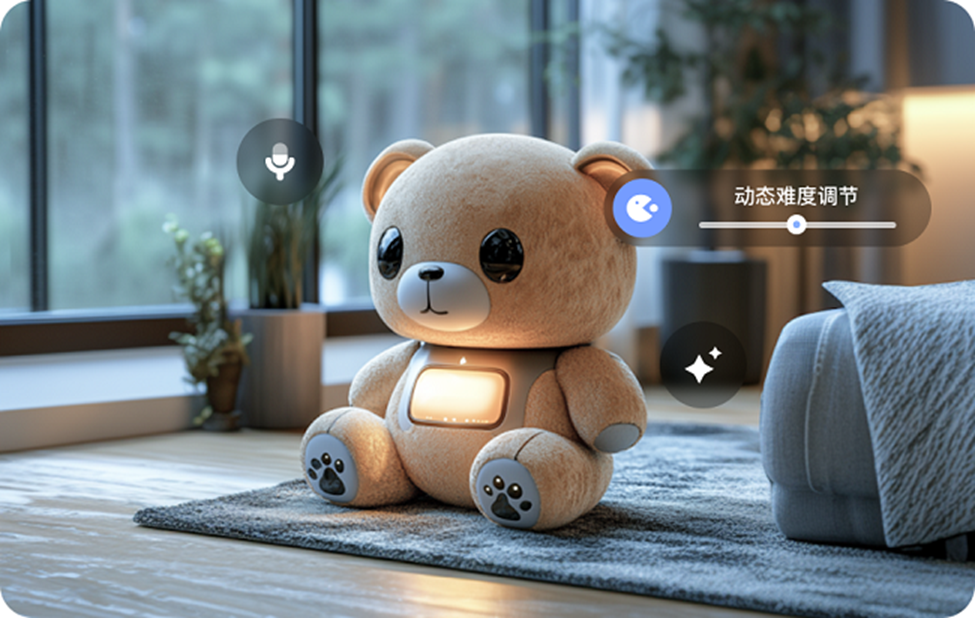
AI toys refer to a new generation of intelligent toys that integrate artificial intelligence technologies (such as voice recognition, natural language dialogue, perceptual interaction, personalized learning, etc.) and possess the ability to understand and respond. Unlike traditional electric toys or voice playback products, AI toys are no longer just mechanically executing commands; they can engage in continuous emotional interaction with people, possessing memory, learning, and personality traits.
They are both an extension of toy forms and an important foothold for AI to transition from the virtual world to the real world. Compared to virtual assistants on mobile phones, AI toys provide a sense of reality—appearance, touch, expressions, and tone all constitute emotional carriers, making the sense of companionship from AI more tangible and warmer.
The Chinese toy industry has long relied on global culture and foreign trade orders for growth, but with the advent of the AI era, the wave of combining trendy toys with smart hardware is evolving toys from mere OEM products into a convergence of culture and technology. AI toys are not only an extension of the IP economy but also a manifestation of emotional consumption. They carry not only functional entertainment needs but also a psychological reliance on being understood and accompanied.
On the industrial side, the logic of these products is that AI reshapes embodied experiences through toys. The goal of developers is not just to make chips capable of conversation but to make characters embody what they represent: IP: understanding stories, having voices, and being responsive. A mature AI toy must avoid the out-of-character problem through model fine-tuning, and the difficulty behind this lies not in technical stacking but in the replication of the soul of IP.
AI toys: Bringing IP to Life
AI toys’ greatest charm is making IP truly come to life. In the past, the relationship between users and characters was one-way. Audiences watched, players controlled, and fans collected. However, AI toys create a two-way emotional loop through voice recognition, emotional perception, and behavioral feedback. Users are no longer just spectators of the story but co-creators of character personalities and interaction styles.
In commercial psychology, this interaction is referred to as ⌈projective attachment⌋ (projective attachment): consumers project their emotions, loneliness, and expectations onto embodied characters, thus establishing parasocial relationships. Compared to virtual games or digital pets, AI toys are warmer; they are ⌈huggable AI⌋. This transition from virtual to physical shifts the sense of social belonging from weak online connections to strong offline connections. People begin to believe that this plush toy truly ⌈understands me⌋.
For brands, this emotional hardware is a significant commercial lever. AI toys not only extend the content boundaries of IP but also reshape the commercial logic of IP. They allow characters to become sustainable interactive subjects for the first time, shifting from one-time consumption to long-term companionship. As AI models continue to learn, characters will generate unique language habits and emotional responses through interactions, gradually forming personalized shared memories. Brands can also update IP through cloud models, allowing it to continue to grow, extend its lifecycle, and achieve a ⌈companionship loop⌋ (Companionship Loop): the more users invest, the closer the AI character aligns with user preferences, and the stronger the emotional stickiness.
Generation Z: The Natural Soil for AI Toys
As AI toys interact more deeply with users, their value is no longer merely reflected in the characters themselves but in the management of the relationship between users and characters. Essentially, AI toys are a low-cost, controllable social tool that provides users with a sense of companionship, participation, and immediate emotional resonance through voice, emotional feedback, and behavioral interaction. For this reason, they align closely with Generation Z’s current social preferences: facing macro uncertainties and the accelerated evolution of the digital environment, this generation is turning to light socializing—low burden, immediacy, and modular relationship patterns. AI toys perfectly fill the gap between long-term relationships and immediate emotions, providing instant and gentle responses without adding emotional burdens to interpersonal relationships. This makes AI toys suitable not only for teenagers but also has the potential to become new emotional nodes in young adults’ emotional management, identity expression, and light social ecosystems.
The Psychological Design of AI Toys: Inspiration, Not Replacement
When AI toys become emotional interfaces, a new safety issue arises: where are the boundaries of companionship?
If AI can respond at any time and never tire, human attachment and dependence may be infinitely magnified. The charm of emotional technology lies in simulating understanding, but the real challenge is how to avoid replacing interpersonal relationships.
AI toys’ intelligence level may need to be carefully limited. If AI is too smart, children will lose the space for thinking and exploration, and may even lose patience and empathy in real social interactions. Ideal educational interactions should remain slightly above individual capabilities, guiding rather than taking over. AI toys’ responses should lean towards providing support but not replace the process of human growth.
For adults, this psychological balance also exists. The most ideal AI toy is not a machine that provides perfect answers but an object that appropriately stimulates thinking and evokes empathy. It offers emotional understanding while leaving rational gaps, allowing individuals to still achieve genuine connections through self-reflection and communication.