In the field of industrial automation, Programmable Logic Controllers (PLCs) are hailed as the “industrial brain,” and the degree of autonomy of their core chips is directly related to national industrial security.However, it is concerning that the self-sufficiency rate of high-end domestic PLC chips is currently less than 30%, which means that over 70% of the critical components of our industrial control systems rely on imports. This data reflects the long-standing reality of dependence in the field of industrial control chips in our country. This reliance exists not only at the technical level but is also evident in multiple links of the industrial chain.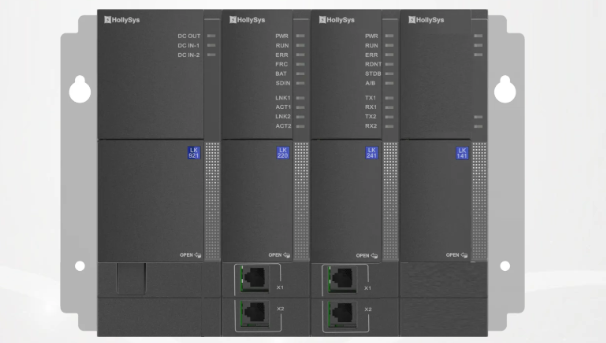 From the perspective of global market competition, European and American manufacturers have a strong voice in the medium and large PLC market. The three giants of the global PLC market are Siemens from Germany, Rockwell from the USA, and Mitsubishi Electric from Japan, while domestic PLC brands are mostly concentrated in the relatively low-tech small PLC market.Market Structure: Foreign Monopoly and Domestic MarginalizationLooking at the competitive landscape of the domestic PLC market, there is a clear polarization. In the medium and large PLC market, which has higher technical requirements, it is almost monopolized by foreign brands such as Siemens and Rockwell.For example, in the automotive manufacturing sector, Rockwell is the most widely used; in the tobacco industry, Siemens products occupy 60%-70% of the market share. In contrast, domestic PLC companies mainly focus on the small PLC market, with leading company Wuxi Xinjie Electric holding a 9% market share in small PLCs, ranking third alongside Taiwan’s Delta and Japan’s Omron. Shenzhen Inovance Technology, although currently holding only 4% market share, is gradually expanding its market share through bundled sales, leveraging its technological accumulation in industrial frequency converters and servo systems. However, overall, the influence of domestic PLCs in the high-end market remains very limited, and this market structure directly restricts the development space for domestic chips.Supply Chain Dilemma: Dual Dependence on Materials and EquipmentThe supply chain of domestic PLC chips also faces severe challenges. In the semiconductor materials field, key materials such as photoresist gases and high-purity helium have been certified by leading wafer manufacturers, but the overall self-sufficiency rate remains low.Data shows that the self-sufficiency rate of advanced chip packaging and testing materials may be less than 10%, with over 90% dependence on external sources. The market size of China’s semiconductor packaging and testing materials is expected to reach 52.79 billion yuan in 2024, continuing to grow. This imperfection in the supply chain further exacerbates the external dependence of domestic PLC chips. In terms of semiconductor equipment, the localization rate is expected to reach 29% by 2025, but the localization rate of high-end categories such as photolithography machines and inspection and measurement equipment is still less than 5%.R&D Investment: Dual Constraints of Weak Innovation and Talent ShortageDomestic PLC companies show a significant gap in R&D investment compared to international giants. Although the average R&D expense ratio of domestic chip companies is expected to exceed 15% by 2025, the absolute investment amount and technical accumulation are still insufficient.At the same time, the shortage of professional talent is becoming increasingly prominent, especially in high-end talent in integrated circuits and new materials. Although the government is implementing the Excellent Engineer Program, aiming to train 100,000 professionals annually, long-term efforts are still needed to meet the industry’s development needs. Domestic PLC brands entered the industry relatively late, have poor independent R&D capabilities, and exhibit serious imitation of foreign PLCs, which directly affects their product innovation capabilities and market competitiveness.Progress in Localization: Difficult Transition from Point Breakthrough to System ReplacementDespite facing numerous challenges, the domestic PLC field has still made some positive progress. For example, Nanjing’s Nanda Aotuo has achieved full coverage of large, medium, and small PLC product lines, with all products having complete independent intellectual property rights, installed with domestic Loongson processors and Linux or Ruijie operating systems, initially realizing core technology autonomy.Beijing Heli’s large PLCs have already been applied in subway projects in Beijing, Wuhan, and Tianjin, with over 120 sets used in the Beijing Subway Line 14, totaling more than 100,000 I/O measurement points, indicating that the technology of domestic large PLCs has reached safety standards. The large PLC developed by Shanghai Baoxin Software has been validated in high-end equipment processes in the metallurgy industry. These breakthroughs lay a foundation for the further development of domestic PLCs, but there is still a long way to go to achieve comprehensive autonomy.
Policy Support: National Will and Industrial Opportunities
The national level is increasing policy support for the PLC industry. From the 12th to the 14th Five-Year Plan, industrial software has always been listed as a key area of national strategic layout. Especially under the guidance of the national 14th Five-Year Plan, autonomy and controllability have become the keywords for industrial development. Local governments are also actively following up by establishing industrial funds, building industrial parks, and cultivating key enterprises to promote the agglomeration development of the industrial software industry. Relevant documents issued by the Ministry of Industry and Information Technology further clarify that by 2027, approximately 2 million sets of industrial software and 800,000 sets of industrial operating systems need to be updated, providing solid policy support for the promotion and application of domestic PLCs.
Future Outlook
Breaking through domestic PLCs requires a dual drive: technological breakthroughs and ecosystem construction. On the technical level, comprehensive breakthroughs need to be achieved in core chip design, manufacturing processes, and reliability. In terms of ecosystem construction, a complete industrial chain collaboration system needs to be built, including upstream materials and equipment, midstream design, manufacturing, packaging, and downstream applications.Only by achieving a transformation from point breakthroughs to system replacements can we truly break the long-standing dominance of foreign brands in the industrial control field. This requires the joint participation and continuous investment of enterprises, research institutes, and the government. With the continuous increase in national policy support and in-depth technological research and development, the self-sufficiency rate of domestic PLC chips is expected to gradually improve, but in the short term, the dilemma of less than 30% self-sufficiency in high-end chips may still persist.