
 What are PLC, DCS, and FCS
There are many types of control products, and the names vary among manufacturers. The commonly used control products include two main categories: DCS and PLC. We also extend the concept of DCS to FCS.
DCS (Distributed Control System) is a computer control system that is developed and evolved from centralized control systems. It is known as a distributed control system.
FCS (FieldBus Control System) utilizes an open and interoperable network called FieldBus to interconnect various controllers and instruments in the field, forming a FieldBus control system. It also decentralizes control functions to the field, reducing installation and maintenance costs.
PLC (Programmable Logic Controller) is a type of programmable logic controller.
Detailed Comparison of FCS and DCS
FCS is developed from DCS and PLC. It not only possesses the characteristics of both DCS and PLC but also takes a revolutionary step forward. Currently, new types of DCS and PLC show a trend of convergence. New DCS has strong sequential control capabilities, while new PLCs also perform well in closed-loop control, and both can form large networks, leading to significant overlap in the application scopes of DCS and PLC.
The key to DCS systems is communication. One could say that the data bus is the backbone of the distributed control system DCS. Since its task is to provide a communication network for all components of the system, the design of the data bus itself determines the overall flexibility and safety. The media for the data bus can include: twisted pairs, coaxial cables, or fiber optic cables. By analyzing the design parameters of the data bus, one can generally understand the relative advantages and disadvantages of a specific DCS system.
To ensure the integrity of communication, most DCS manufacturers can provide redundant data buses. To guarantee system safety, complex communication protocols and error detection technologies are used. The so-called communication protocol is a set of rules to ensure that the transmitted data is received and understood in the same way as the sent data. Currently, two types of communication methods are generally used in DCS systems, namely synchronous and asynchronous. Synchronous communication relies on a clock signal to regulate data transmission and reception, while asynchronous networks adopt a report system without a clock.
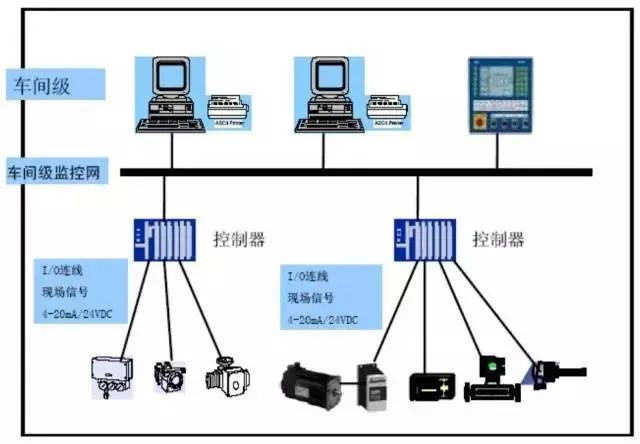
Figure: Traditional method: One-to-one I/O wiring between field devices and controllers
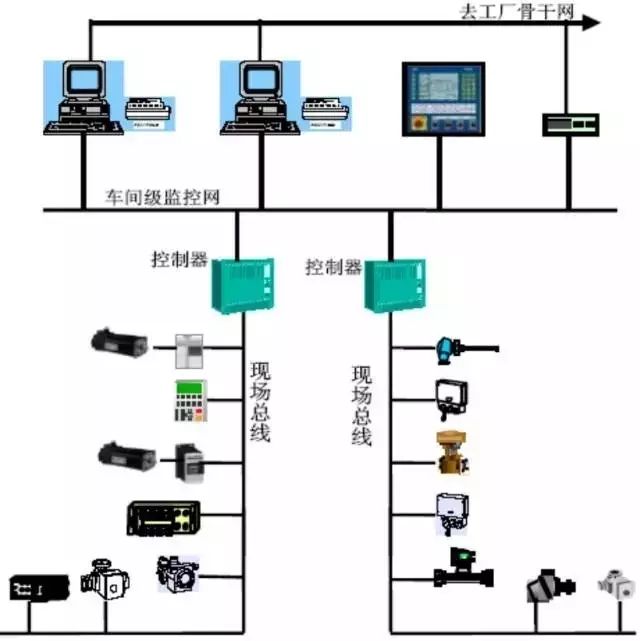
Figure: FieldBus technology: Connecting all field devices with one cable
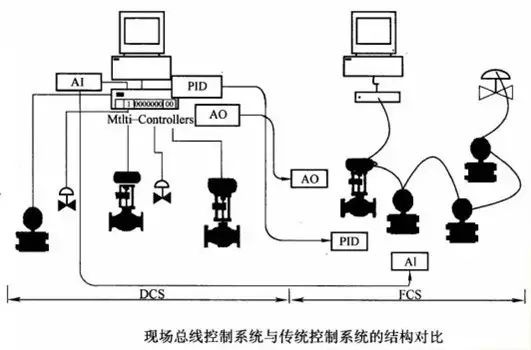
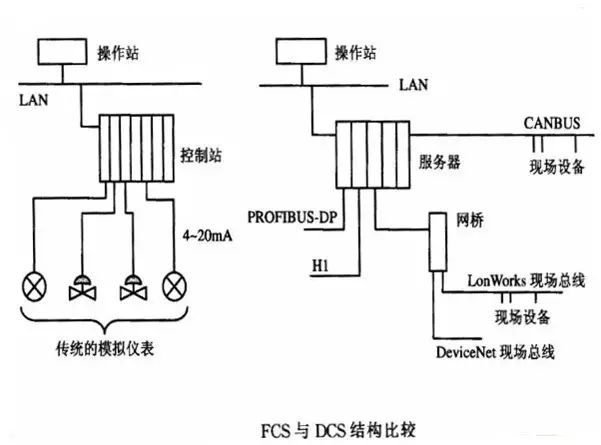
|
Performance |
FCS |
DCS |
|
Structure |
One-to-many: One transmission line connects multiple instruments, bi-directionally transmitting multiple signals. |
One-to-one: One transmission line connects one instrument, unidirectionally transmitting one signal. |
|
Reliability |
Good reliability: Digital signal transmission has strong anti-interference ability and high precision. |
Poor reliability: Analog signal transmission has low precision and is easily interfered with. |
|
Loss of Control State |
The operator in the control room can understand the working conditions of field devices through field instruments, adjust parameters, and predict or locate faults, keeping devices under the operator’s process monitoring and control. |
The operator in the control room cannot understand the working conditions of analog instruments, cannot adjust parameters, and cannot predict faults, leading to the operator being in a “loss of control” state regarding the instruments. |
|
Control |
Control functions are decentralized among various intelligent instruments. |
All control functions are centralized in the control station. |
|
Interchangeability |
Users can freely choose the best performance-price ratio field devices and instruments from different manufacturers and interconnect instruments of different brands, achieving “plug and play”. |
Although analog instruments have unified signal standards (4~20mA DC), most technical parameters are still determined by the manufacturer, resulting in poor interchangeability among instruments of different brands. |
|
Instruments |
Intelligent instruments not only have the functions of detection, conversion, and compensation of analog instruments but also have digital communication capabilities and control and computational abilities. |
Analog instruments only have functions such as detection, conversion, and compensation. |
|
Communication Method |
Uses dual digital, bi-directional transmission communication. From the lowest layer of sensors, transmitters, and actuators, a FieldBus network is utilized, extending up layer by layer to the highest layer, with multiple branch communication lines extending to the production site to connect field digital instruments using one-to-N connections. |
Uses a hierarchical architecture, with communication networks distributed across layers and employing digital communication methods. Only the conventional analog instruments at the production site still use one-to-one analog signal (e.g., 4~20mA DC) transmission, making it a “semi-digital signal” system. |
|
Decentralized Control |
Abandons the DCS input/output units, replacing them with field instruments, thus breaking down the functions of the DCS control station into smaller functional blocks that are distributed among the digital instruments on the FieldBus, achieving complete decentralized control. |
Analog instruments at the production site are centrally connected to input/output units, while all control-related input, output, control, and computation functions are centralized within the DCS control station. DCS is merely a “semi-decentralized” system. |
|
Interoperability |
As long as field devices adopt the same bus standard, products from different manufacturers can interconnect and interchange, and can be configured uniformly, thereby fundamentally changing the closed and specialized nature of traditional DCS control layers, offering excellent integrability. |
Field-level devices are developed independently by each manufacturer. Due to proprietary and incompatible communication protocols, products from different manufacturers find it difficult to interconnect and interoperate. |
PLC and DCS
PLC:
-
Developed from switch control to sequential control, transport processing, and is capable of continuous PID control from the bottom up, with PID in the interrupt station.
-
A PC can serve as the master station with multiple identical PLCs as slave stations.
-
Also, one PLC can act as the master station with multiple identical PLCs as slave stations, forming a PLC network. This is more convenient than using a PC as the master station because when programming, users do not need to know the communication protocol; they just need to follow the manual format.
-
The PLC grid can serve as an independent DCS or as a subsystem of DCS.
-
PLC is mainly used for sequential control in industrial processes, and new PLCs also have closed-loop control functions.
DCS:
-
The Distributed Control System DCS integrates 4C (Communication, Computer, Control, CRT) technology into a monitoring technology.
-
A tree-like topology system from top to bottom, where communication (Communication) is key.
-
PID in the interrupt station connects computers with field instruments and control devices in a tree-like topology and parallel continuous link structure, with numerous cables running from relay stations to field instruments.
-
Analog signals, A/D—D/A, with microprocessor hybrids.
-
Each instrument connects to I/O with one pair of wires, linked to the local area network (LAN) by the control station.
-
DCS is structured in three levels: control (engineer station), operation (operator station), and field instruments (field measurement and control station). It is used for large-scale continuous process control, such as in petrochemicals.
Industry Experts Discuss the Differences Between PLC and DCS
PLC and DCS cannot be compared directly; PLC is a controller, an isolated product, while DCS is a system. However, PLC can be compared with the control station of DCS. The cycle time of PLC is around 10 milliseconds, while that of DCS control station is around 500 milliseconds. PLC has better openness and stronger independent working capability as a product.
—— OMRON Corporation
DCS is a system that includes upper-level software, networks, and controllers, while PLC is just a controller. To form a system, it also requires upper-level SCADA systems and the connected networks.
Regarding PID loop control, Mitsubishi’s process controller can also implement FBD programming similar to SAMA configuration; DCS systems are larger, with more control loops, and more control algorithms, capable of handling more complex inter-loop controls. Hardware reliability is similar. DCS can achieve I/O redundancy, while PLC cannot. Relatively speaking, systems based on PLC are cheaper.
—— Mitsubishi Electric Automation Precision Control Division Manager
DCS is a “distributed control system” that includes field controllers, operator station computers, engineer station computers, and the network system connecting them; DCS software is a complete solution that addresses all technical issues of a system, with tight integration between its components.
PLC is a device that is equivalent to the field controller in DCS; software-wise, it is a local solution with loose organization between stations.
—— B&R Technical Manager responsible for APROL product application development
Analyzing the differences between DCS and PLC, the key points are two: first, DCS is distributed control with a global database; second, PLC operates on a sequential scanning mechanism, while DCS is time-based control. Our system meets the first point; for example, a modification of an I/O tag can be synchronously reflected in the HMI.
—— Rockwell Automation Process Market Product Manager
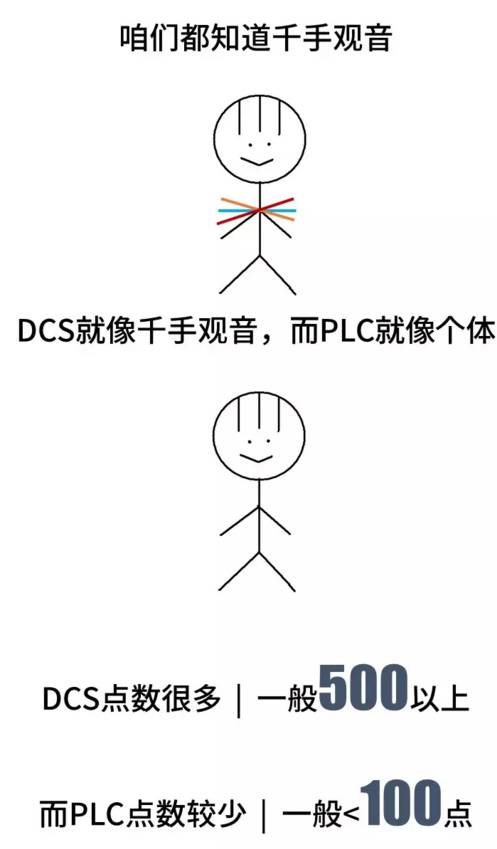
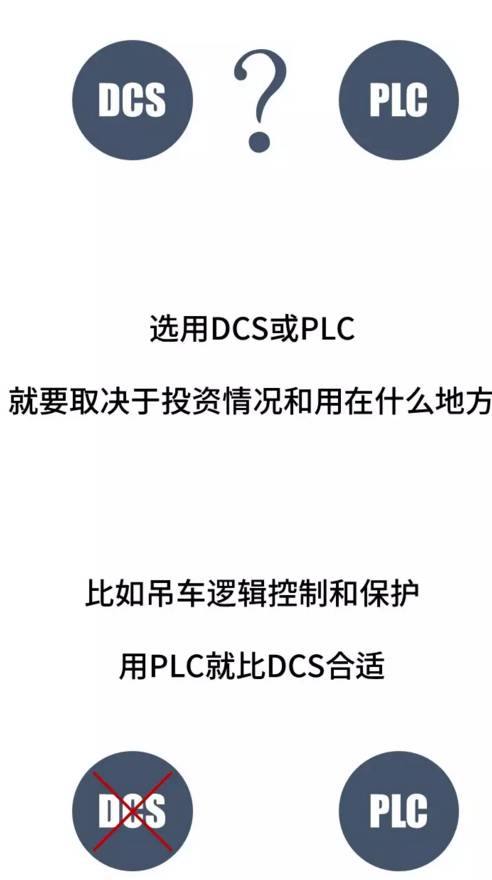
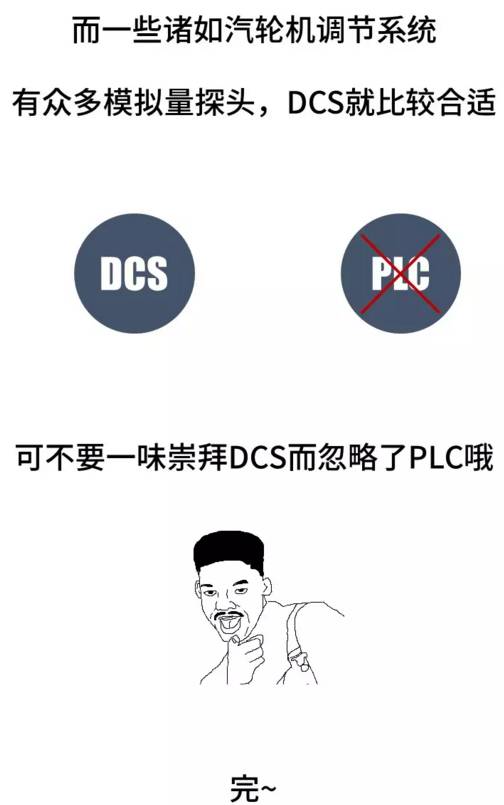
Understanding PLC and DCS through Comics

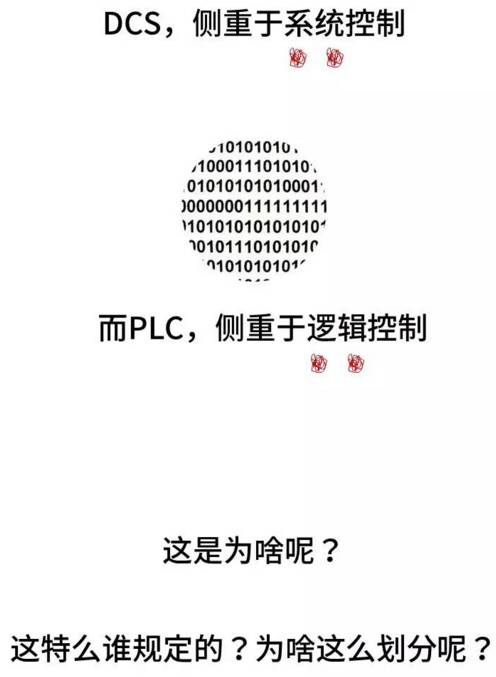
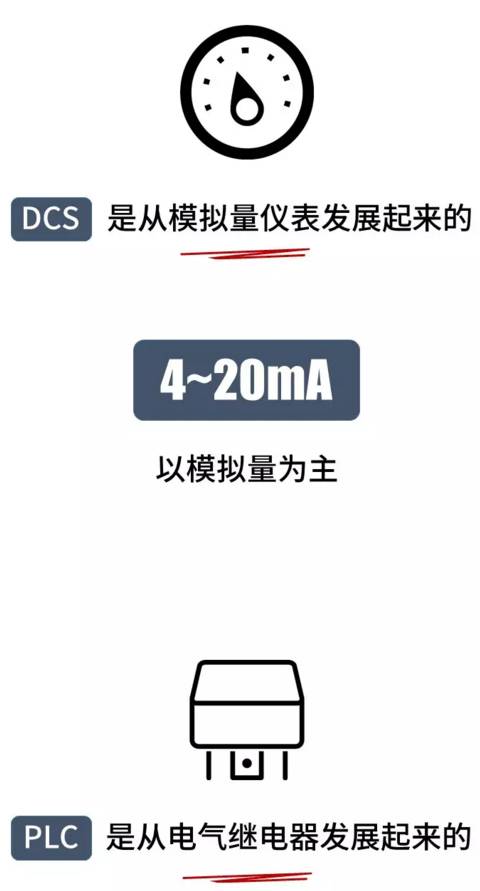
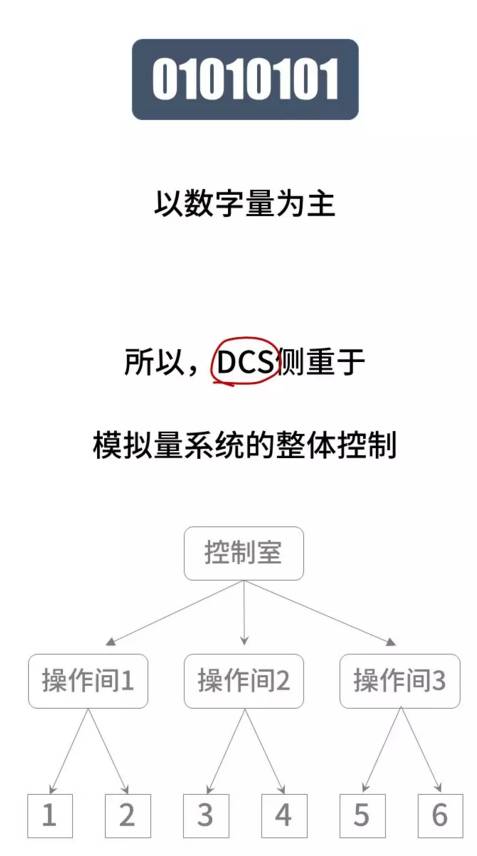
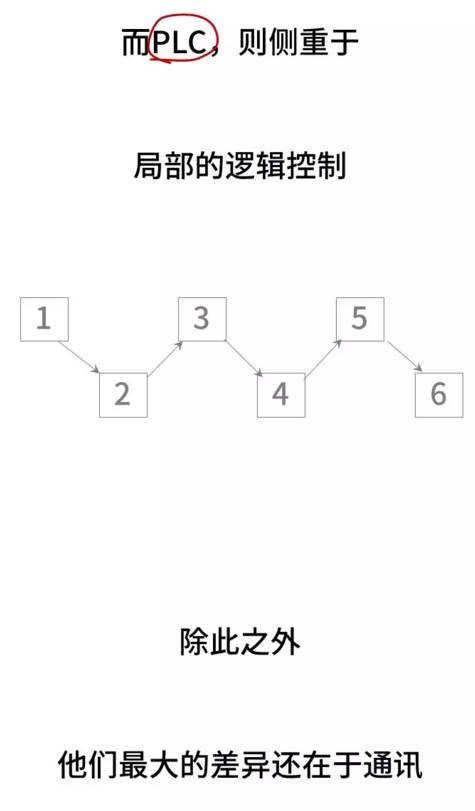
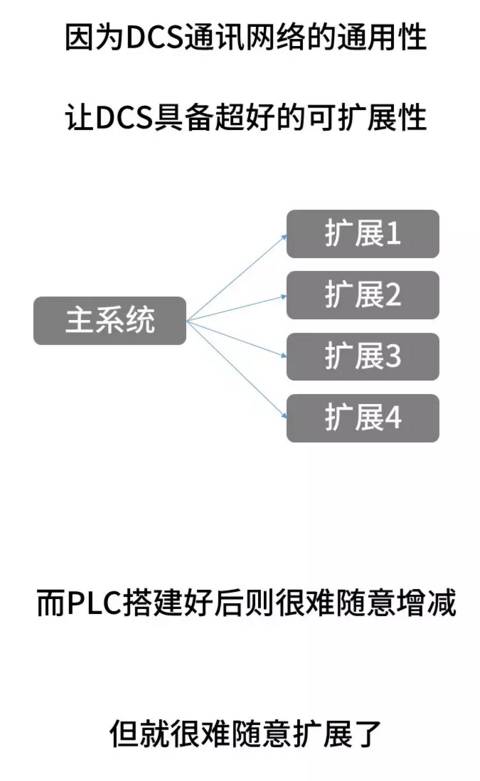
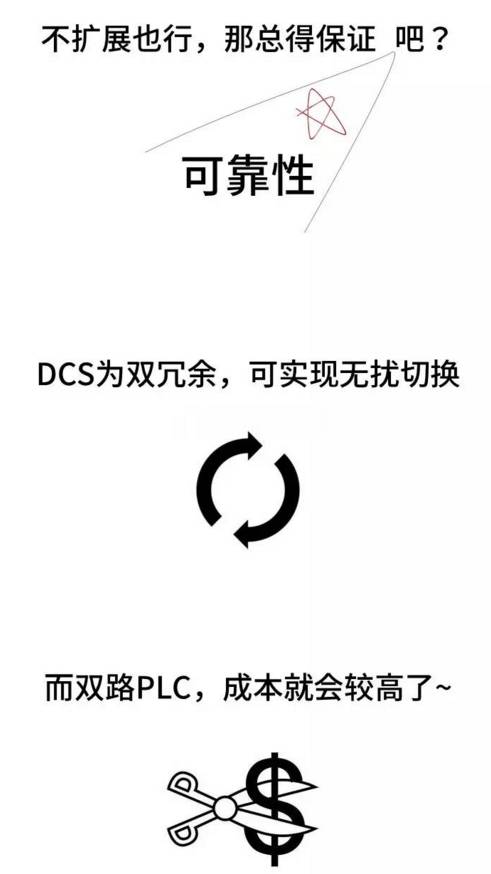
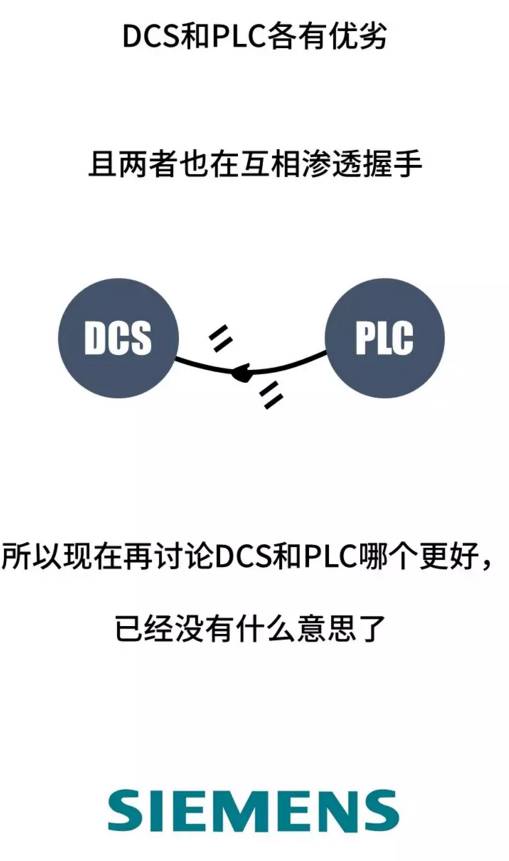
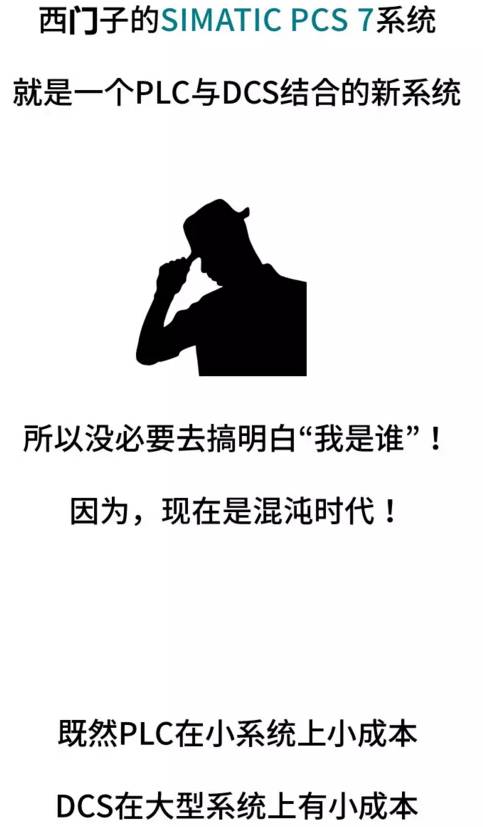
Source: Industrial Navigation
Edited by Chemical Engineering 707
Analysis of Four Mainstream Energy-Saving Technologies for Centrifugal Pumps, Learn More!
Do You Really Know These 12 Types of Flanges?
Impressive!Collection of 80 Animated Diagrams Explaining Sensor Working Principles
How to Choose Pipe Diameter and Valves for Steam Pipelines?
Valve Diameter (DN) and Pipe Diameter Size Comparison Table, No More Confusion with DN, De, D, d, Φ!

♡ Seven Friends! Give a “Like”~