Abstract:
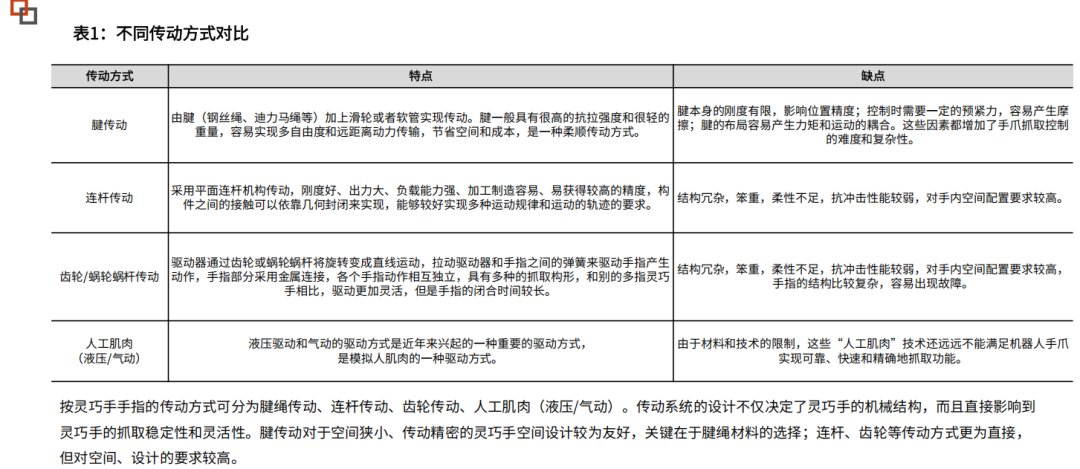
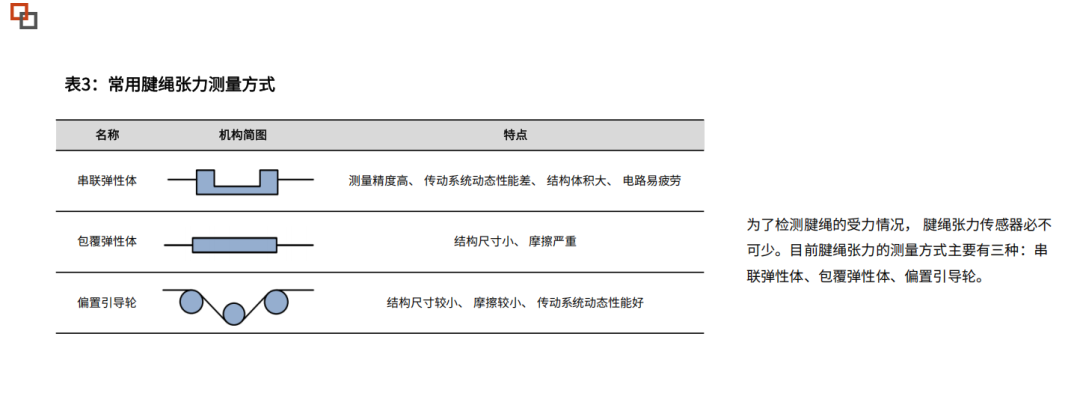
Tendon materials are crucial for the actuation of humanoid robot dexterous hands, directly determining the precision, stability, and flexibility of grasping. The required transmission materials must possess high strength, low creep, wear resistance, and damage-free folding. Ultra-high molecular weight polyethylene fiber, UHMWPE meets these requirements and is the primary material for tendon-driven actuation. It can ensure stable and precise transmission and grasping even under frequent use and long-term stress, with a strength 15 times that of quality steel, 4 times that of glass and nylon 66, and 2.6 times that of carbon fiber, earning it the reputation of being “unbreakable, uncuttable, and unsinkable.” It is also widely used in aerospace, military, and robotics. At the Tesla Optimus launch, the 22-degree-of-freedom dexterous hand utilized a planetary gearbox + screw + tendon structure, whereas the previous generation of robotic fingers primarily relied on torsion springs for recovery. Now, a single tendon completes the extension, further enhancing flexibility. Today, we will focus on:1. Actuation Methods for Dexterous HandsActuation methods for dexterous hands can be divided into tendon actuation, linkage actuation, gear actuation, and artificial muscles (hydraulic/pneumatic). Linkage actuation: Good stiffness, high output, strong load capacity, and easy manufacturing, but the structure is complex, heavy, lacks flexibility, and has weak impact resistance; Gear/worm gear actuation: Converts rotation into linear motion through gears or worm gears, pulling the spring between the actuator and fingers to produce finger movements. The fingers are connected with metal, allowing for independent movements with various grasping configurations, but the closing time of the fingers is longer, and impact resistance is weak. Hydraulic and pneumatic actuation methods have emerged as important actuation methods in recent years, simulating human muscle actuation. However, due to material and technological limitations, these “artificial muscle” technologies still cannot meet the requirements for reliable, fast, and precise grasping functions in robotic claws. Tendon actuation: Achieved through tendons (steel cables, Dyneema ropes, etc.) combined with pulleys or hoses. Tendons generally have high tensile strength and low weight, making it easy to achieve multiple degrees of freedom and long-distance power transmission, saving space and cost, and providing a compliant actuation method. However, the stiffness of the tendons is limited, affecting positional accuracy; control requires a certain amount of pre-tension, which can easily cause friction; and the layout of the tendons can easily create torque and motion coupling. These factors increase the difficulty and complexity of controlling the grasping of the claw.
2. Definition & Classification of Tendons
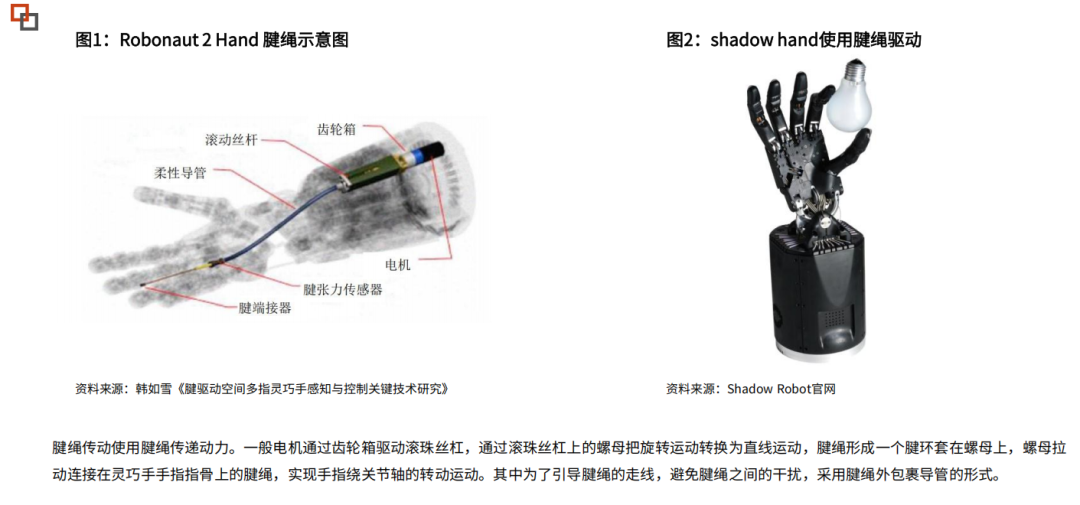
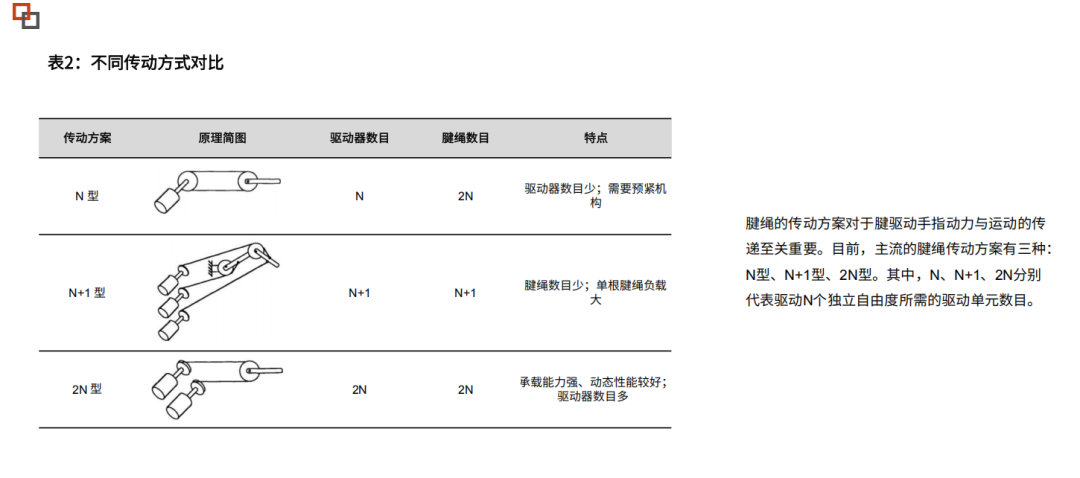
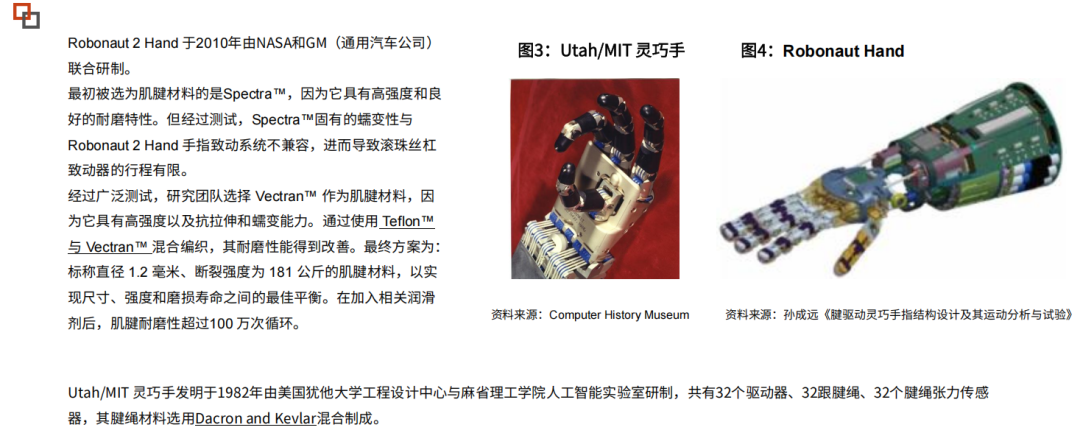
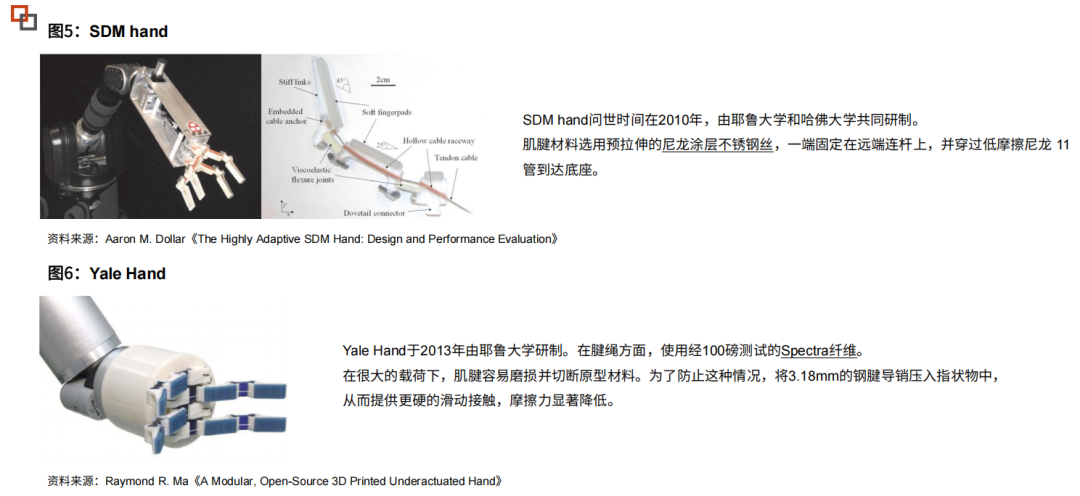
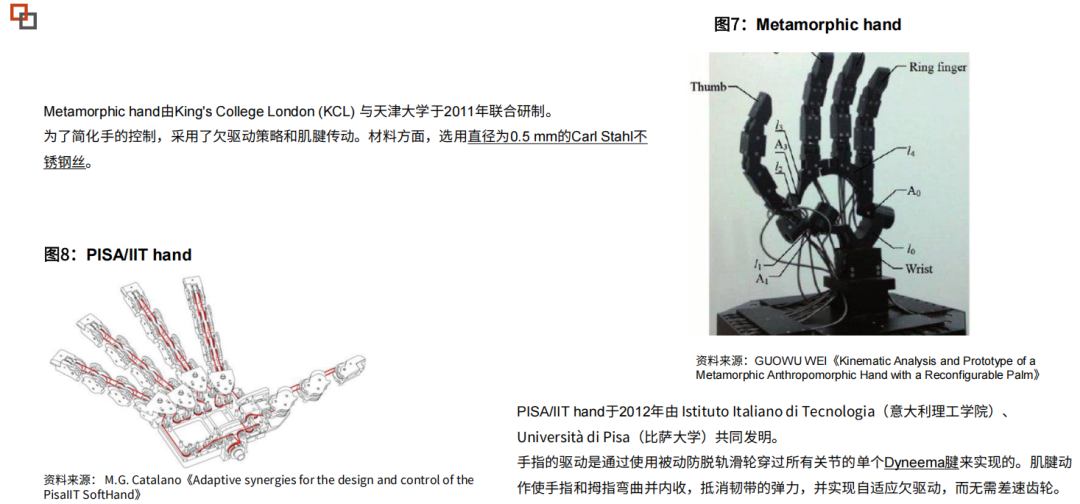
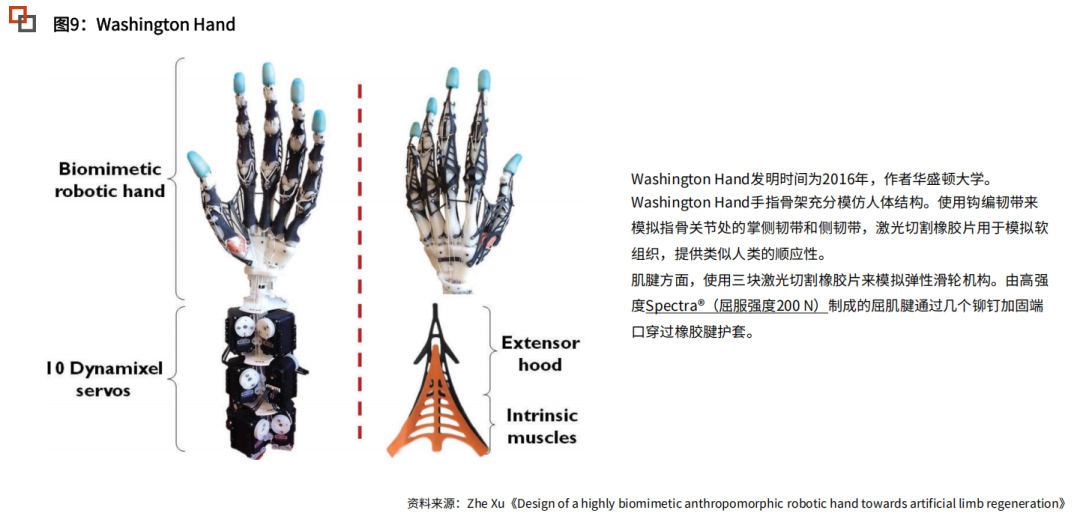
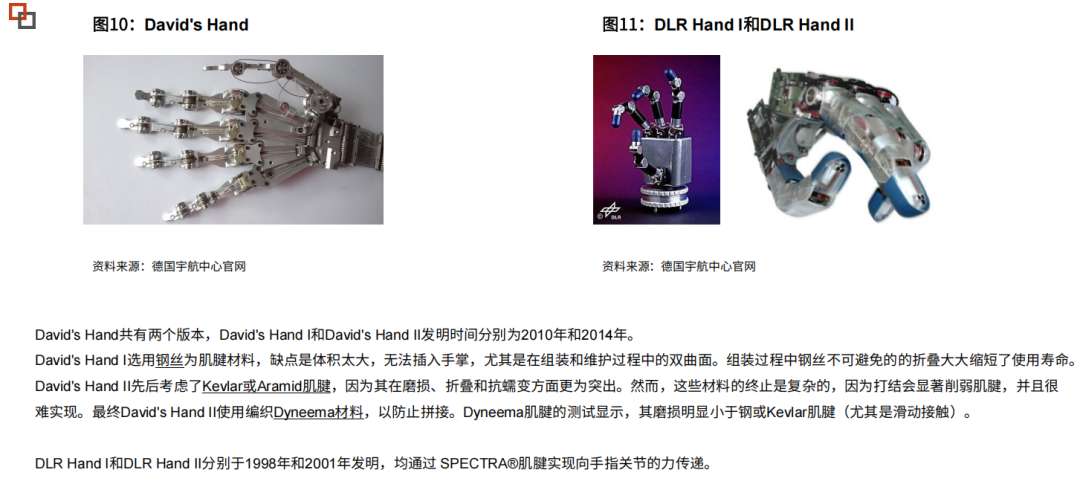
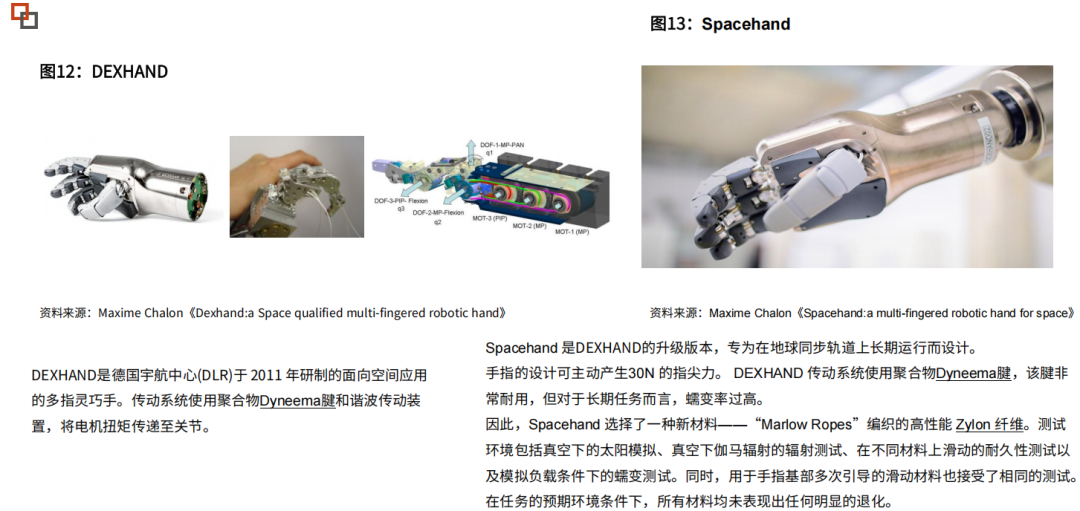
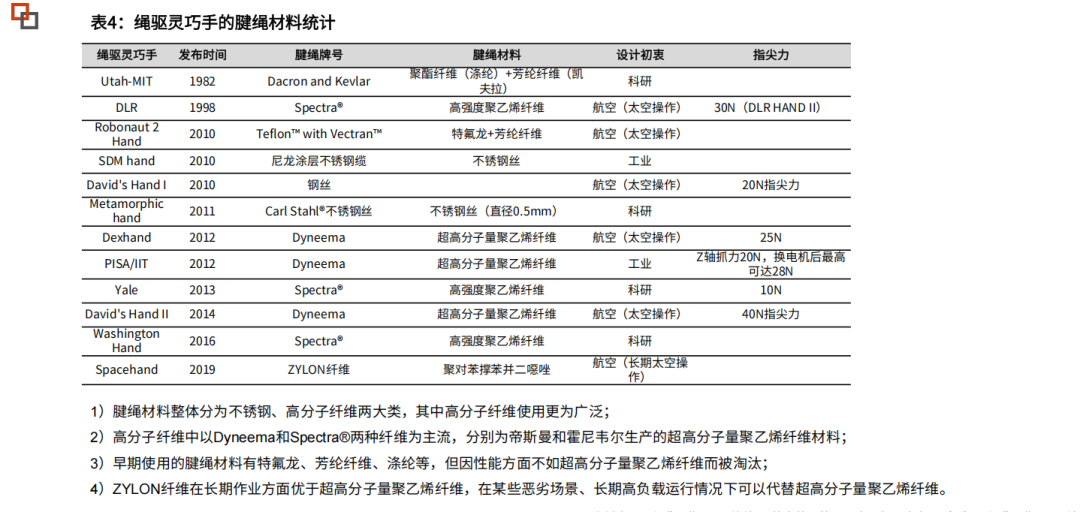
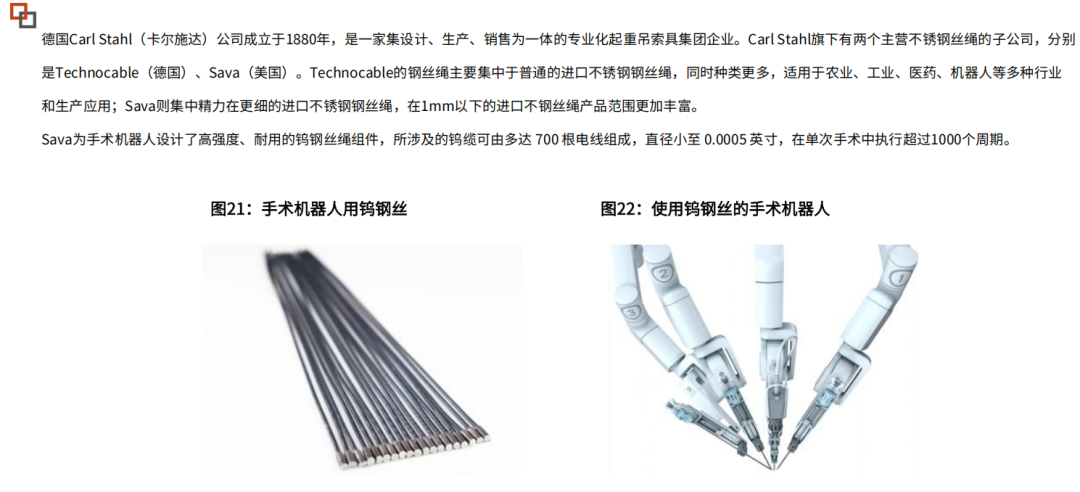
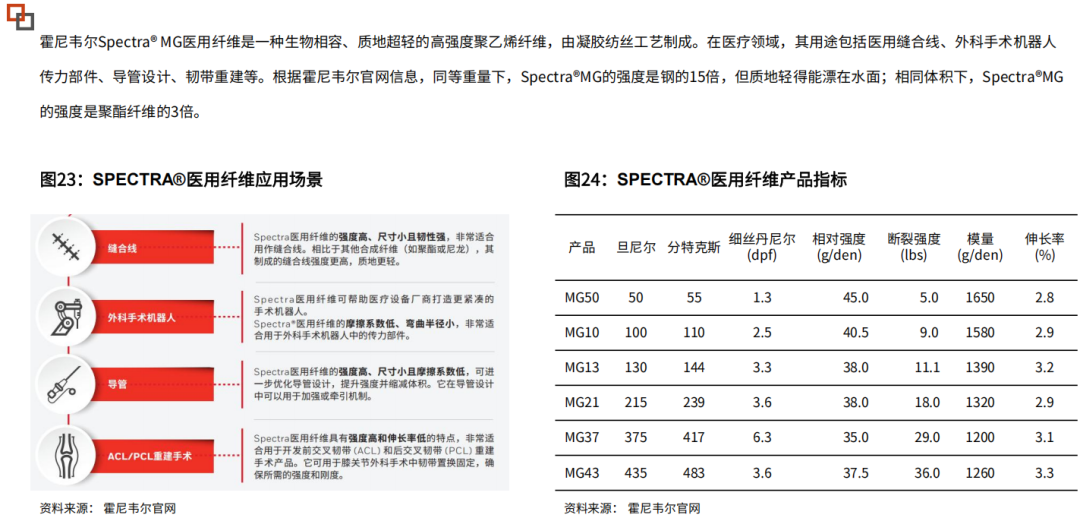
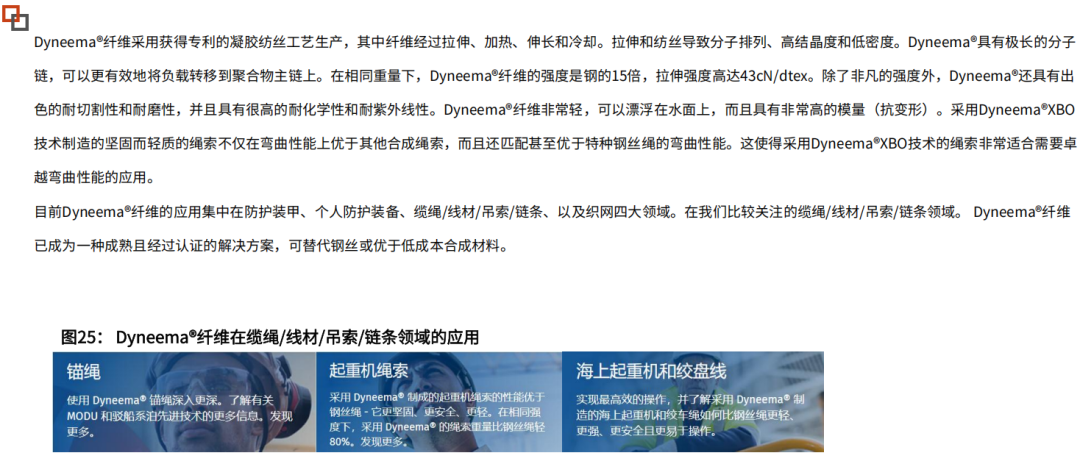
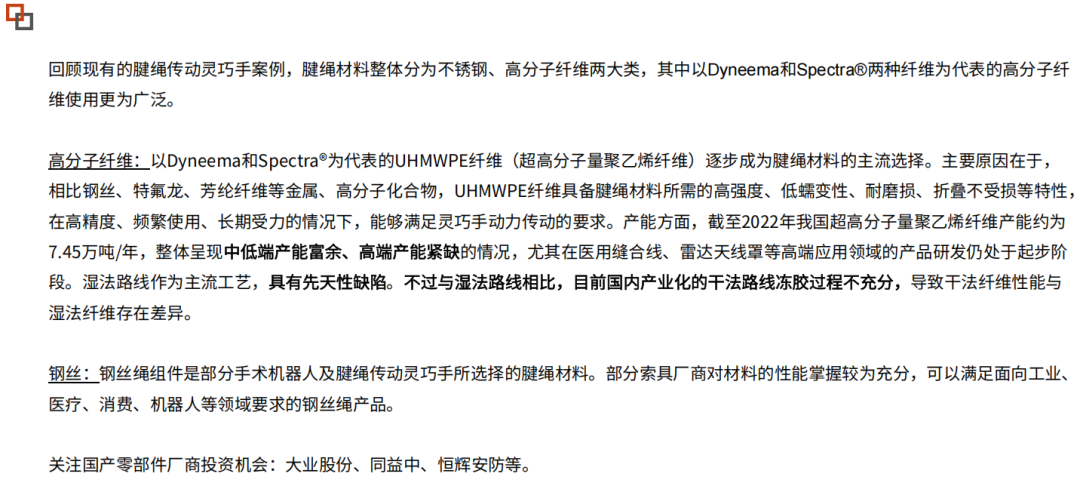
Tendons are fine ropes or fibers used to connect and secure keyboard keys, typically made from high-strength materials such as UHMWPE fiber or steel cables to ensure stability and durability during prolonged use. Tendon materials are generally divided into two categories: stainless steel and polymer fibers, with polymer fibers being more widely used; among polymer fibers, Dyneema and Spectra® are the mainstream fibers, produced by DSM and Honeywell, respectively, from ultra-high molecular weight polyethylene; earlier tendon materials included Teflon, aramid fibers, and polyester, but were eliminated due to inferior performance compared to ultra-high molecular weight polyethylene fibers; ZYLON fibers outperform ultra-high molecular weight polyethylene fibers in long-term operations and can replace them in certain harsh scenarios and under long-term high-load conditions. Tendon actuation uses tendons to transmit power. Generally, a motor drives a ball screw through a gearbox, converting rotational motion into linear motion via the nut on the ball screw. The tendon forms a tendon loop around the nut, which pulls the tendon connected to the phalanges of the dexterous hand, achieving rotational movement around the joint axis. To guide the tendon routing and avoid interference between tendons, a tendon-wrapped conduit is used.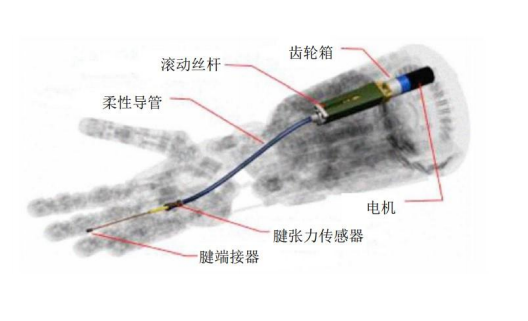 Currently, there are three mainstream tendon actuation schemes: N type, N+1 type, 2N type. Among them, N, N+1, 2N represent the number of drive units required to drive N independent degrees of freedom.
3. Mainstream Tendon Material – UHMWPE
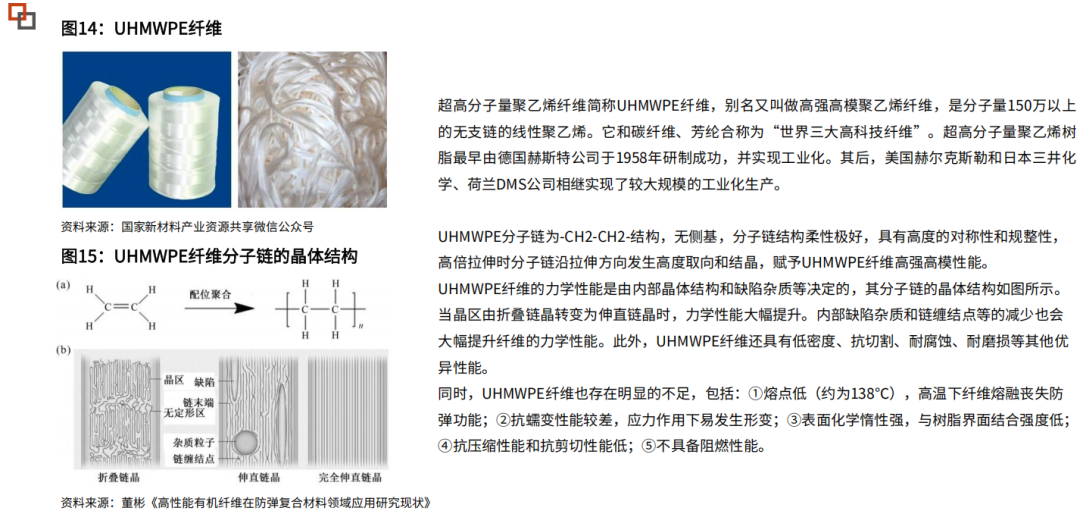
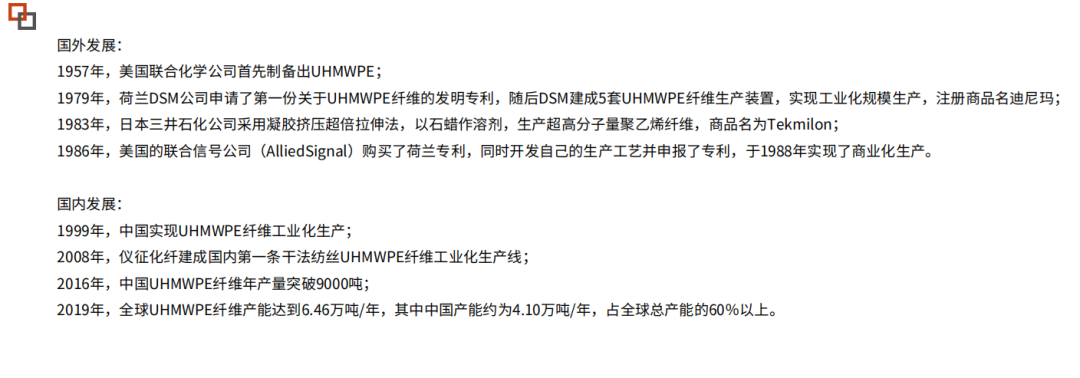
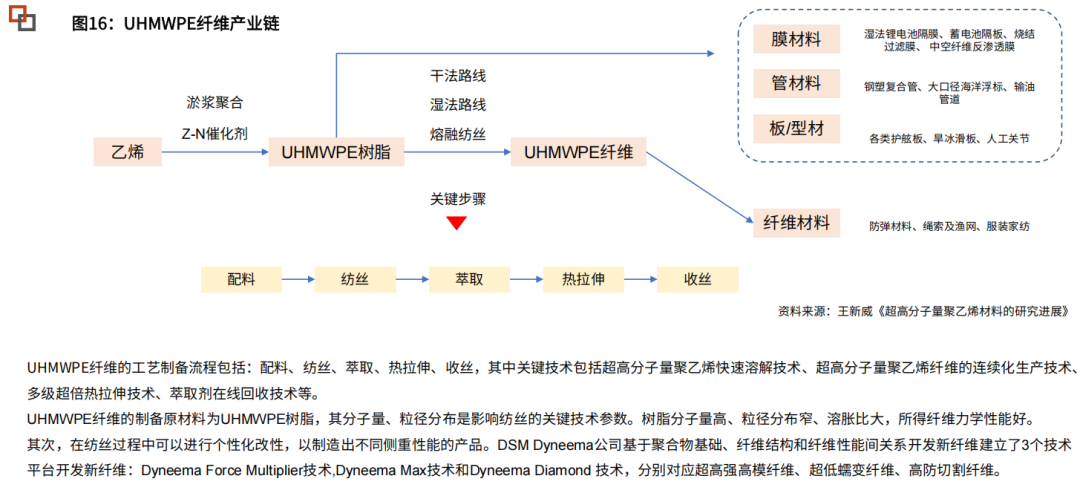
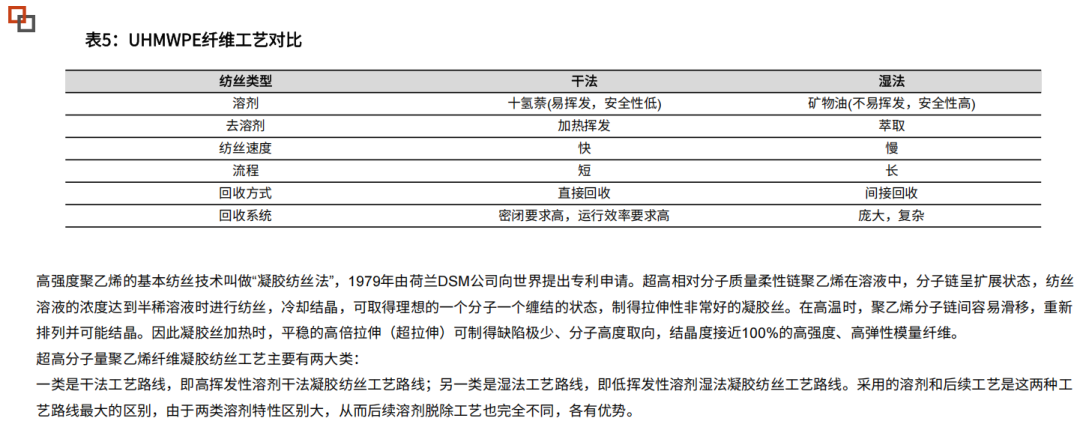
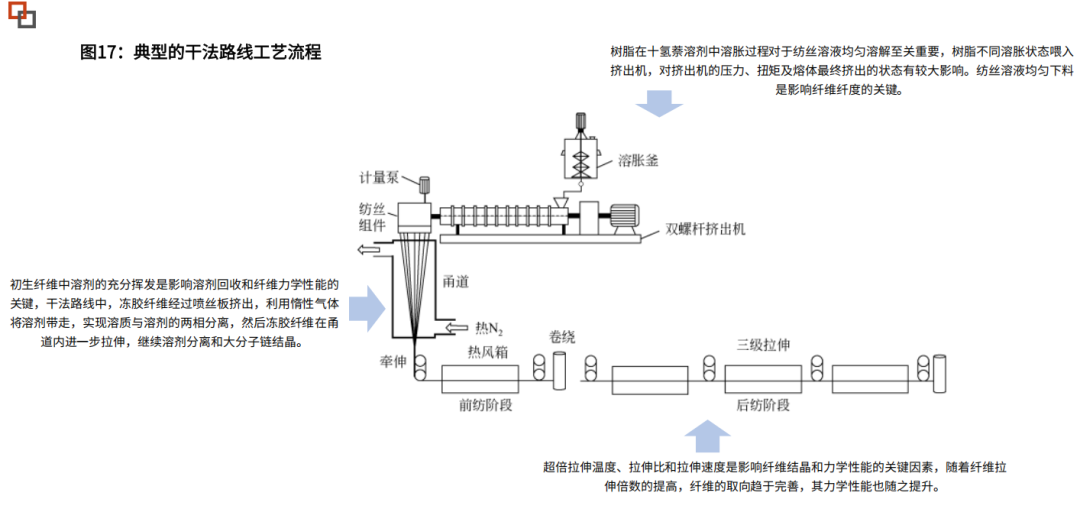
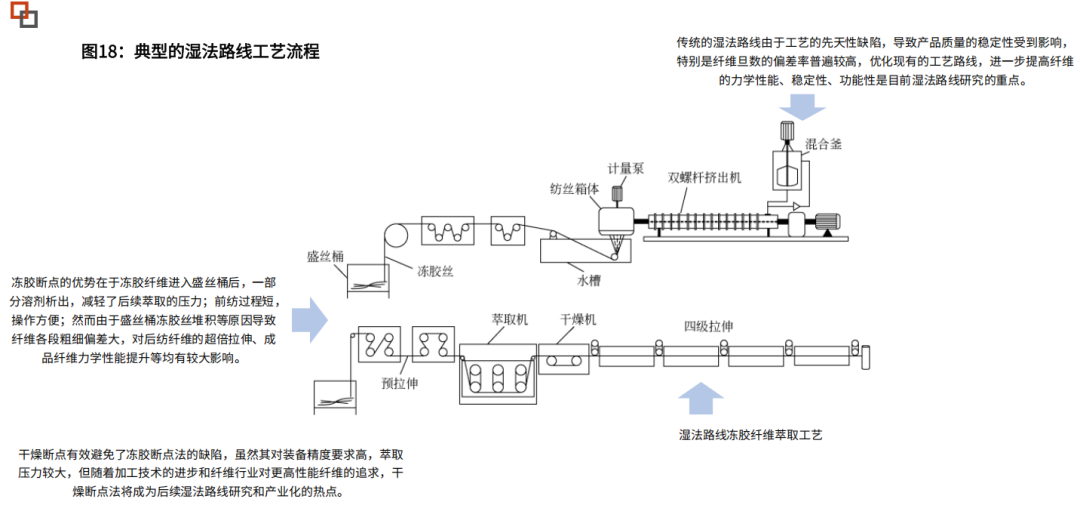
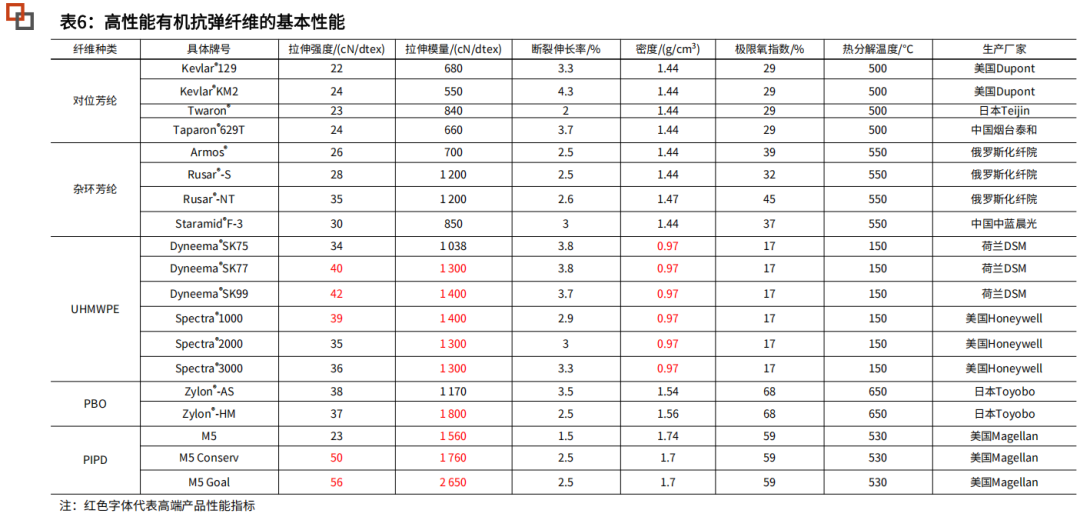
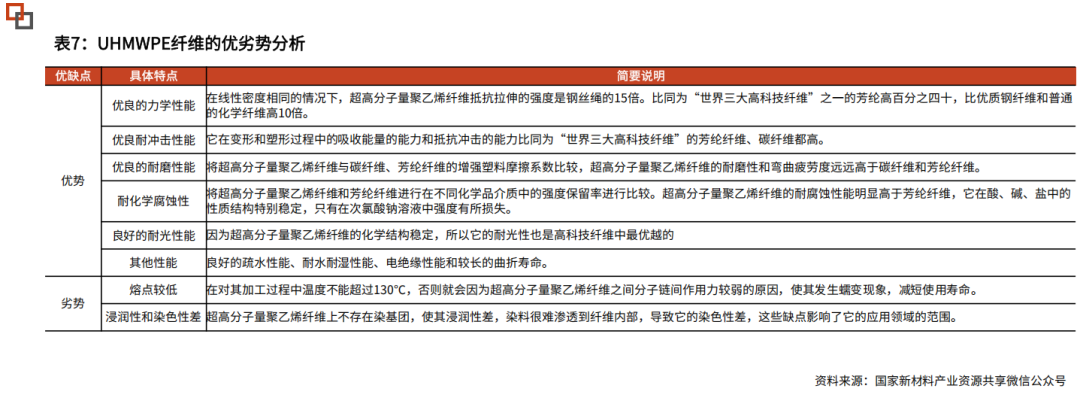
Ultra High Molecular Weight Polyethylene Fiber, UHMWPE fiber, is a linear polyethylene with a molecular weight of over 1.5 million and no branches. It is known as one of the “three major high-tech fibers” along with carbon fiber and aramid fiber. The ultra-high molecular weight polyethylene resin was first developed by the German company Huls in 1958 and industrialized. Subsequently, American Hercules, Japanese Mitsui Chemicals, and Dutch DMS companies achieved large-scale industrial production. The molecular chain of UHMWPE is structured as -CH2-CH2-, with no side groups, providing excellent flexibility, high symmetry, and regularity. When stretched, the molecular chains become highly oriented and crystalline along the stretching direction, endowing UHMWPE fibers with high strength and modulus performance. UHMWPE fibers also possess excellent mechanical properties: under the same linear density, ultra-high molecular weight polyethylene fibers have a tensile strength 15 times that of steel cables, 40% higher than aramid, and 10 times higher than quality steel fibers and ordinary chemical fibers. Additionally, they have low density, cut resistance, chemical corrosion resistance, wear resistance, and excellent impact resistance. They are as light as paper and as hard as steel, making them ideal ballistic materials. However, UHMWPE fibers also have significant drawbacks, including: ① low melting point (about 138°C), losing ballistic functionality when melted at high temperatures; ② poor creep resistance, easily deforming under stress; ③ strong surface chemical inertness, low bonding strength with resin interfaces; ④ low compressive and shear strength; ⑤ lack of flame retardancy.
High-performance UHMWPE Fiber Classification
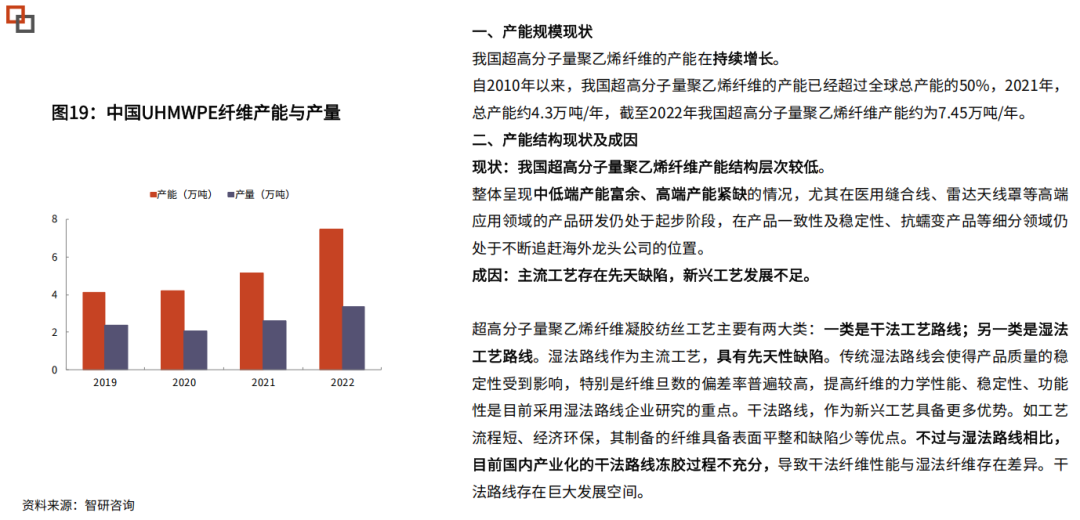
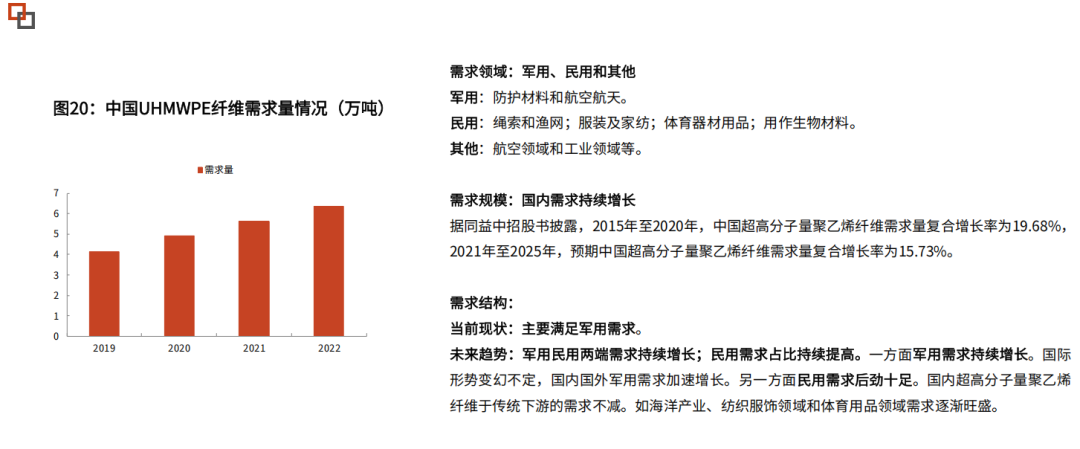
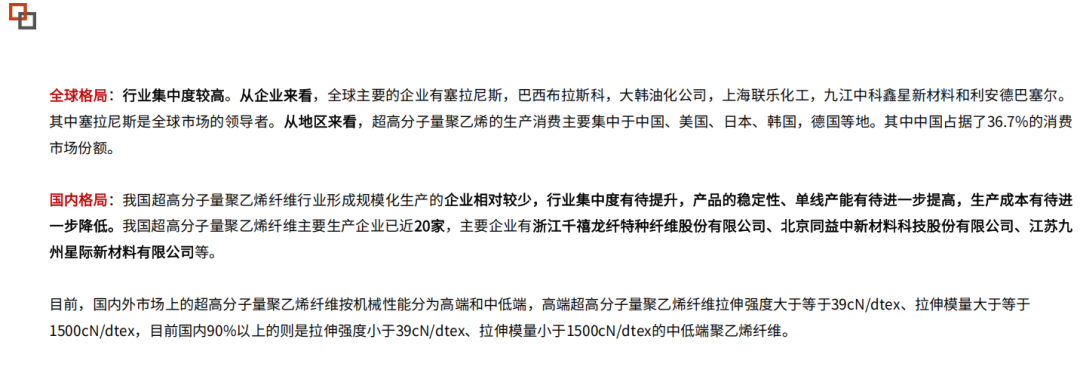
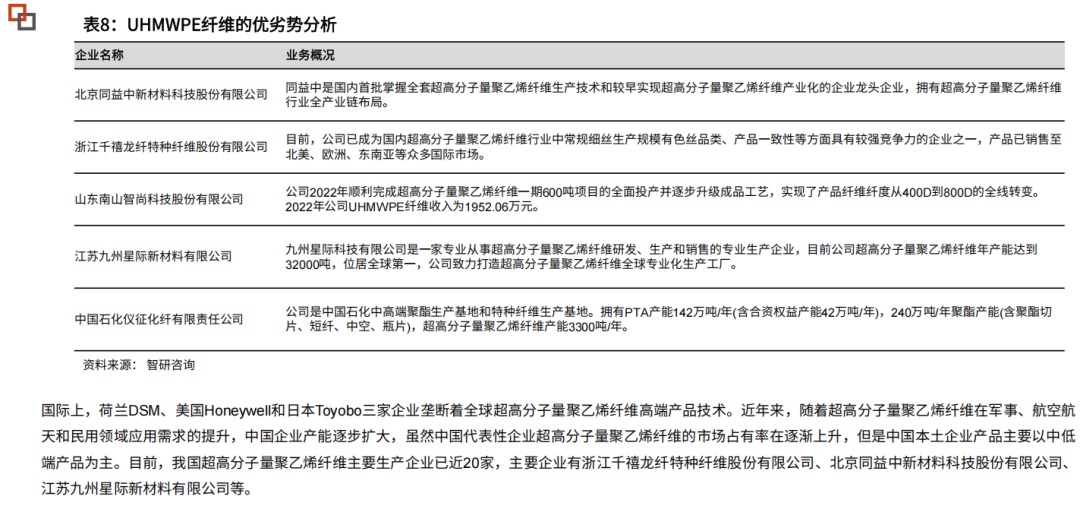
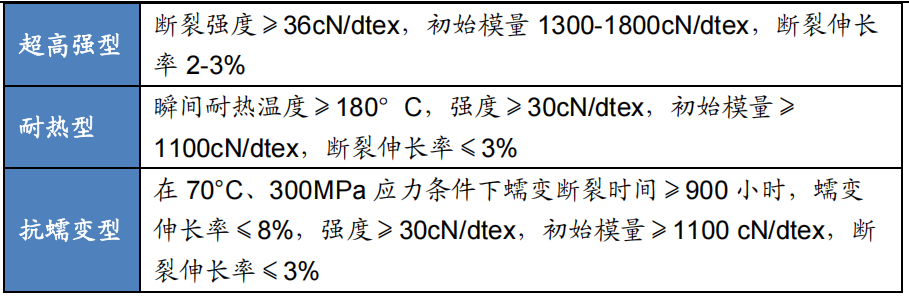 4. Market Landscape In 2022, the global demand for ultra-high molecular weight polyethylene fibers was approximately 126,800 tons, expected to exceed 200,000 tons by 2026. Ultra-high molecular weight polyethylene fibers were once military supplies banned from export to socialist countries under the “Paris Agreement” and were monopolized in international sales by Dutch DSM, American Honeywell, and Japanese Toyobo at the end of the 20th century. Global landscape: the industry concentration is relatively high. From the enterprise perspective, major global companies include Celanese, Braskem, Korean Oil Company, Shanghai Lianle Chemical, Jiujiang Zhongke Xinxing New Materials, and LyondellBasell. Among them, Celanese is the market leader, with a production capacity of 120,000 tons in 2022, accounting for about 29% of global total capacity. Regionally, the production and consumption of ultra-high molecular weight polyethylene are mainly concentrated in China, the United States, Japan, South Korea, and Germany, with China holding 36.7% of the consumption market share. In China, there are relatively few enterprises capable of large-scale production of ultra-high molecular weight polyethylene fibers, and the industry concentration needs to be improved. The stability of products and single-line production capacity need further enhancement, and production costs need to be reduced. Currently, there are nearly 20 major domestic enterprises producing ultra-high molecular weight polyethylene fibers, including Zhejiang Qianxilong, Beijing Tongyi Zhongxin Materials, and Jiangsu Jiuzhou Starry Sky New Materials. Currently, the ultra-high molecular weight polyethylene fibers in the domestic and international markets are classified into high-end and mid-low-end based on mechanical properties. High-end ultra-high molecular weight polyethylene fibers have a tensile strength greater than or equal to 39 cN/dtex and a tensile modulus greater than or equal to 1500 cN/dtex, while over 90% of domestic fibers have a tensile strength less than 39 cN/dtex and a tensile modulus less than 1500 cN/dtex.
5. Investment Recommendations:
Pay attention to investment opportunities in domestic component manufacturers: 1. Zhejiang Qianxilong: One of the competitive enterprises in the domestic ultra-high molecular weight polyethylene fiber industry, known for its conventional filament production scale and product consistency, with products sold to many international markets in North America, Europe, and Southeast Asia. 2. Beijing Tongyi Zhong: A leading enterprise that was among the first to master the complete set of ultra-high molecular weight polyethylene fiber production technology and achieve industrialization, with a full industry chain layout in the ultra-high molecular weight polyethylene fiber sector. 3. Jiangsu Jiuzhou Starry Sky: A specialized manufacturer engaged in the R&D, production, and sales of ultra-high molecular weight polyethylene fibers, with an annual production capacity of 32,000 tons, ranking first globally, dedicated to building a global specialized production factory for ultra-high molecular weight polyethylene fibers. 4. Jiangsu Henghui Security: Mainly engaged in the production and sales of security products and high polymer new materials. Currently has an annual production capacity of 3,000 tons of ultra-high molecular weight polyethylene fibers and is expected to become one of the few domestic enterprises to achieve large-scale production of ultra-high molecular weight polyethylene fibers and their composite materials. 5. Shandong Nanshan Zhishang: The company’s ultra-high molecular weight polyethylene fibers are positioned as high-end, with product quality and specifications benchmarked against international giants, currently having a production capacity of 3,600 tons of ultra-high molecular weight polyethylene fibers, operating at full capacity in 2024.
Table of Contents
1. Advantages and Applicable Scenarios of Tendon Actuation—
2. Selection of Tendon Materials and Case Analysis—
3. Analysis of Mainstream Tendon Materials—
4. Investment Recommendations—
5. Risk Analysis—
1. Advantages and Applicable Scenarios of Tendon Actuation

2. Selection of Tendon Materials and Case Analysis

3. Analysis of Mainstream Tendon Materials

4. Investment Recommendations

 Source: Internet, please contact for removal if there is any infringement!