 Join the group: “Liquid Cooling Group” Please add WeChat 18158711612, and notethe corresponding group name!
Data Center Cold Plate Liquid Cooling Solutions: Historical data shows that cooling alone can account for 40% of a data center’s energy consumption. As the thermal design power of GPUs continues to rise, traditional air cooling is facing bottlenecks, while liquid cooling offers significantly higher cooling efficiency, especially with microchannel liquid cooling. According to NVIDIA data, deploying liquid cooling in the GB200 NVL72 system can save over $4 million annually for a 50 MW hyperscale data center.
According to data from the China Academy of Information and Communications Technology, the liquid cooling market for intelligent computing centers in China is expected to reach 18.4 billion yuan in 2024, a year-on-year increase of 66%, and is projected to further reach 130 billion yuan by 2029, indicating a potential explosion in demand for liquid cooling. Among them, cold plate liquid cooling is the most widely used method, which conducts heat through a closed cavity made of copper/aluminum thermal conductive metals filled with liquid. Since server chips and other heat-generating components do not need to come into direct contact with the liquid, this system does not require a complete redesign of the data center equipment, making it more operable. Therefore, cold plate liquid cooling has the highest maturity and the widest application.
3D Printing is Expected to Become the Optimal Manufacturing Technology for Liquid Cooling Plates
3D printing technology, also known as Additive Manufacturing (AM), has broad development prospects in aerospace, medical, and industrial fields. 3D printing technology starts with a model, slicing the 3D model into multiple thin layers that can be understood as 2D planes, and then printing and stacking layer by layer in a manner similar to an inkjet printer, thereby controlling the position and adhesion of materials in 3D space to manufacture objects.
There are many classifications of 3D printing technology, but it mainly includes extrusion processes, photopolymerization processes, powder particle bonding processes, and layering processes.
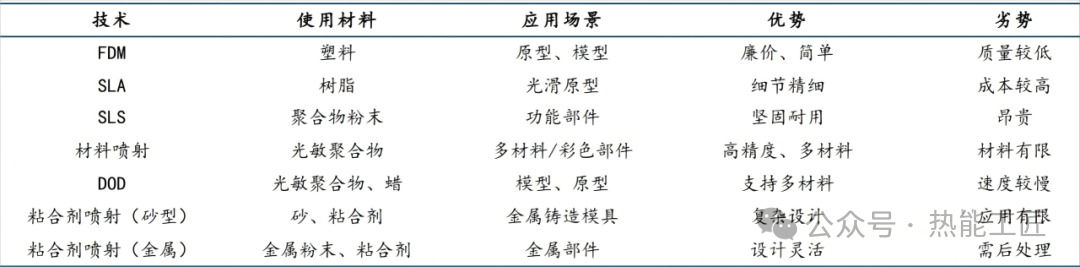

3D Printing Offers Ultimate Design Freedom and Integrated Forming Features, Especially Suitable for Liquid Cooling Plate Manufacturing
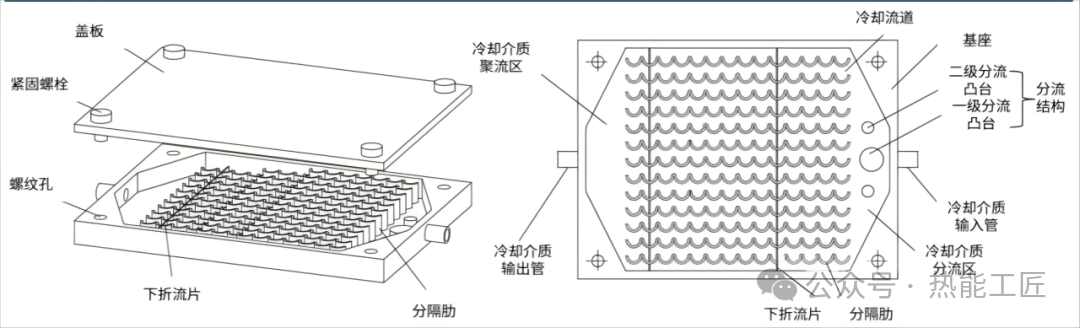
Liquid cooling plates achieve heat exchange by contacting heat-generating components and generally consist of a cold plate substrate, flow channel cover, and fluid channels.
Data Center Liquid Cooling Plate Structure
Common design schemes for liquid cooling plates include serrated, pipe, zigzag, needle-like, and microchannel, among which the serrated type is currently the most prevalent in data center scenarios.
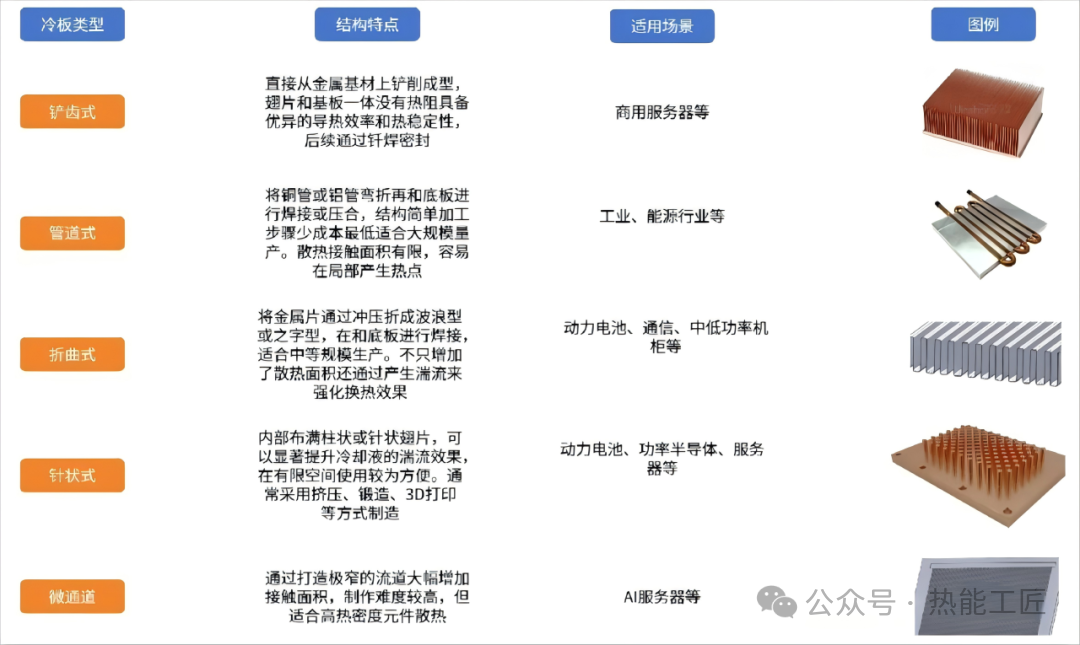
The current liquid cooling plates in data centers are primarily serrated
3D printing first liberates the design limitations of flow channels, continuously improving cooling performance. The most significant impact on the performance of liquid cooling plates is the design of the flow channels, which must consider the total thermal load on the cold plate, the thermal power density of individual components, the cooling liquid flow rate provided by the system, the required surface temperature of the components, and the inlet temperature of the cooling liquid. For example, transforming linear flow channels into plant vein-like channels through topological optimization can significantly enhance cooling performance.
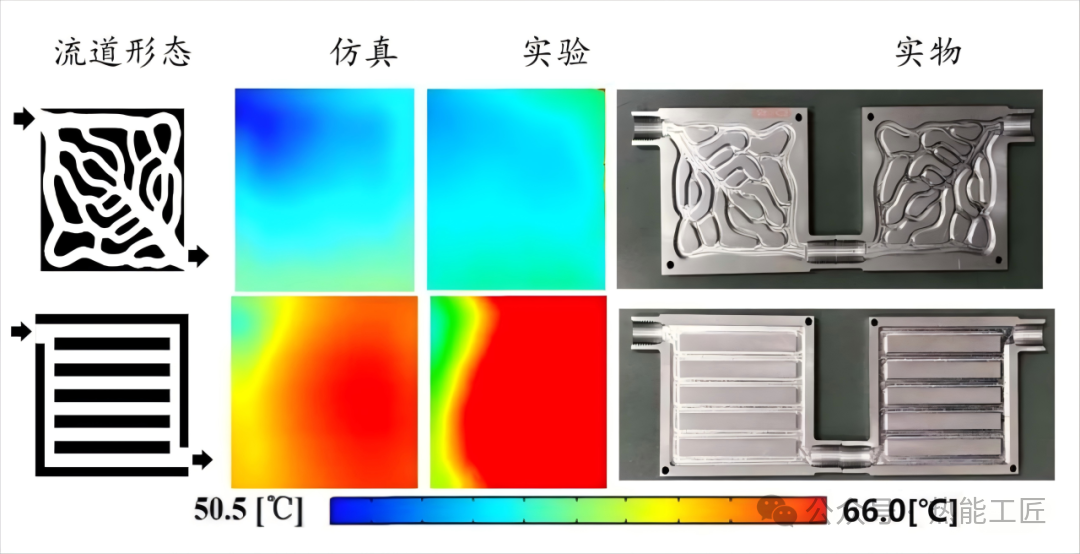
Due to the layered processing nature of 3D printing technology, the complexity of flow channel design has a significantly lesser impact on processing time and quality compared to CNC methods, allowing for continuous optimization of flow channel design. For instance, based on the aforementioned flow channel design optimization, further optimization can be achieved through topological optimization and bionic design to create dual-scale flow channels, where the macroscopic flow channels can improve flow uniformity and reduce power loss, while the microscopic vein-like flow channels can effectively increase the heat exchange area, enhance heat conduction, and improve cooling performance, as well as enhance temperature uniformity.
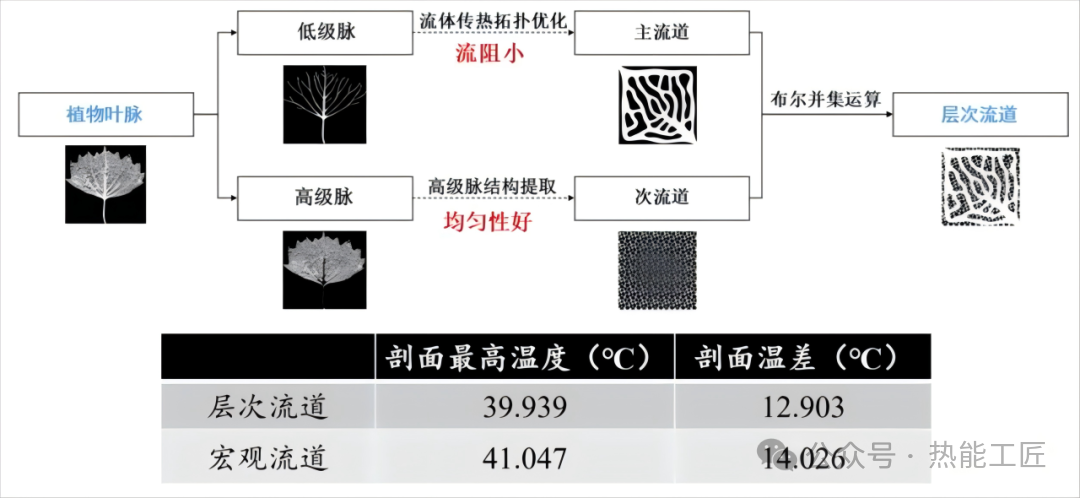
The dual-scale flow channel obtained through topological optimization and bionic design exhibits stronger cooling performance
Additionally, because 3D printing allows for integrated forming, the structural strength and thermal resistance at the joints are superior to those of cold plates manufactured using traditional welding processes. Common sealing welding methods for liquid cooling plates include vacuum brazing, diffusion welding, friction stir welding, and electron beam welding.
Microchannel Cold Plates Become a New Trend, Amplifying the Advantages of 3D Printing
According to Jinfu Technology, its custom-developed 0.08mm serrated heat dissipation structure has received an order from a Taiwanese client and is used in the liquid cooling system for the B200 chip, effectively addressing the TDP thermal effect issues of processors with power consumption of 1800W-2000W and above, ensuring stable low-temperature operation of the processor module. Furthermore, the adaptation plan for the next-generation B300 chip has also completed multiple rounds of sample testing with positive feedback, entering the production preparation stage.

Jinfu Technology’s serrated microchannel liquid cooling plate has been used in the liquid cooling system for the B200 chip
To maximize the heat dissipation contact area, the industry mainly manufactures microchannel liquid cooling plates using serrated processes, where copper is directly cut into small fins, generally defining heat exchangers with an equivalent diameter of less than 1mm as microchannel liquid cooling plates.
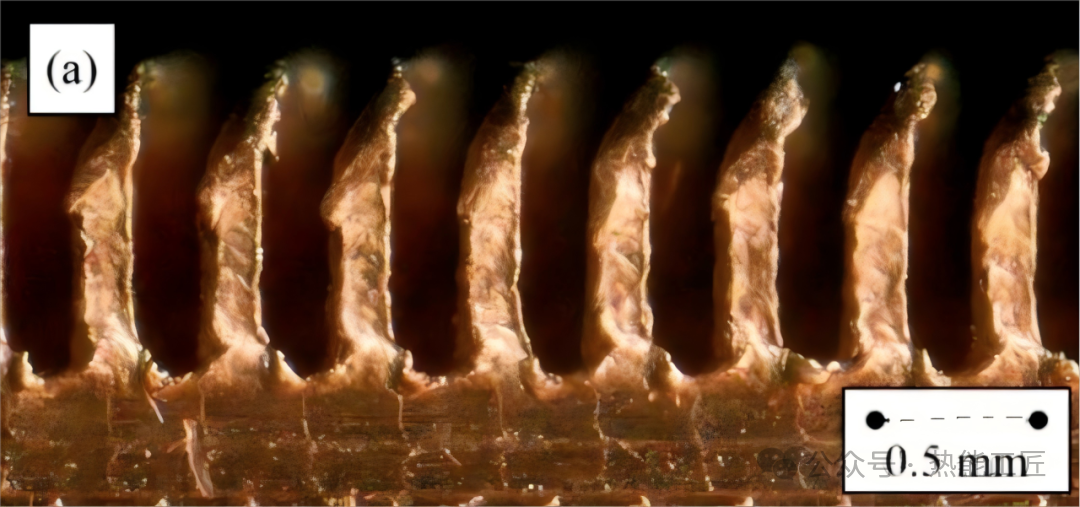
Microchannel liquid cooling plates processed by serration of copper
Straight channels are the most basic type of microchannel, suitable for use in environments requiring low pressure drop. Adjusting the structure of straight channels can improve their heat transfer performance; for example, using high-conicity conical channels can allow the fluid to transition to turbulence earlier, resulting in a larger heat transfer coefficient and higher pressure drop at lower Reynolds numbers.
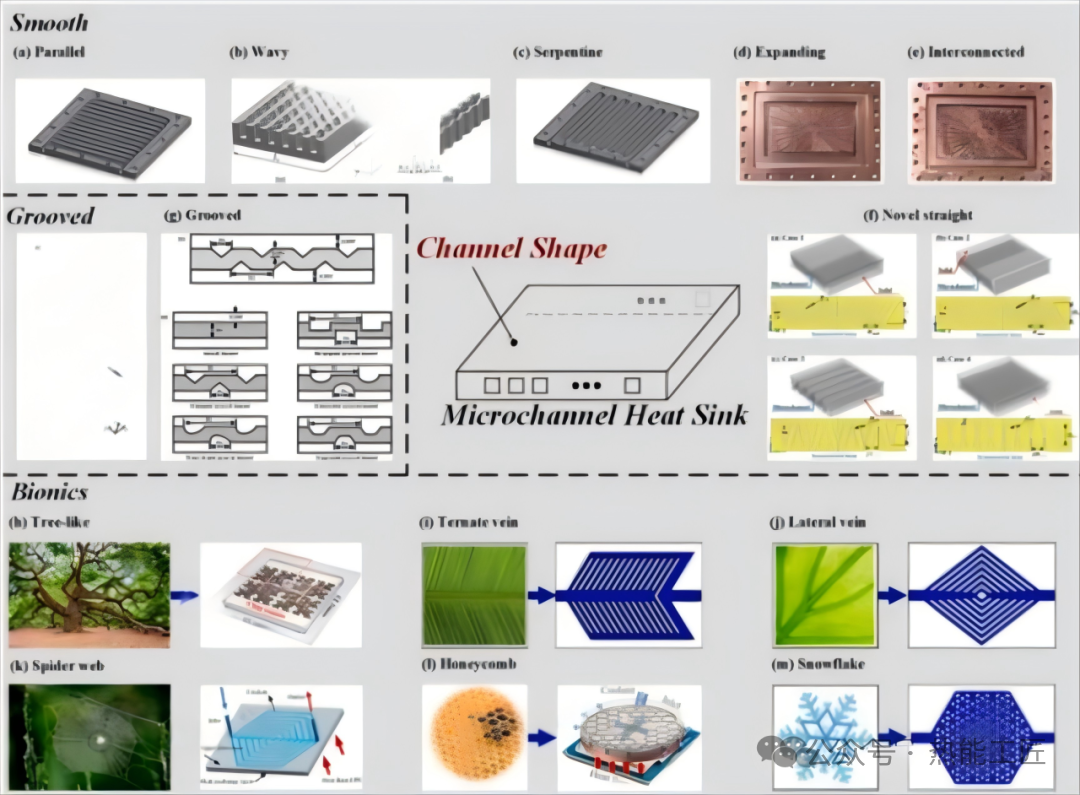
Microchannel heat exchanger channel design has significant optimization potential
Since microchannel liquid cooling plates involve the manufacturing of extremely small-sized complex three-dimensional structures (especially to achieve bionic flow channel designs), traditional serration, micro-milling, micro-electrical discharge machining, and micro-stamping processes all have significant limitations due to material thickness and geometric complexity, making it difficult to process grooves with large depth-to-width ratios and complex structures. 3D printing presents a better manufacturing prospect.
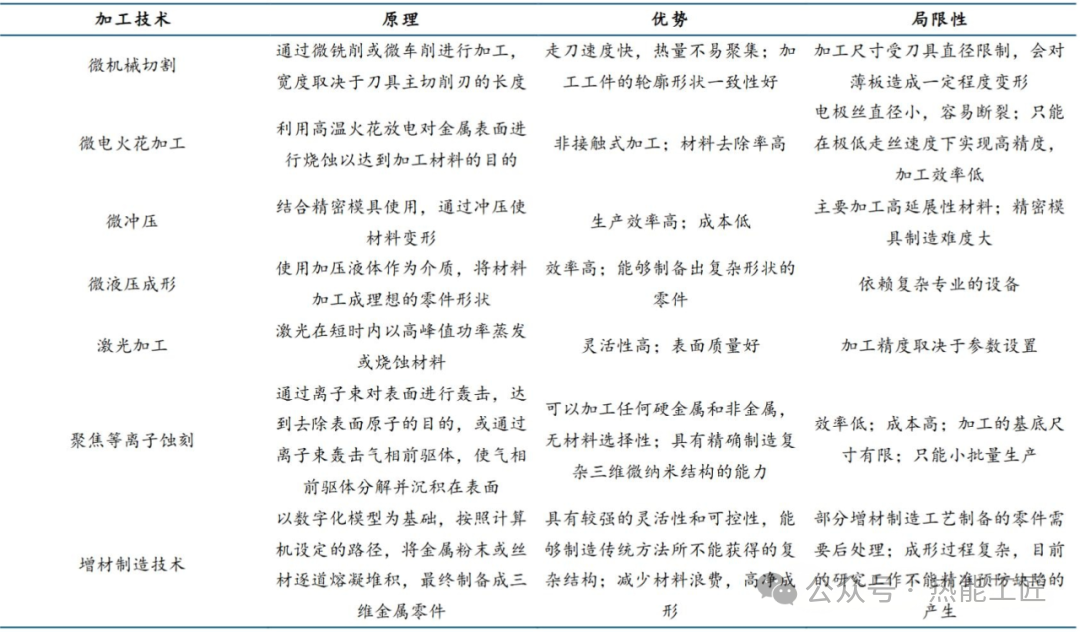
The 3D printing technology route for manufacturing microchannel liquid cooling plates shows better prospects
In recent years, porous structures have also gradually been applied in microchannels to enhance heat transfer, as they can effectively expand the heat transfer area and provide numerous micro-pores and ideal spaces for bubble nucleation and growth, thereby alleviating flow instability, and have been proven to have excellent heat transfer enhancement effects.
Comparison of the heat performance enhancement of three types of porous structures
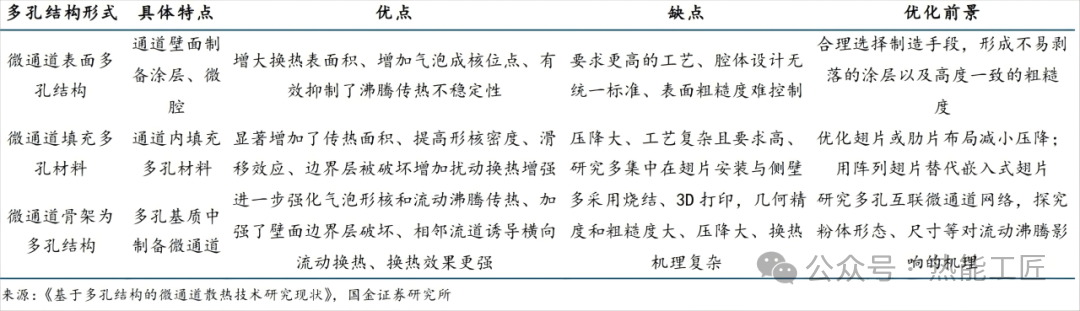
Therefore, considering all three, the microchannel skeleton with a porous structure has the optimal heat dissipation effect. By using 3D printing technology, metal particles can be directly sintered into a porous matrix, and then microchannels can be prepared within the porous matrix, forming microchannels with a porous structure, further enhancing cooling performance.
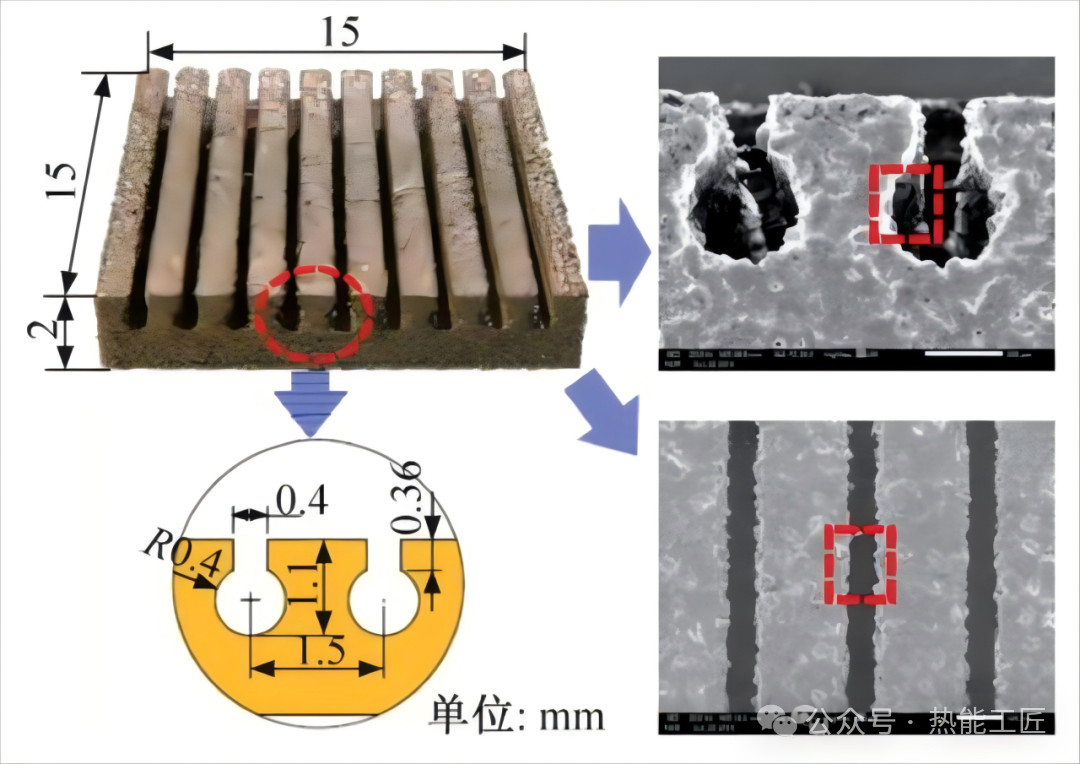
3D printing can manufacture the most efficient porous structure microchannel skeleton
According to the design of microchannel liquid cooling plate structures, although planar welding seams can be achieved through vacuum brazing and diffusion welding, due to the width of microchannel liquid cooling plates being less than 1mm, using vacuum brazing can cause the molten solder to flow and fill the microchannels, leading to blockages. Using diffusion welding can cause changes in the dimensions of the microchannel structure due to the pressure applied during the diffusion welding process, affecting flow resistance and heat transfer performance. 3D printing’s integrated forming can avoid these issues.
3D Printing of Copper Materials is Challenging but Achievable
Under high cooling liquid flow rates and thermal power, copper and aluminum are the most common materials for cold plates, with copper having a higher thermal conductivity and better cooling effect.
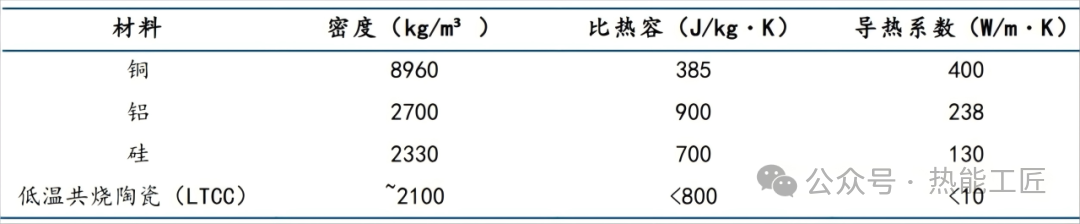
However, achieving 3D printing of copper is quite difficult, primarily due to the high reflectivity of pure copper to mainstream laser wavelengths, making it challenging to deposit during selective laser melting and laser melting forming, and it is also prone to metallurgical defects such as balling, voids, and micro-cracks. Generally, for laser wavelengths greater than 1060nm, 3D printing of copper requires the use of blue lasers with wavelengths around 450nm or green lasers with wavelengths around 515nm, which can significantly reduce the reflectivity of copper.
3D Printed Liquid Cooling Plate Products Have Already Been Developed in the Industry
CoolestDC has developed an integrated cold plate based on EOS DMLS technology and high-density EOS Copper CuCP process. The integrated design of the cold plate has no gaskets or joints and can withstand water pressures above 6 bar. Compared to air cooling, the CPU chip and core temperature are reduced by 10 degrees, and the GPU operating temperature is reduced by nearly 50%.
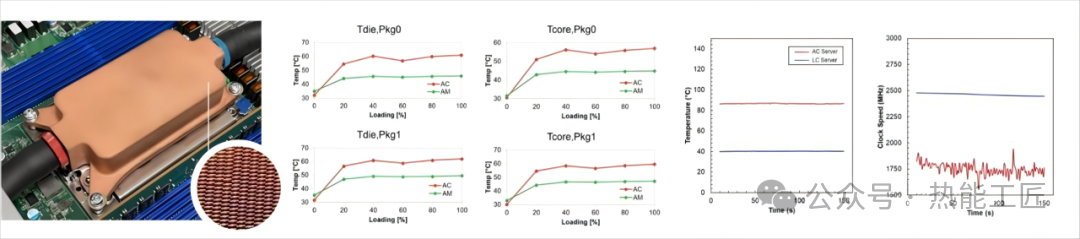
The integrated cold plate launched by CoolestDC can significantly reduce CPU/GPU temperatures
Fabric8Labs uses unique electrochemical additive manufacturing (ECAM) technology to print high-precision cold plates, achieving precise cooling of chip hot spots, with performance significantly higher than that of microchannel cold plates manufactured using serrated processes.
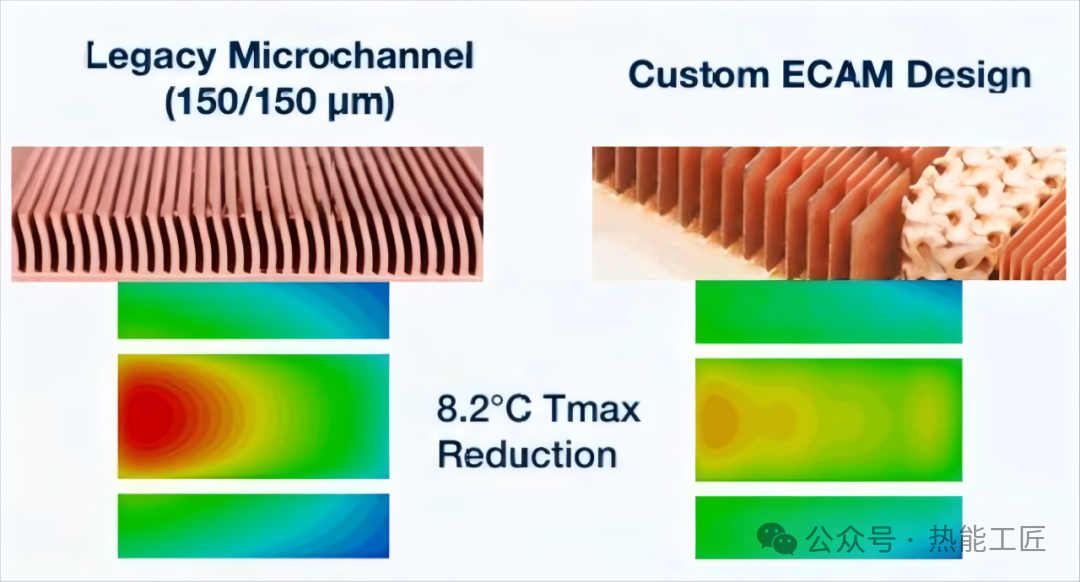
The microchannel cold plates printed using Fabric8Labs’ ECAM technology significantly outperform serrated microchannel cold plates
Xihe Additive Manufacturing achieves the manufacturing of microchannel liquid cooling plates through green light 3D printing technology, with a minimum wall thickness of 0.05mm and a density exceeding 99.8%.
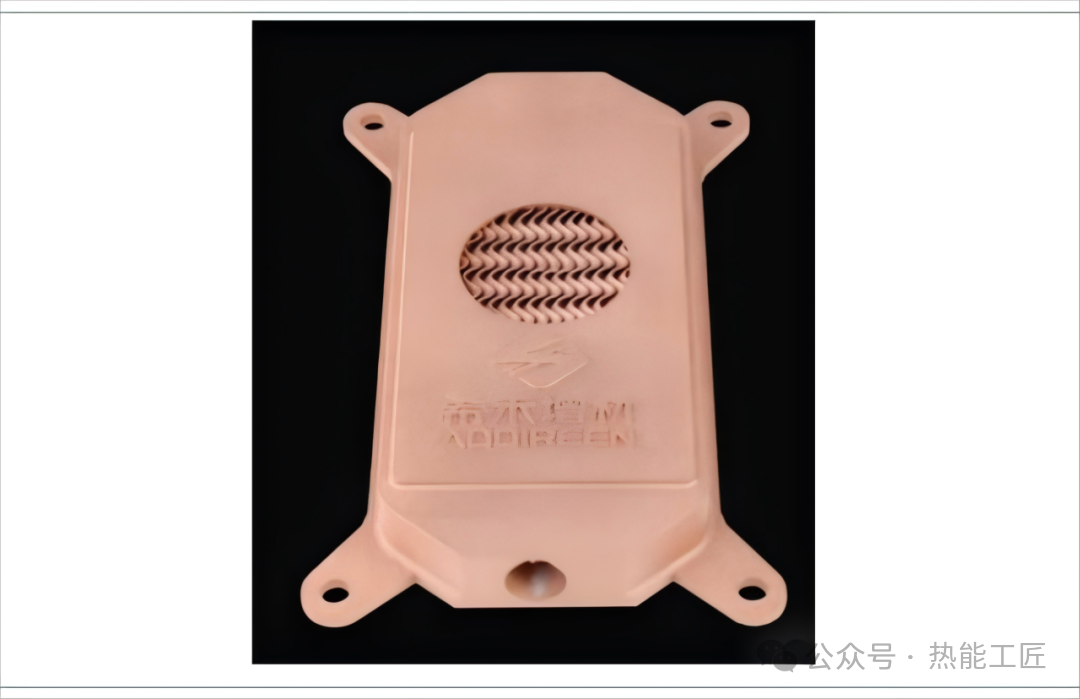
Xihe Additive Manufacturing’s 3D printed microchannel liquid cooling plates
Risk Warning: New technology promotion may not meet expectations: 3D printing has significant potential in liquid cooling plate processing, but still faces issues in surface processing quality control and cost control. If subsequent technology maturity does not improve as expected, it may impact the growth of related enterprises.
Source: Thermal Design
Disclaimer:This public account reprints articles for sharing purposes, and the copyright of the reprinted articles belongs to the original author or original public account. If there are any copyright issues, please inform us in a timely manner, and we will verify and delete them..
Scan to join the Knowledge Planet to receive the latest and most comprehensive reports in the thermal management industry!