 Silicon nitride (Si₃N₄), as a high-performance ceramic material, has attracted significant attention in the field of medical implants due to its excellent biocompatibility, infection resistance, and bone integration properties.Since 1989, silicon nitride ceramics have been applied in areas such as orthopedic joint implants and spinal repair.Its good radiographic imaging performance and properties such as non-conductivity and non-magnetism ensure that no noise is generated during postoperative imaging examinations, providing patients with a safer and more reliable treatment option.In today’s rapidly advancing medical technology,Shenghua 3D’s application of PEP technology to prepare silicon nitride ceramic implants brings new hope to patients with spinal diseases.This article will explore the current application status of silicon nitride artificial vertebrae in the field of medical implants, as well as the characteristics and application prospects of silicon nitride ceramic artificial vertebrae prepared by the PEP process. The following video is sourced from Shenghua 3D
Current Applications of Silicon Nitride in Medical Implants
In orthopedic surgery, the “biological inertness bottleneck” of artificial vertebral implants has long troubled clinicians—traditional titanium alloy materials suffer from stress shielding effects, polymers can easily trigger inflammatory responses, and the brittleness of ordinary ceramics remains unresolved.Silicon nitride, known as the “super ceramic” in the medical implant field, is the only FDA-certified antibacterial ceramic material. Over 50,000 cases of silicon nitride spinal fusion devices have been successfully implanted globally, with postoperative infection rates reduced to 0.3% (compared to approximately 2.1% for traditional materials). Silicon nitride is sweeping the orthopedic field with a compound annual growth rate of 17.3% (according to Grand View Research data).
Advantages of Silicon Nitride Implants
Bone integration speed increased by 40%: Its porous structure guides the directional growth of bone cells.
Antibacterial rate >99%: Reactive oxygen species inhibit pathogenic bacteria such as Staphylococcus aureus.
Mechanical performance breakthrough: Bending strength reaches 900MPa, comparable to natural bone.
Trends in the Application of 3D Printed Silicon Nitride in Medicine
3D printed artificial vertebrae are an innovative medical device designed to provide personalized customized implants for spinal surgeries, widely used in spinal fusion and fracture repair. In the trend of precision medicine, traditional machining has struggled to meet demands. However, with the continuous advancement of 3D printing technology, the application prospects of silicon nitride ceramics in the medical field are becoming broader. 3D printing technology can achieve high-precision forming of complex structures, meeting the needs of personalized medicine.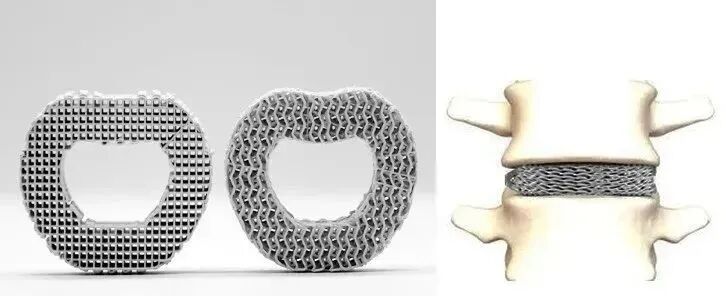 ▲Ceramics prepared by PEPArtificial vertebrae 1. Spinal Repair and Artificial VertebraeSilicon nitride ceramic artificial vertebrae are customized through 3D printing technology (such as the PEP process), with a porous structure that can precisely control porosity (0.1mm level), promoting bone cell growth and accelerating the postoperative bone fusion cycle (shortened to 4.8 months). The postoperative infection rate for traditional materials is 2.1%, while that for silicon nitride ceramic artificial vertebrae is only 0.3%, far lower than traditional materials.Silicon nitride’s unique non-magnetic properties are also reflected in postoperative imaging examinations, with no interference and higher safety..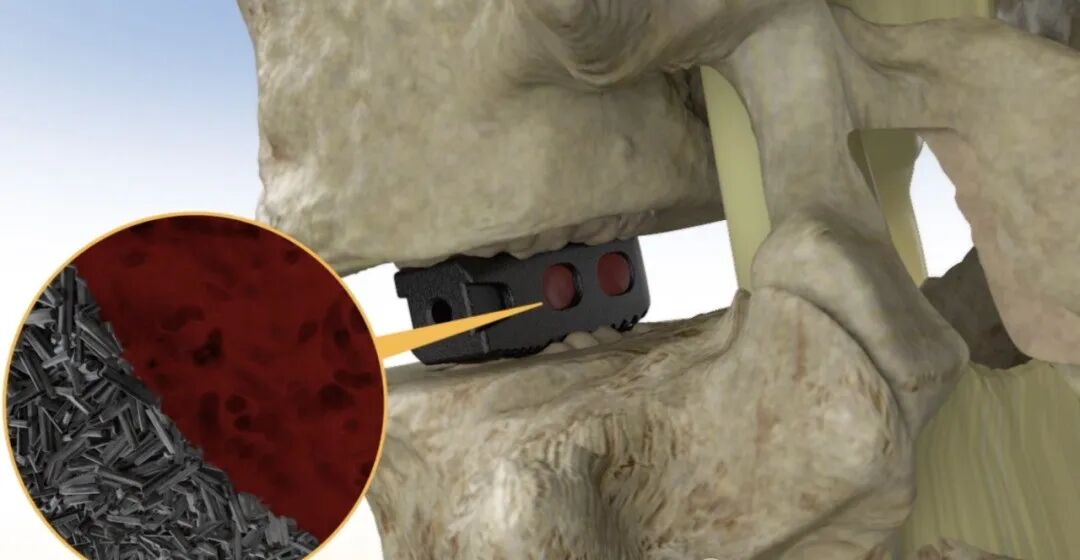
2. Artificial Joints (Hip and Knee Joints)
The mechanical properties of silicon nitride ceramics (with a bending strength of up to 900MPa) are close to those of natural bone. With a low friction coefficient (0.1) and excellent self-lubrication, it can reduce joint wear and extend the lifespan of prosthetics to over 20 years. Clinical data shows that the antibacterial rate of silicon nitride ceramics is >99%, effectively inhibiting common pathogens such as Staphylococcus aureus and reducing the risk of postoperative infections..
3. Dental Implants: Dual Advantages of Antibacterial and Bone Integration
The unique micro/nano-level morphology of silicon nitride provides dual advantages:
-
Antibacterial: The inhibition effect on oral pathogens such as Porphyromonas gingivalis and Escherichia coli is superior to that of pure titanium and zirconia, reducing the incidence of peri-implant inflammation..
-
Bone Integration Performance: The compressive strength of silicon nitride is close to that of human bone, and its surface activity can promote bone cell differentiation, accelerating bone bonding, with bone density potentially increasing by about 30%..
4. Drug Preparation Tools: High Precision and Low Contamination
Silicon nitride ceramic microspheres (0.1~1mm) have an ultra-low wear rate (one millionth) and ultra-high chemical stability, making them key tools for nano-level drug grinding in the biomedical field.
-
Spore Wall Disruption Technology: Enhances drug bioavailability through high-energy grinding, reducing impurity contamination..
-
Precision Machining: Silicon nitride blades and instrument components made using hot-press sintering technology can withstand high-temperature sterilization, extending the service life of equipment..
Advantages of PEP Process in Preparing Silicon Nitride Ceramic Artificial Vertebrae
The PEP technology’s particle material melting extrusion forming method has limited surface finish on printed parts, but after combining with a porous lattice filling structure, it will have unique structural characteristics of high contact area and low surface quality that better adapt to biological tissue infiltration and growth.Shenghua 3D has done extensive optimization work on materials and process equipment to meet the high standards of the medical industry.Currently, silicon nitride, zirconia, hydroxyapatite, and other bioceramic materials have been developed, and collaborations have been established with several medical device research institutions to jointly explore the application of the PEP process in ceramic implants.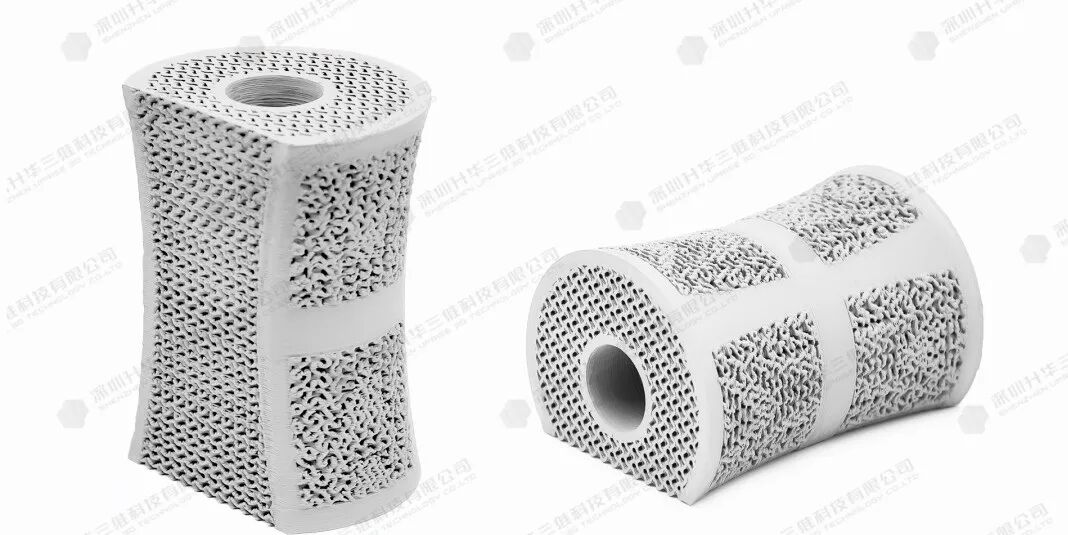 ▲3D printed silicon nitride artificial vertebrae (sintered)
PEP has disruptive advantages in preparing silicon nitride implants, mainly reflected in:
Low material waste: The PEP process uses particle materials, and the printed materials can be recycled, achieving a raw material utilization rate of 98%;Gradient Porosity Optimization: The porosity of the surface layer and internal layer can be designed and optimized according to needs, allowing for continuous gradient filling to enhance bone growth;
Structural Function Integration: The PEP process can achieve high degrees of freedom in the design of complex geometric structures, quickly realizing the integration of functions and structures, more in line with the customization of biomimetic bones;
Short Manufacturing Cycle: The integration of 3D printing and powder metallurgy processes significantly accelerates product development and commercialization time, shortening the manufacturing cycle;
Good Structural Performance: The PEP process uses low-temperature forming and high-temperature sintering methods, resulting in dense structural components with consistent performance.
Analysis of the Application Prospects of 3D Printed Silicon Nitride Artificial Vertebrae
With the aging population (over 200 million patients with spinal degeneration in China) and the demand for cost control in DRG medical insurance, silicon nitride artificial vertebrae, which combine high performance and cost advantages, are expected to experience explosive growth.According to FDA data, the global orthopedic ceramic market is expected to reach $8.3 billion by 2026, with the annual growth rate of 3D printed implants exceeding 29%, while the popularity of minimally invasive surgical techniques will drive the demand for miniaturized and functionalized products.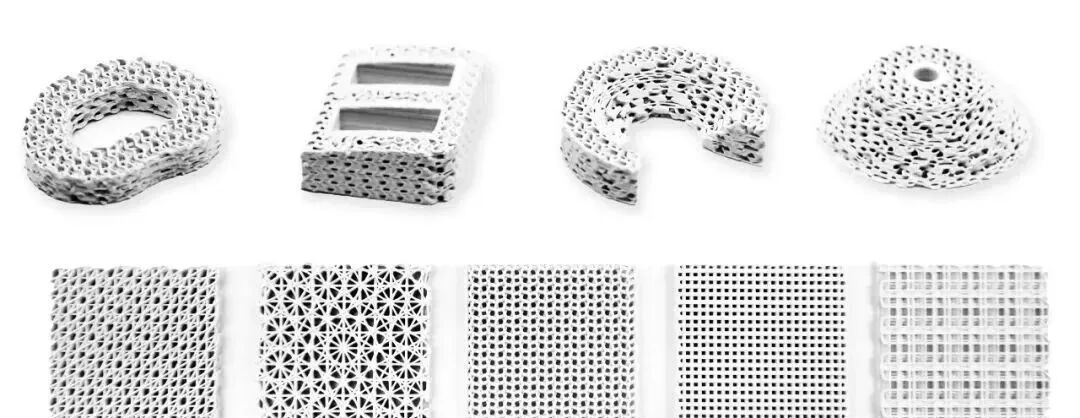
▲Samples of bioceramic implants prepared by PEP
Silicon nitride ceramic artificial vertebrae have broad application prospects in the medical field, with their excellent biocompatibility and bone integration performance providing significant advantages in spinal repair and joint implantation.The high design freedom and low-cost characteristics of the PEP process enable it to meet personalized medical needs. With continuous technological advancements and increasing market demand, PEP-prepared silicon nitride ceramic artificial vertebrae are expected to play an important role in the medical implant field, providing technical and process support for the medical device manufacturing industry and bringing benefits to more patients.Silicon nitride ceramics are continuously expanding the boundaries of biomedicine through technological innovation, enhancing medical outcomes from orthopedic repair to precise drug preparation, and promoting the deep integration of materials science and clinical medicine. In the future, with the integration of 3D printing, smart sensing, and other technologies, silicon nitride is expected to become a “jack of all trades” in the field of bioceramics, providing better solutions for human health.
Source: WeChat Official Account: 3D Printing Technology Reference