
While Qualcomm is still struggling with the yield of its 3nm chips, MediaTek has quietly completed the design tape-out of its 2nm flagship chip. On September 16, this chip manufacturer, once labeled as “mid-range”, announced that its first SoC, the Dimensity 9600, utilizing TSMC’s 2nm process, has completed critical design validation and is expected to enter mass production by the end of 2026. This timeline is at least six months ahead of industry expectations, marking a new phase in the semiconductor race—MediaTek is now on the same starting line as Qualcomm in terms of process technology, and may even surpass it.

Nanofin Transistors: A Disruptive Breakthrough in 2nm Technology
The most revolutionary change in TSMC’s 2nm process lies in the upgrade of the transistor architecture. The traditional FinFET structure has approached its physical limits after the 5nm node, while the 2nm process introduces nanofin transistors (GAAFET), which achieve more precise control of current by replacing the fin structure with a nanosheet fully wrapped by the gate. According to official data, compared to the existing N3E process, the 2nm process improves logic density by 1.2 times, enhances performance by 18% at the same power consumption, or reduces power consumption by 36% at the same performance level.
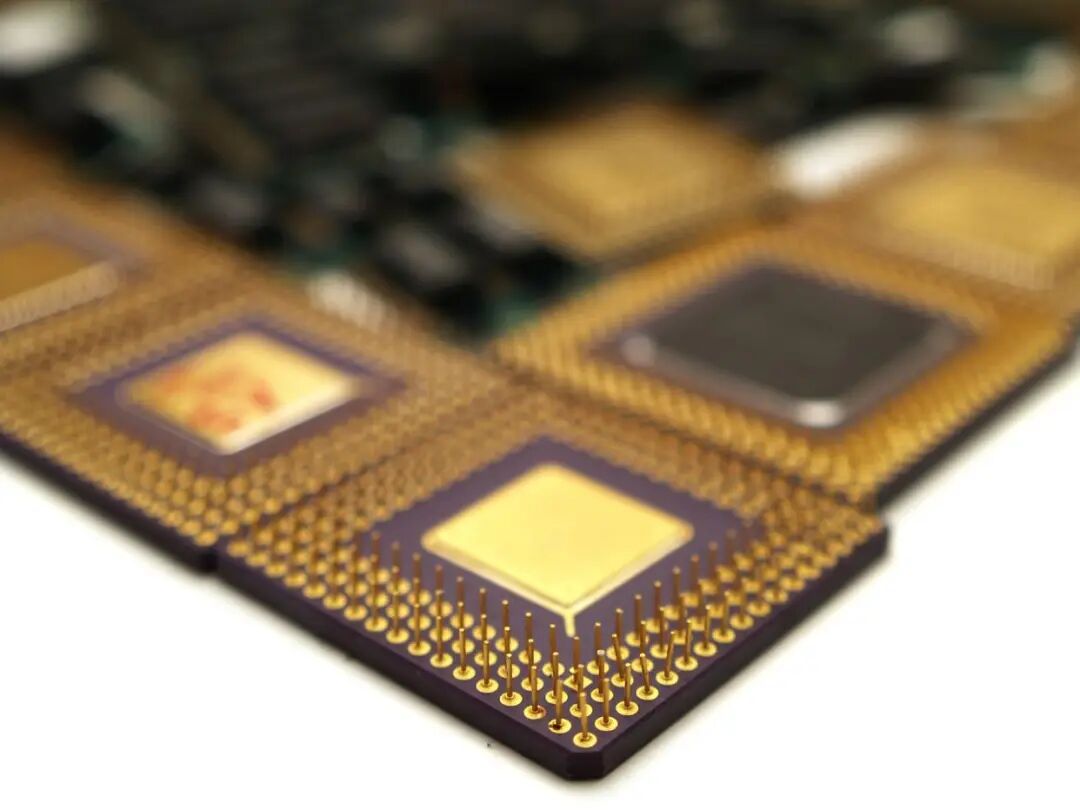
This leap in energy efficiency is significant for mobile devices. For instance, a 2nm chip could extend the gaming battery life of flagship smartphones by nearly 4 hours while maintaining the current battery capacity, or allow foldable devices to achieve a thinner design. More importantly, nanofin transistors pave the way for 3D stacking technology, potentially enabling the three-dimensional integration of logic chips and memory, breaking the “memory wall” bottleneck.
Technology Evolution Roadmap of Dimensity Chips
Looking back at the development trajectory of MediaTek’s Dimensity series, its strategy for technological catch-up is clear. The Dimensity 9000, launched in 2021, was the first to adopt TSMC’s 4nm process, barely catching up with the Snapdragon 8 Gen1; in 2023, the Dimensity 9300 surpassed in multi-core performance with an all-big-core architecture; and the upcoming Dimensity 9500 (3nm) and the recently taped-out Dimensity 9600 (2nm) signify MediaTek’s transition from a process follower to a synchronous participant.
Qualcomm’s recent process choices have been more cautious. From the Snapdragon 8 Gen1’s Samsung 4nm to the 8 Gen2’s shift to TSMC’s 4nm, and the rumored 8 Gen4 possibly adopting TSMC’s 3nm, its strategy focuses more on architectural innovation rather than aggressive processes. This difference stems from fundamentally different business models: MediaTek can go all-in on TSMC’s latest production lines, while Qualcomm needs to balance capacity allocation among clients like Apple and AMD.
Outlook on the Chip Market Landscape in 2026
If MediaTek’s 2nm chip enters mass production as scheduled by the end of 2026, it will directly impact three market dynamics. First, Qualcomm may be forced to accelerate its 2nm product roadmap, or even hasten its self-developed architecture to maintain its advantage; second, the lead time for Apple’s A-series chips will shrink from the previous 12-18 months to less than 6 months; and more importantly, the technology gap between followers like Huawei’s HiSilicon and the first tier may widen to more than two generations.
MediaTek’s opportunity lies in its diversified layout. Besides mobile chips, its automotive Dimensity Auto platform has entered the BMW supply chain, and the Dimensity 800 series in the AIoT field occupies 30% of the global smart speaker market. This “rural encirclement of the city” strategy provides broader application scenarios and room for trial and error for its high-end chips.
How Will 2nm Chips Reshape User Experience?
Technological advancements must ultimately translate into user experience. The most intuitive change brought by 2nm chips is that smartphones will become true AI terminals—running local models with 10 billion parameters will become possible, and the latency for real-time voice translation and image generation will drop to milliseconds. In the XR device field, a 36% reduction in power consumption means AR glasses can eliminate the need for external batteries, enabling all-day wear.
The more profound impact lies in edge computing. When terminal chips possess computing power equivalent to current cloud inference cards, sensitive scenarios such as medical diagnostics and industrial quality inspection will no longer need to upload data to the cloud, fundamentally reshaping the entire AI service industry chain. MediaTek’s accumulation in heterogeneous computing (such as APU+GPU+ISP collaborative architecture) may become its differentiated advantage.
Concerns Behind the Technological Frenzy
The challenges of the 2nm era should not be overlooked. TSMC has disclosed that wafer costs will rise by 10%, which means flagship smartphones may exceed the 10,000 yuan threshold; the yield ramp-up cycle could lead to capacity constraints, potentially repeating the “fire dragon” crisis of the Snapdragon 888; and MediaTek’s brand recognition in the high-end markets of Europe and the United States still requires at least two generations of products for sustained proof.
The semiconductor industry is undergoing a transformation from process-driven to architecture-driven. MediaTek’s successful tape-out is merely a new starting point in a marathon; the real competition lies in how to convert nanometer-level process advantages into user-perceived value innovation. As process dividends gradually peak, the outcome of the chip war may not be in the laboratory, but in the real experiences of millions of consumers.