Industrial robots have penetrated various industries, assisting people in tasks such as welding, handling, spraying, and stamping. Have you ever wondered how robots accomplish these tasks? What is their internal structure like? Today, we will explore the structure and principles of industrial robots through an animated video.Robots can be divided into hardware and software components. The hardware mainly includes the body and the controller, while the software refers to its control technology. Body ComponentLet’s first discuss the body component of the robot. Industrial robots are designed to mimic human arms.Taking the modern robot model HS220 as an example, from the appearance, it mainly consists of six parts: base, lower frame, upper frame, arm, wrist, and wrist support.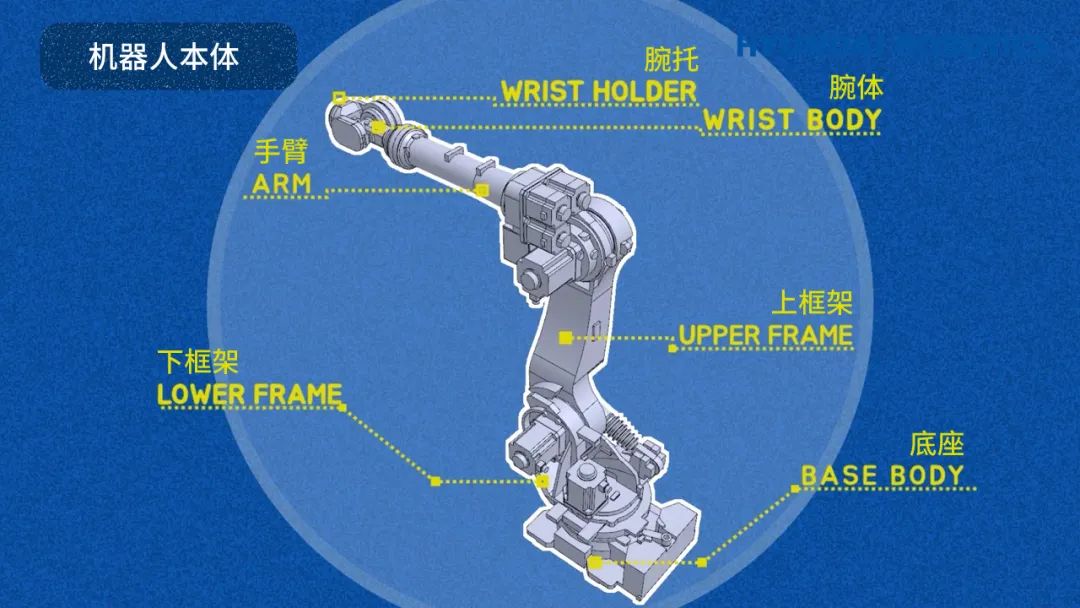 The joints of the robot are controlled by servo motors and reducers, similar to human muscles. The servo motor is the source of power, and the robot’s operating speed and load capacity depend on the servo motor.The reducer acts as an intermediary for power transmission and comes in various sizes.Generally, for miniature robots, the required repeatability is very high, typically below 0.001 inches or 0.0254 mm. The connection between the servo motor and the reducer helps improve precision and enhances the transmission ratio of the reducer.
 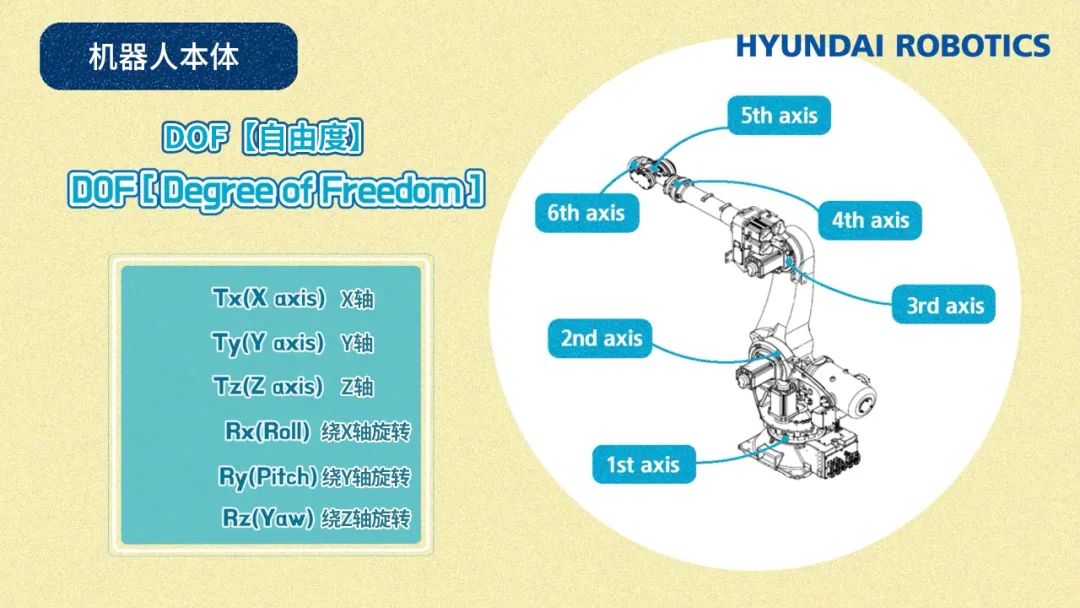 HS220 has six servo motors and reducers installed at each joint connection, allowing the robot to move in six directions, which is referred to as a six-axis robot. The six directions are X-axis – forward and backward, Y-axis – left and right, Z-axis – up and down, RX – rotation around the X-axis, RY – rotation around the Y-axis, and RZ – rotation around the Z-axis. It is this ability to move in multiple dimensions that allows robots to adopt different postures and complete various tasks. ControllerThe robot’s controller is akin to the brain of the robot, involved in the entire process of calculating and sending commands as well as energy supply. It controls the robot to perform specific actions or tasks based on commands and sensor information, making it a key factor in determining the robot’s functions and performance.
 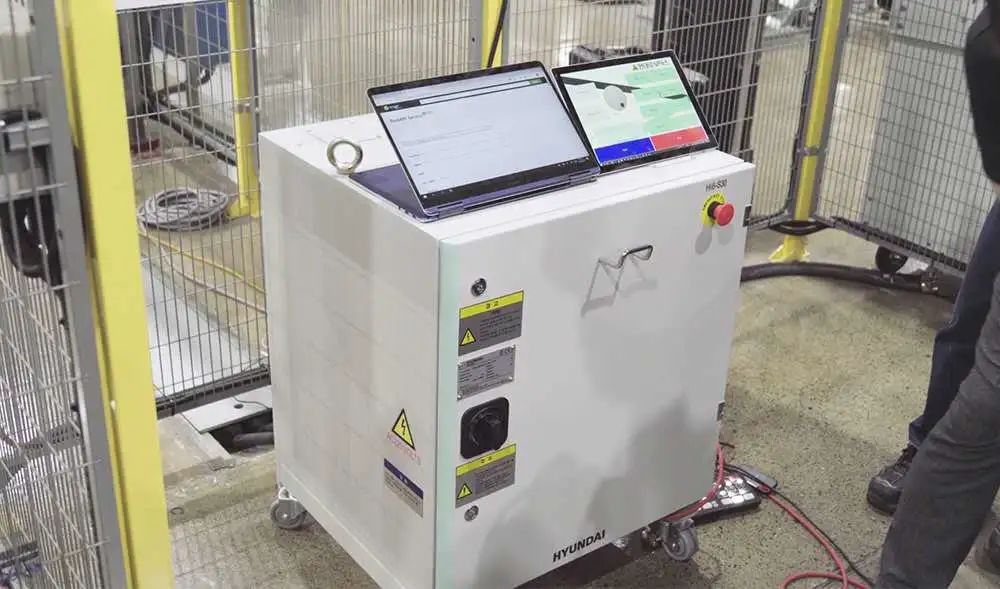 Modern robots feature the latest Hi6-S control cabinet.In addition to the two main components mentioned, the hardware of the robot also includes:
-
SMPS, a switch power supply providing energy;
-
CPU module, controlling actions;
-
Servo drive module, controlling the current to move the robot joints;
-
Safety module, akin to the human sympathetic nervous system, overseeing the robot’s safety, rapid control, and emergency stop;
-
I/O module, functioning as the detection response nerve, serving as the interface between the robot and the external world.
Control TechnologyThe control technology of robots refers to the field of quickly and accurately operating robot applications. A significant advantage of robots is that their programming can be easily modified, allowing them to switch between different scenarios. To operate robots, a teach pendant is essential. On the teach pendant’s display, we can see the robot’s programming language HR Basic and its various states. We can program the robot using the teach pendant. 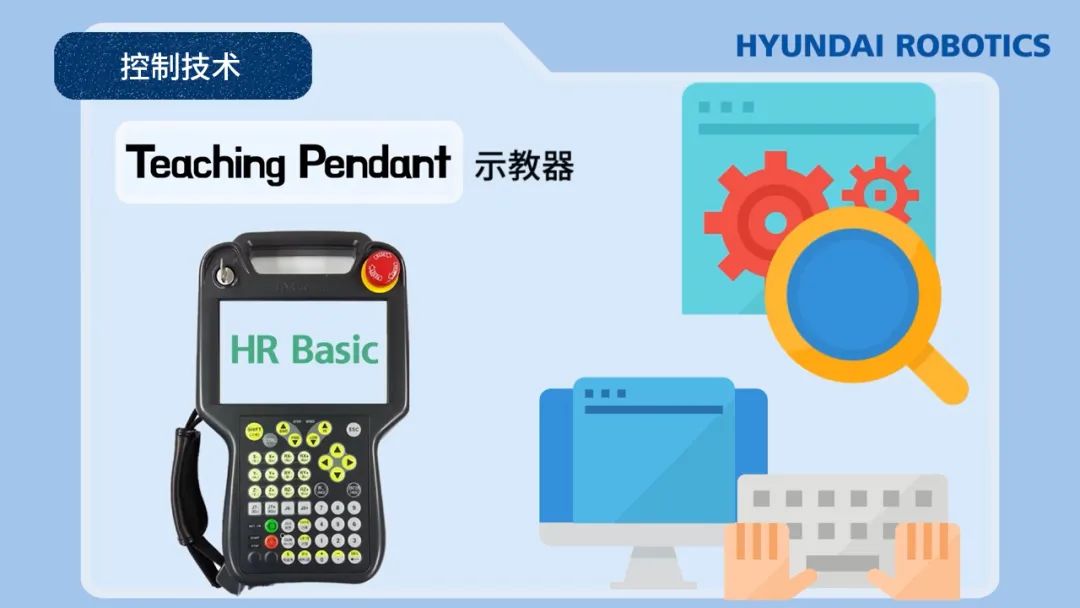 The second part of control technology involves plotting tables and controlling the robot’s movement based on the charts. We can use calculated mechanical data to plan and control the robot’s actions. Moreover, machine vision, as well as the recently popular artificial intelligence immersive deep learning and classification, all fall under the realm of control technology. Modern robots also have dedicated research teams focusing on control technology. Additionally, we have mechanical system R&D teams responsible for the robot’s body, control platform teams overseeing the controller, and application control teams handling control technology. It is the collaboration of multiple departments that has led to the modern robots we see today.
 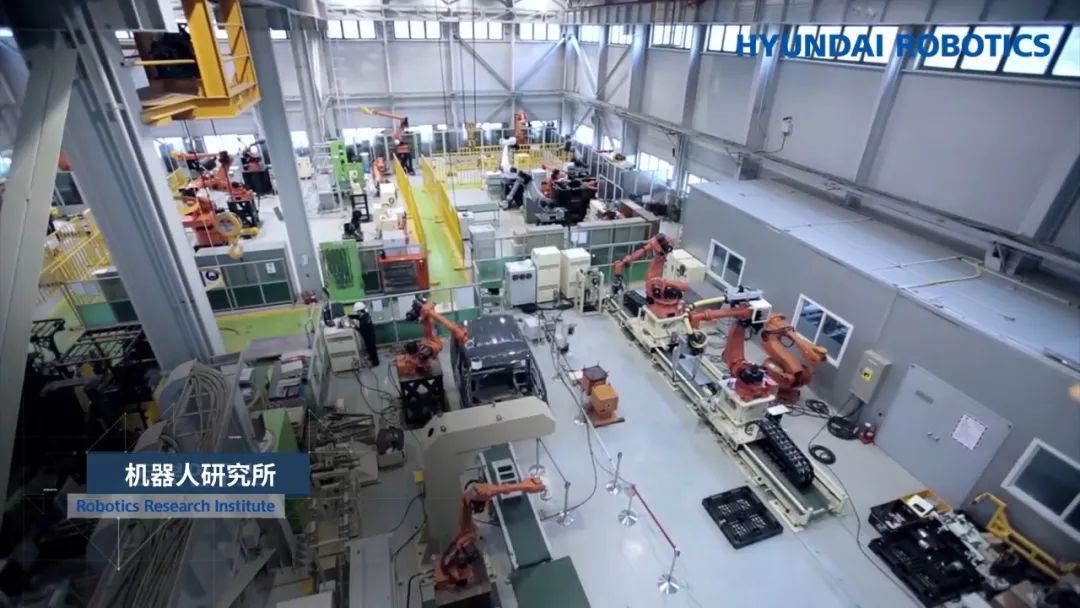 Modern Robotics Research InstituteAs a preview, in the upcoming issues, we will introduce knowledge related to industrial robots and collaborative robots, so don’t miss out!
☞Source: Modern Robotics
☞Advertising Cooperation: Sun Ha 13811718902
Statement: If there are any copyright issues regarding the videos, images, and text used in this article, please inform us immediately. We will confirm the copyright based on the materials you provide and pay remuneration according to national standards or delete the content immediately!
Statement: If there are any copyright issues regarding the videos, images, and text used in this article, please inform us immediately. We will confirm the copyright based on the materials you provide and pay remuneration according to national standards or delete the content immediately!