Research • November 25, 2025
Solana’s SIMD-0411 Proposal: Another Attempt to Reduce SOL Inflation
Overview
On Friday evening, Mert Mumtaz, CEO of Helius Labs (a leading Solana infrastructure provider), submitted the Solana Improvement Document-0411 (SIMD-0411), proposing to increase the blockchain’s deflation rate from 15% per year to 30%. This is the second update to Solana’s inflation plan this year, following the rejection of SIMD-0228 in March. If approved, it will complicate the validator economy while reducing the overall emission of SOL. The following description outlines the proposal and its potential impact on the network.
Background
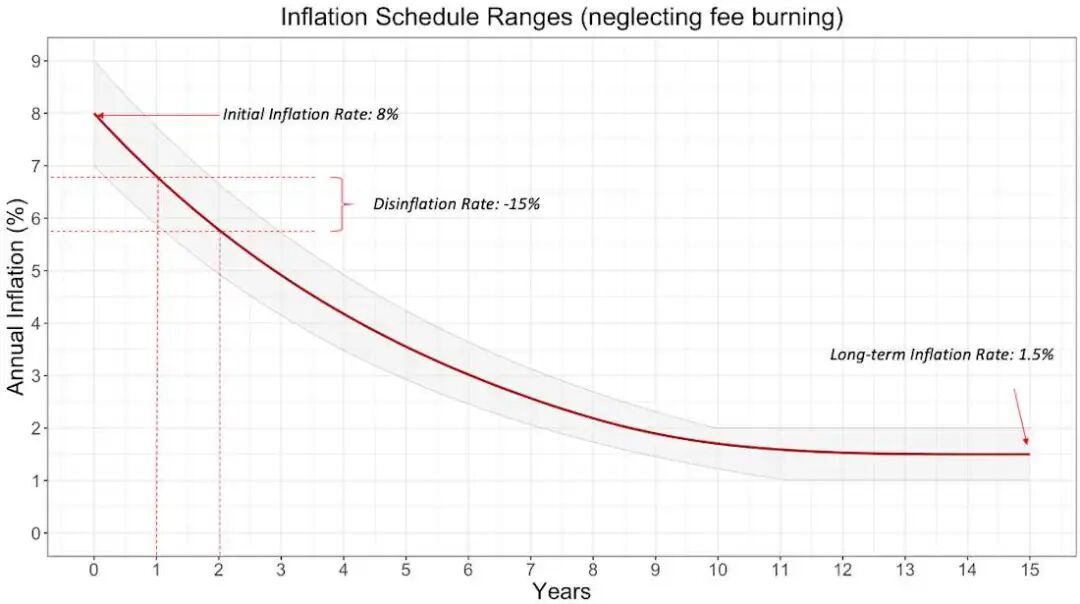
According to Solana’s inflation plan, the supply of SOL tokens increases by 8% in the first year, and the inflation rate is set to decrease by 15% per year (deflation rate) until it reaches a final inflation rate of 1.5%. The current inflation rate is approximately 4.18%, and it is expected to reach the final rate by 2032.
(Source: Anza Labs)
SOL inflation incentivizes validators to participate and subsidizes operational costs. In addition to emissions, Solana validators can also earn base fees, priority fees, and MEV (for a deeper overview of the recent adjustments in Solana’s token economics, see my recent research report).
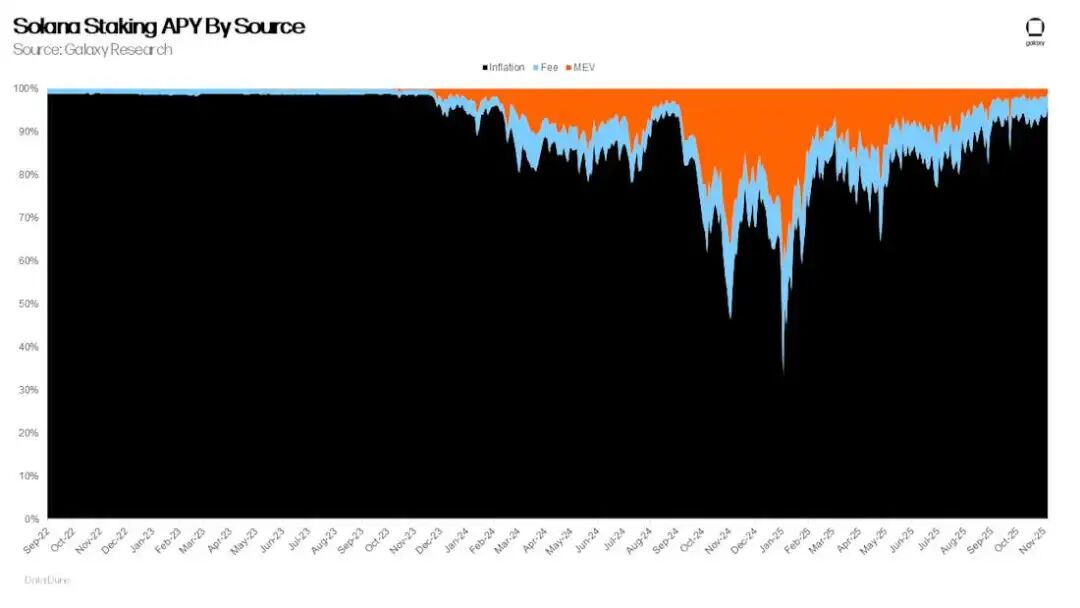
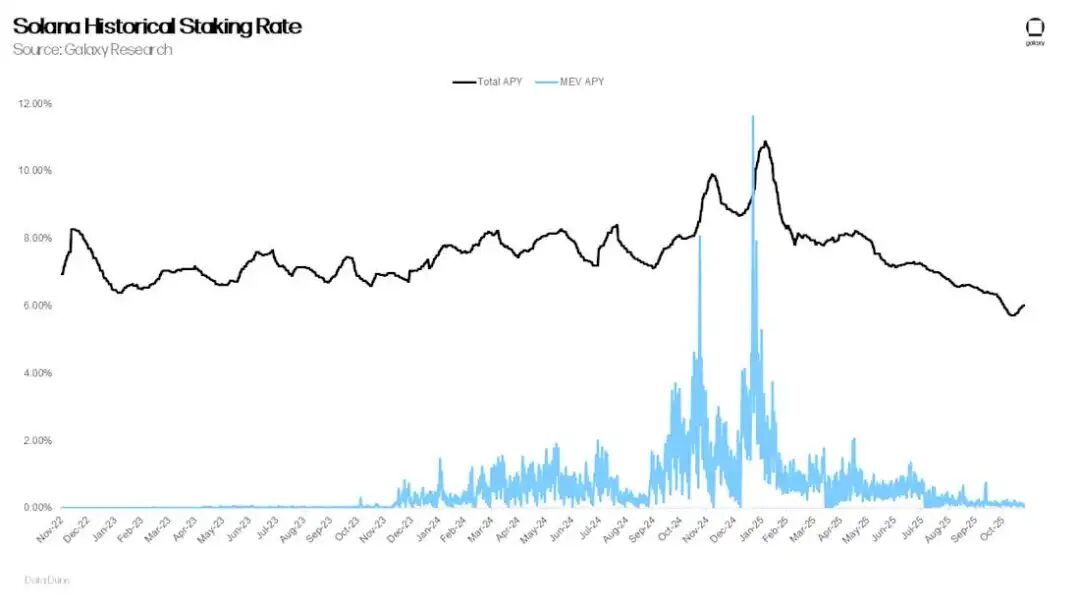
While emissions historically accounted for over 98% of validator rewards, this percentage has dropped to about 90% since December 2023, with increased on-chain activity on Solana. This is a highly variable number that fluctuates with on-chain activity, dropping to about 50% during peak Solana activity in November 2024 and January 2025. Nevertheless, even with recent activity declines, SOL stakers continue to earn staking yields of 6% to 8%.
SIMD-0411
Proposal Overview
The main proposal of SIMD-0411 is to increase the annual deflation rate from 15% to 30%. This adjustment will halve the time required to reach the final inflation rate of 1.5% (from approximately 6.2 years to about 3.1 years).
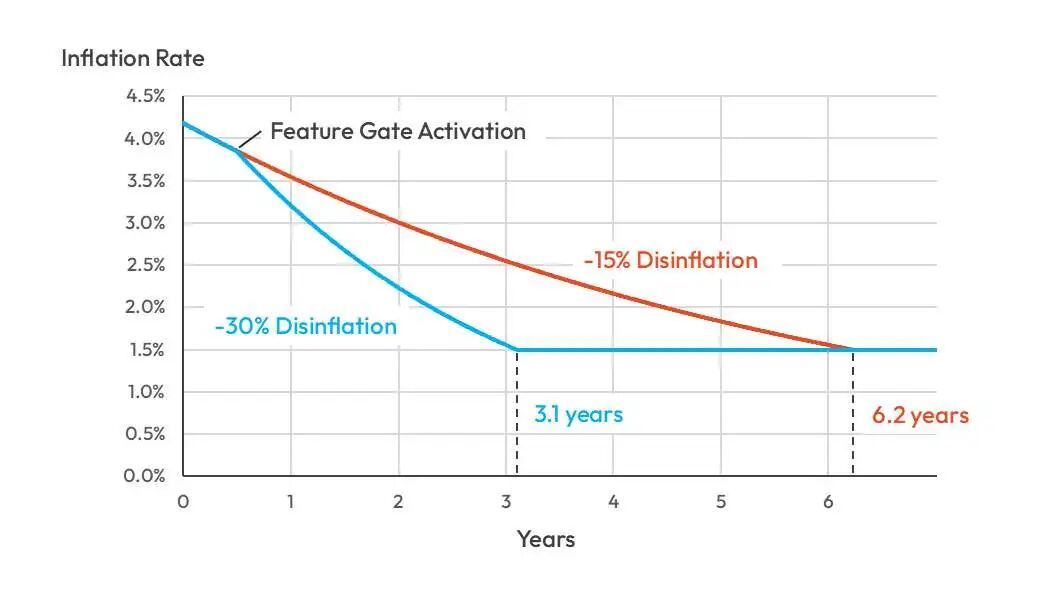
(Source: SIMD-0411 Proposal)
This proposal will also reduce the emission of SOL over the next six years by 22.3 million, which is 3.2% lower than the currently expected inflation amount. At the current SOL price (130 USD), this amounts to approximately 2.9 billion USD.
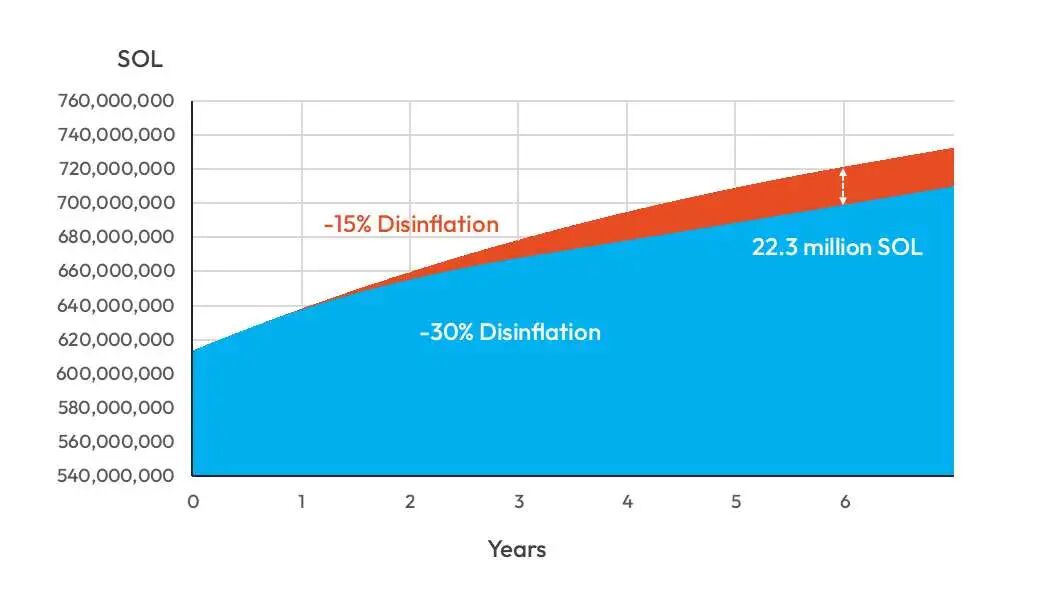
(Source: SIMD-0411 Proposal)
SIMD-0411 will not make any other changes to Solana’s inflation mechanism and will maintain the initial final inflation target of 1.5% for Solana. This differs from SIMD-0228, which was the first proposal to adjust Solana’s emission plan. SIMD-0228 was submitted earlier this year and proposed a dynamic inflation plan based on the amount of SOL staked. It was rejected in March 2025 by a controversial validator vote (for a deeper report, see my recent Solana report).
Impact on Validators
As the accelerated deflation rate reduces token emissions over time, the nominal staking yields for validators and delegators will gradually decline. Assuming the percentage of SOL staked remains consistent, the nominal staking yield will decrease from approximately 6.4% today to about 5.0% in the first year, and then to 3.5% and 2.4% in the following two years as the inflation rate converges to the final rate of 1.5%.
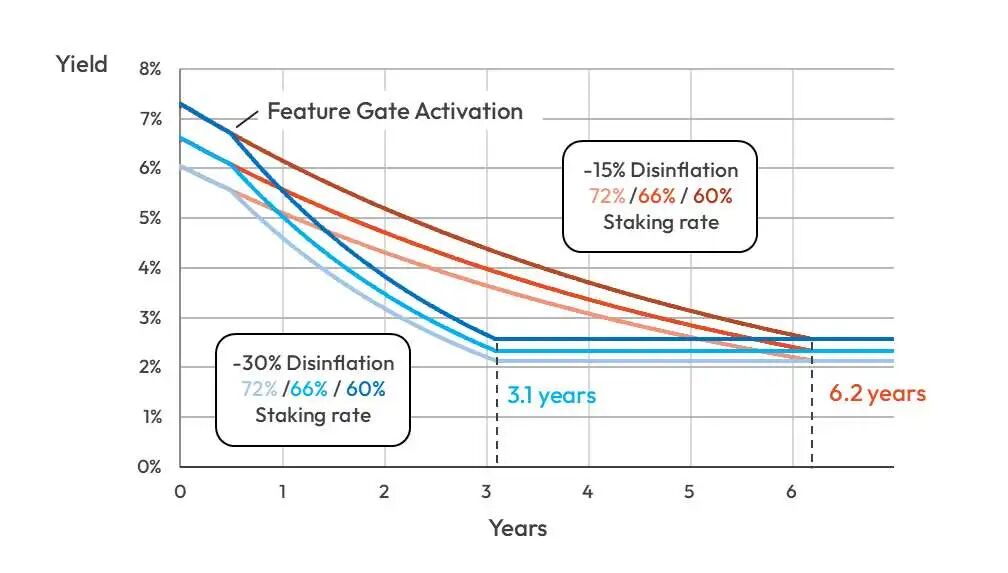
(Source: SIMD-0411 Proposal)
While this moderate reduction will improve the long-term supply dynamics of SOL, it will slightly compress the profit margins for validators, especially for smaller operators that heavily rely on inflation rewards. The proposal estimates that about 47 of Solana’s 870 active validators (approximately 5% of the network) will become unprofitable over the next three years, although the majority of the validator set is expected to remain sustainable.
However, validators will benefit from the upcoming Alpenglow consensus upgrade, which will reduce operational costs (detailed in my latest Solana report). Alpenglow will fundamentally reform Solana’s consensus mechanism and shift voting to off-chain processes, which will reduce costs by approximately 20%, with potential for further reductions in the future.
Implementation Timeline
There is currently no official timeline for voting on this proposal. It is in the community review stage, with active discussions on GitHub, forums, and X. The proposal mentions a 6-month lag period before implementing any changes to consider the activation of Alpenglow (expected in Q1 2026) and the governance process, meaning that if approved, it could be activated in mid-2026.
Based on recent precedents (SIMD-0228), this process may take 1-3 months before a decisive vote is held. Voting will be conducted through on-chain voting weighted by stake, expected to last for 2-3 epochs (approximately 4-7 days), requiring a simple majority approval among participating validators. Validator voting power is proportional to delegated stake.
Main Conclusions:
As I mentioned in the Solana report, despite the rejection of SIMD-0228, we expect discussions about Solana’s inflation plan to resurface, and SOL inflation remains a contentious issue within the Solana community due to its impact on the validator economy.
Those in favor of adjusting the inflation plan mainly argue that it will:
- Reduce selling pressure on SOL, especially from large institutional validators that must sell part of their emissions to meet tax obligations.
- Enhance DeFi activity on the network by reducing the opportunity cost of not staking SOL. Despite leading in categories such as decentralized exchange (DEX) trading volume, network and application fees, and stablecoin circulation speed, Solana’s DeFi vertical still lags in adoption compared to competitors like Ethereum.
Those opposed to adjusting the inflation plan mainly argue that it will reduce the attractiveness of SOL to large institutional allocators and retail investors who prefer high staking yields, which somewhat offsets the risks of holding a volatile asset. Other objections include the impact on the profitability of smaller validators and the potential reduction in the number of Solana validators, which could undermine network decentralization and security.
The proposal aims to meet the needs of both sides. While it will accelerate the reduction of SOL’s inflation rate, it will do so in a more gradual manner than previous proposals and will not change the final SOL inflation rate. By not introducing a dynamic rate, it also provides validators with a consistent and predictable inflation rate to plan for adjustments. Additionally, adjusting the SOL inflation rate may help SOL perform better, thereby reducing selling pressure and attracting new investors who previously found its high inflation rate off-putting.
Crucially, the proposal emphasizes the changing dynamics in the cryptocurrency ecosystem, where protocols and applications must focus on generating sustainable economic activity as the primary incentive mechanism for validator activity, rather than relying on token issuance. SOL inflation has successfully provided an initial bootstrapping mechanism for the ecosystem, but Solana has evolved into a more mature blockchain with some of the highest revenue-generating applications in cryptocurrency and one of the largest user bases. If the primary source of income for validators on the network comes from demand for block space (base/priority fees/MEV) or from profitable businesses running on-chain, they will be optimally incentivized to become long-term honest stakeholders.
Conclusion
A consistent theme in the Solana ecosystem over the past year has been the active push by protocol and application layer teams to improve various aspects of the network. This is content we have extensively reported on at Galaxy Research. SIMD-0411 aligns perfectly with this broader effort and reinforces Solana’s long-term commitment to not stagnate or slow its pace of development.
Meanwhile, the introduction of this proposal comes at a time when Solana faces challenges in maintaining its position as one of the few leading high-performance blockchains. In recent months, network activity has slowed, with overall users and DEX trading volume declining after record activity earlier this year. Within the ecosystem, competition for market share has intensified, and there are competing ideas on the best ways to implement technical upgrades such as application-controlled execution. At the same time, Solana faces increasing competition from established ecosystems like Binance Smart Chain and emerging ecosystems like Base and Hyperliquid.
Like SIMD-0228, SIMD-0411 will face a highly contentious vote, and it is still too early to determine whether it will pass. However, regardless of the outcome, the proposal indicates that the Solana ecosystem is continuing to push for sustainable economic development. Whether these adjustments translate into lasting competitive advantages will depend on the network’s ability to maintain developer activity and user demand in an increasingly competitive market.
- Original link: galaxy.com/insights/rese…
- UpChain Community AI Assistant, translating excellent English articles for everyone. Please forgive any translation inaccuracies.

UpChain Community started in 2017, helping developers become better Web3 Builders by building a high-quality technical content platform and offline spaces.

- UpChain Community website: learnblockchain.cn
- Developer skill certification: decert.me
- Bilibili: space.bilibili.com/581611011
- YouTube: www.youtube.com/@upchain