Pipelining Technology
We can think of pipelining technology as a fast food restaurant. Making a fast food meal requires several steps, such as chopping vegetables, frying, and plating. If one person makes one meal at a time, the efficiency will be very low. However, if we break this process down and let A chop vegetables, B fry, and C plate, then these three people can work simultaneously. While B is frying the second meal, A can chop the third, and C can be plating the first. This greatly improves overall work efficiency. This is the principle of pipelining technology.
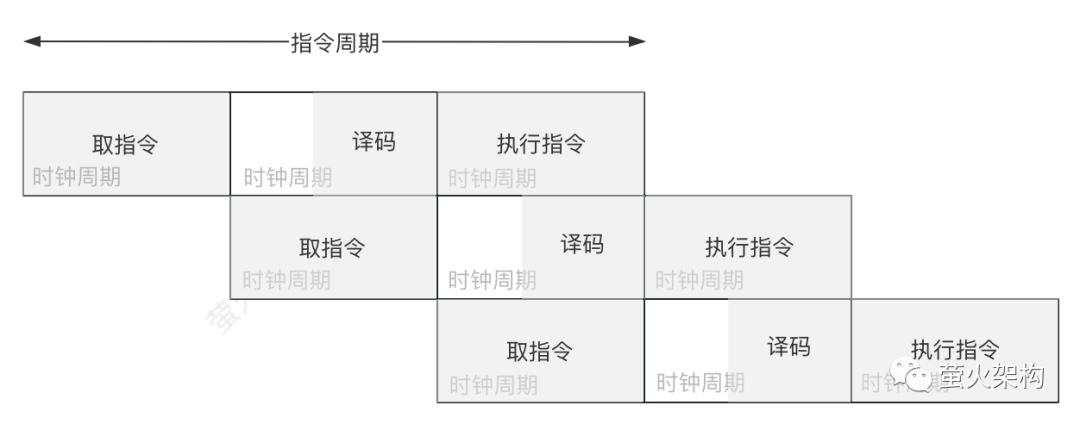
However, pipelining technology is not omnipotent. Just like in our fast food restaurant example, if too many people are working simultaneously, for example, if there are 10 people all chopping vegetables, it can lead to inefficiency due to overcrowding. This is because each person needs a workstation, and the number of workstations is limited. In a computer, this workstation is the pipeline registers, which need to record the outputs of the previous stage for the next stage to use. If there are too many pipeline stages, it can lead to excessive overhead in register operations, affecting performance improvement. Therefore, we need to choose an appropriate number of pipeline stages to achieve optimal performance.
Superscalar Technology
Next, let’s talk about superscalar technology. Superscalar technology is like a restaurant with multiple dishes. In a regular restaurant, you might need one chef to prepare one dish, and then wait for him to finish before starting the next. However, in a multi-dish restaurant, you can have multiple chefs preparing several dishes at the same time, greatly increasing efficiency. Superscalar technology allows the CPU to fetch multiple instructions from memory at once and dispatch them to different instruction decoders and subsequent pipelines. Originally, only one instruction could be executed per clock cycle, which is a scalar operation. Now, through multiple dispatches, multiple scalar operations can be executed in parallel, hence the term superscalar technology.
However, superscalar technology also has its challenges; it increases the complexity of CPU circuit design. To address this issue, some work is shifted to software, leading to the introduction of Very Long Instruction Word (VLIW) design, where the compiler packages multiple instructions into a single instruction bundle (also addressing instruction dependency issues), allowing the CPU to fetch, decode, and execute multiple instructions in parallel. This is like having our chefs prepare the menu in advance and then working together in the order specified in the menu. However, this method has its problems; if we want to change the menu, we may need to recompile the entire program, leading to both forward and backward compatibility issues, which was the reason for the epic failure of Itanium.
SIMD Technology
Finally, let’s discuss SIMD technology. SIMD technology is like a large food processing machine that can handle multiple food items at once, with the processing of these items being independent and able to occur in parallel. This is the principle of SIMD technology, which reads multiple data items from memory at once and performs parallel calculations in the CPU, thereby enhancing efficiency.
In the CPU, this is achieved by increasing the number of registers. A register can load multiple data items at once, and since these data items are independent in their calculations, there are no hazards to address. As long as there are enough functional units in the CPU, these calculations can be performed in parallel. SIMD technology has wide applications in vector operations, matrix computations, image, audio, and video processing.
In summary, the world of computer hardware is a fascinating realm, where technologies like pipelining, superscalar, and SIMD enable our computers to work more efficiently. I hope this explanation helps everyone gain a deeper understanding of computer hardware, which in turn will facilitate better software development. Remember, understanding the tools allows for better utilization of them.