A new direction with explosive potential in the semiconductor industry has emerged, surpassing liquid cooling and PCBs.
We may soon see the next star stocks like Shenghong and Xinyi Sheng, as tech giants Huawei and NVIDIA are fully betting on the emerging field of silicon carbide!
In particular, a tech company that has broken the monopoly of Japanese NTN and German Schaeffler in the silicon carbide market and secured orders from major manufacturers like Huawei and BYD is likely to become the most promising benchmark in the second half of 2025!
This is not just a baseless claim.
First, NVIDIA plans to replace the intermediate substrate material in the advanced packaging process of its next-generation Rubin processor from silicon to silicon carbide (SiC).
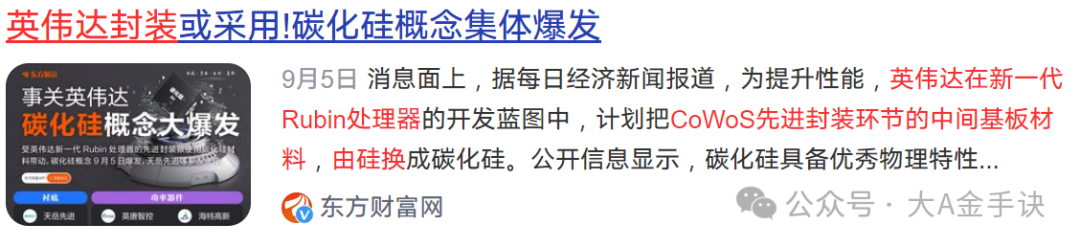
Currently, TSMC is inviting major manufacturers to jointly develop the manufacturing technology for silicon carbide intermediate substrates! Additionally, Huawei recently released two patents related to silicon carbide heat dissipation, including “Thermal Conductive Composition and Its Preparation Method and Application” and “A Thermal Conductive Absorbing Composition and Its Application,” both using silicon carbide as a filler to enhance the thermal conductivity of electronic devices.
Finally, in August, our country released the “Action Plan for Implementing the National Standardization Development Outline,” which clearly lists silicon carbide as a core material for third-generation semiconductors and calls for accelerating the formulation of relevant standards to promote large-scale applications!
This means that silicon carbide is entering a significant time window for technological transformation and policy promotion, similar to PCBs and liquid cooling.
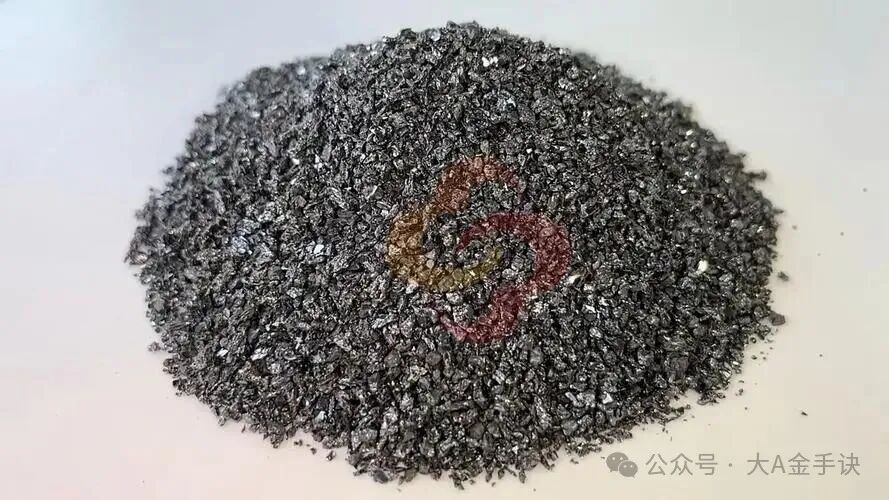
As a core raw material for third-generation semiconductors, silicon carbide will be widely used in data centers, AI chips, robotics, automotive, mobile phones, and commercial aerospace, with a market space potentially reaching trillions!
Next, let’s take a look at several companies that have performed outstandingly in the silicon carbide field:
First: Tianyue Advanced
This company is the world’s first to achieve mass production of 12-inch silicon carbide substrates, with a yield of over 70% for 8-inch conductive substrates, and a 40% cost reduction compared to 6-inch substrates. Its liquid-phase preparation technology has improved the yield of 8-inch substrates to 85%, and a single 12-inch optical-grade substrate can support the production of 3-4 pairs of AR glasses, seizing the new track in AI/AR.
Second: Luxiao Technology
This company has achieved a mass production yield of 65% for 6-inch conductive substrates (industry average is 50%), with prices 30% lower than the international market; the yield for 8-inch substrates is 60%, with plans to achieve automotive-grade mass production by 2026. After reaching full production at its Hefei base, the annual capacity will reach 240,000 pieces, with plans to expand to 500,000 pieces in the second phase.
Third: Jingsheng Electromechanical
This company has over 50% market share in the global silicon carbide crystal growth furnace market, covering the entire chain of equipment from crystal growth to cutting and epitaxy, with over 80% localization rate for 8-inch epitaxy equipment. It is the only domestic company to achieve coordinated development of equipment and materials, benefiting from the industry’s expansion on the equipment side while seizing the initiative in large-size technology on the materials side.
Fourth: Dongni Electronics
This company has over 35% market share in the silicon carbide cutting line and conductive materials market, with cutting efficiency improved by 30%, supplying leading companies like Tianyue Advanced and Sanan Optoelectronics, and is an invisible champion in the cutting materials field, with breakthroughs in single crystal material technology opening up long-term growth space.
Fifth: Saiwei Electronics
The 6-inch silicon carbide epitaxial wafer capacity at the company’s Beijing FAB3 plant has reached 5,000 pieces/month, with a yield exceeding 90%, already supplying Huawei HiSilicon and Nexperia. The 8-inch epitaxy equipment is currently being debugged, with mass production expected in 2026.
Sixth: China Resources Microelectronics
The company has a capacity of 2,500 pieces/month for 6-inch silicon carbide epitaxial wafers, with a yield exceeding 95% for automotive-grade products, already entering the supply chain of Tesla and NIO. The planned capacity for the Chongqing 12-inch production line is 30,000 pieces/month, expected to be operational in the third quarter of 2025.
Seventh: Zhongwei Company
Its ICP etching equipment has achieved breakthroughs in silicon carbide device manufacturing, validated by Silan Microelectronics and China Resources Microelectronics, with new orders expected to exceed 500 million yuan by 2025. Meanwhile, MOCVD equipment has also begun to enter the gallium nitride power device market, collaborating with Huawei HiSilicon to develop RF chips for 5G base stations.
Eighth: *****【Company Name】Click to Unlock! (Research Report)
As the only domestic IDM enterprise to achieve full-process manufacturing of “substrate-epitaxy-device,” this company plans to produce 480,000 pieces of 8-inch silicon carbide devices annually at its Hunan base, and the Chongqing Anst Semiconductor 8-inch automotive-grade production line, a joint venture with STMicroelectronics, is expected to start mass production in the fourth quarter of 2025.
This company has broken the technological blockade of international giants like Wolfspeed and Rohm in the silicon carbide field, with Huawei Hubble investing in Sanan Integrated, and both parties conducting joint R&D in automotive-grade SiC devices and optical communication chips, forming a “technology-capital” dual binding.
At the same time, this company has also entered the supply chain of major manufacturers like BYD. Its products have been certified by Bosch and Continental Group, and by 2025, the proportion of overseas revenue is expected to increase from 18% to 35%, becoming a secondary supplier to international car manufacturers like Tesla and Volkswagen.
*****【Company Name】Click to Unlock! (Research Report)
Risk Warning: Any opinions or data mentioned in this article are sourced from the internet for reference only and do not constitute any investment advice, commitment, or guidance. Investment carries risks; please proceed with caution.