
Self-Organizing Network
Military Collaborative Operations
Solution
Through self-organizing network technology, the military can establish a communication system that is “dynamic, resilient, and adaptable” in complex battlefield environments, significantly enhancing the efficiency of multi-service collaboration and the reliability of operational command.
Application Background

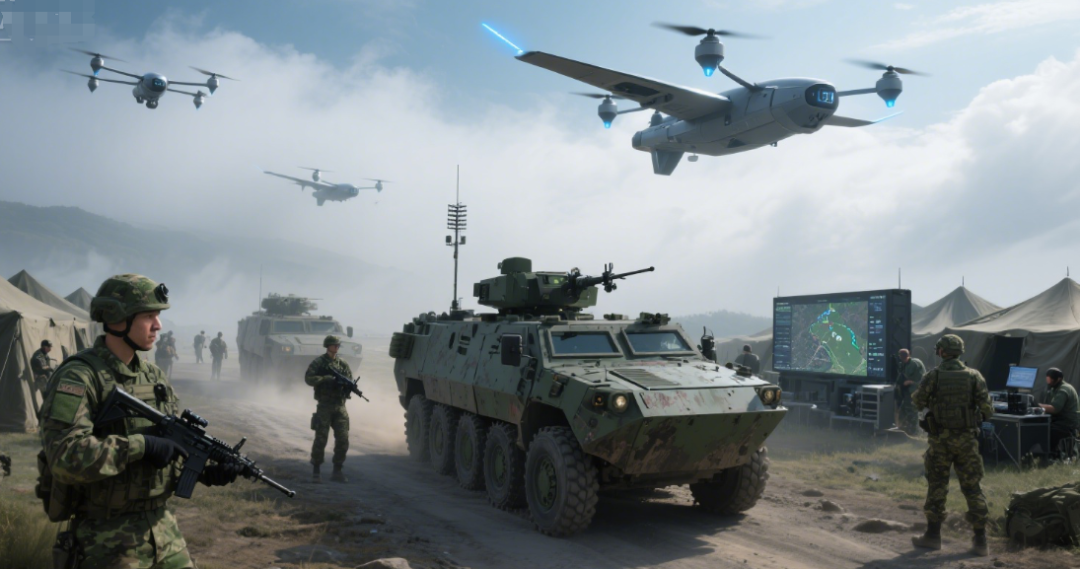
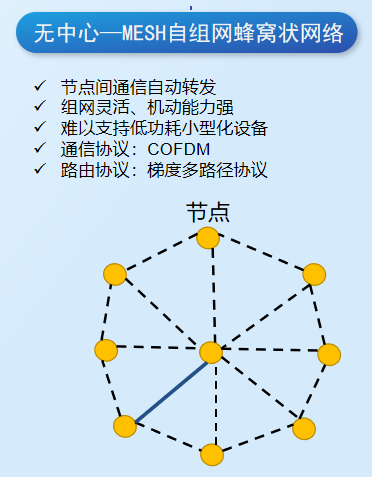
Modern warfare exhibits multi-dimensional and high-dynamic information characteristics. Traditional fixed communication infrastructure is vulnerable to destruction, and frontline combat units need to quickly establish communication networks in the absence of base stations. Self-organizing network technology, with its characteristics of “decentralization, self-organization, and multi-hop relay,” has become the core communication support for joint operations among the army, navy, and air force, especially suitable for scenarios such as field maneuvers, behind-enemy lines infiltration, and cross-service collaboration.
Application Requirements
Rapid Network Establishment without Infrastructure:Armored units on the move and airborne troops need to complete network setup within 3 minutes;
Resilient and Secure Communication:To counter electromagnetic interference and network eavesdropping, military-grade encryption (such as SM4 algorithm) is required;
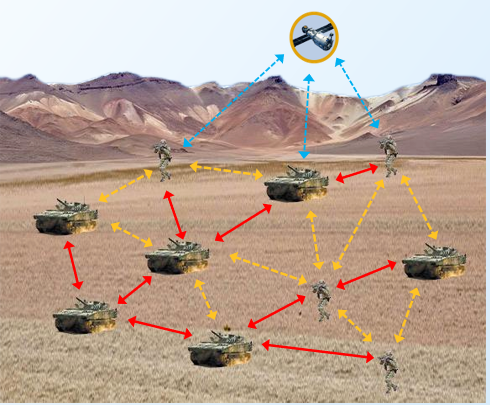
Multi-Service Data Collaboration:Real-time transmission of video, tactical commands, and positioning information among tanks, drones, and command centers;
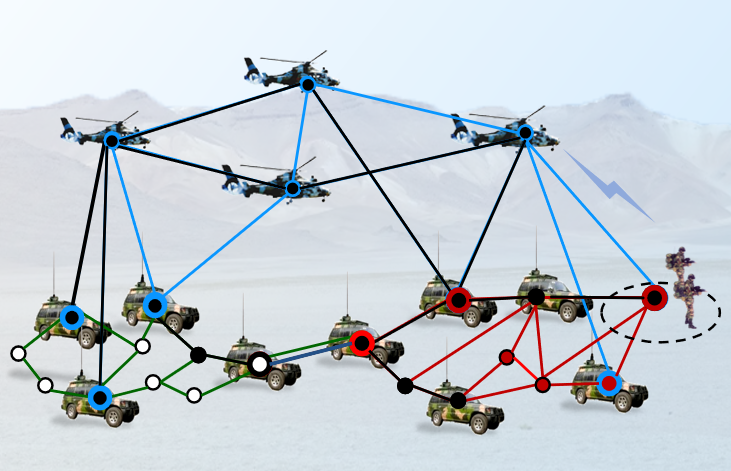
Dynamic Topology Adaptation:Network topology automatically adjusts during troop maneuvers to ensure uninterrupted communication.
Application Solutions
Network Architecture:
Utilizes a “tactical layer + strategic layer” dual-layer architecture:
Tactical Layer: Individual soldiers, vehicles, and drones form a Mesh network, achieving 5-10 km coverage through multi-hop relays;
Strategic Layer: Interconnects with the rear command center via satellite relay, supporting cross-theater collaboration.
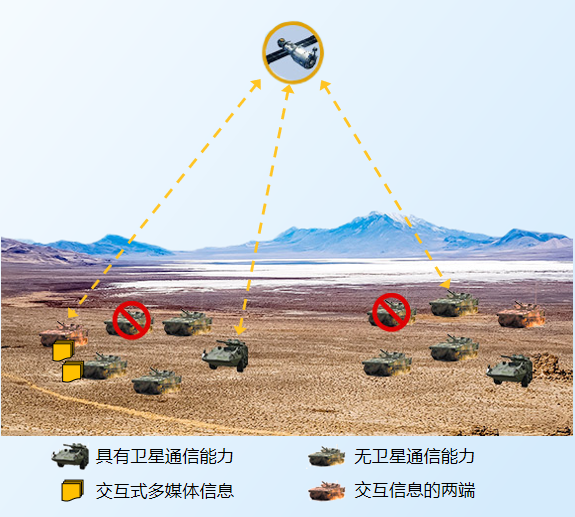
Core Functions:
Real-time voice group: Supports simultaneous intercom for 64 nodes, prioritizing the transmission of command instructions;
Video feedback: Drone reconnaissance images are transmitted back to the command vehicle in real-time at a rate of 2Mbps;
Tactical data sharing: Information such as unit locations and ammunition status is automatically synchronized to the command system.
Advantages of the Solution
Strong Resilience
After node destruction, the network automatically reconstructs,
ensuring that communication links do not collapse during wartime.
Flexible Deployment
No pre-planning required, “plug and play” for rapid network establishment.
Adapts to emergency combat scenarios such as raids and air drops.
Multi-Scenario Adaptability
Supports complex environments such as mountains, cities, and seas.
Covers the operational needs of all military branches.
Safe and Reliable
National secret encryption + frequency hopping to resist interference.
Prevents intelligence leaks and communication disruptions.
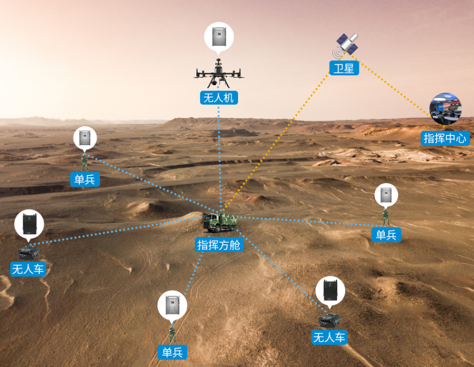
To accelerate the fulfillment of modern military information needs, achieve the requirements of “real-time command and visual monitoring,” and improve the command level of combat personnel over frontline sentinels, a battlefield wireless communication collaborative operation system needs to be established. In today’s technological society, battlefield communication networks must be deployed quickly, securely, and flexibly in complex environments, allowing all combat units to connect seamlessly, achieving high coordination and integration of situational awareness and distribution, tactical command and decision-making, as well as integrated firepower attacks and assessments.
Phone: 15735979040
Learn more about the solution
Achieve full IP-based, wireless self-organizing network technology alliance
Or long press to recognize the QR code below to add WeChat