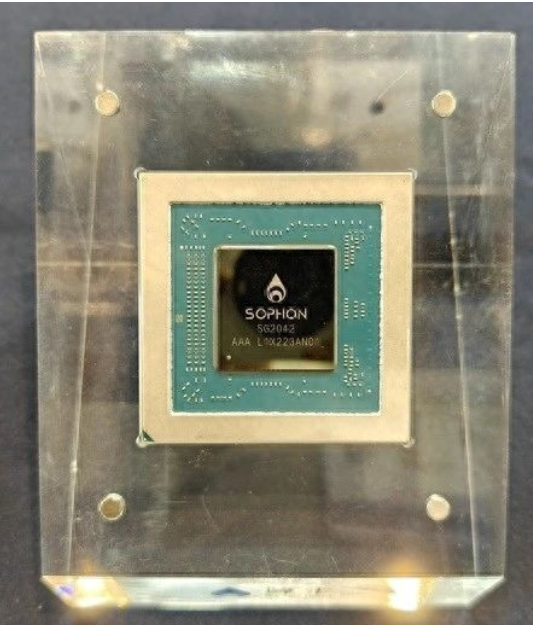
The SG2042 uses the T-head Xuantie C910 core. It has a clock speed of 2.0GHz, with a total of 64 cores, where every 16 cores form a NUMA node, and there are 4 memory channels. The following tests were conducted using the vendor-provided GCC 10.2 version on an Ubuntu system with SSH remote access. In the SPEC CPU2006 single-core test, after repeated tuning of compilation parameters, the int_base score was 9.56, and the fp_base score was 10.6. When using the community version of GCC 10, the best int_base score I could achieve was 8.97.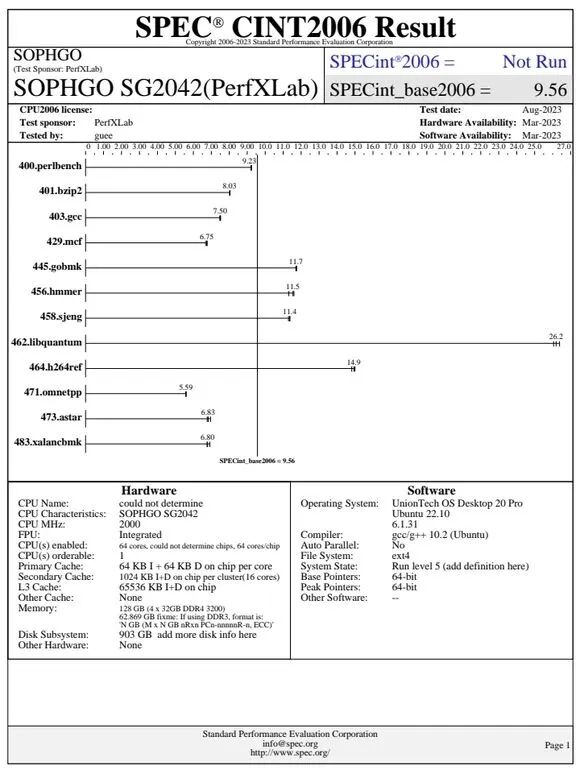
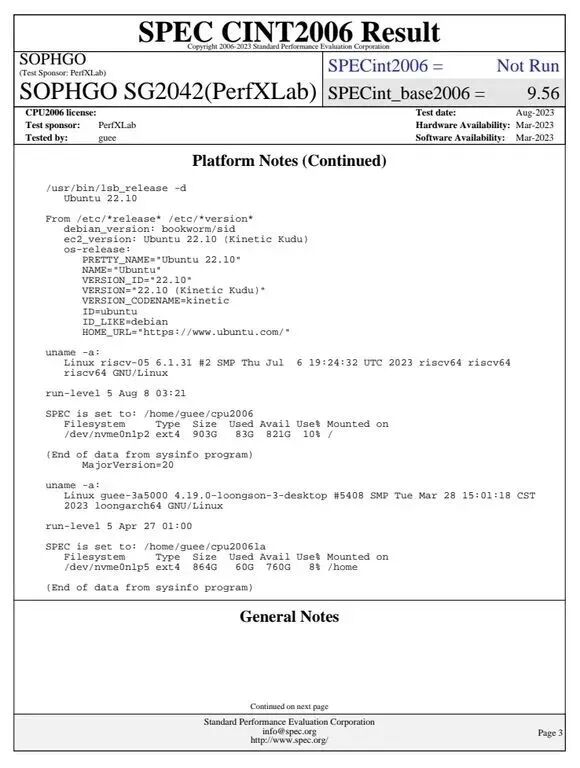
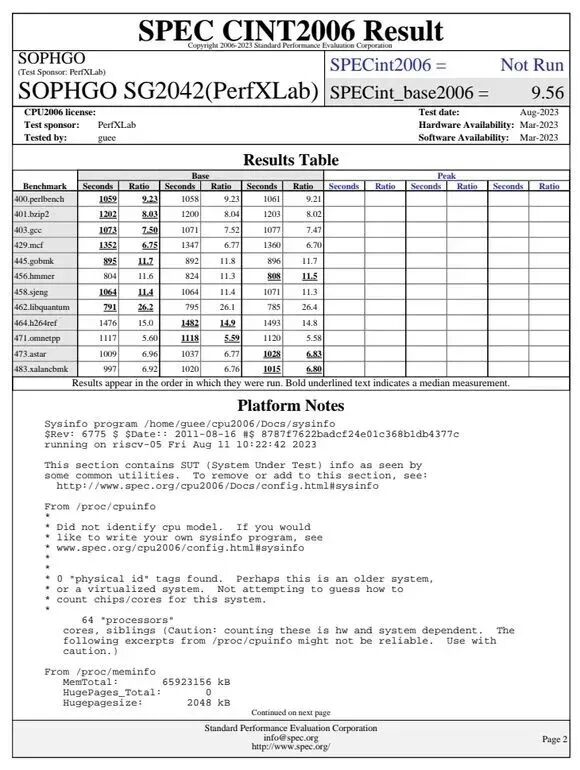
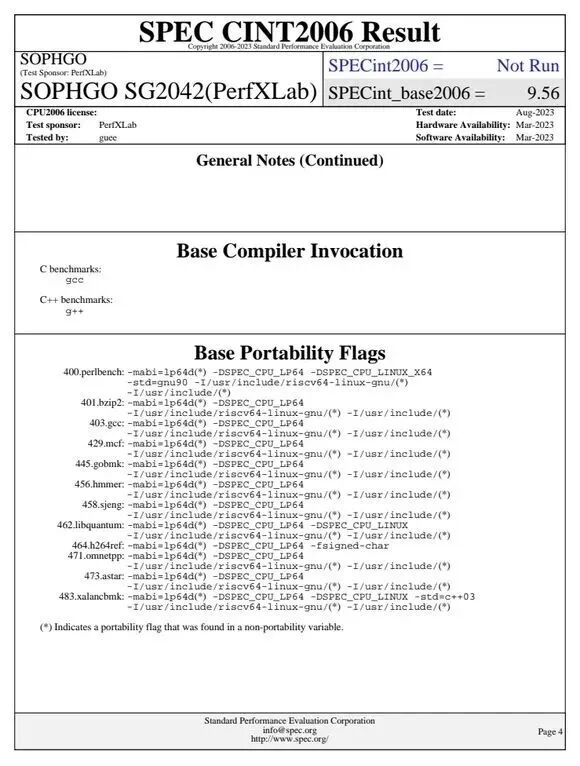
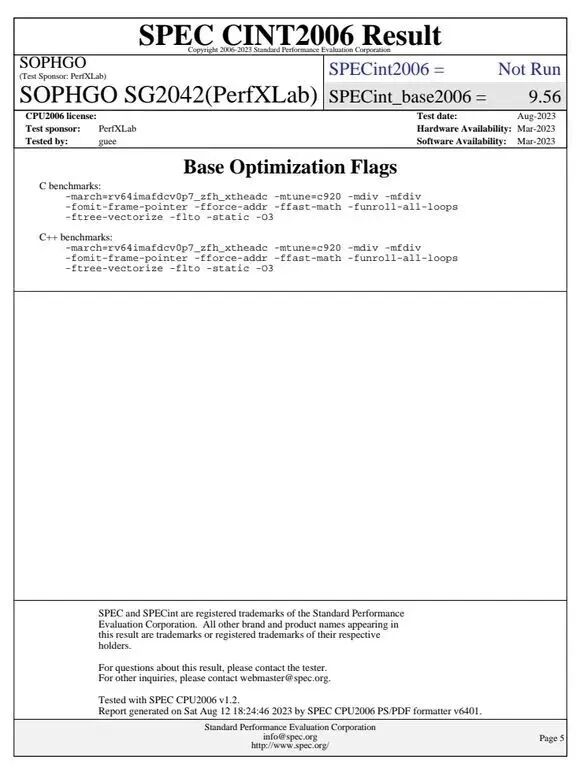
During the SPEC CPU testing, to avoid affecting other users, a separate machine was temporarily allocated, meaning the testing process would not be disturbed by other users.
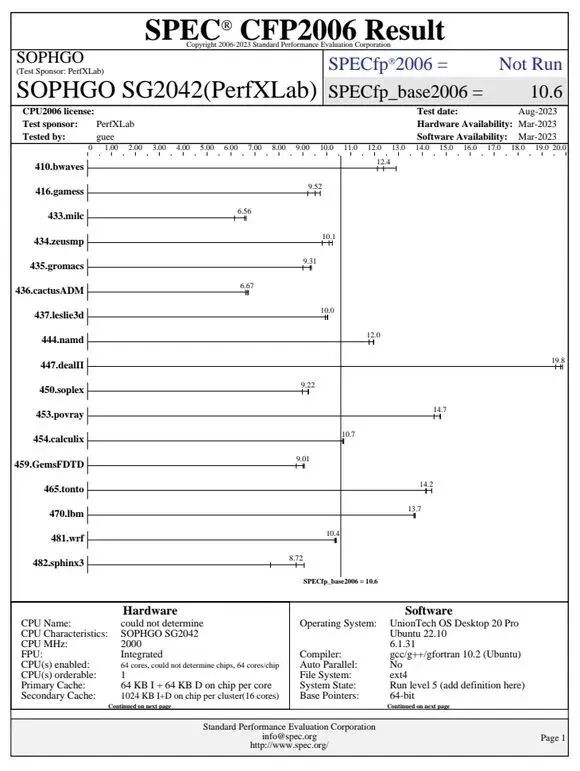
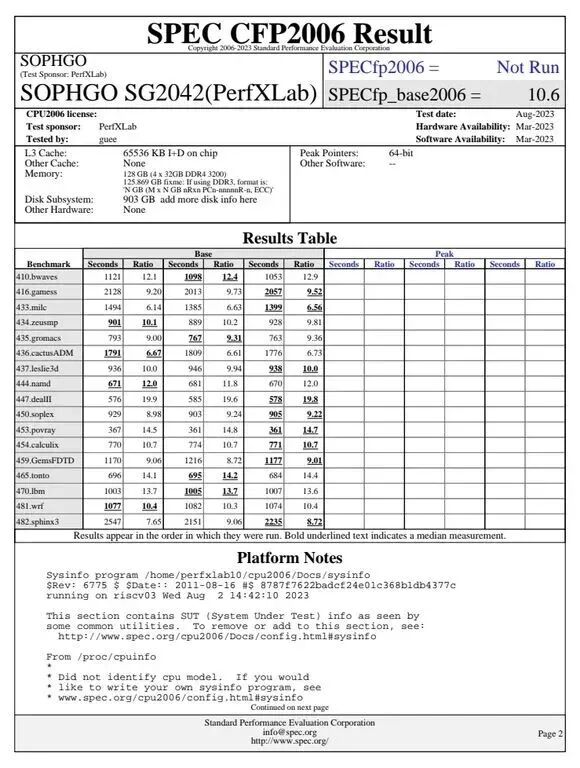
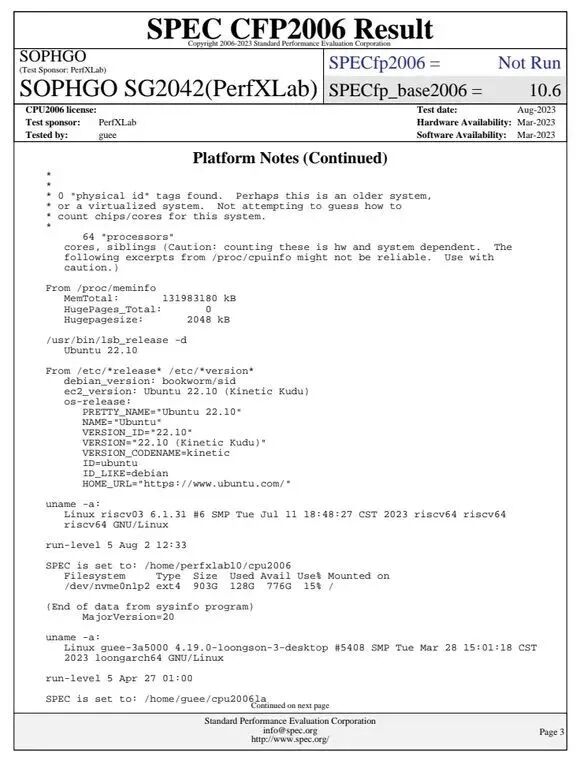
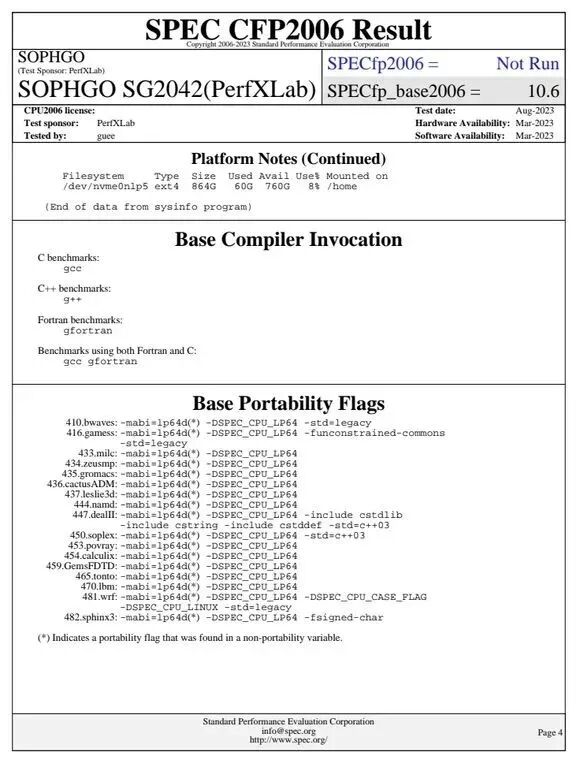
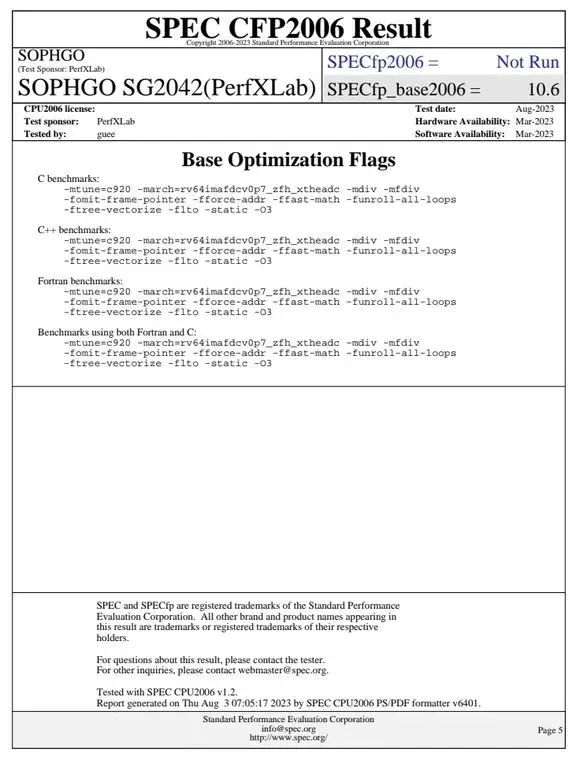 Single-core floating-point score: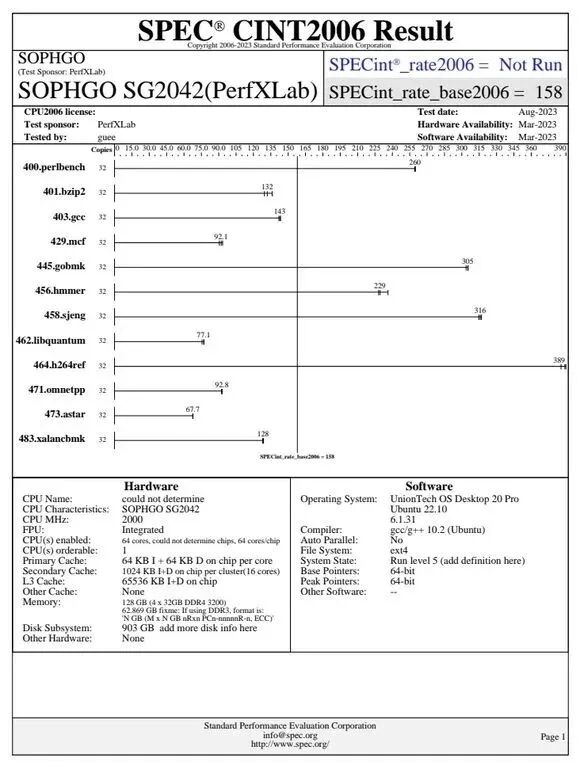
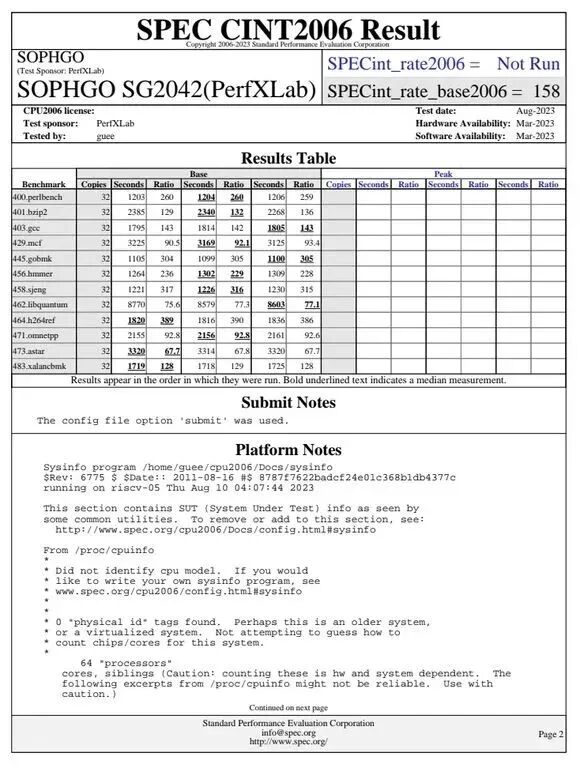
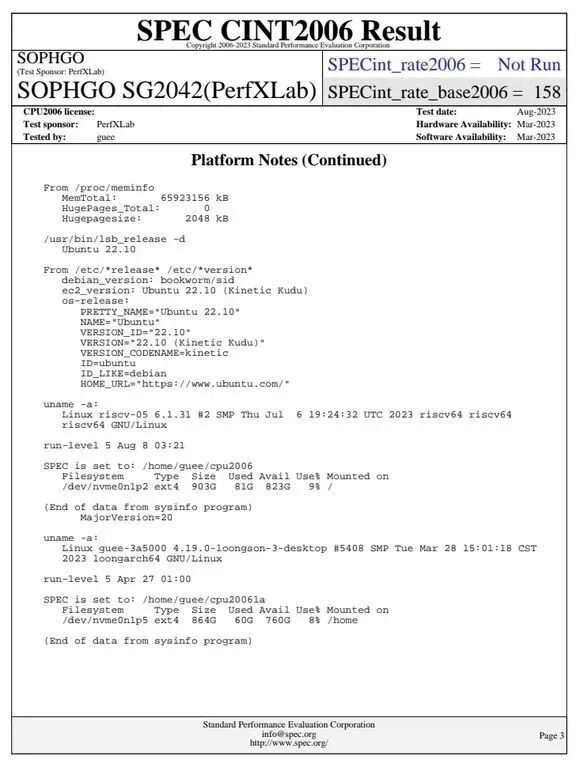
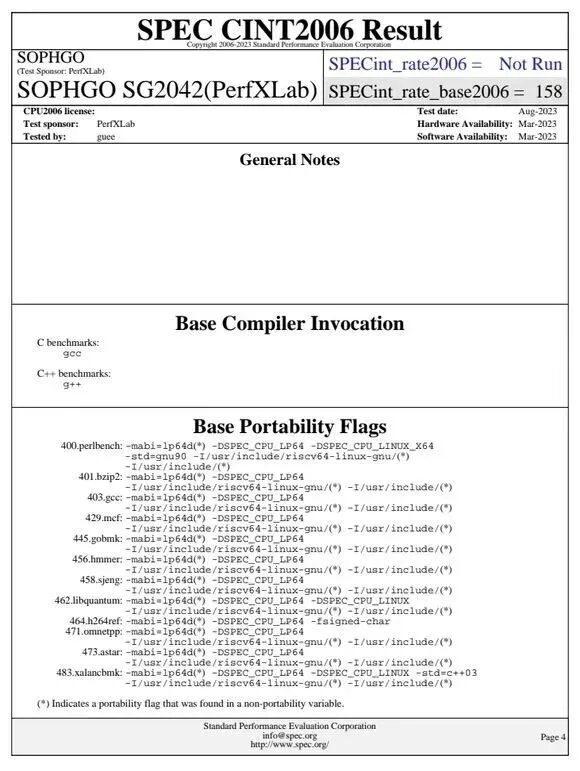
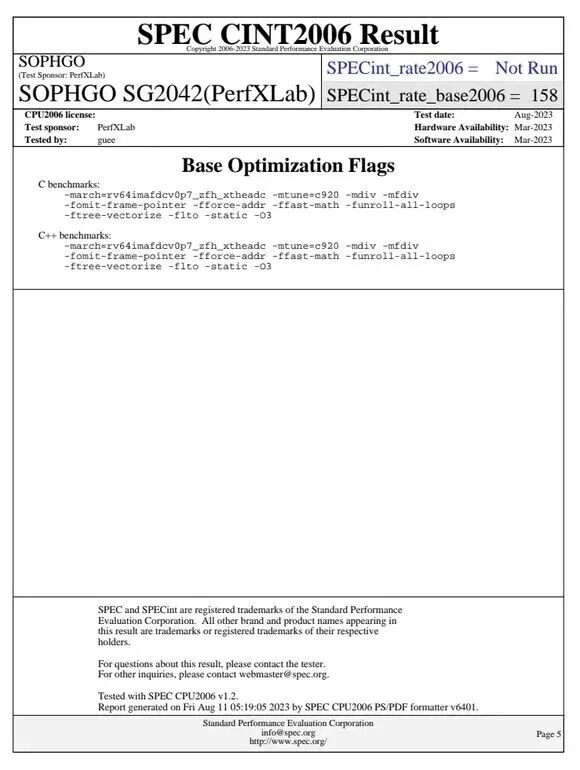
Due to the temporary machine having only 4 sticks of 16GB memory, the total memory capacity is 64GB. When running 64-core parallel tests, there was insufficient memory, so only 32-core parallel tests were conducted. During the parallel tests, the first two NUMA nodes were bound to the CPU, which is half a CPU, 32 cores. Since the SG2042 has 16 cores per NUMA node, if only 8 cores were bound per node, the test scores would certainly be much higher, but this would not reflect the true situation of multi-tasking parallelism of the CPU. Therefore, I fully utilized the 16 cores of each NUMA node, using two NUMA nodes in total. The parallel tests only evaluated int_rate_base, and floating-point tests were not conducted. The 32-core parallel score was 158, and if 64-core parallel tests could be conducted, the estimated score would be between 300 and 310. For reference, the Loongson 3C6000 16-core multi-core performance is estimated to reach 500 points. SG2042 has average performance in both single-core and multi-core scenarios. It is a typical case of insufficient single-core performance compensated by stacking 64 cores.