Who has the best hands-on skills?
On Twitter, I saw a 19-year-old blogger who spent a full 3 years to manually create a CPU with 1200 transistors.

This American college student named Sam Zeloof ultimately built a CPU with 1200 transistors! It was achieved using a 10-micron polysilicon gate technology and named Z2. The key point is that it uses the same technology as Intel’s world-famous 4004 processor from the 1970s. 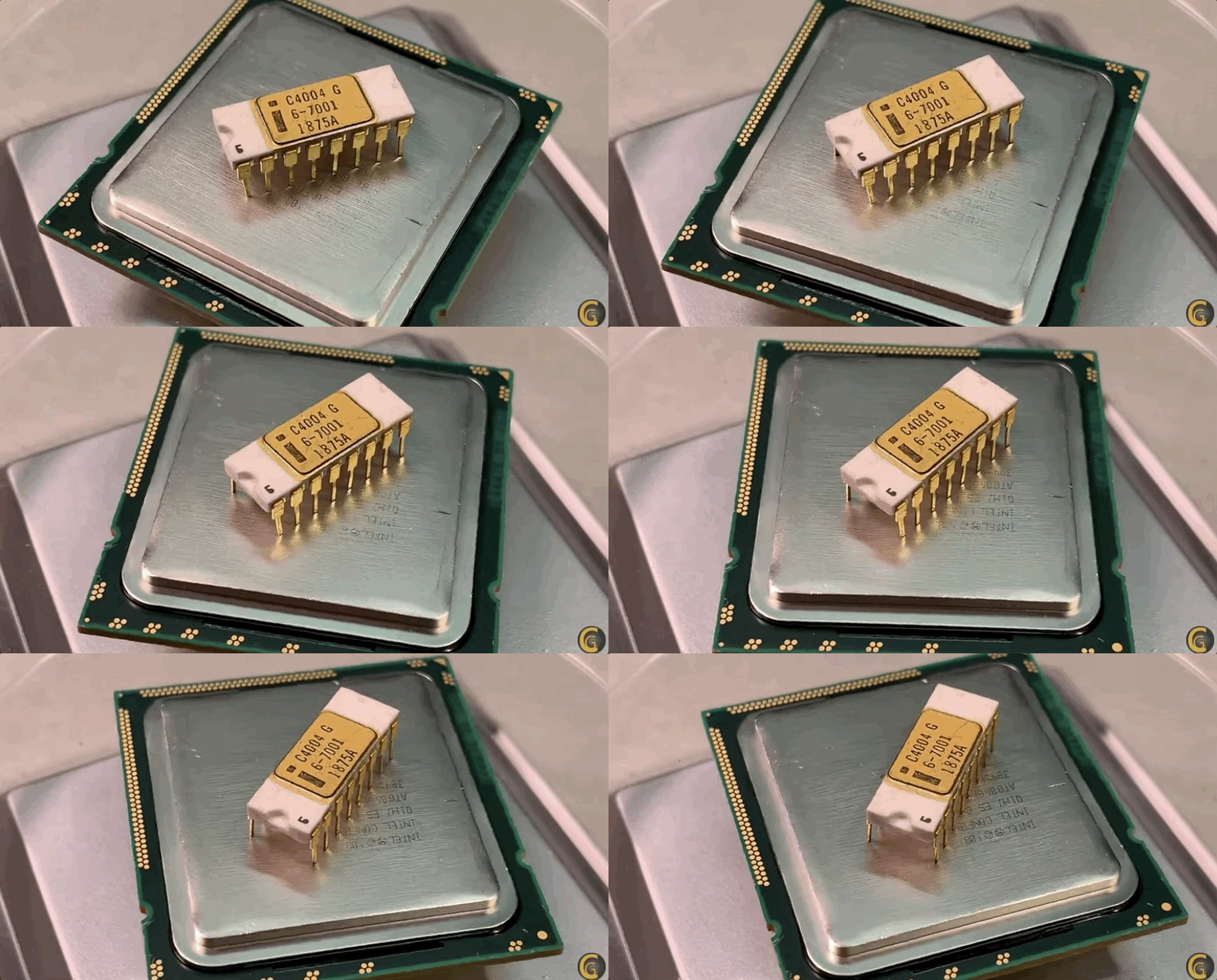 PS array, garage-made, surpassing the ‘Moore’s Law’This Z2 chip is an upgrade from the first generation. In 2018, at 17, he made the first integrated circuit Z1, which had 6 transistors.
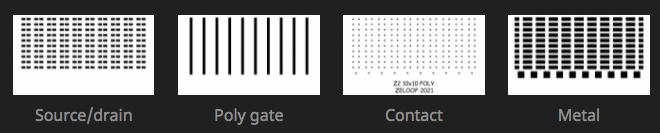
 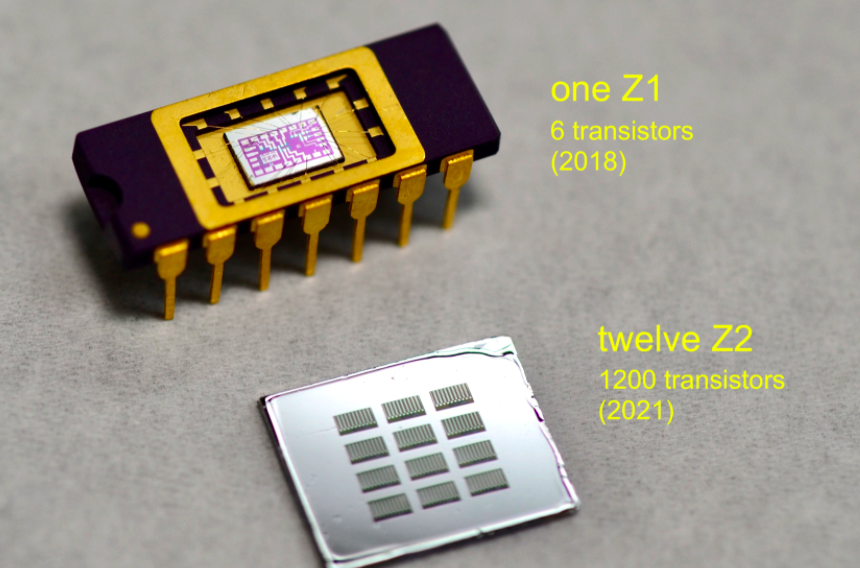 As before, the entire process took place in his ‘garage factory’, using impure chemicals and homemade equipment, without a clean room. First, Zeloof laid out a simple 10×10 transistor array in Photoshop.
 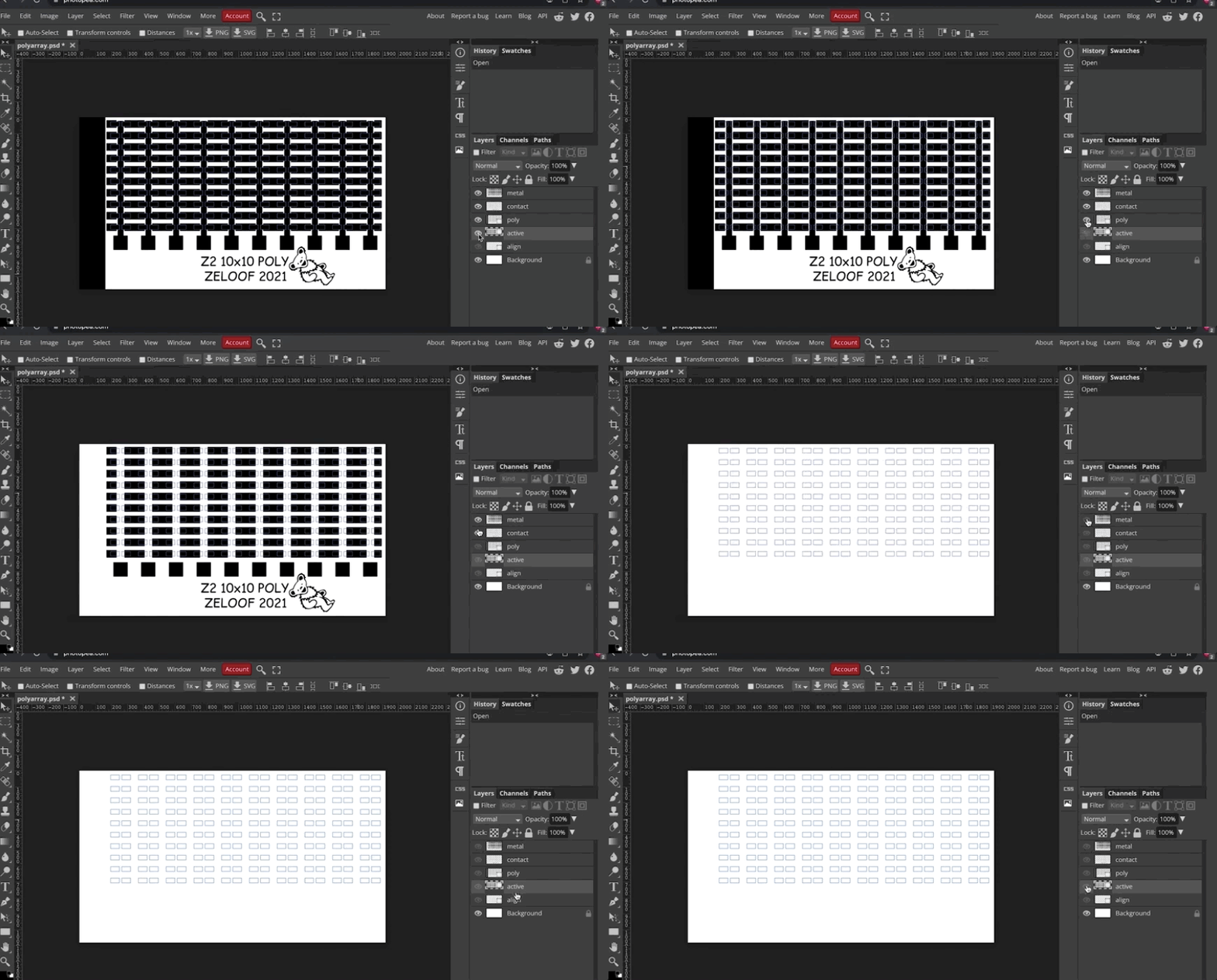 Ten transistors in a column share a common gate connection, with each row connected in series, sharing a source/drain with adjacent transistors. Related articles: Handmade CPU.
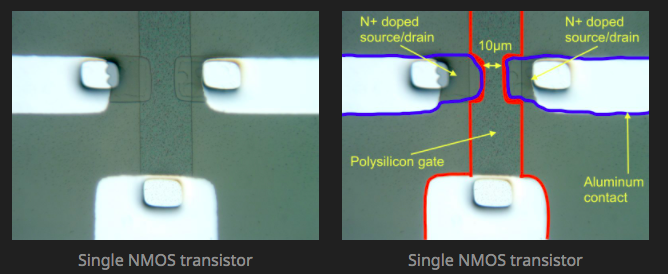
  The appearance of a single 10-micron NMOS transistor is as follows, with the metal layers slightly misaligned; the red outline is polysilicon, and blue is the source/drain.
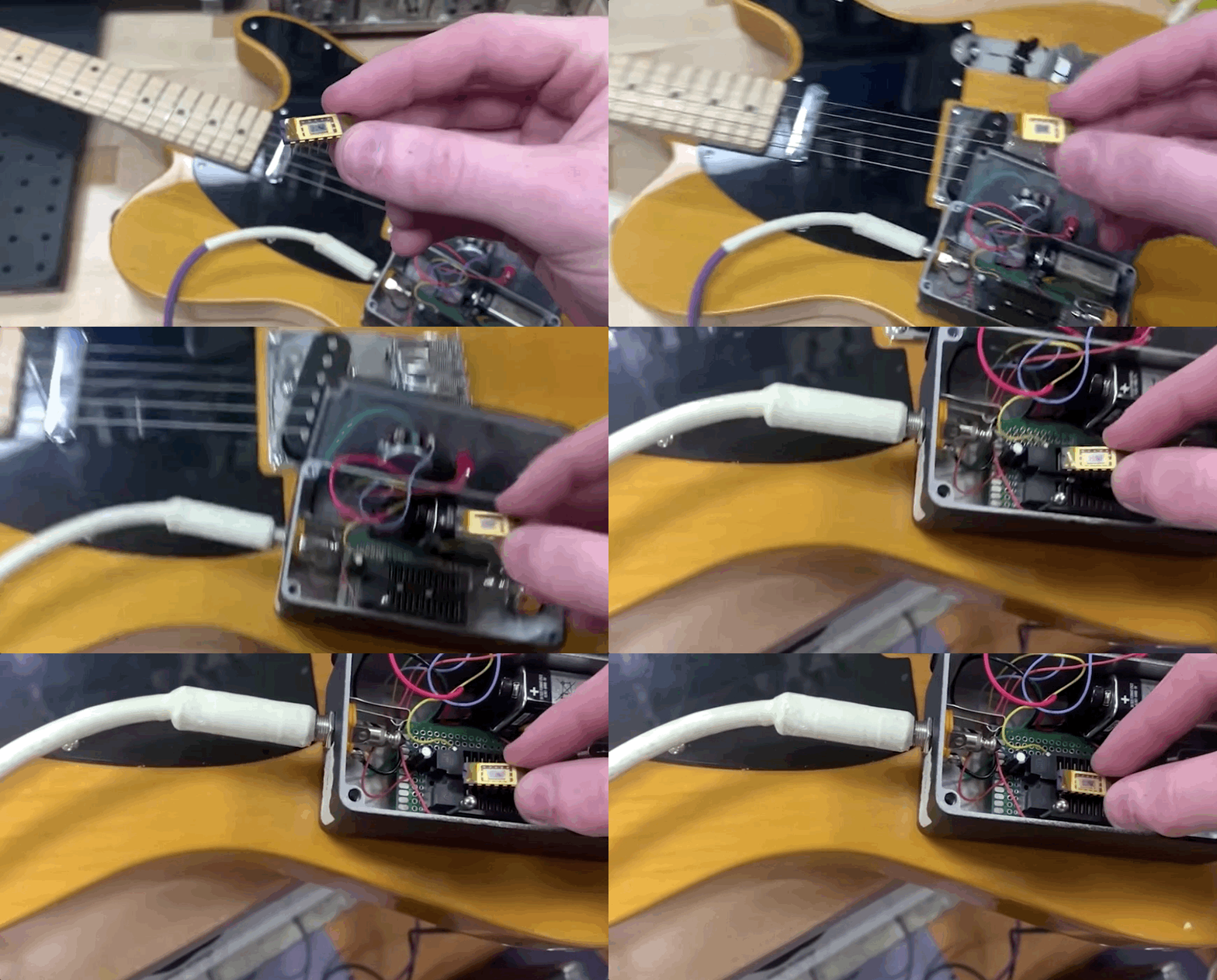
  Previously, Zeloof had been using metal gate technology for production. The aluminum gate has a significant work function difference with the silicon channel below, resulting in a high threshold voltage (>10V). For example, guitar distortion pedals and ring oscillator LED flashers require one or two 9V batteries to operate the circuit due to the high threshold voltage of these two materials.
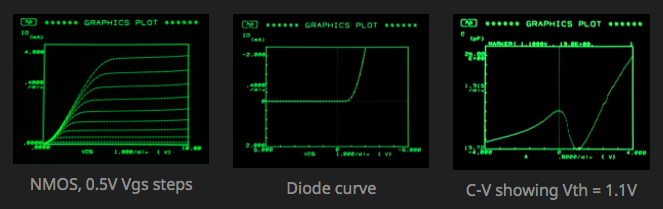
  To save power, Zeloof chose polysilicon gate technology, which improved performance, as self-aligned gates do not produce high threshold voltages. This makes these chips compatible with 2.5V and 3.3V logic levels.
  After the design was completed, he proceeded to cut the chips and etch the polysilicon gates.
 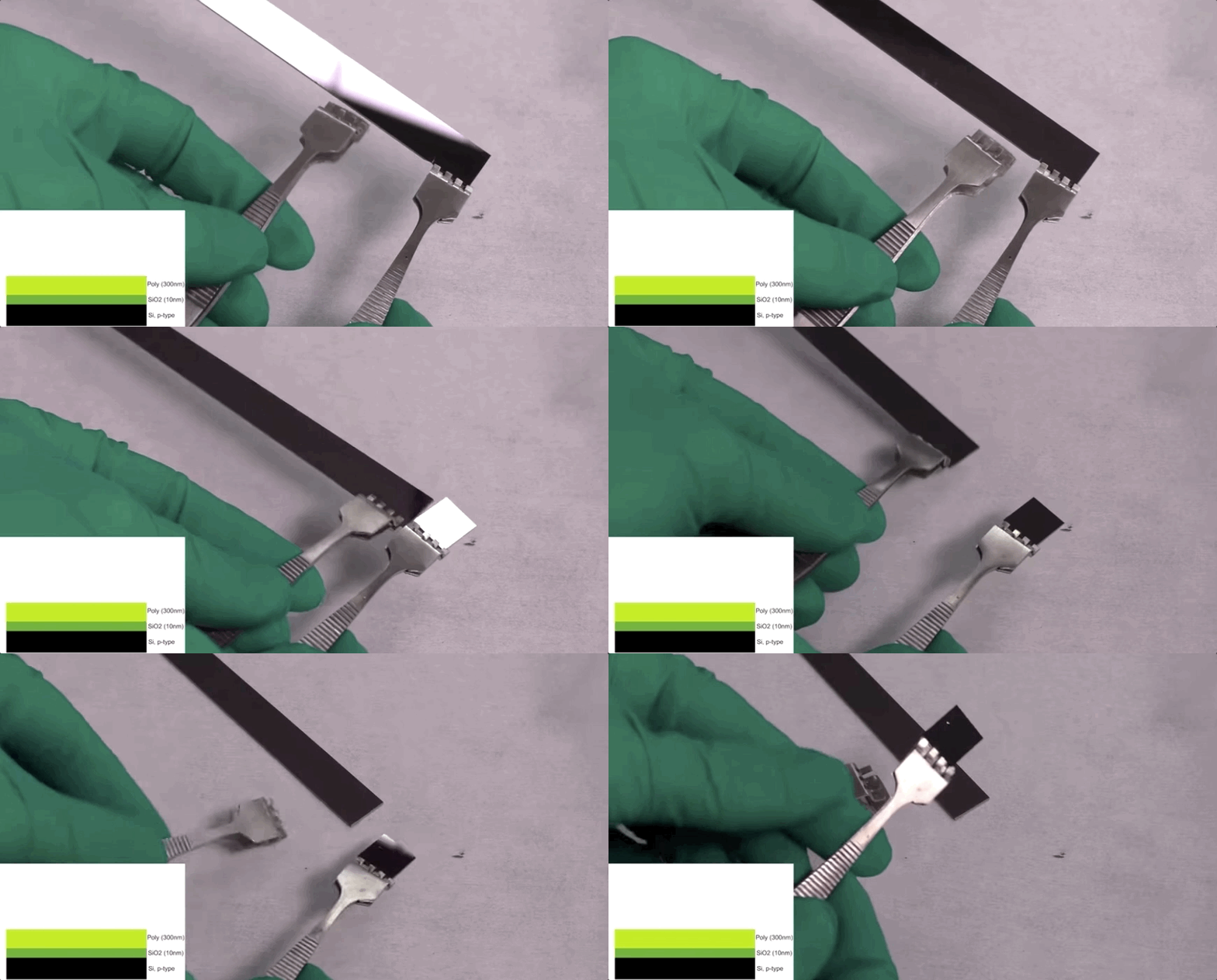 Zeloof improved the process by using a self-aligned method, choosing high-temperature diffusion instead of ion implantation for doping.
 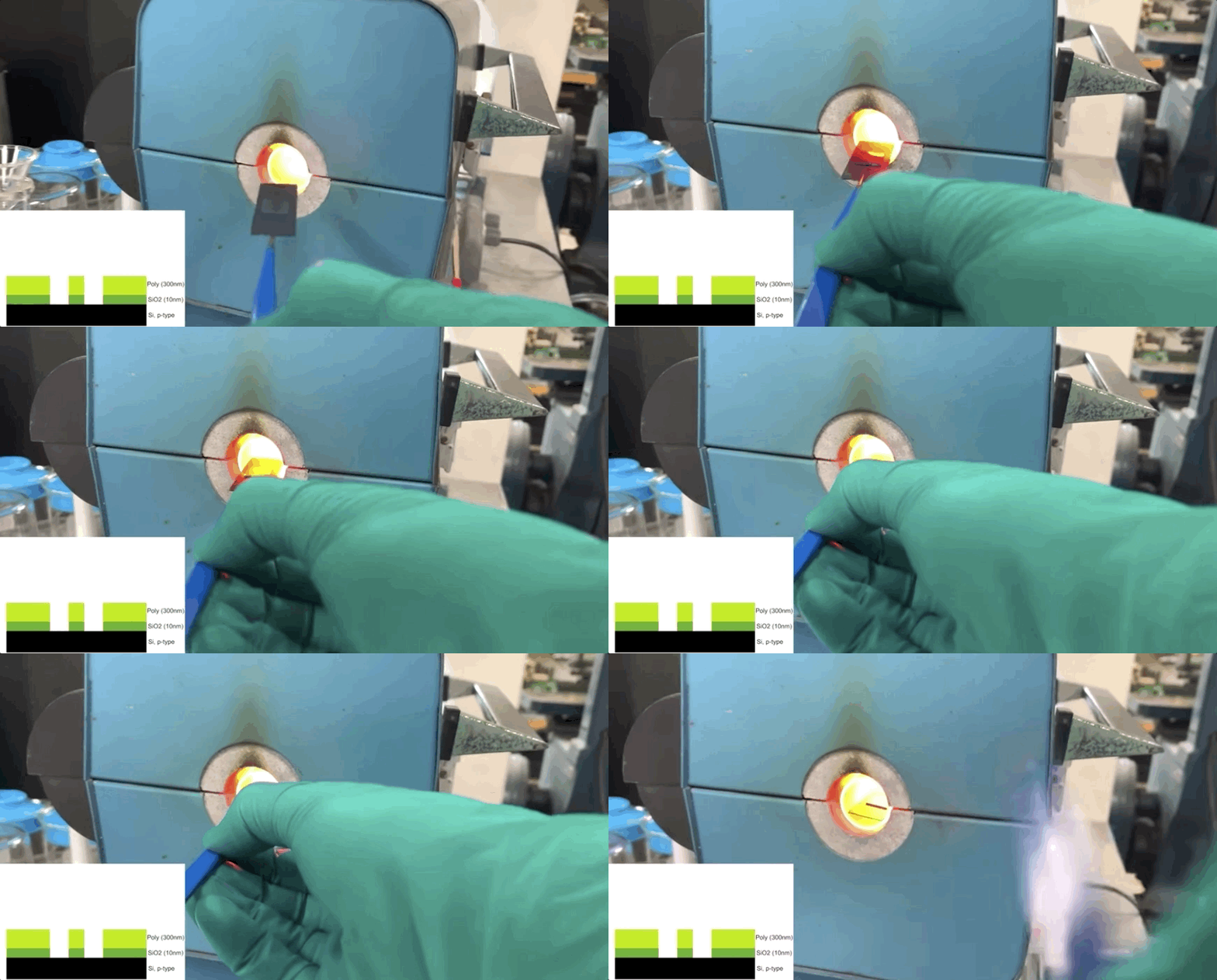 Since there were various materials already on the wafer, he only needed to find a thin layer of SiO2 (about 10nm), followed by a thicker layer of polysilicon (300nm). The results showed that Z2 had made a significant leap compared to Z1. Switching to polysilicon gate technology greatly reduced power consumption, but due to the lack of pure chemicals and clean room, the yield was very low.
 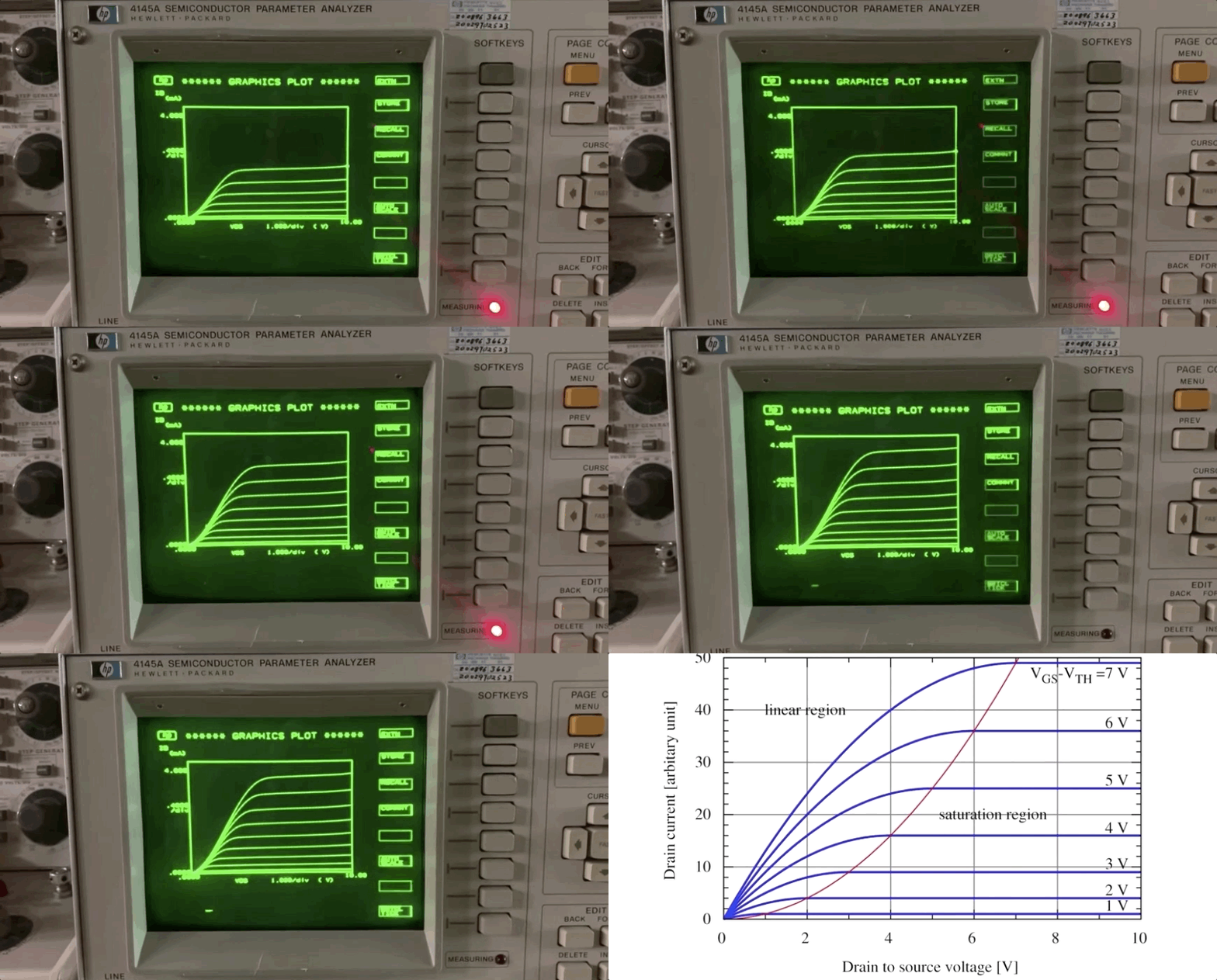 Zeloof stated, “I have made 15 chips (1500 transistors), and I know at least one fully functional chip and at least two mostly functional ones, meaning the yield is below 80%, not 100%.” At the beginning of the video, Zeloof joked about his garage chip-making exceeding Moore’s Law.
  Netizens also mocked Intel, the ‘toothpaste factory’, saying that by 2025
  Zeloof: I finally made it to 5nm. Intel: This is our latest 10nm+++++++ process.
  Geeky youth, chip-making dream So, what exactly did Sam Zeloof do in 2018? Despite the increasing barriers to CPU chip manufacturing, the genius youth Zeloof did not give up on his dream.
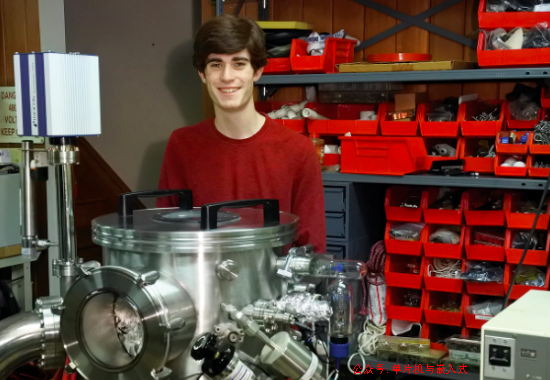
In 2018, at 17, he was still just a high school senior, but he had already successfully made the first integrated circuit Z1, which had 6 transistors, using 5-micron PMOS technology. 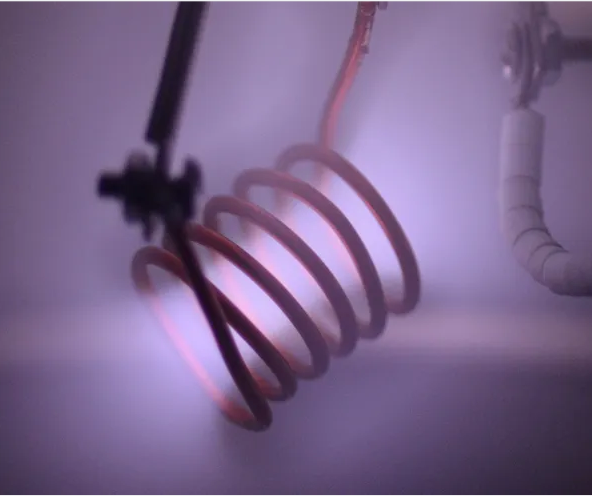 In an interview with The Amp Hour, Zeloof mentioned that the inspiration for this invention came from a YouTube channel, where Jeri Ellsworth demonstrated how to cut silicon and make silicon transistors without special tools.
 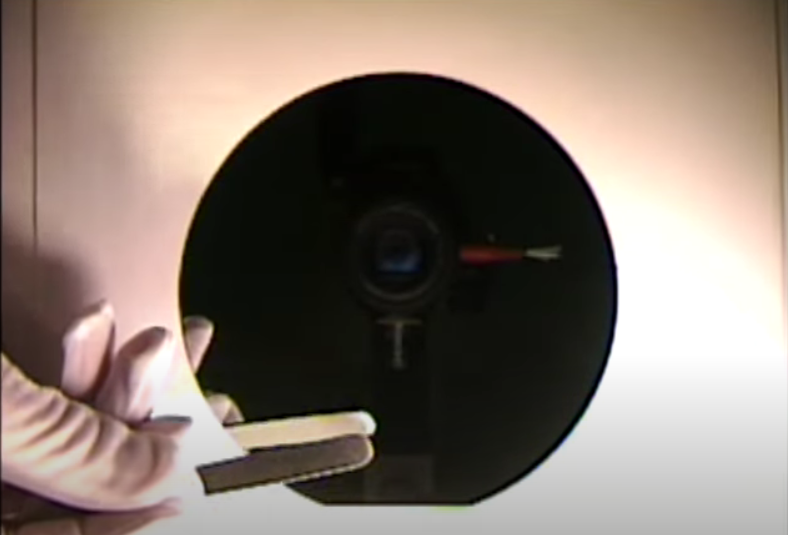 Inspired by this, Zeloof planned to make integrated circuits based on Jeri Ellsworth’s work.
 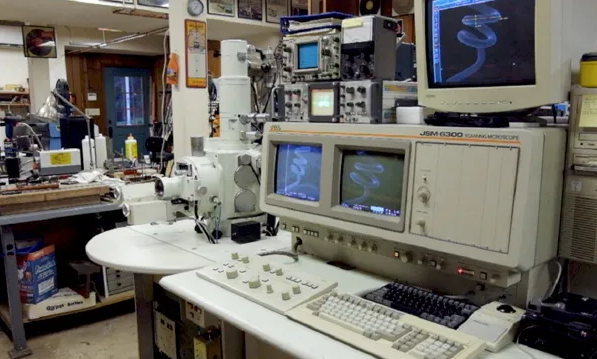 This legendary youth can be considered a seasoned electronics enthusiast. He started making chips in high school and learned the information and machinery needed to manufacture chips at home. He bought components and materials from eBay, creating a semiconductor manufacturing laboratory. This talented youth believes that attempting to make chips is a way to understand how semiconductors and transistors work internally.
 Since 2017, he began introducing his projects on his blog, and Zeloof received a lot of positive feedback. Some senior engineers from the 1970s also provided Zeloof with many suggestions, hoping he could develop a relatively simple method to clone the 4004 chip technology, thus better serving his chip development. Zeloof stated, “I started reading old books, studying some old patents, because the processes introduced in new books require very expensive equipment.” (End)
More exciting:
Call for Papers
Yan Shi│Thoughts and Suggestions on the ‘Dilemma’ of Young Teachers in Colleges
【Directory】Computer Education, 2022 Issue 11
【Directory】Computer Education, 2022 Issue 10
【Directory】Computer Education, 2022 Issue 9
【Directory】Computer Education, 2022 Issue 8
【Directory】Computer Education, 2022 Issue 7
【Editorial Board Message】Professor Li Xiaoming from Peking University: Reflections from the ‘Year of Improving Classroom Teaching’…
Professor Chen Daoxu from Nanjing University: Teaching students to ask questions and teaching students to answer questions, which is more important?
【Yan Shi Series】: Trends in Computer Science Development and Their Impact on Computer Education
Professor Li Xiaoming from Peking University: From Fun Math to Fun Algorithms to Fun Programming—A Path for Non-professional Learners to Experience Computational Thinking?
Reflections on Several Issues in First-Class Computer Science Construction
New Engineering and Big Data Professional Construction
Learning from Others—Compilation of Research Articles on Computer Education at Home and Abroad