The development of 5G has entered a critical stage, and 5G technology is gradually being applied in daily life.
In addition to concerns about when the 5G network will be completed and when the prices of 5G phones will drop, most people do not have enough understanding of the two networking modes of 5G: NSA (Non-Standalone) and SA (Standalone).
Once you understand the differences between NSA and SA, you won’t have to worry about which type of 5G phone to choose.

NSA and SA are two types of 5G networking modes.
Let’s start with a simple analogy to explain their differences.
Merchant A opened a cake shop, and due to the excellent skills of the pastry chef, the business boomed, so he plans to open a branch. This branch will use the same pastry chef as the original cake shop. The advantage of this approach is that it ensures the taste and saves costs. However, the downside is that the workload is too large, and one pastry chef may not be able to handle it all.
Merchant B also opened a cake shop, which is doing well, and is preparing to open a new store. However, he plans to hire a new pastry chef and create a brand new shop based on market demand. This will lead to a larger market, but the substantial expenses are not something every merchant can afford.

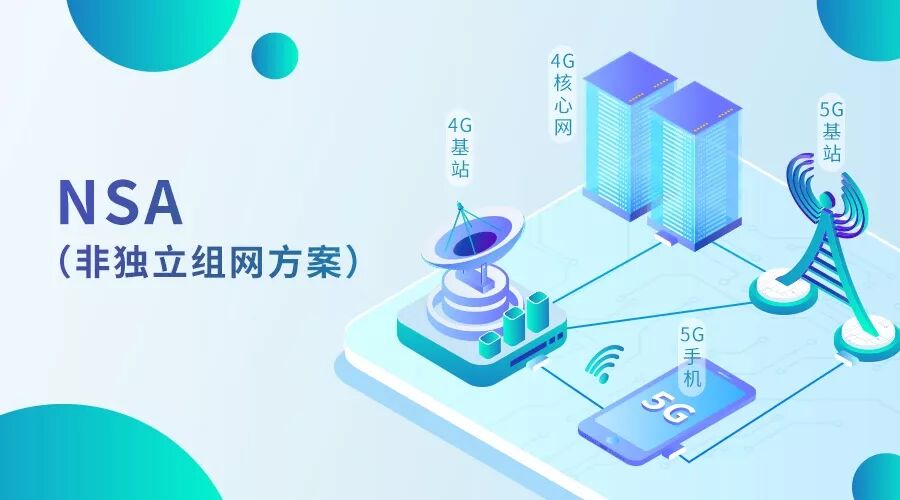
The example of Merchant A is a metaphor for the NSA networking mode, where some services and functions need to be realized through the 4G network, which is a 5G network achieved after the transformation of 4G infrastructure. In terms of network transmission speed alone, it has the same high-speed characteristics as the SA network, with speeds 10 times that of the 4G network.
On the other hand, the example of Merchant B is a metaphor for the SA networking mode, where everything in the network is redesigned and built from scratch, specifically for 5G networks. Compared to the NSA network, the SA network not only has the advantage of high speed but also features low latency and wide connectivity, which are extremely important for the industrial internet sector.
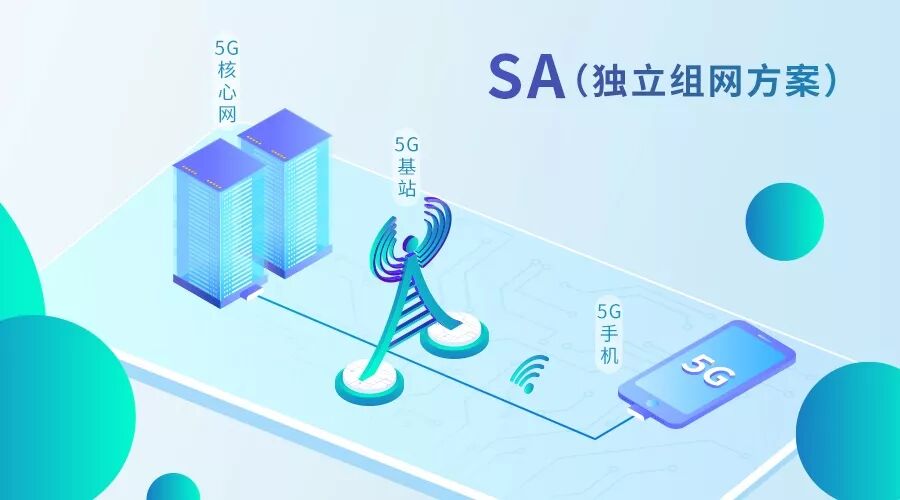
Only with the SA network can functionalities such as autonomous driving, remote medical care, remote education, and holographic projection be realized, and for mobile users, their experiences will be indistinguishable.
However, for operators, building the SA network requires a significant investment, and the network construction cycle is also very long, making large-scale coverage impossible in the short term.

GSMA conducted a survey of major operators worldwide and found that about 77% of operators indicated they would implement SA networking. The three major operators in China have clearly stated that they aim to adopt SA as their target network architecture.
Whether choosing the SA or NSA networking mode, decisions need to be made based on the operator’s network situation and future judgments.After the construction of the 5G network, 4G will continue to progress and develop in coordination for a considerable period.
Currently, the deployment of SA is expected to take 1 to 2 years from initiation to actual completion.Consumers need not worry too much about which type of 5G phone to buy; at least for the next year or two, or even the next ten years, they will be able to use them normally.

In the future, once SA deployment is completed, 5G will initiate a broader range of applications, landing in scenarios such as autonomous driving and smart factories, and the 5G network will unleash greater value.