Last week, partners from Shandong visited to have an in-depth discussion about the GCC IPPBX solution for integrating traditional IP cameras. The discussion was lively, focusing on practical application scenarios.
To assist engineering partners, the discussion content has been organized into a technical note. One of the questions was: How many IP cameras can a single GCC6010 gateway convert into SIP extensions? This will be explained in detail.
How does the GCC6021 gateway convert IP cameras to SIP? Are there any special requirements for the brands of IP cameras? How does the GCC6021 gateway network to solve multi-branch scenarios for groups and factories? Traditional RTSP streaming suffers from image mosaic/green spot quality issues due to unstable network bandwidth; how can this be resolved? Traditional RTSP streaming has slow opening times and significant network latency; how can this be improved? How to manage monitoring screen viewing permissions? How to manage whether remote IP camera images are online? What are the differences compared to traditional GB28181 solutions? How to view remote monitoring? Is it supported on WeChat, DingTalk, and Feishu? How many SIP cameras can a single GCC6000 gateway support?1. How does the GCC6021 gateway convert IP cameras to SIP? Are there any special requirements for the brands of IP cameras?
No brand restrictions! Whether mainstream brands, niche brands, or special devices like law enforcement cameras and drones, as long as they support ONVIF or RTSP protocols, they can be integrated.
Conversion Principles and Configuration:
- The gateway automatically discovers or manually inputs the RTSP URL via the ONVIF protocol to obtain the video stream from the IP camera (IPC).
- Within the same local area network, each IPC is configured as an independent SIP extension.
- Configuration is extremely simple: just assign a SIP extension number in the gateway’s web interface and fill in the IPC’s static IP address and RTSP URL (ensure it can be accessed via tools like VLC).
In summary: All IP cameras that support RTSP/ONVIF can be converted into SIP extensions through the GCC gateway, seamlessly integrating into the SIP communication system.
As shown in the figure: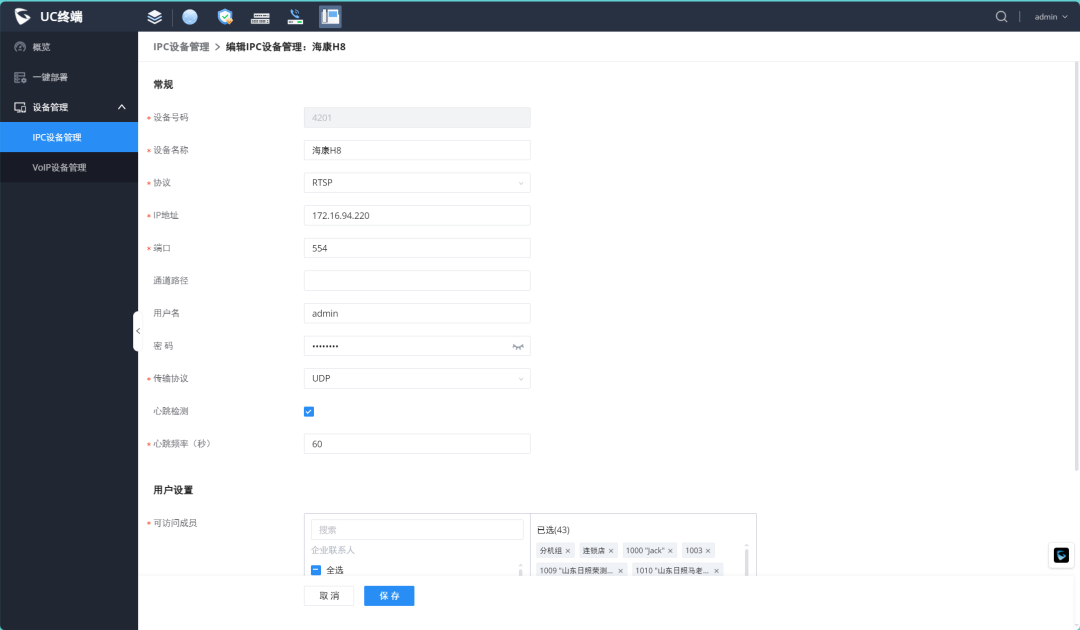 2. How does the GCC6021 gateway network to solve multi-branch scenarios for groups and factories?Networking Principles:The GCC gateway must be connected to the same subnet as the IPC, and after connection, cross-regional networking is achieved through the SIP protocol (trunk or peer).
Typical Architecture:
- Group Headquarters: Deploy one GCC6021 as the core.
- Factory/Branch: Deploy GCC6011 as the edge gateway to connect local IPCs and access control devices.
Example: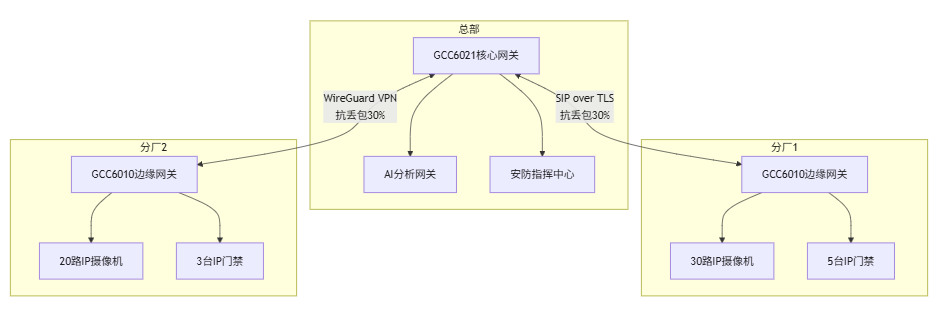 Three common networking scenarios: Flexible Adaptation: Specific solutions can be flexibly chosen based on the enterprise’s network environment and security policies.
| Scenario | Scenario | Description |
|---|---|---|
| Group has public IP | Group has public IP | Configure SIP trunk connection; or use the built-in WireGuard VPN of the gateway to establish a secure tunnel, making networking simple and secure. |
| Factory has public IP | Factory has public IP | At the factory end, configure GCC6010 as a TURN gateway, allowing the group to view through the web or soft terminal. |
| Factory does not have public IP | Factory does not have public IP | Activate UCMRC cloud service to achieve cloud-based relay, allowing the group to view remotely at any time. |
3. How to resolve image mosaic/green spot quality issues caused by unstable network bandwidth in traditional RTSP streaming?
Pain Points of Traditional Solutions: When RTSP over RTP is transmitted across public networks, packet loss can lead to I-frame loss, causing the decoder to fail to reconstruct the image, resulting in mosaic and green spot phenomena. Traditional GB28181 solutions lack effective anti-packet loss mechanisms. Generally, SRT gateways must be purchased and deployed on both sides to resolve this, or special industry models of IP cameras must be selected.
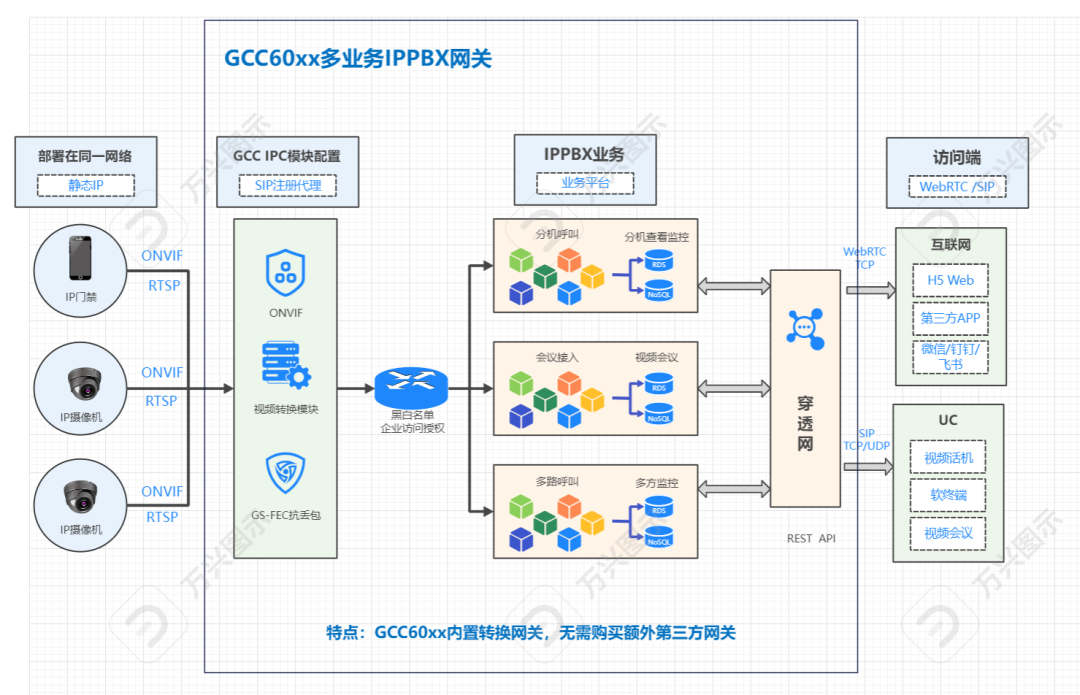
GCC6000 Solution: Built-in FEC (Forward Error Correction) and NACK (Negative Acknowledgment) anti-packet loss algorithms!
- Can ensure video transmission quality even at 30% packet loss rate.
- No need to deploy additional SRT gateways or purchase special models.
- Especially suitable for group deployments of AI analysis gateways for centralized monitoring analysis, avoiding decreased AI recognition rates due to packet loss.
 4. How to resolve slow opening times and high latency in traditional RTSP streaming?
Pain Points of Traditional Solutions: Traditional RTSP streaming is based on TCP, which involves a three-way handshake and TCP retransmission mechanisms, resulting in initial frame delays often exceeding **1500ms**, leading to poor real-time performance and slow transmission.
GCC6000 Solution: Reconstruct media transmission based on WebRTC architecture!
- Uses UDP transmission, significantly reducing latency.
- End-to-end latency stabilizes at 230-350ms, enhancing low-latency experience.
5. How to manage monitoring screen viewing permissions?
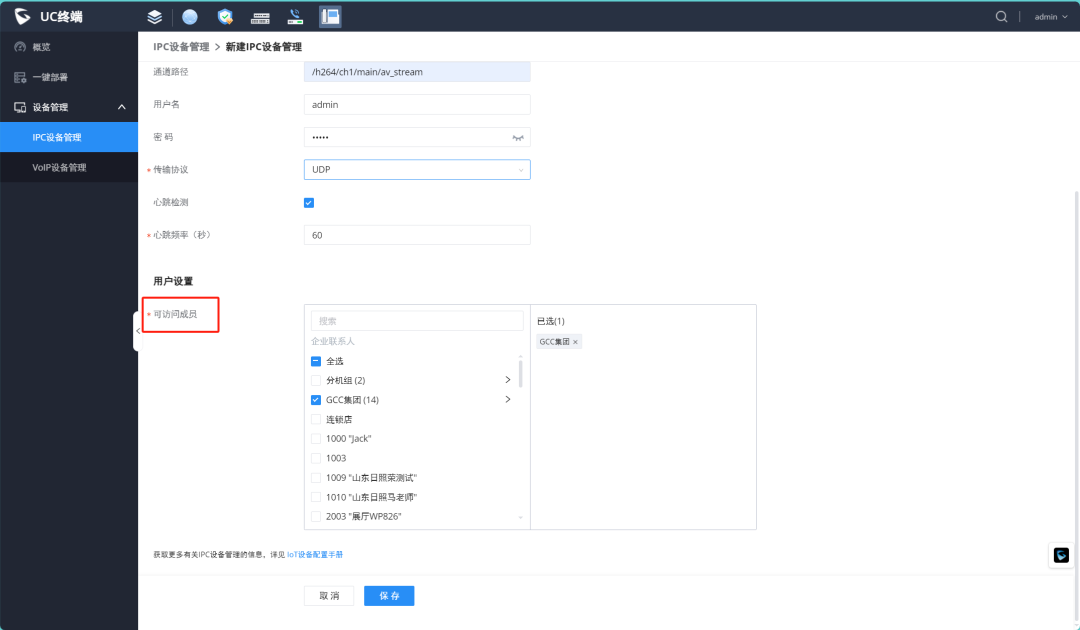
- Administrators can set up extension access whitelists at the terminal management console.
- Precisely control which users (SIP accounts) can view which IPC corresponding SIP extension images, ensuring information security.
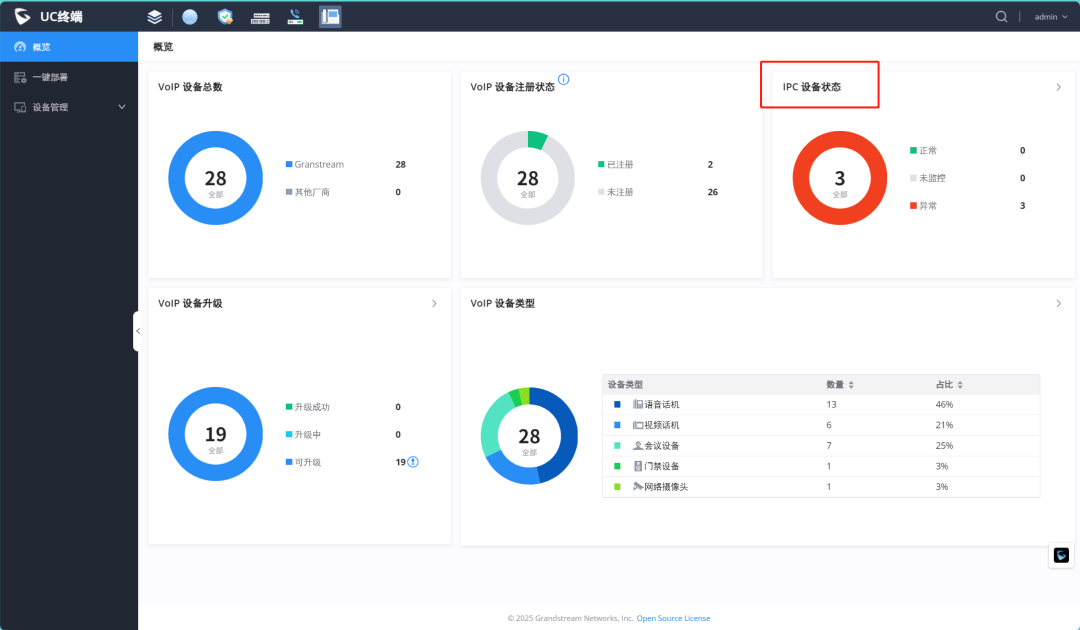
 6. How to manage whether remote IP camera images are online?
- The GCC gateway supports a heartbeat detection mechanism, which can automatically monitor the online status of IPCs.
- When an IPC goes offline, the GCC can send real-time alerts via SMS or email.
- Through dispatch software (third-party), achieve TTS voice broadcasting (notifying to landlines or mobile phones, etc.), allowing timely responses.
 7. What are the differences compared to traditional GB28181 solutions? Each has its strengths. GCC6000 focuses more on user experience, resistance to network fluctuations, and integrated solutions; GB28181 focuses more on standardization and platform integration. Features of the GCC6000 gateway:
Advantages:1. Built-in ONVIF/RTSP conversion gateway, no additional costs required.2. Simple networking, built-in IPPBX, video conferencing3. Supports end-to-end 30% packet loss resistance, ensuring monitoring image and on-site audio quality.Disadvantages:1. Does not support GB28181 monitoring management solutions.GB28181 video conversion gateway:
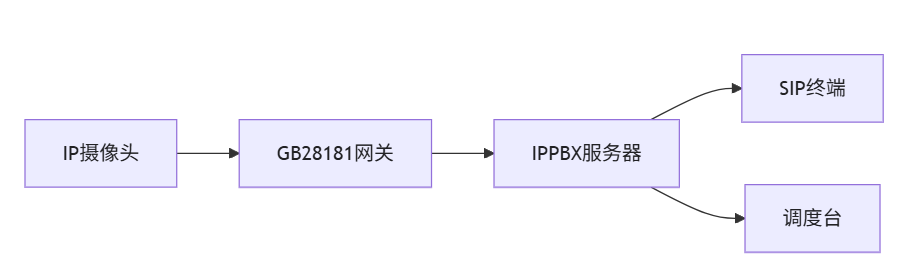
Advantages:1. Supports GB28181 monitoring management solutions2. Supports RTMP protocolDisadvantages:1. Requires additional hardware gateways, and separate purchases of IPPBX and video conferencing products.2. Cannot support end-to-end 30% packet loss resistance.8. How to view monitoring images? Is it supported on WeChat/DingTalk/Feishu?
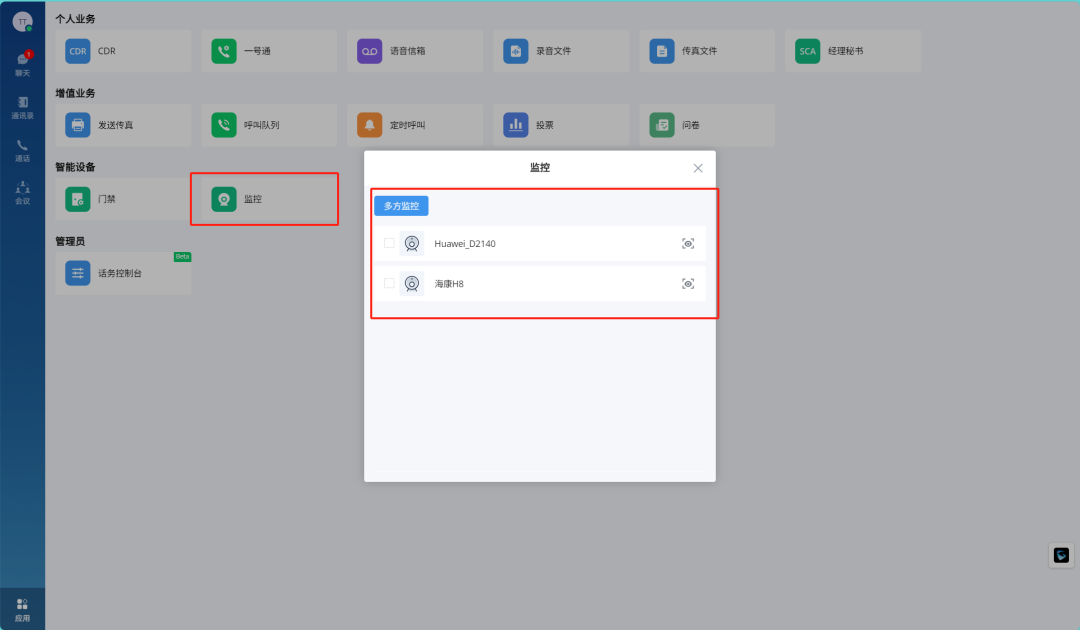
Viewing methods are flexible and support various terminals:
- SIP video phones
- Accompanying Wave soft terminal
- Web browsers (supporting H5, can be embedded in WeChat, DingTalk, Feishu)
- Mobile apps (supporting HarmonyOS, iOS, Android)
- PC/Mac/Linux clients
 9. How many SIP cameras can a single GCC6000 gateway support?
- GCC6010 supports up to 60 bundled IP cameras, converting them into 60 SIP extensions.
If there are any questions, feel free to leave a message for discussion.