This article systematically organizes the basic structure and typical networking methods of renewable energy hydrogen production systems, analyzes the characteristics and main application scenarios of various networking methods, and discusses the networking structures suitable for large-scale renewable energy hydrogen production systems.
1. Overview of Renewable Energy Hydrogen Production Systems
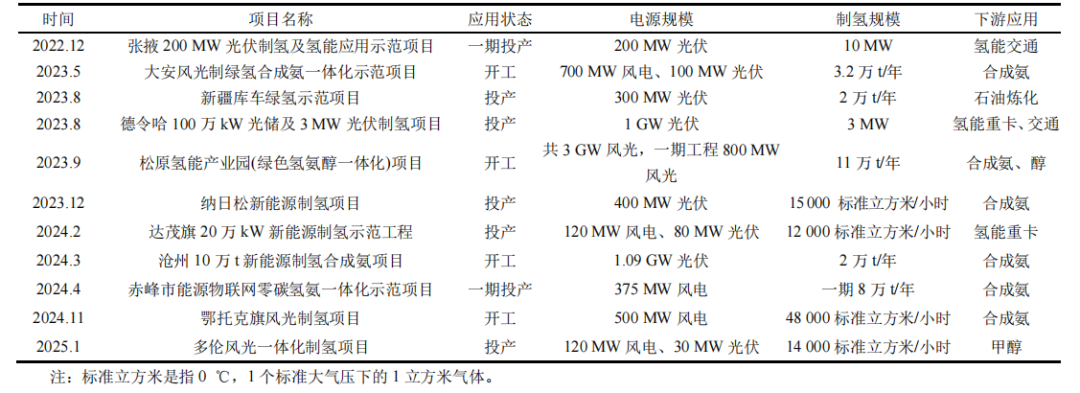
Table 1 lists some large-scale wind and solar hydrogen production projects in recent years in China. Renewable energy hydrogen production systems mainly include wind and solar renewable energy generation systems, power conversion and transmission systems, electrolysis hydrogen production systems, storage and transportation systems, and downstream application systems (such as synthetic ammonia and synthetic methanol). Some renewable energy hydrogen production systems are also equipped with energy storage systems.
Table 1 Some large-scale wind and solar hydrogen production demonstration projects in recent years in China
The electrolysis hydrogen production system is the core of the renewable energy hydrogen production system, responsible for the generation, separation, and purification of hydrogen. Currently, the mainstream electrolysis hydrogen production technologies include four types: alkaline water electrolysis (AWE), proton exchange membrane water electrolysis (PEMWE), solid oxide electrolysis (SOE), and anion exchange membrane water electrolysis (AEMWE). As the most researched, technically mature, and cost-effective water electrolysis hydrogen production technology, alkaline electrolysis can achieve a single electrolyzer capacity of 5 to 15 MW. Through modularization of electrolyzers and shared auxiliary machines, the capacity of electrolyzer modules can reach 20 MW, making it very suitable for the construction of hydrogen production stations at the hundred-megawatt level and above. However, due to safety risks associated with hydrogen-oxygen mixing, its minimum load is usually limited to over 20%; at the same time, its relatively large leakage current can lead to a significant reduction in efficiency at low loads. The proton exchange membrane electrolysis system uses pure water as the electrolyte, has a compact design, small volume, and high current density, and has achieved industrial applications ranging from 5 to 20 MW. However, its high cost is due to the use of precious metal catalysts. The solid oxide electrolysis system can achieve system efficiencies of up to 80% to 90% by electrolyzing water vapor in a high-temperature environment and can easily switch between electrolysis mode and fuel cell mode, making it a promising electrolysis technology with high green premium potential. However, it currently faces issues such as poor performance stability, short lifespan, and high costs. The anion exchange membrane electrolysis system does not contain precious metal catalysts and is expected to combine the less stringent reaction conditions of alkaline electrolyzers with the simplicity and high efficiency of PEM electrolyzers, but it is still in the experimental research stage, and megawatt-level products are still in the testing phase.
The electrolysis hydrogen production system for industrial-scale applications mainly includes conversion equipment, hydrogen production stacks, and auxiliary equipment, as shown in Figure 1. The conversion equipment converts electrical energy into direct current suitable for electrolyzers while having the capability to change load current and power operation. The hydrogen production stack is the core component for achieving electrochemical hydrogen energy conversion. Auxiliary equipment in the electrolysis hydrogen production system mainly includes purification and drying equipment, compressors, pure water equipment, circulation pumps, heat exchangers, monitoring instruments, and other devices.
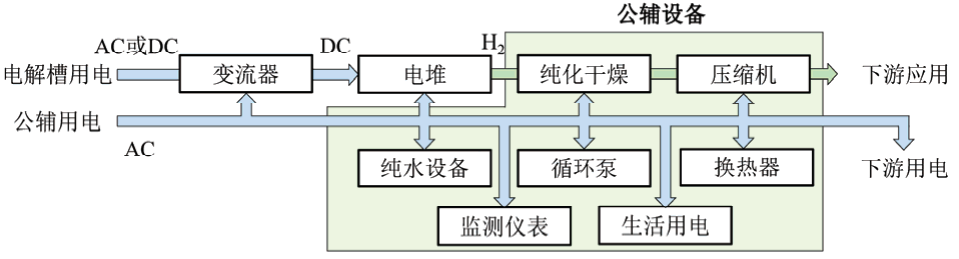
Figure 1 Main components of the electrolysis hydrogen production system
The electricity used by the electrolysis hydrogen production system is mainly divided into two parts: electricity for the electrolyzer and auxiliary electricity. The electricity for the electrolyzer is the main electrical load of the electrolysis hydrogen production system, while auxiliary electricity is essential for the normal operation of the electrolysis hydrogen production system, mainly including various instruments, pump groups, control systems, and living electricity in the plant, accounting for about 2% of the electrolyzer load. In the renewable energy hydrogen production system, in addition to the electrolysis hydrogen production system, downstream hydrogen application systems are also important electrical loads. Taking the downstream synthetic ammonia as an example, the electrical load of the synthetic ammonia unit, air separation nitrogen unit, water treatment unit, etc., accounts for about 10% of the electrolyzer load. Auxiliary electricity and downstream equipment electricity need to be stable and reliable to ensure the safe operation of the entire system.
Based on different dimensions such as the source of electricity for the electrolyzer and auxiliary electricity, networking modes, operational methods, and system layout structures, renewable energy hydrogen production systems have various networking methods, as shown in Figure 2. According to the types of power sources in the system, renewable energy hydrogen production systems can be divided into grid-connected hydrogen production systems, photovoltaic hydrogen production systems, wind power hydrogen production systems, and hybrid power source hydrogen production systems. Based on the differences in power conversion and transmission systems, they can be divided into direct current networking and alternating current networking renewable energy hydrogen production systems. Based on the operational methods of renewable energy hydrogen production systems and the connection methods to the power grid, they can be divided into grid-supporting systems that are fully connected to the grid, grid-friendly systems that are partially connected to the grid, electrolysis off-grid systems that fully utilize renewable energy generation, and fully off-grid systems where the electrolyzer and auxiliary systems are completely disconnected from the external power grid. Additionally, based on the relative layout positions of the electrolysis hydrogen production system and renewable energy generation system, they can be divided into centralized power collection and transmission, decentralized power transmission, and decentralized hydrogen collection and transmission layouts; based on system design capacity, they can be divided into small-scale systems of megawatts and below and large-scale systems of tens of megawatts to hundreds of megawatts. The following provides an overview of various typical renewable energy hydrogen production systems.
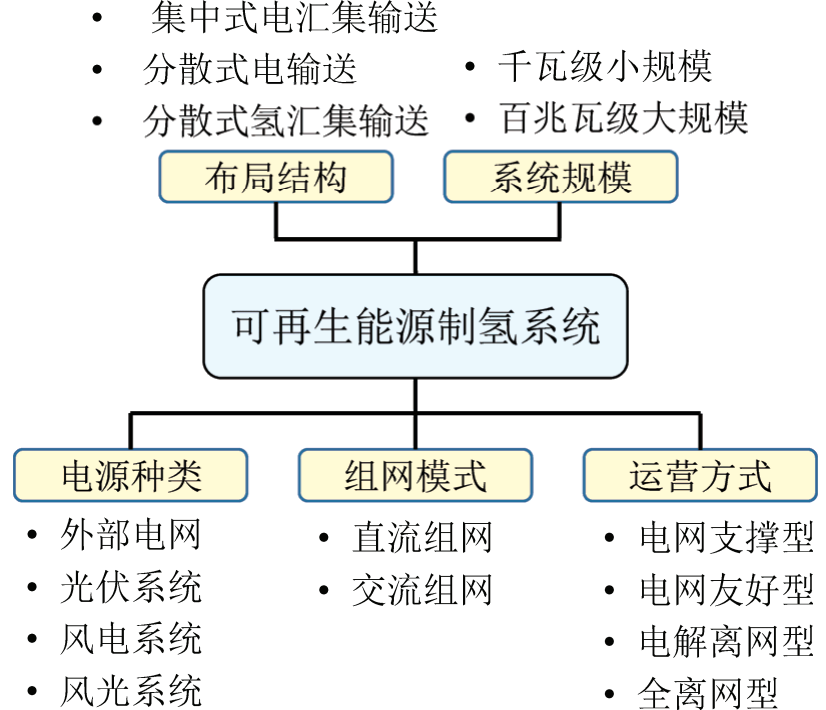
Figure 2 Classification of networking methods for renewable energy hydrogen production systems
2. Typical Networking Methods for Renewable Energy Hydrogen Production Systems
1. Grid-Purchased Green Electricity Hydrogen Production System
The grid-purchased green electricity hydrogen production system has a simple structure, as shown in Figure 3, where the electrolyzer is connected to the AC grid through a rectifier and rectifier transformer. The AC grid can provide stable power supply for the electrolyzer and auxiliary systems. Grid electricity hydrogen production systems are often used in medium and small-scale hydrogen production and application scenarios, such as generator cooling, polysilicon production, and hydrogen refueling stations. The grid electricity hydrogen production system can purchase green electricity through power market transactions to achieve green hydrogen production and provide peak shaving and frequency regulation services to the power system to reduce electricity costs and improve system economics, but its products are difficult to obtain green certification and are only suitable for small-scale applications.
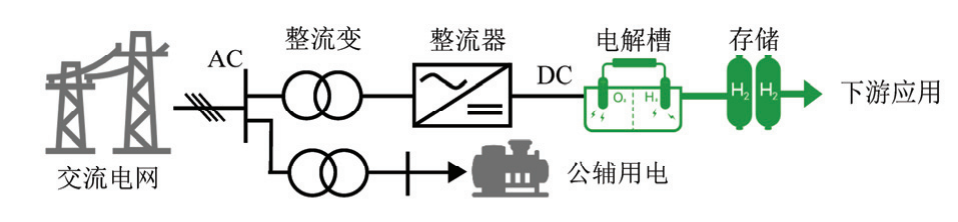
Figure 3 Grid-purchased green electricity hydrogen production system
2. Photovoltaic Hydrogen Production System
Due to the direct current output characteristics of photovoltaic systems, photovoltaic hydrogen production systems have long been in the research focus of scholars, resulting in a rich variety of topologies primarily based on direct current networking. Common networking methods for photovoltaic hydrogen production systems include photovoltaic direct connection hydrogen production systems and photovoltaic direct current networking hydrogen production systems.
1) Photovoltaic Direct Connection Hydrogen Production System
The photovoltaic direct connection hydrogen production system refers to a networking method where photovoltaic modules are directly connected to the electrolyzer through a single-level direct current converter or even without a direct current converter, with no fixed voltage direct current bus in the system, as shown in Figure 4. Depending on whether a direct current converter is used, it can be divided into direct coupling and indirect coupling methods.
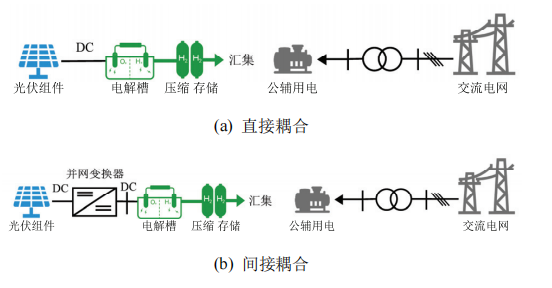
Figure 4 Photovoltaic direct connection hydrogen production system
In the photovoltaic direct coupling hydrogen production system, the photovoltaic modules are directly connected to the electrolyzer without needing an intermediate converter for voltage conversion, reducing the intermediate energy conversion steps, improving energy utilization efficiency, and lowering costs, as shown in Figure 4(a). By reasonably configuring and dynamically adjusting the number of photovoltaic modules in series and parallel with the electrolyzer, temperature, and area, the system can achieve voltage-current working curve matching and maximum power point tracking of the photovoltaic modules. However, the mechanical adjustment method leads to poor maximum power point tracking performance in photovoltaic direct coupling systems, and the frequent changes in the number of electrolyzer series and parallel connections and start-stop switching are too complex to implement in practical engineering applications.
In the photovoltaic indirect coupling hydrogen production system, the photovoltaic modules are connected to the electrolyzer through a single-level direct current converter, and by adjusting the duty cycle of the converter, the system operating point can be adjusted. Maximum power point tracking control algorithms such as incremental conductance method and perturb and observe method can enable the system to operate efficiently without frequent equipment switching. Compared to direct coupling, the impact of weather conditions on the indirect coupling system is smaller, providing higher stability and control flexibility, resulting in higher hydrogen production efficiency. However, while the photovoltaic direct connection hydrogen production system can reduce converter costs compared to networking hydrogen production systems and achieve stable operation during the day without relying on energy storage systems, it depends on the installation of energy storage systems and external grid support for black start and auxiliary electricity. On the other hand, if the electrolyzer is kept in a hot standby state for long periods during the night without light, it will incur significant additional energy consumption; if the electrolyzer is shut down, although it can reduce nighttime energy consumption, frequent start-stop will adversely affect the lifespan of the stack.
2) Photovoltaic Networking Hydrogen Production System
Since both photovoltaic systems and electrolysis hydrogen production systems are direct current devices, photovoltaic hydrogen production systems usually adopt direct current networking methods. The collaborative use of photovoltaic and grid-connected energy storage systems is also being gradually explored in demonstration projects. Direct current networking photovoltaic hydrogen production systems typically connect photovoltaic modules and electrolysis hydrogen production systems through two-level converters, with a fixed voltage direct current bus in the system. Photovoltaic hydrogen production systems can be divided into off-grid and grid-connected types.
The typical structure of a grid-connected photovoltaic hydrogen production system is shown in Figure 5(a), where the photovoltaic system and electrolysis hydrogen production system are connected to the direct current bus through direct current converters, and the direct current bus is connected to the AC grid through a grid-side converter, allowing the auxiliary system to draw power directly from the AC grid. Due to the presence of the AC grid, the system can achieve stable operation without relying on energy storage systems, but it can selectively connect to energy storage systems (such as battery energy storage systems, hydrogen fuel cell energy storage systems, and supercapacitor energy storage systems) to enhance system flexibility, utilize low-cost off-peak electricity for hydrogen production, and reduce system electricity costs through optimized control and energy management. However, grid-connected systems generally face difficulties in obtaining green certification for products and are subject to policy restrictions on grid access, while direct current networking systems also face high costs for high-voltage direct current transmission and transformation equipment when scaled up.
The typical structure of a photovoltaic off-grid hydrogen production system is shown in Figure 5(b). Unlike grid-connected hydrogen production systems, the auxiliary system must connect to the direct current bus through an inverter. Since there is no external grid support, to maintain energy balance and safe stable operation, the system must connect to a large-scale energy storage system (such as battery energy storage systems, hydrogen fuel cell energy storage systems, and hybrid energy storage systems). Compared to grid-connected photovoltaic hydrogen production systems, off-grid photovoltaic hydrogen production systems can save costs on transmission and transformation equipment for grid connection, but due to the overall low utilization hours of photovoltaic systems, the overall utilization rate of the system is low, and the configuration of a large amount of energy storage will lead to poor system economics, making it difficult to scale up.
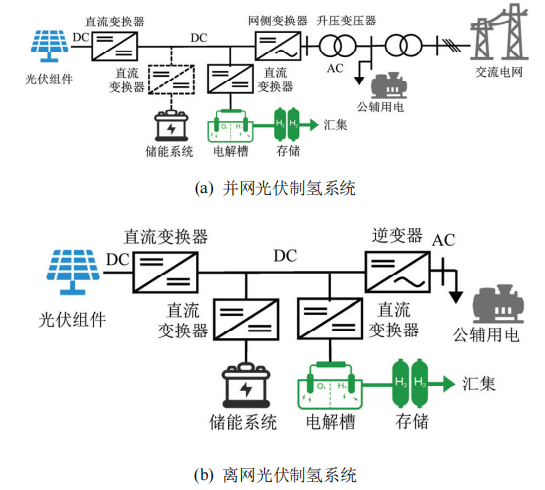
Figure 5 Direct current networking photovoltaic hydrogen production system
3. Wind Power Hydrogen Production System
Wind power systems have a high utilization rate, and the capacity of individual units matches that of electrolysis hydrogen production systems. With the continuous development of onshore and offshore wind power technologies, the attention to wind power hydrogen production systems is gradually increasing both domestically and internationally. Depending on whether they are connected to the external grid, wind power hydrogen production systems can be divided into grid-connected hydrogen production systems and off-grid hydrogen production systems.
1) Wind Power Grid-Connected Hydrogen Production System
Wind power grid-connected hydrogen production systems can operate flexibly based on wind power output and grid-side electricity prices, improving the utilization hours and economic performance of electrolysis hydrogen production systems, while the auxiliary system can receive stable power supply. Depending on the type of bus in the system, wind power grid-connected hydrogen production systems can be divided into direct current networking systems and alternating current networking systems.
Direct current networking wind power grid-connected hydrogen production systems are often applied in permanent magnet synchronous direct drive wind turbine systems, as shown in Figure 6(a). The system structure involves connecting the electrolyzer through a direct current converter at the direct current bus of the direct drive wind turbine. The grid-side converter is usually used to control the stability of the direct current bus voltage, while the machine-side converter implements maximum power point tracking control. To further enhance the system’s dynamic response capability and flexibility, some systems also connect hydrogen fuel cell systems, supercapacitors, and other energy storage systems. Direct current networking systems have a simple structure and require fewer conversion devices, but the electrolyzer needs to be located near the direct drive wind turbine. On one hand, the system has a high current at the medium voltage direct current bus, and the transmission distance is long, leading to high copper bus costs; on the other hand, it requires redesigning the wind turbine and supporting system structure, making the electrolysis hydrogen production system occupy a large area and have high explosion-proof safety requirements, complicating system configuration in large-scale scenarios.
Alternating current networking wind power hydrogen production systems connect the wind power system and electrolysis hydrogen production system through an alternating current bus, as shown in Figure 6(b). Since alternating current buses are used, this networking method can apply both direct drive wind turbines and doubly-fed wind turbines. Compared to direct current networking methods, alternating current networking methods can directly use mature products of wind turbines and electrolysis hydrogen production systems, with higher technical maturity, enabling industrial-scale applications. However, in remote scenarios such as offshore wind power and desert areas, the long grid connection lines and transmission and transformation equipment make it difficult to further reduce the costs of large-scale grid-connected wind power hydrogen production systems.
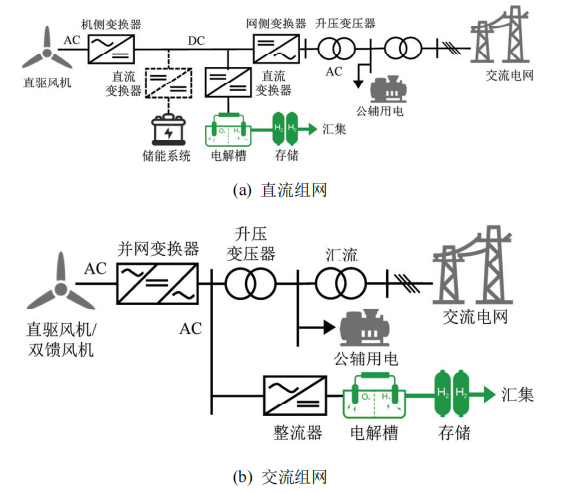
Figure 6 Wind power grid-connected hydrogen production system
2) Wind Power Off-Grid Hydrogen Production System
Wind power off-grid hydrogen production systems can leverage the capacity matching characteristics of electrolysis hydrogen production systems and wind power systems, relying on power electronics control technology to enable the hydrogen production system to follow the operation of the wind power system. Wind power off-grid hydrogen production systems can be divided into direct current networking and alternating current networking methods, as shown in Figure 7.
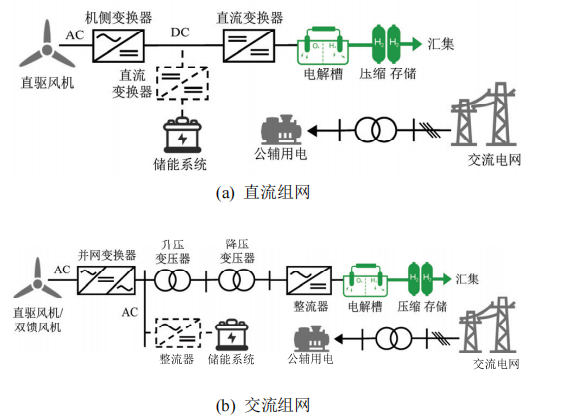
Figure 7 Wind power off-grid hydrogen production system
Similar to grid-connected systems, direct current networking methods are mainly applied in direct drive wind turbine hydrogen production systems, controlled by machine-side converters and direct current converters, enabling the electrolysis hydrogen production system to absorb wind power fluctuations and achieve stable operation without energy storage. The use of energy storage systems can further enhance system flexibility and stability to cope with the uncertainty of wind power output. However, in terms of black start and auxiliary electricity, it relies on the installation of energy storage systems and external grid support. Direct current networking methods have a simple structure compared to alternating current networking methods, but due to the lower voltage and higher current at the medium voltage direct current bus, copper bus costs are high. Using grid-connected wind power technology, off-grid wind power hydrogen production systems can also adopt alternating current networking methods. Alternating current networking systems are technically mature but need to consider issues of reactive power harmonics and system stability.
4. Wind-Solar Hydrogen Production System
1) Wind-Solar Grid-Connected Hydrogen Production System
Wind-solar grid-connected hydrogen production systems can be divided into direct current networking and alternating current networking methods, as shown in Figure 8. Photovoltaic modules, direct drive wind turbines, and electrolyzers can be connected to the direct current bus through a single-level converter. The AC grid connects to the direct current bus through a grid-side converter, maintaining auxiliary system electricity. The system can also selectively connect to energy storage systems to enhance system flexibility and provide peak shaving and frequency regulation auxiliary services to the grid as a virtual power plant. However, it cannot directly purchase mature wind-solar equipment in bulk, and the costs of direct current transmission and transformation equipment are high, making large-scale deployment challenging. In alternating current networking wind-solar hydrogen production systems, photovoltaic systems and wind power systems are connected to the grid through grid-connected converters, while electrolyzers and auxiliary systems are connected to the AC grid through rectifiers. In alternating current networking methods, wind-solar systems can be distributed in the distribution network, combined with hydrogen storage systems and battery storage systems, optimizing system operation in the form of virtual power plants. However, grid-connected wind-solar hydrogen production systems also face difficulties in obtaining green certification for products and are subject to policy restrictions on grid access. Compared to direct current networking systems, the lower transmission and transformation costs make alternating current systems more suitable for large-scale application scenarios.
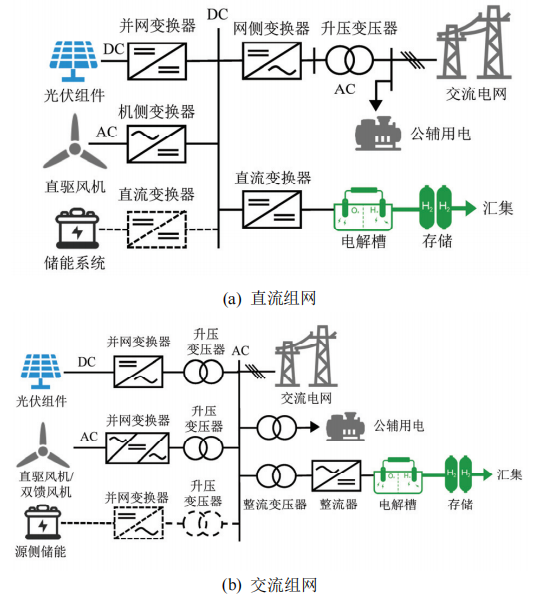
Figure 8 Wind-solar grid-connected hydrogen production system
2) Wind-Solar Off-Grid Hydrogen Production System
As shown in Figure 9, wind-solar off-grid hydrogen production systems can utilize the complementary characteristics of wind and photovoltaic systems to further enhance the utilization hours of electrolysis hydrogen production systems. Direct current networking and alternating current networking photovoltaic off-grid hydrogen production systems, combined with hydrogen fuel cell storage systems and battery storage systems, can achieve relatively independent microgrid power supply. However, they rely on the configuration of energy storage systems to maintain energy balance and auxiliary system electricity, making it difficult to improve economics.
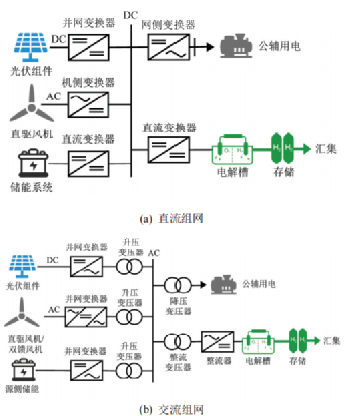
Figure 9 Wind-solar off-grid hydrogen production system
3. Comparison and Applicability Analysis of Networking Methods
Table 2 summarizes the main shortcomings and typical applicability scenarios of the typical networking methods for renewable energy electrolysis hydrogen production systems discussed in Section 1.2. In terms of photovoltaic hydrogen production systems, the development potential of indirect coupling methods will far exceed that of direct coupling methods. However, the high-voltage bus voltage formation of indirect coupling systems relies on the series connection of photovoltaic modules, making it difficult to increase voltage for long-distance transmission. Indirect coupling methods have application prospects in localized medium and low-voltage direct current layout hydrogen collection and transmission systems. Direct current networking photovoltaic hydrogen production systems are limited by the high costs of high-voltage direct current transmission and transformation equipment after scaling, primarily adopting medium and low-voltage direct current networking methods, suitable for small-scale microgrid systems. Grid-connected photovoltaic hydrogen production systems are expected to be applied in user-side distributed integrated energy systems, vehicle-grid interaction, and other scenarios.
Table 2 Summary of Renewable Energy Hydrogen Production Networking Methods
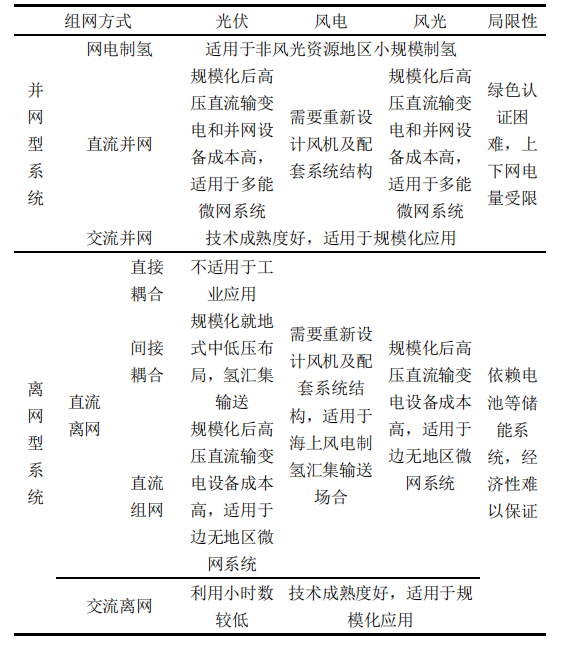
Regarding wind power systems, direct current networking methods have a simple structure but rely on redesigning the wind turbine and supporting system structure, making it difficult to directly purchase mature standardized equipment in bulk, and large-scale networking is challenging, often used in localized small-scale microgrid systems. Wind-solar direct current off-grid hydrogen production systems have application prospects in small-scale power supply in islands and remote areas.
Alternating current networking systems, due to their technical maturity, are expected to become the main networking method for low-cost large-scale green hydrogen base construction. However, alternating current grid-connected systems face policy restrictions on grid access, increasing the operational difficulty of the system, requiring targeted in-depth research. Alternating current off-grid systems rely on battery energy storage systems and require large hydrogen storage systems to maintain power balance and energy balance, with capacity configuration methods, stability analysis, and system-level optimization control methods becoming major issues restricting their application in practical engineering, requiring further research.
(Source: Lin Jin, Cheng Xiang, Qiu Yifei, Chi Ying Tian, Song Yonghua, Research Review on Key Technologies for Networking Access and Operation of Renewable Energy Electrolysis Hydrogen Production)
This account can provide technical consulting, market support, resource linking, project cooperation (investment, hydrogen energy industry equipment supply and sales) If needed, please contact the WeChat number below (18511514179):

Previous content:
Optimization of Electrolysis Hydrogen Production Equipment Performance and Flow Channel Design
Analysis of the Optimization Space for the Levelized Cost of Wind-Solar Electrolysis Hydrogen Production
Current Research Status of Corrosion Coatings for PEM Electrolysis Hydrogen Production Gas Diffusion Layers
Current Research Status of Bipolar Plates and Their Corrosion Coatings for PEM Electrolysis Hydrogen Production
Application of Porous Transition Metal Electrocatalysts in Water Electrolysis Hydrogen Production Reactions
Performance Optimization Strategies for Non-Precious Metal Oxide Anode Materials in Alkaline Electrolysis Hydrogen Production
Non-Precious Metal Oxide Anode Materials for Alkaline Electrolysis Hydrogen Production
Digital Twin Construction of Alkaline Electrolysis Hydrogen Production Equipment
Zero-Carbon New Energy Consumption System Based on Electrolysis Hydrogen Production and Methanol Synthesis and Reforming
Material and Energy Integration and Tech-Economic-Environmental Evaluation of SOEC Electrolysis Hydrogen Production Coupled with Ammonia Synthesis Process
Research on Thermal Management Systems for Alkaline Electrolysis Hydrogen Production Devices
Performance Analysis of Different Membranes in Alkaline Electrolysis Hydrogen Production
Measured Data of Production Operation of Alkaline Water Hydrogen Production Device
Cost Breakdown of PEM Electrolysis Hydrogen Production Systems
Introduction to Coating Processes for PEM Electrolysis Hydrogen Production Membrane Electrodes
Current Level and Bottlenecks of PEM Electrolysis Hydrogen Production Technology in China
Impact of Through-Hole Diffusion Layer Structure on PEM Electrolyzer Performance
Performance and Durability Analysis and Challenges of Proton Exchange Membrane Water Electrolysis Membrane Electrodes (MEA)
Introduction to Operating Modes of Proton Exchange Membrane Water Electrolysis Hydrogen Production Systems
Recent Research Overview of Anode Oxygen Evolution Catalysts for Direct Seawater Electrolysis Hydrogen Production
Recent Research Overview of Cathode Hydrogen Evolution Catalysts for Direct Seawater Electrolysis Hydrogen Production
Classification of Offshore Wind Power Hydrogen Production Systems and Comparison of Offshore Wind Power Hydrogen Production Technologies
Interpretation of Common Membranes Used in Alkaline Electrolysis Water Systems
Introduction to Deoxygenation Technology for Electrolysis Hydrogen Production
Process Design for Photovoltaic Power Generation-Alkaline Water Hydrogen Production-Low Temperature Low Pressure Ammonia Synthesis
Classification of Renewable Energy Electrolysis Hydrogen Production Technologies
Overview of Hydrogen Compression Technologies
Impact of Fluctuating Conditions on Gas Purity in Directly Connected Alkaline Electrolyzers and Optimization Solutions
Impact of Operating Parameters on Gas Purity in Alkaline Hydrogen Production
Preparation Process of PEM Water Electrolysis Hydrogen Production Membrane Electrodes
Design Strategies for Iridium-Based Metal Oxide Catalysts for PEM Electrolysis Hydrogen Production Anodes
Iridium-Based Oxide Catalysts for PEM Electrolysis Hydrogen Production Anodes Design Strategies
Latest Research Trends of Iridium-Based Metal Catalysts for PEM Water Electrolysis Hydrogen Production
Cross-Permeation Phenomenon and Improvement Strategies in PEM Water Electrolysis Hydrogen Production
Introduction to PEM Water Electrolysis Hydrogen Production Systems
Safety Precautions for Hydrogen Production and Purification Operations on Site
Overview of Electrolysis Hydrogen Production Process and Equipment
Common Fault Handling Methods for Purification Systems in Electrolysis Hydrogen Production
Overview of Alkaline Water Hydrogen Production Systems
Operation and Process Condition Control of Alkaline Electrolysis Hydrogen Production Systems