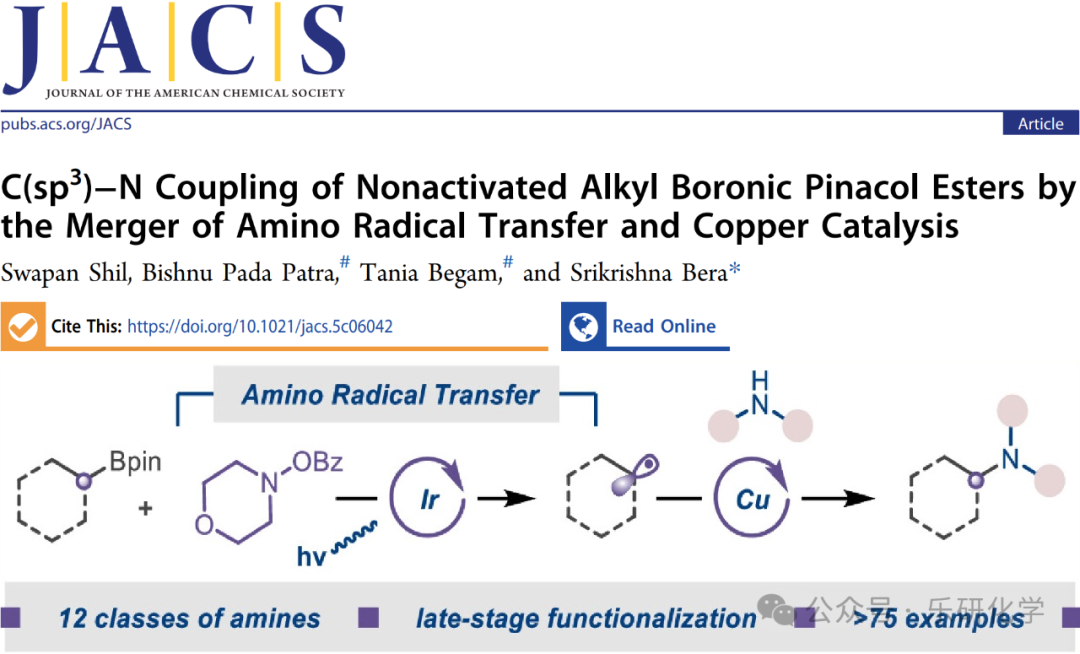
 From J. Am. Chem. Soc.
Hi, everyone! Do you remember the article we shared recently about the activation of alkyl boronic esters by morpholine radicals in the “perfectly flawless” Quasi-Suzuki Coupling? The morpholine radical couples with alkyl boronic esters to generate alkyl radicals and aryl halides. So, can the radicals produced by this pathway be used for other couplings? Of course! In this issue, let’s take a look at:
⭐ Photocatalytic N-Alkylation ⭐Mechanism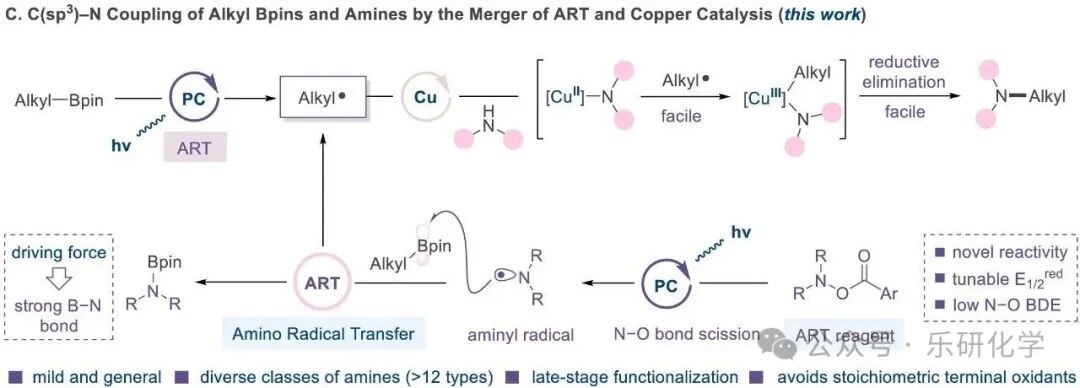 Substrate Expansion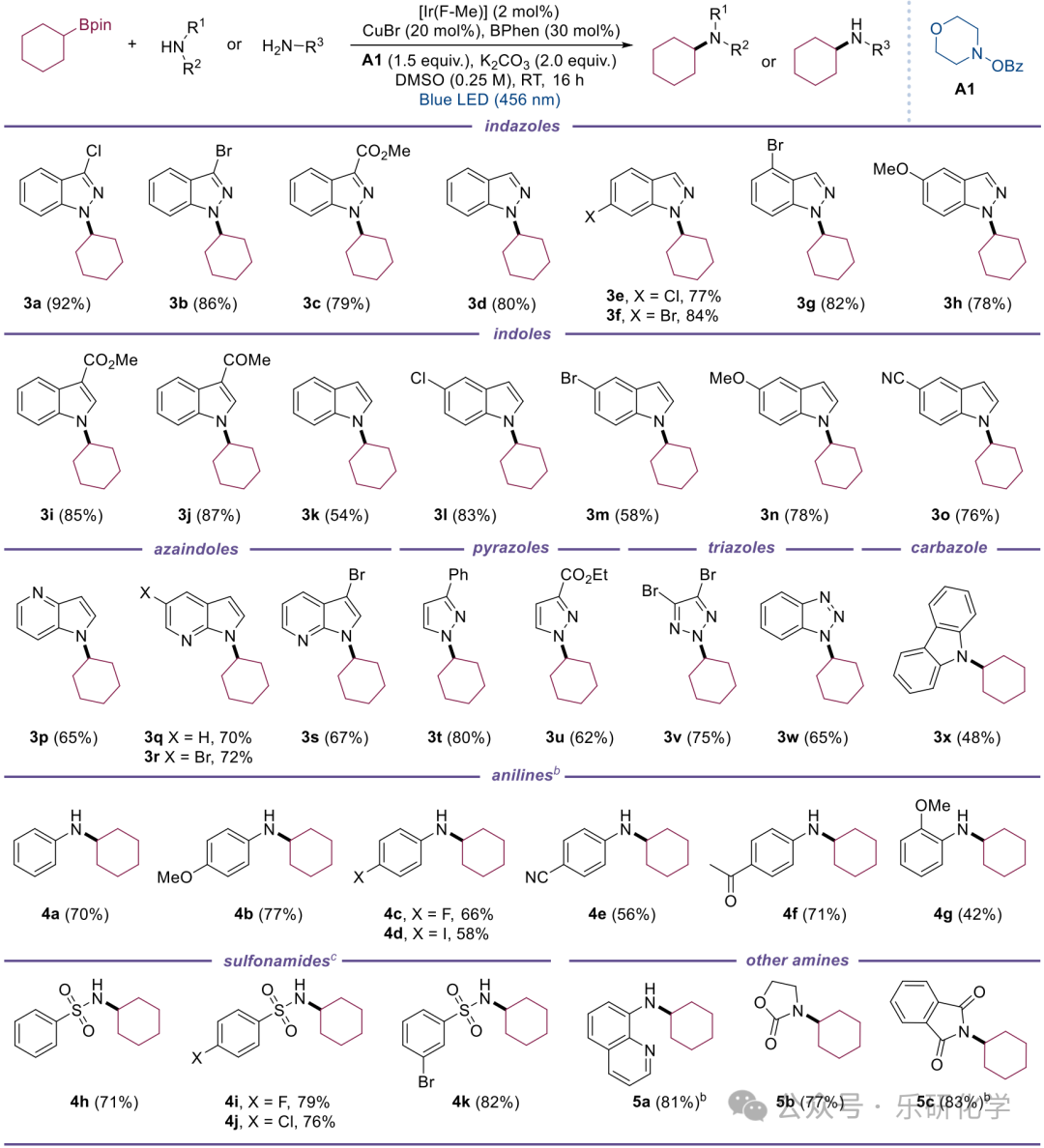
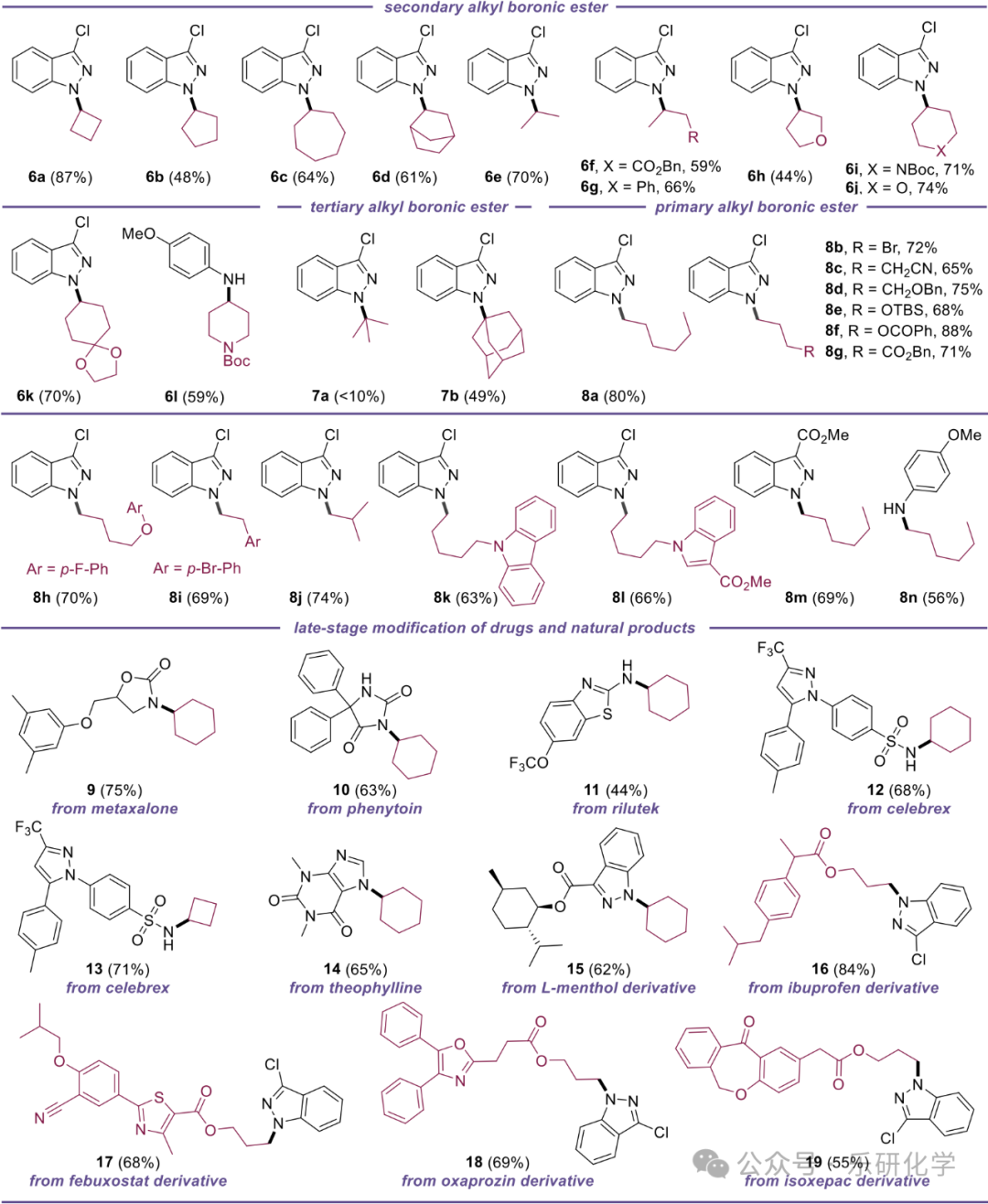 Highlights[1] This method utilizes alkyl boronic esters as a radical source, generating alkyl radicals under the activation of morpholine radicals, achieving heteroaryl amine N-alkylation via photocatalysis;;[2] This method has a wide substrate scope, allowing reactions with indoles, isoindoles, nitrogen-containing indoles, pyrazoles, triazoles, carbazoles, anilines, benzenesulfonamides, oxazolidinones, and phthalimides for photocatalytic N-alkylation;
[3] This method is applicable to the vast majority of primary and secondary alkyl boronic esters, with tert-butyl boronic esters showing poor reactivity; notably, adamantyl boronic esters achieve moderate yields;
[4] This method also demonstrates excellent practicality in the late-stage functionalization of drug molecules and natural products;
[5] The catalysts, ligands, and activation reagents used in the reaction are all commercially available reagents, making them convenient and accessible.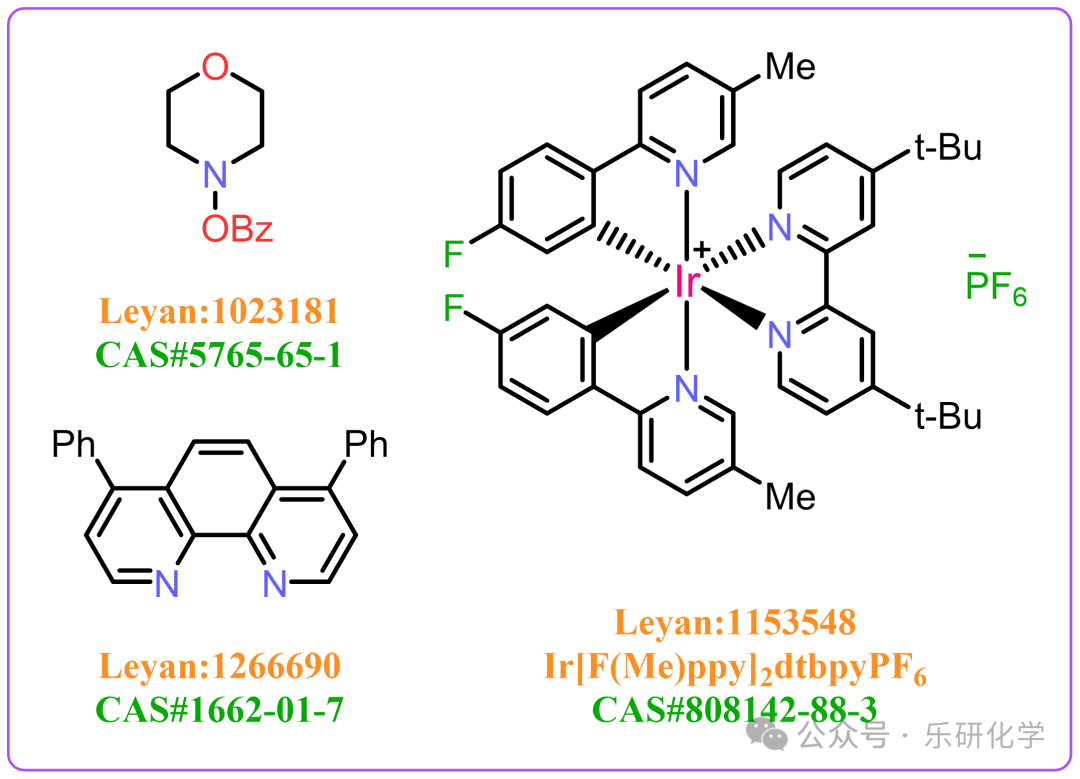 ReferencesC(sp³)-N Coupling of Nonactivated Alkyl Boronic Pinacol Esters by the Merger of Amino Radical Transfer and Copper Catalysis.Swapan Shil, Bishnu Pada Patra, Tania Begam, Srikrishna BeraJ. Am. Chem. Soc. 2025, XXXX, XXX, XXX-XXXDOI: 10.1021/jacs.5c06042