The 14th NXP Cup National College Student Smart Car Competition is about to kick off, and teachers and students from various schools are busy preparing. Last Sunday (March 24), the competition organizing committee held a technical seminar to answer students’ questions in real-time.
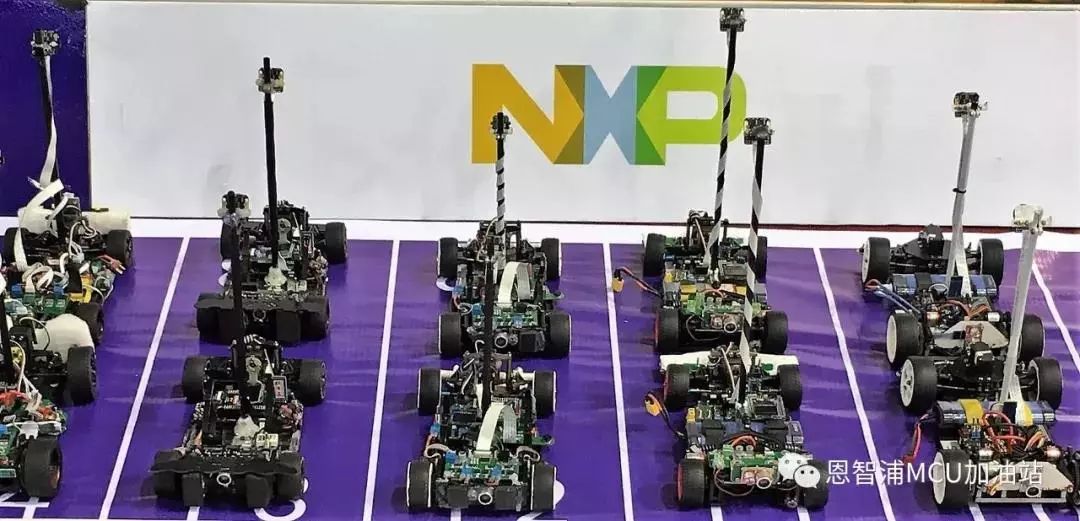
Taking this opportunity of the seminar, our senior expert from the General MCU department, Song Yan, first introduced the broad product line of NXP’s general MCUs.
According to the competition rules set by the organizing committee, the main control chip for the smart car can choose any NXP MCU. However, based on our analysis, students’ selection range is relatively narrow and has not changed much over the years. The following chart shows the proportion of products used by all registered teams from 2014 to 2017.
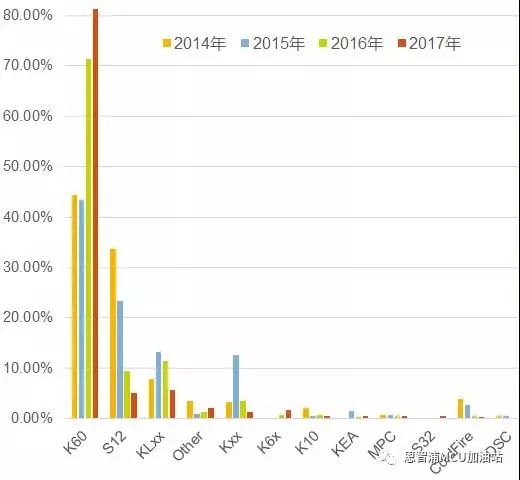
From this statistic, it can be seen that students are using products we released several years ago and have not benefited from the advantages and advanced features of the latest products. On the other hand, many emerging technologies such as artificial intelligence and image processing are no longer suitable for implementation on outdated products. Therefore, there is an urgent need to introduce the latest product dynamics and the latest technologies in the industry to teachers and students.
Song Yan started with this image to showcase the full scope and positioning of NXP’s general MCU and MPU product lines.
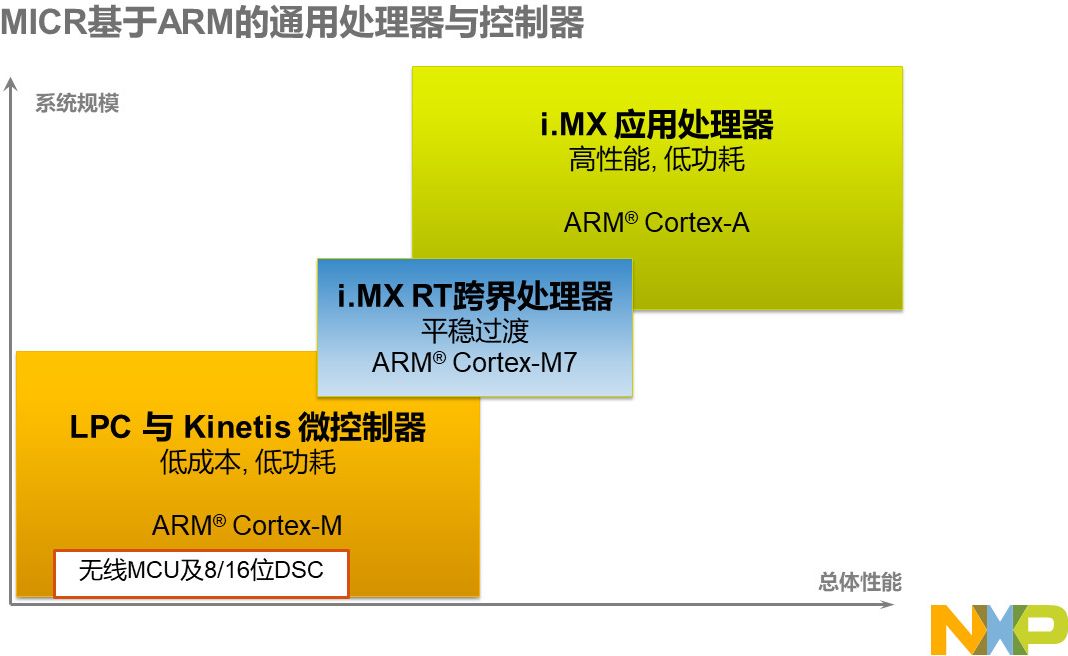
The orange area in the lower left corner of the image represents common MCUs, where controllers like K60, KLxx, K10, etc., are located.
The blue area in the middle represents the latest high-end MCUs, using Arm Cortex-M7 as the core, paired with higher-end i.MX application processor architecture and peripherals, while providing users with the convenience of MCUs and the high performance of MPUs. This year’s recommended programmable vision module uses this cross-domain processor.
The yellow-green area in the upper right corner of the image represents high-end i.MX application processors based on Arm Cortex-A, including low-power processors with Cortex-A7 and multi-core high-performance processors with Cortex-A72 and Cortex-A53. These application processors mainly run high-end applications based on Linux or Android.
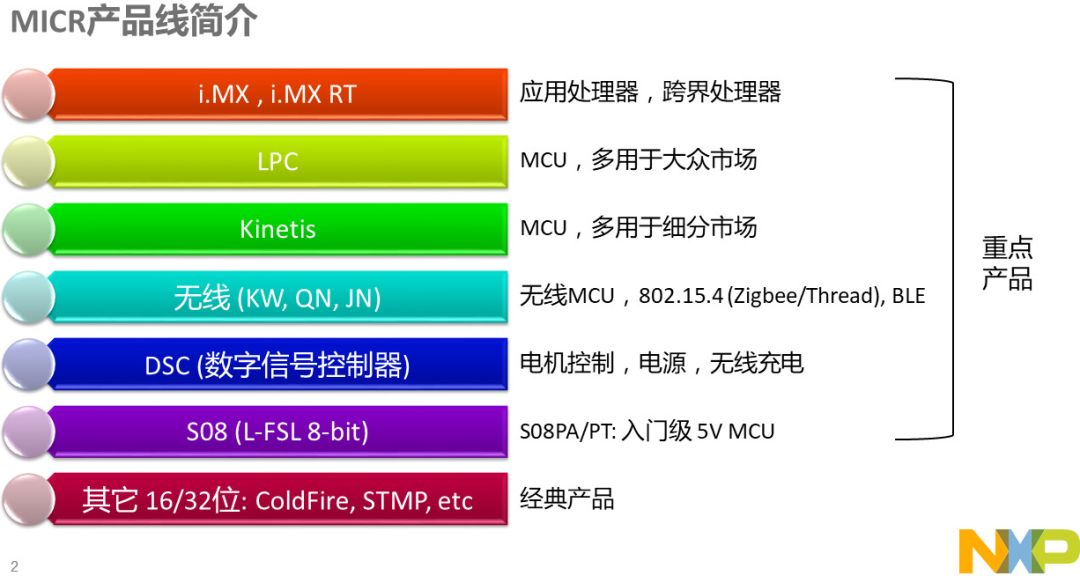
Next is the basic positioning of each product series. The product distribution is very comprehensive.
In response to the needs of the smart car competition, in addition to the K6x series MCUs that students are already using, we also recommend the following chips.
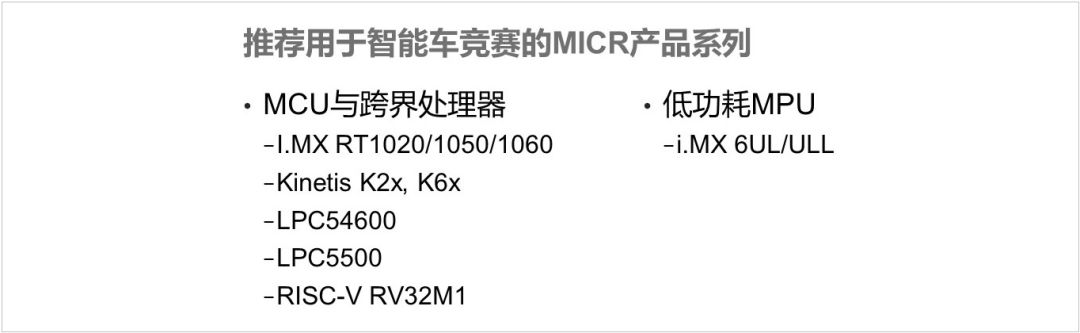
Among them:
-
i.MX RT is the cross-domain processor introduced earlier, with performance far exceeding all existing MCU products;
-
LPC5500 is the latest dual-core microcontroller aimed at the Internet of Things with a focus on security;
-
LPC54600 series is the latest high cost-performance product, with MCU performance comparable to K6x;
-
RV32 is NXP’s latest microcontroller based on dual RISC-V cores, suitable for students interested in the latest RISC-V applications;
-
i.MX 6UL and i.MX 6ULL are application processors based on Cortex-A7, which can run Linux and are the lowest-end products for students wanting to explore Linux.
Among the recommended chips, there are already market-available core boards specifically for the smart car competition, such as LPC54606 and i.MX RT1052 (see the image below), along with relevant reference example codes.
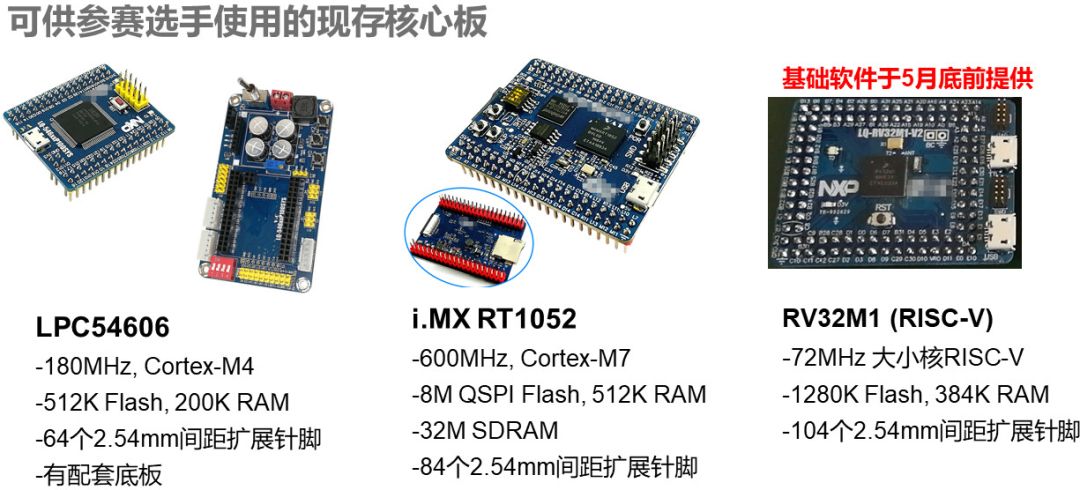
Additionally, to promote the popularization of RISC-V applications, NXP has worked with industry partners to create RV32 core boards (the board on the right side of the image), which are currently under intensive debugging and development and will soon be made available for students to learn and use, allowing everyone to keep up with the current RISC-V trend and experience application development based on RISC-V chips.
Finally, Song Yan emphasized the basic performance and configuration of the recommended i.MX RT1062 programmable vision module in the creative group of this competition, hoping that this module will allow students to experience more advanced machine vision algorithms and neural network programming and applications.
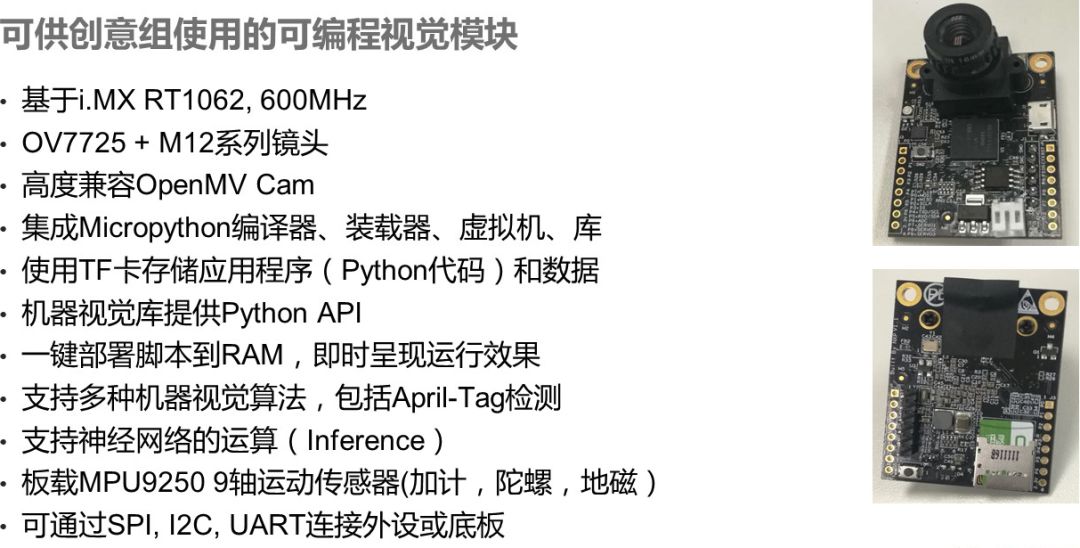
Below are some basic external features of this vision module, which will not be detailed in this article. For detailed content, students can refer to the article posted by Teacher Zhuo:
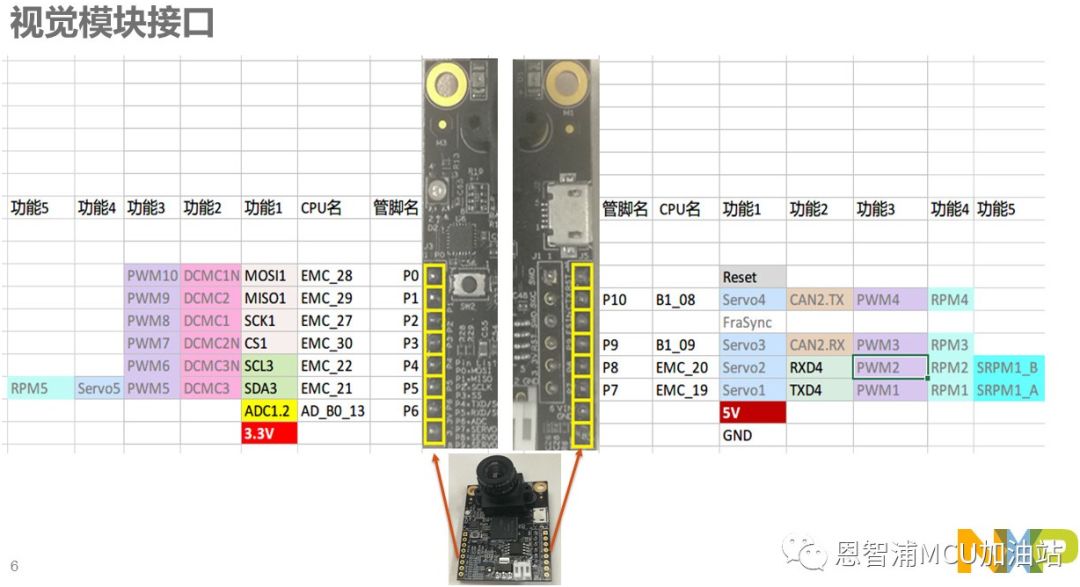
At the end of this article, please take a look at this article, which contains a demonstration video of this programmable vision module, allowing everyone to appreciate the power of this module:
Video demonstration – Let machine vision take off on i.MX RT.
Note: This year’s NXP Cup also has related selection information for our company’s automotive general microcontrollers, please pay attention to the relevant information.