AM Easy Road Deep News
Just a few days ago, Bambu Lab had an update.
This time, it is not a new printer, but a software tool named ChromaCanvas.
Currently, this software is in a small-scale beta testing invitation phase, with a clear goal:
To allow users to directly convert ordinary digital images into filament paintings that can be printed using multi-color FDM 3D printers.
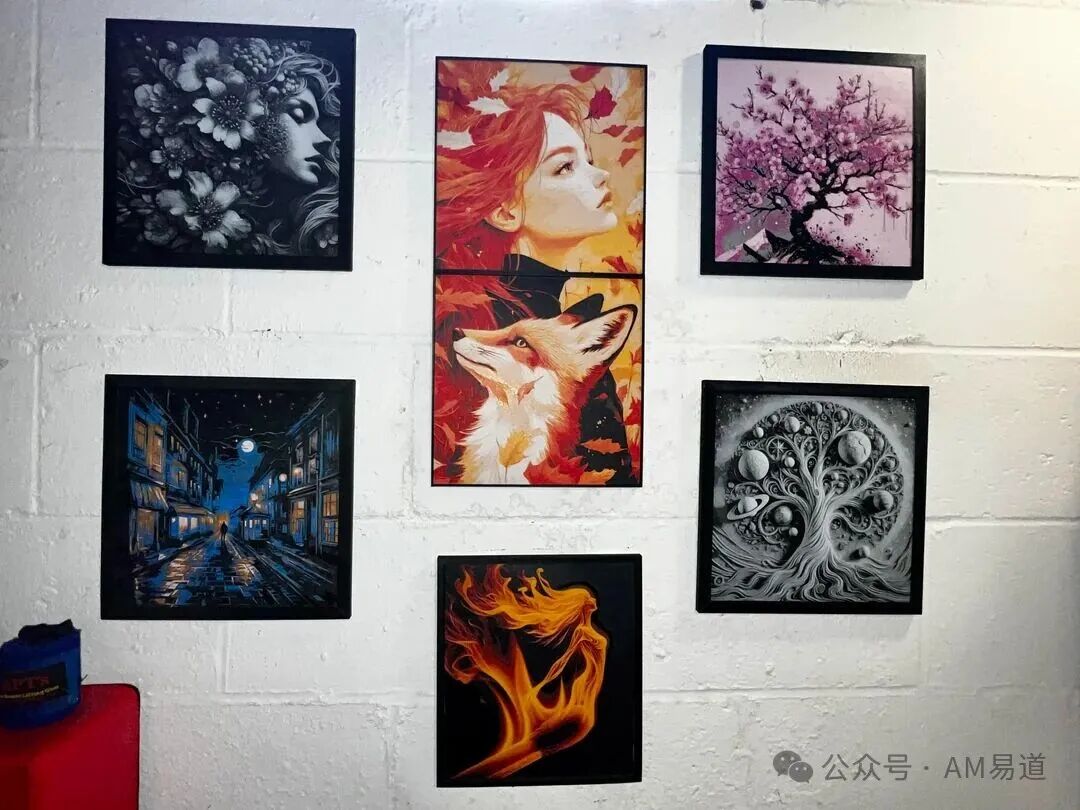
This makes us think of one of the pioneers in this field—HueForge.
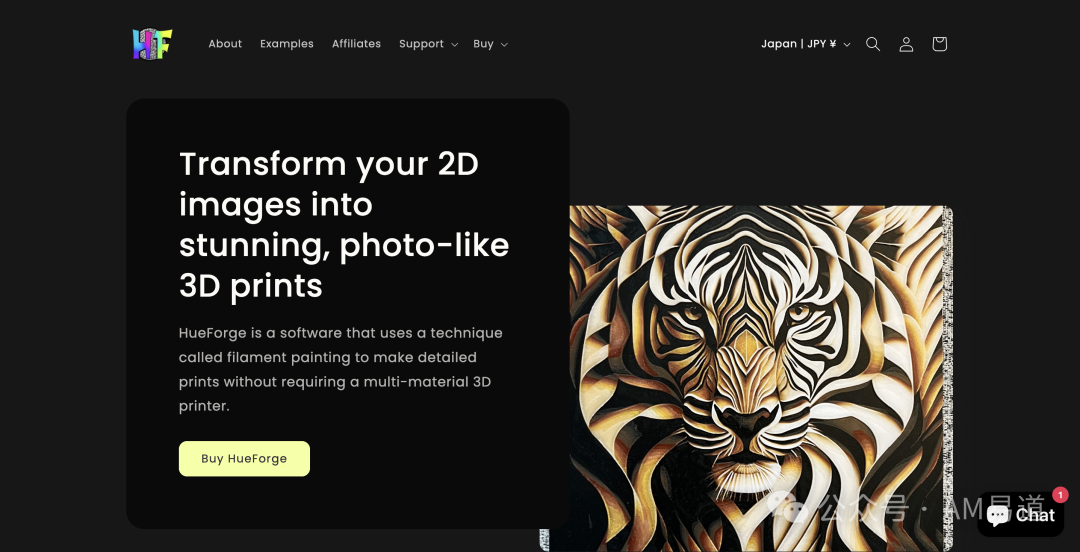
Today, let’s talk about what ChromaCanvas is all about and how it differs from HueForge.
In-Depth Analysis of the Core of Filament Painting Technology
First, it is important to clarify that Filament Painting is not simply about changing colors layer by layer.
It is more like a color mixing art performed in three-dimensional space.
This technology cleverly utilizes thetranslucency of the 3D printing materials themselves.
By precisely controlling the thickness of the overlapping layers of different colored materials, light is filtered and mixed as it passes through these translucent layers, ultimately presenting extremely delicate color gradients and light and shadow effects to the human eye.
This technology can simulate reliefs, gradients, and light and shadow art with photo-realistic effects.

The core of this technology is a key parameter called Transmission Distance (TD).
The TD value measures the ability of light to penetrate a specific thickness of material.
Each color, each material, and even each brand of material has vastly different TD values.
If the material has a high TD value (e.g., 10mm), it is usually very transparent.
When it is layered over other colors, the underlying color can be clearly seen, and the two can blend to produce soft, rich gradients.
If the material has a low TD value (e.g., 1.5mm), it is very opaque.
It can effectively cover the colors below, making it suitable for creating outlines or deep shadows in artworks.
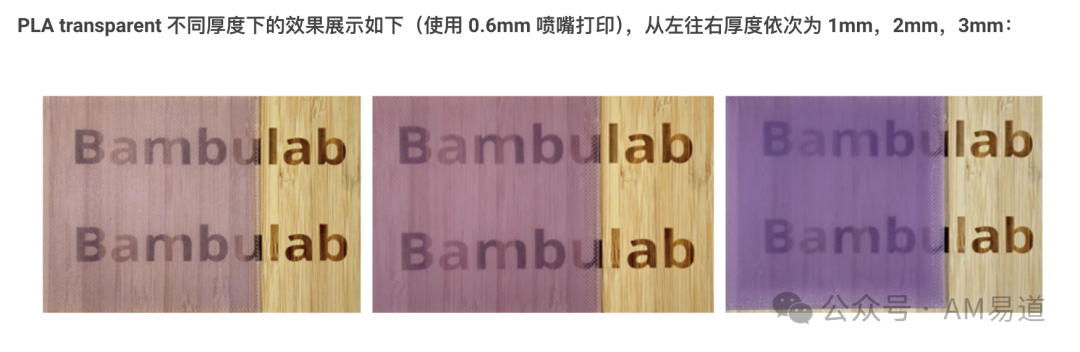
The essence of filament painting software is a complex calculator.
It predicts and calculates which color to use and how thick to print at each layer and position based on the input image, the TD values of the selected materials, and the set layer height, in order to restore the colors closest to the original image after final layering.
Pioneer in the Market: The Pros and Cons of HueForge
Before Bambu Lab entered the market, HueForge had already built up a reputation.
It opened a new world for many FDM 3D printing enthusiasts.
Its core advantage lies in its powerful features and first-mover advantage:
It has a large, pre-calibrated TD value database for materials (covering mainstream brands like Polymaker, Bambu Lab, and Sanlian), and supports automatic color matching and pre-printing previews.
Further reading: When 3D printing is no longer afraid of heat: In-depth evaluation of new high-temperature PLA products before global release
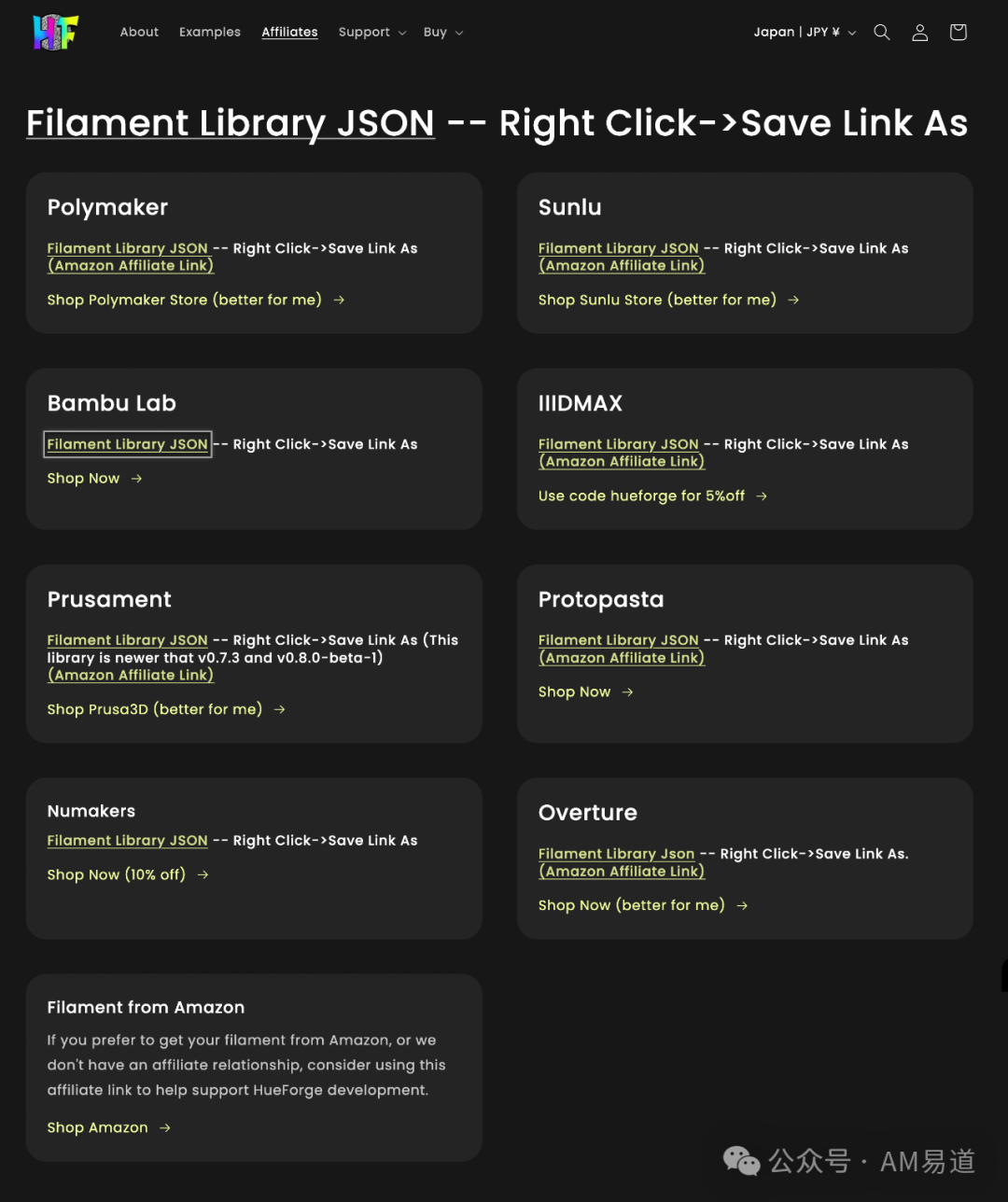
However, HueForge is not perfect.
It still has many shortcomings.
Its learning curve is very steep, and many early users complained that its interface is not intuitive enough, the workflow is complex, and some even gave up after purchasing due to the difficulty in learning.
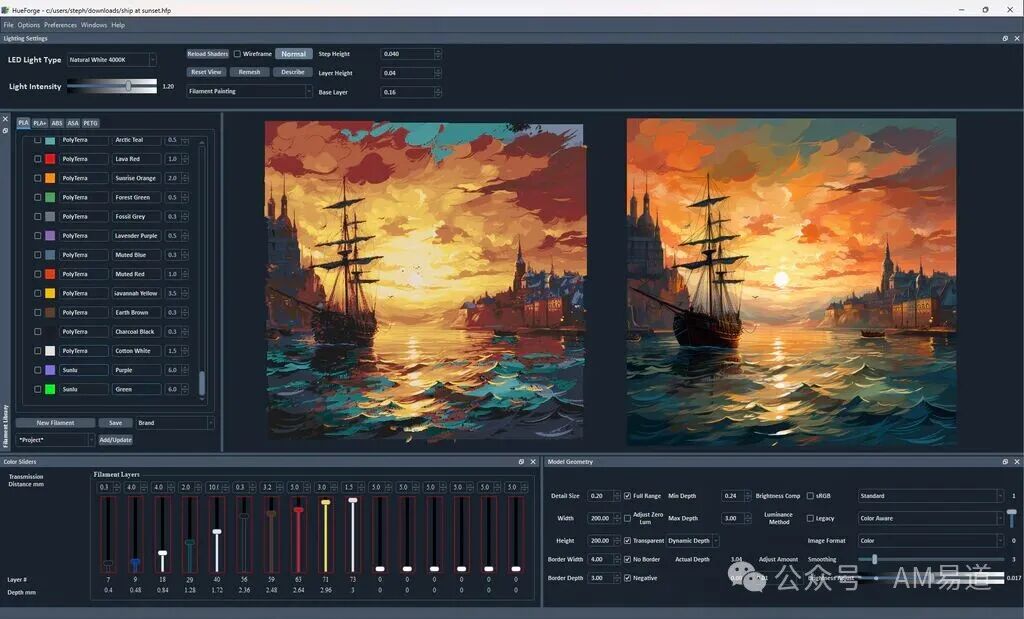
Additionally, its business model has also been controversial.
The main issue is thatHueForge requires commercial licensing for users selling printed products, divided into personal use and different levels of commercial licensing.
Although the official clarification states that there is no mandatory watermark requirement for commercially licensed printed products, it requires users to display a certificate image with the order number when selling.
This is seen by some users as an additional burden, and some community members have described it as a form of extortion against commercial sales, which has directly led to user dissatisfaction.
Building the Ecosystem of ChromaCanvas
Bambu Lab’s timing for entering the market is very clear:
To address the pain points of HueForge with ease of use and build its own moat through ecosystem integration.
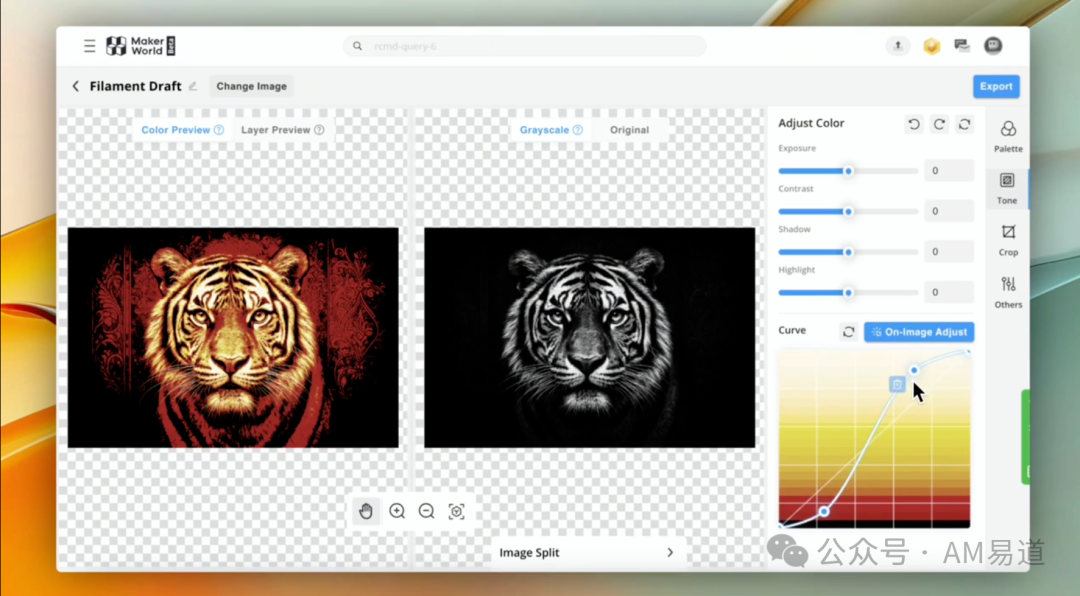
From the current leaked beta information and early user feedback, ChromaCanvas has very distinct features.
The user interface of ChromaCanvas software:
The software interface of HueForge:
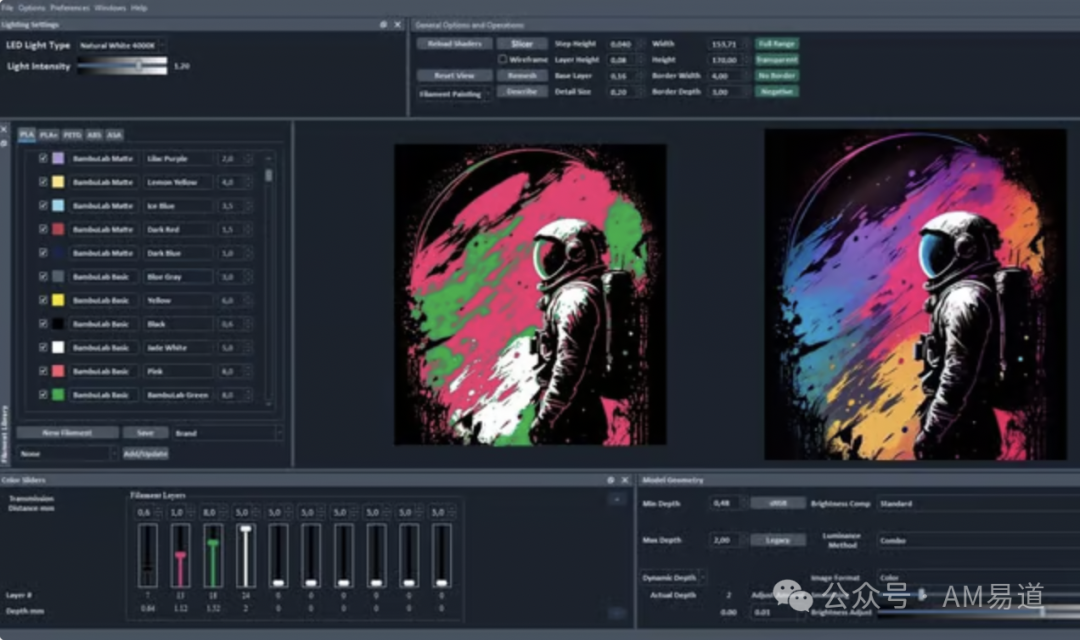
This indicates that Bambu Lab’s primary goal is to lower the barrier to entry for filament painting technology.
However, its real killer feature lies in its deep integration with its own hardware ecosystem.
As a built-in feature of BambuStudio slicing software, ChromaCanvas seamlessly integrates with Bambu printers and their AMS (Automatic Material System).
For users with AMS, the entire process from an image to a multi-color artwork print can be almost one-click, as the software automatically handles the most cumbersome manual material change steps in multi-color printing.
This represents two different business philosophies:
HueForge: sells the software itself, with its value in its functionality and uniqueness.
Bambu Lab: ChromaCanvas itself may even be completely free, with the software becoming the gravitational field of the hardware ecosystem.
Concerns about Sherlocking?
Of course, where there are supporters, there are opponents.
Different voices quickly emerged in the community, with a user named PurpleEsskay stating:
We should support HueForge, as it is affordable and has mature functionality.

This viewpoint reflects a concern for independent developers.
In the tech circle, there is a specific term called Sherlocking, which refers to the behavior of platform providers (like Apple, Microsoft, etc.) integrating the core ideas and functionalities of small third-party developers directly into their operating systems or software ecosystems, thereby stifling the survival space of third-party applications.

This time, Bambu Lab has been labeled with the term Sherlocking by some voices in the community.
However, interestingly, there is another perspective that approaches this from a business and market competition angle.
A user countered:
HueForge currently holds a monopoly position, and Bambu’s launch of similar software will force HueForge to continuously improve.

Moreover, the commercial licensing model of HueForge has always been controversial.
User Easy_Atmosphere_9140 bluntly pointed out: I am very annoyed by HueForge’s restrictions on the sale of printed products; it is simply extortion. I welcome competition.

For many small businesses or individual creators who wish to sell their printed works, the licensing terms of HueForge are undoubtedly a shackle.
Therefore, regardless of how ChromaCanvas’s final functionality and commercialization are integrated into the ecosystem, its emergence has already become an important variable.
New and High-End Players: Differentiated Survival Strategies
Other players in the market are also seeking their own survival space.
For example, ColorStack. This is created by independent developer ezafs, which takes a minimalist approach.
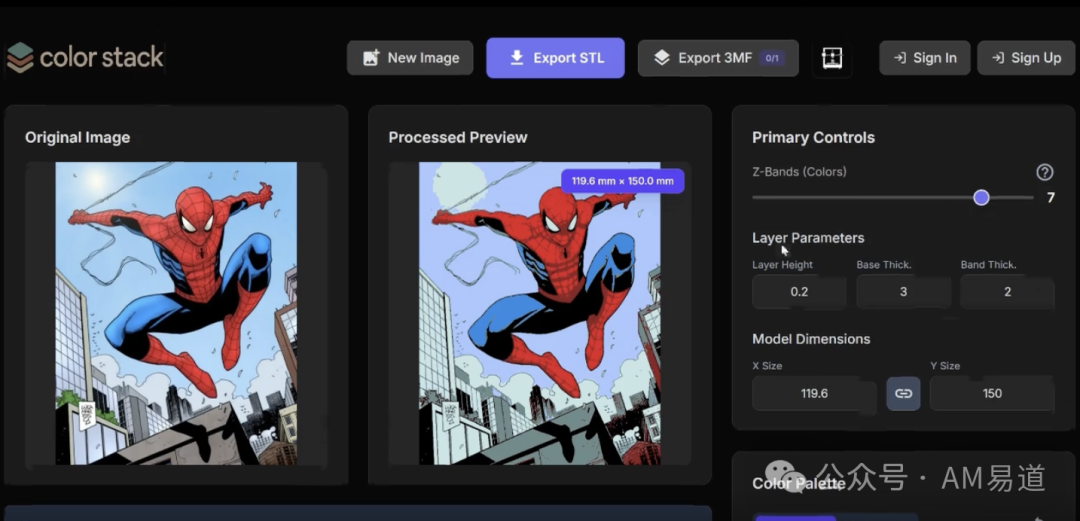
The developer clearly states that it abandons complex TD translucency simulation and instead uses a WYSIWYG logic to construct images directly with the solid colors of the materials.
This approach sacrifices delicate light and shadow gradients but gains extreme simplicity and speed, making it very suitable for users who only want to do simple logos or functional multi-color prints.
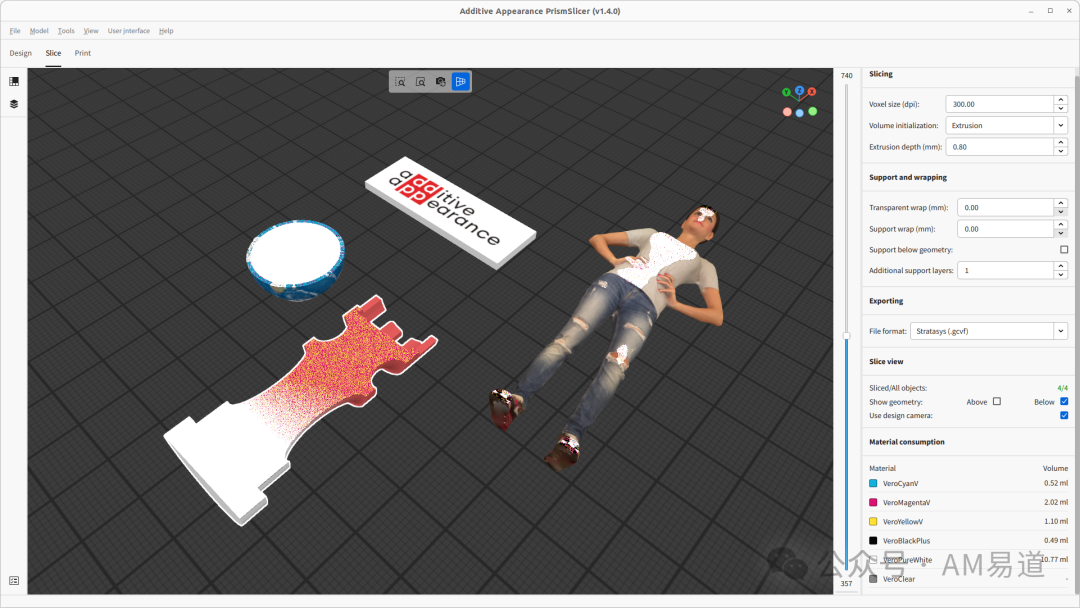
There is also PrismSlicer.
If the above companies are still competing within the FDM field, PrismSlicer targets a completely different high-end track.
It is developed by a spin-off company from Charles University in Prague, designed specifically for multi-material inkjet 3D printing (like PolyJet) industrial-grade software.
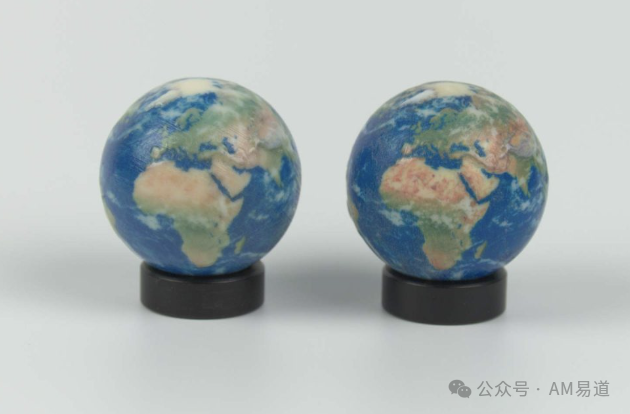
It focuses on voxel-level volumetric modeling and ray tracing, capable of simulating resin mixing and precise light penetration, primarily serving professional fields such as industrial design and medical applications, aiming to reduce the trial and error costs of expensive materials.
The Philosophy of Business: Where Will Competition Lead the Market?
From Prusa’s simplified browser slicing tool PrusaEasyPrint for beginners, to the one-click ChromaCanvas mentioned in this article, to ColorStack’s pursuit of minimalism, a clear trend has emerged:
3D printing software is evolving from a geek’s professional tool to a consumer application for the masses.
Lowering the barrier to use and providing a seamless software-hardware experience is key to attracting a broader user base.
In the current 3D printing market, it is difficult for purely software or purely hardware tools to build a sufficiently deep moat.
The real value lies in empowering hardware through software, forming a complete ecological closed loop of software + hardware + materials + community.
Bambu Lab is a typical representative of this model.
For independent developers, competing head-on with giants in the main track is undoubtedly dangerous.
A better strategy is to find niche markets that giants overlook or do poorly in, or to create plugins or services around the giants’ ecosystems:
For example, providing more professional third-party material TD value calibration services to become a complement to the ecosystem rather than a competitor.
In Conclusion
While filament painting tools may not be core functionalities, it is certain that:
Similar tools are accelerating the transition of 3D printing from a production tool to a true creative medium.
When sufficiently simple and powerful tools are in the hands of more people, we have reason to expect a more creative and imaginative era of colorful 3D printing to arrive.
Follow AM Easy Road to understand the changes in 3D printing.
Further reading:
Multi-color 3D printing is on the rise, MIT’s new software inspires the future of multi-material FDM
Bambu Lab continues to make waves! The H2S has just been released, but the more significant news is clearly the new multi-color solution of the H2C!
Snapmaker U1 crowdfunding is booming! Breaking $3 million in one hour set a record, can multi-color printing reshape the 3D printing landscape?
Looking forAM Easy Road editors, with over 5 years of experience in the 3D printing industry, regardless of professional field. Looking forward to collaborating with those who have deep thinking abilities, writing skills, and creative interests to create quality content together. Interested parties please add yihanzhong for detailed discussion.
Corporate Partner Program: Become an industry partner of AM Easy Road, and receive free access to resources for clients, financing, overseas expansion, and industry-academia-government collaboration.Reader Reminder: Add amyidao to join the reader group (note to join), to obtain original source links or content that is inconvenient to publish, and to discuss everything about 3D printing with readers of AM Easy Road.AM Easy Road also suggests that readers star the public account to receive updates from AM Easy Road in a timely manner.Disclaimer:AM Easy Road imagesand videos are sourced from the internet, used only as auxiliary reading materials, with no commercial purpose. Copyright belongs to the original author, and if there are any infringement issues, please contact the rights holder in a timely manner, and we will delete it as soon as possible. The copyright of the images in this article belongs to the copyright holder, and the AM Easy Road watermark is automatically added for auxiliary reading, and does not represent ownership of the images. If you need to use the images, please consult the relevant copyright holders. AM Easy Road articles do not constitute any investment advice, and AM Easy Road is not responsible for any direct or indirect losses caused by the use of the information in this article.